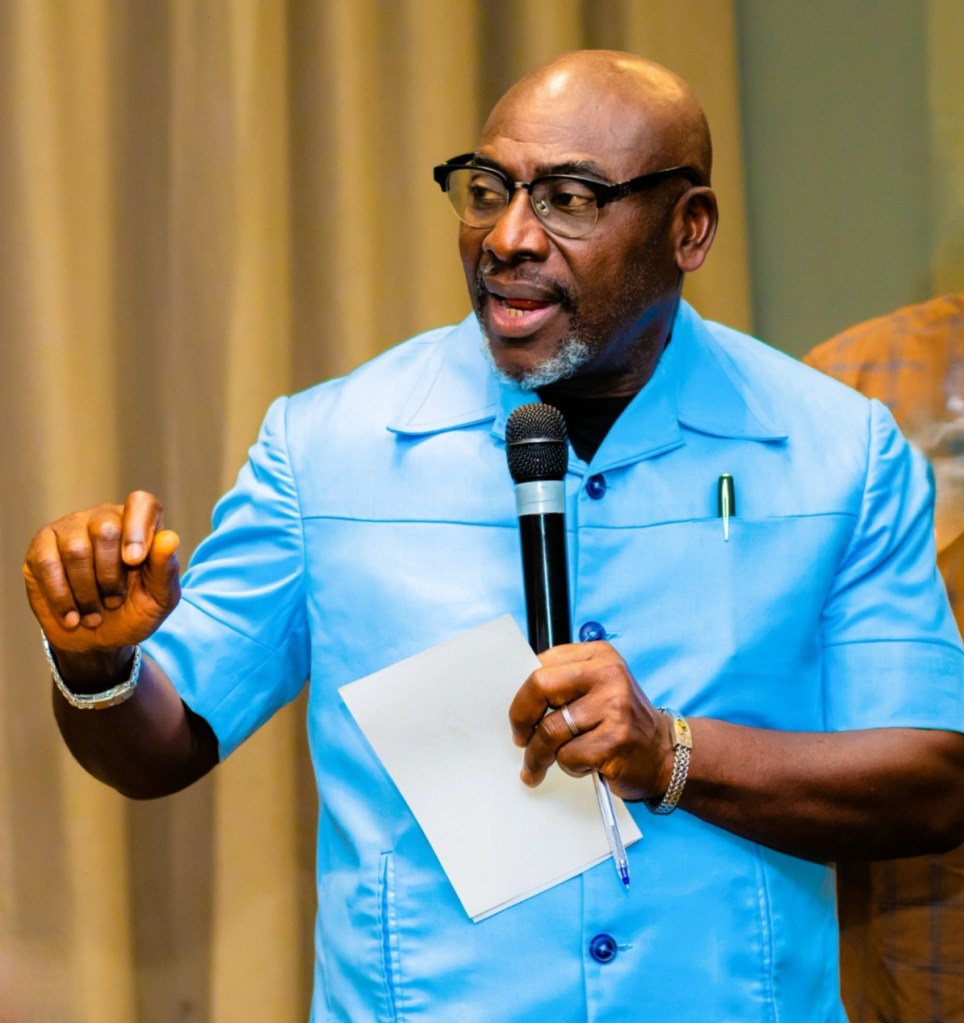
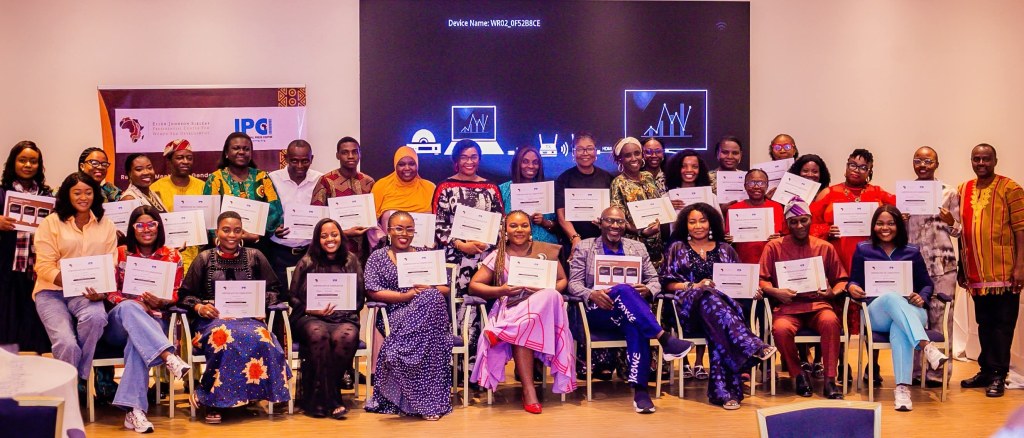
Executive Director of the International Press Centre (IPC), Mr. Lanre Arogundade, has been elected Deputy Convenor of the 13-member Council of the International Freedom of Expression Exchange (IFEX) while also appointed as a member of its Governance Committee. Mr. Arogundade was first elected to the IFEX Council at its reconvened Annual General Meeting on July 16, 2026. His election as deputy convenor and governance committee member was unanimously approved at the inaugural meeting of the 2026–2029 IFEX Council on Wednesday, August 5, where Layal Bahnam, Program Manager at the Maharat Foundation, was appointed Convenor and Ruth Kronenburg, Executive Director of Free Press Unlimited, was appointed Treasurer. As Deputy Convenor, Arogundade will support the Convenor in providing leadership to the Council and, in the Convenor’s absence, undertake responsibilities that include chairing Council and members’ meetings, convening Council committees as required, supporting the implementation of Council decisions, encouraging active participation of Council members, and contributing to the effective governance of the network. In addition to his responsibilities as Deputy Convenor, Arogundade will serve on the IFEX Governance Committee, where he will contribute to strengthening the network’s governance framework, institutional effectiveness and strategic oversight. In a statement, the Executive Director of Media Rights Agenda (MRA), Chairman of the IPC Governing Board, and former IFEX Convenor and former Council member, Mr. Edetaen Ojo, congratulated Mr. Arogundade on his new IFEX leadership responsibilities, noting that they come at a defining moment for global efforts to defend press freedom. “IFEX has long been a leading force in defending free expression and supporting journalists worldwide. At a time of growing threats to media freedom, these appointments will help reinforce the network’s collective advocacy for press freedom and access to information. I wish him a successful and impactful tenure.” Speaking on the significance of the new roles, Arogundade said: “To me, they are not mere leadership roles, but more responsibility to contribute to the shaping of the strategic direction of a network whose collective voice has never been more important. I am therefore set to work with the Convenor, fellow Council members and the wider IFEX membership to strengthen the network’s impact and reinforce our collective response to the encumbrances on free speech, independent journalism and access to information.” Since joining IFEX in 2016, IPC has been part of a global community of more than 100 independent civil society organisations committed to advancing free expression and journalists’ rights. Established in 1992, the network pursues these goals through advocacy, research, policy engagement, emergency assistance and international solidarity. IFEX also serves on the Media Freedom Coalition’s Consultative Network and the Advisory Network of the Freedom Online Coalition, contributing to international policy discussions on media freedom, digital rights and civic space.
Media and communication researchers from across Nigeria and around the world will converge on Lead City University, Ibadan, Oyo State, for the 6th International Academic Conference and Annual General Meeting of the Association of Media and Communication Researchers of Nigeria (AMCRON).
The conference with the theme: “Beyond the Inverted Pyramid Formula: Democracy, the Media, the Politicians and the People in Nigeria’s General Elections,” will hold on Wednesday, 25th to Thursday, 26th November 2026, at the Department of Mass Communication and Media Technology, Lead City University, Ibadan.
With reputable speakers drawn from the academia, industry, public, and private sectors, the hybrid event, offering both physical and virtual participation via Zoom, is open to media practitioners, journalists, politicians, political parties, academics, policy makers, and social researchers, among others.
In a statement, Prof. Eserinune McCarty Mojaye, President of AMCRON, urged stakeholders to attend the event, highlighting the critical importance of exploring the media’s evolving role in political communication, election reporting, and democratic accountability.
Dr. Kehinde Oyesomi, the Director of Networking and Publicity, also encouraged attendance, emphasising the need to examine how strategic communication, digital media, and the political economy of media ownership affect public trust and the integrity of electoral information. As modern political landscapes shift, the traditional frameworks of reporting are being challenged.
“This conference provides a vital platform for scholars, practitioners, and political umpires to critically examine how the media, politicians, and citizens interact during Nigeria’s general elections. It seeks to interrogate issues surrounding media framing, digital propaganda, fact-checking, and the role of emerging technologies like Artificial Intelligence in shaping public opinion and national stability,” Oyesomi said.
Bringing together diverse perspectives, the conference aims to foster dialogue, share research findings, and generate actionable insights to protect vulnerable groups, curb online harassment, and promote ethical communication practices that strengthen democratic institutions.
Interested researchers and participants are invited to submit abstracts (250–300 words) by Friday, 31st July 2026 to amcronmail@gmail.com.
The Executive Chairman of Ikeja Local Government, Comrade Akeem Olalekan Dauda (AKOD), led the 2026 Lagos State Tree Planting Day exercise in Ikeja, reaffirming his administration’s commitment to environmental sustainability with a pledge to plant 1,000 trees across public spaces within the local government.
The event, held at the frontage of the Ikeja Local Government Secretariat, formed part of the statewide tree planting campaign organised by the Lagos State Government with the theme, “Trees for Lagos: Our City, Our Responsibility.”
Speaking on behalf of Governor Babajide Olusola Sanwo-Olu, AKOD, delivering the Governor’s keynote address, called on Lagos residents to move beyond discussions on climate change and embrace practical environmental action through tree planting and conservation.
He stressed that Lagos was demonstrating its commitment by taking concrete steps to restore its green environment.
According to the Governor, rapid urbanisation has resulted in rising temperatures, flash floods and increasing environmental degradation, making tree planting one of the most effective and affordable nature-based solutions to climate change.
He explained that trees improve climate resilience by cooling urban areas, absorbing stormwater to reduce flooding and improving air quality, while also enhancing public health through cleaner air and healthier recreational spaces.
Sanwo-Olu noted that environmental sustainability requires collective action from governments, traditional institutions, community associations, schools, corporate organisations, faith-based bodies, markets and individual residents.
He disclosed that the state had set a target of planting 20,000 trees during the current planting season and revealed that 13,401 trees, representing 67 per cent of the target, had already been planted across Lagos as of June 30, 2026.
The Governor announced that the campaign would continue simultaneously across the 57 Local Governments and Local Council Development Areas throughout the rainy season until October to ensure higher survival rates and surpass the state’s planting target.
He, however, emphasised that planting trees alone was not enough.
“Planting is easy; nurturing is leadership. Every tree planted must be protected, watered and preserved to maturity,” he said, urging council chairmen to serve as custodians of trees within their respective jurisdictions in partnership with the Lagos State Parks and Gardens Agency (LASPARK).
The Governor also encouraged Lagos residents to obtain free seedlings from LASPARK nurseries in Ikorodu and Agege and plant trees in homes, schools, offices, estates and communities.
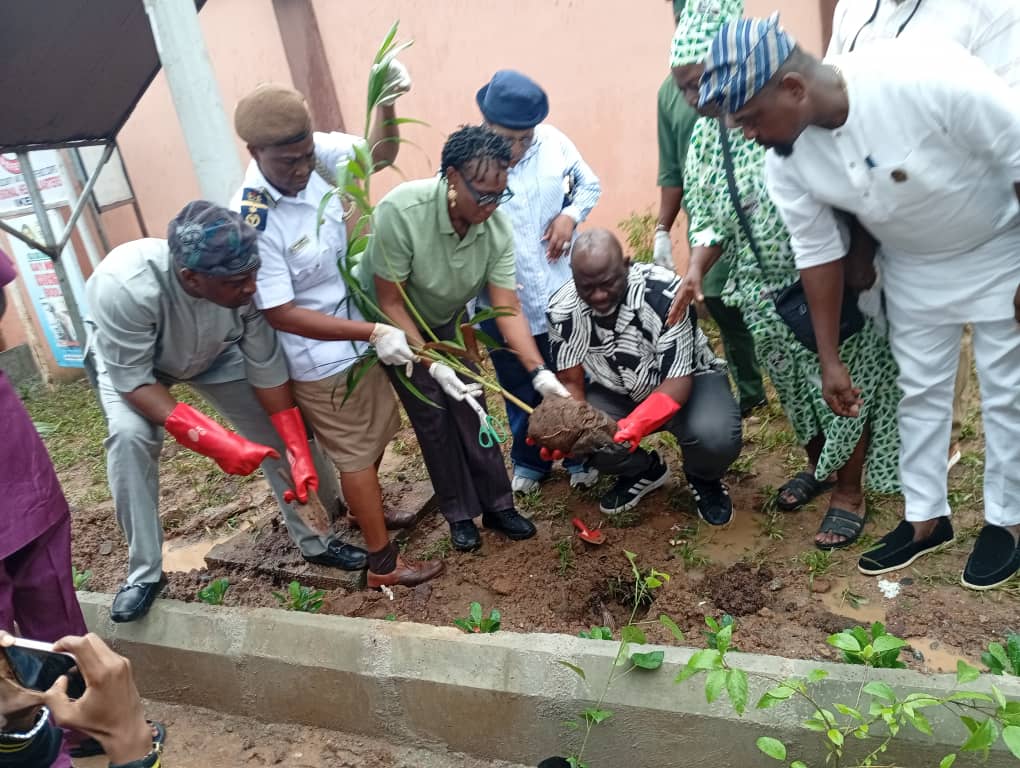
Following the address, AKOD led members of the Ikeja Local Government Executive Council, officials of the Nigeria Police Force, representatives of LASPARK, officials of the Ministry of Environment and Water Resources, lawmakers and other stakeholders in planting 50 trees along the median stretching from the Ikeja Local Government Secretariat through the Police Station, the Directorate of State Services (DSS) office and the Bus Rapid Transit (BRT) corridor.
Speaking after the exercise, the Chairman announced that Ikeja Local Government would go beyond the state’s campaign by planting 1,000 trees in strategic public spaces across the council area.
He said the initiative forms part of the environmental sustainability pillar of the I.K.E.J.A. Agenda, aimed at creating a cleaner, healthier and climate-resilient local government.
“Our responsibility does not end with planting these trees today. We will ensure they are nurtured to maturity because every surviving tree contributes to cleaner air, reduced heat, improved biodiversity and a healthier environment for our people,” AKOD said.
Earlier, the Commissioner for Environment and Water Resources, Mr. Tokunbo Wahab, described tree planting as a strategic investment in public health, biodiversity conservation and climate resilience.
Wahab, who was represented by the Deputy Director (Geology), LASPARK, Mrs Idowu Tolulope commended LASPARK for sustaining the state’s afforestation programme and appreciated private sector organisations, development partners and volunteers whose support has continued to strengthen Lagos State’s environmental sustainability initiatives.
The commissioner also highlighted recent partnerships that produced eco-friendly playgrounds made from recycled materials for public primary schools, describing the projects as as practical examples of sustainable development and circular economy management.
The 2026 Tree Planting Day was observed simultaneously across all the 57 Local Governments and Local Council Development Areas in Lagos State as part of efforts to build a greener, cooler, cleaner and flood-resilient megacity.
As artificial intelligence, social media, citizen journalism and digital technologies continue to reshape the media landscape, the future of journalism has become one of the defining conversations of the profession. Newsrooms are adapting to new technologies, audiences are consuming information in unprecedented ways, and journalists are increasingly challenged to balance speed with accuracy, innovation with ethics, and digital engagement with public trust.
Against this backdrop, a programme was convened at Caleb University where media professionals, academics and students interfaced at high-level forum on “Journalism in the Digital Age: The Prospects, Challenges and the Future.” The event, held at the University’s Mass Communication Auditorium on Tuesday, July 7, 2026, provided students with valuable insights into the evolving realities of journalism and the competencies required to succeed in an increasingly digital information ecosystem.
The forum brought together distinguished media practitioners including Mr. Kingsley Ighomwenghian, Managing Editor of Independent Newspapers Limited; Mr. Caleb Ijioma, Executive Director of RoundCheck; and Mr. Lekan Otufodunrin, Executive Director of the Media Career Development Network. They were joined by the Dean of the College of Communication and Media Studies, Dr. Kayode Okunade; the Head of Department of Mass Communication, Dr. Sunday Ogbonna; Dr. Solomon Oyeleye; Dr. Samson Bello; Dr. Oluwafisayo Ogunyemi; Dr. Charles Adewale; Mrs. Joy Joseph; Mr. Stephen Ajagbe, alongside students, lecturers and journalism enthusiasts.
Giving perspectives on the significance of the engagement, Mrs. Funmi Falobi, lecturer-in-charge and convener of the forum, explained that the forum was intentionally designed to expose students to the rapidly evolving realities of journalism practice and prepare them for careers in a technology-driven media environment. She noted that while technological disruption has transformed the industry, it has also created unprecedented opportunities for innovation, investigative reporting, multimedia storytelling and audience engagement.
According to her, exposing students to experienced practitioners enables them to appreciate the changing demands of the profession while equipping them with the digital competencies, ethical values, critical thinking abilities and verification skills needed to thrive in an increasingly dynamic media ecosystem.
She also noted that the forum was designed to bridge classroom learning with professional practice. She declared that the programme was also aimed at exploring the opportunities, disruptions and ethical responsibilities that define journalism in today’s rapidly evolving digital environment, while equipping aspiring journalists with practical knowledge to navigate an industry undergoing unprecedented transformation.
Setting the tone for the day’s discussions, students of the Department of Mass Communication delivered a series of creative performances that reflected the realities confronting contemporary journalism. A thought-provoking drama by 300-level Journalism students vividly illustrated the dangers posed by misinformation and the indispensable role of investigative journalism in uncovering the truth. Through an engaging storyline, the students demonstrated how false narratives, manipulated content and online propaganda can easily shape public opinion before careful investigation, verification and fact-checking restore the facts. The performance drew a clear distinction between ethical journalism, anchored on verification and public accountability, and the growing tendency among some online platforms to prioritise speed, virality and sensationalism over accuracy. Reinforcing the central theme of the forum, a spoken-word performance by 200-level students and another drama presentation by 400-level Print Journalism students further explored the responsibilities of journalists in safeguarding truth and strengthening public trust in an increasingly complex information ecosystem.
Delivering the first keynote presentation, Mr. Kingsley Ighomwenghian examined how digital technology has fundamentally altered traditional media business models. He observed that newspapers have historically depended on circulation and advertising revenue, both of which have come under increasing pressure as audiences migrate to digital platforms.
While acknowledging that digital journalism has significantly simplified news distribution, he cautioned that the proliferation of blogs, social media platforms and other online publishers has made it increasingly difficult to safeguard information quality and credibility.
“Digital journalism came to simplify the distribution channel,” he remarked, noting that unlike traditional media organisations, many digital content creators operate outside established editorial and regulatory frameworks.
Turning attention to investigative journalism and fact-checking, Mr. Caleb Ijioma highlighted the growing importance of verification in an era characterised by information overload. He described investigative journalism as a specialised discipline requiring patience, rigorous research and sustained inquiry into issues concealed from public view.
Although investigative reporting and fact-checking share common research techniques, he explained that they serve different purposes. Investigative journalism seeks to uncover hidden wrongdoing, while fact-checking focuses on verifying the accuracy of public claims and information already circulating within the public domain.
He stressed that data has become an indispensable resource for modern journalists, strengthening evidence-based reporting and enhancing public trust.
“The best tool for a fact-checker is your eyes,” he told students, urging them to remain observant, question assumptions, verify independently and uphold professional integrity throughout the reporting process.
Speaking on media practice in the digital era, Mr. Lekan Otufodunrin encouraged aspiring journalists to embrace technological innovation without compromising professional ethics. He noted that success in contemporary journalism requires much more than writing ability; it demands digital literacy, multimedia competence, continuous learning and mastery of verification techniques.
He urged students to cultivate habits of responsible information management by verifying content before publication, resisting the temptation to prioritise speed over accuracy, and investing consistently in professional development. According to him, technology should enhance journalism, not diminish its core values of accuracy, fairness and accountability.
The interactive question-and-answer session enabled students to engage the speakers on practical issues confronting journalists, particularly the risks associated with investigative reporting.
Responding to a question on journalist safety, one of the speakers offered advice that resonated across the auditorium: “No story is worth your life.” He recounted an experience involving a sensitive campus investigation in which journalists faced pressure not to publish their findings. To protect those directly involved while ensuring that the public still received the information, the report was eventually published through a journalist outside the campus environment, illustrating the difficult ethical and security decisions investigative journalists sometimes face.
Collectively, the speakers encouraged students to embrace a simple but powerful professional discipline: “Stop. Check. Verify.” They emphasised that in an age where misinformation can spread globally within seconds, the credibility of journalism depends not on who publishes first, but on who publishes accurately.
As the forum concluded, participants departed with a deeper appreciation of both the opportunities and the challenges confronting journalism in the digital age. More importantly, they left with a renewed conviction that despite rapid technological change, the profession’s enduring mission remains unchanged—to pursue the truth, uphold ethical standards, combat misinformation and serve the public interest.
For the next generation of journalists at Caleb University, the message was unmistakable: the future belongs not simply to those who master digital tools, but to those who combine innovation with integrity, technology with responsibility, and speed with accuracy.
The Department of Mass Communication, Caleb University, Imota, Lagos State has charged students to explore the growing influence of branding, communication strategies, and technology in shaping the future of the media industry.
This was the focus at a media consultancy campaign organised for the 300 level students of the department with the theme, “Empowering Brands: Transforming the Future of the Media.”
Speaking at the event, Mrs Amina Omoike, an advertising expert, explained that every brand is a media organisation because every brand communicates a message to its audience.
She described Caleb University as a brand and emphasised that organisations must pay attention to their reputation, communication style, and relationship with their audiences.
Mrs Omoike stated that media consultancy is the role of an expert who provides professional advice and strategies to brands and media organisations. She highlighted different forms of media, including television, magazines, and digital platforms, as important tools for communication.
She also identified strategic planning, digital messaging, data interpretation, and emotional intelligence as important skills needed in media consultancy, noting that understanding audiences remains a key part of effective communication.
Dr Monday Ashibogwu , Group CEO, Billsbox Services Limited, shared personal experiences from his academic journey and encouraged students to view media consultancy as a field that requires creativity, professionalism, and problem-solving skills.
He explained that media consultants help brands identify communication challenges and develop strategies to improve their public image. He challenged the students to think about their responsibilities as future media consultants and asked them how they would approach real-life communication challenges.
Dr Ashibogwu also discussed the growing influence of Artificial Intelligence (AI) in media consultancy and explained how technology is changing the way media professionals create content, analyse information, and develop strategies.
While speaking on the media industry, Dr Ashibogwu explained the difference between media practitioners and media consultants, adding that journalism, public relations, and media consultancy all contribute to effective communication.
Mrs. Joy Joseph, the Course Lecturer explained that the programme was an avenue for the students to learn from professionals and horn their skills in communications and media consultancy.
“The event was organised to expose the students to best practices in media communications and consultancy. To let them know that there are opportunities in strategic communications where in the changing world of technology, they can use communication to solve problems and make impact.”
The programme was attended by distinguished members including the Dean, College of Communication and Media Studies, Dr Kayode Okunade; Head of Department (HOD) Mass Communication, Dr Sunday Ogbonna; Dr Solomon Oyeleye; Mrs Funmi Falobi; Dr Samson Bello; Dr Charles Adewale.
The event empowered students where they gained more knowledge about the future of the media profession. There were group presentations by the students on strategic communications, event planning and branding. The event left the students with valuable lessons on branding, innovation, and the changing opportunities within the media industry.
As the Ekiti governorship election holds on Saturday, 20th June, 2026, the International Press Centre (IPC) and Centre for Media and Society (CEMESO), have reiterated call to journalists and other media professionals to adhere to professional standards while also being safety conscious during coverage. . The governorship election is scheduled to hold across 16 Local Government Areas (LGAs) within the state.
IPC Executive Director, Mr. Lanre Arogundade, said the admonition had become necessary in the light of the critical role that the media plays during electioneering processes and elections during which journalists’ safety may be threatened. “It is very important for journalists covering the Ekiti State election to be safety conscious in the discharge of their duties, and to avoid situations that will put them in harm’s way. Journalists are expected to be non-partisan. Being partisan is not only about being a member of a political party but also includes the use of expressions and/or impressions with statements, tags, symbols and colours that portray or identify with a particular political party or personality, ” he said.
While advising journalists covering the election to be well kitted, he added that, “Journalists who are to cover the elections should ensure that they are fully kitted and accredited to do so, in order to avoid situation wherein security agencies would have to question them or bar them from performing their duties. Journalists, who are not on election duty, should avoid straying into the identified polling units at will during the stipulated period of the election. At all times, journalists covering the elections must have their identification card and press/media tag clearly displayed to avoid undue harassment and unnecessary identity checks by the security agencies. “
Similarly, Dr. Akin Akingbulu, Executive Director, Centre for Media and Society (CEMESO), a partner organisation in the IPC/CEMESO-Safety of Journalists framework, underscored the democratic imperative of journalists safety, noting that the conditions under which journalists are permitted to work constitute a direct measure of a society’s commitment to its own civic values. “Every election is, at its core, a test of those values — and nowhere is that test more visibly administered than in the field.
Amongst other activities, IPC/CEMESO will, during the election, be partnering with the Ekiti State Police Command in ensuring the safety of journalists deployed to the field. Through the IPC/CEMESO safety initiative journalists who face any form of violation or attack on the field can directly reach the Divisional Police Officer (DPO) assigned to that area command/division.
“We expect the security forces to note that the media is a critical part of the electoral process and so the media should be accorded with due rights and privileges to enable them to carry out their social obligations as partners in enshrining the credibility of the electoral process.
“Other stakeholders, including elections observers should also proactively provide journalists covering the elections with information to ensure that all work together for the credibility of the electoral process,” Arogundade stressed.
As part of initiatives to keep tab on the safety consciousness of journalists, IPC/CEMESO said that there are safety alert officers who journalists under threat/attack can report to.
In cases of attacks or insecurity issues, concerned journalists on the field can contact any of the following persons:
Arogundade also encouraged journalists to report any threats to the Nigeria Union of Journalists (NUJ), Ekiti State Chapter.
The deployment of journalists to cover the Ekiti governorship election is not merely a professional exercise; it is an act of democratic service. When a journalist is harassed, barred, or attacked at a polling unit, it is not simply that individual who suffers — it is the electorate that is robbed of the witness it deserves. The partnership between the IPC/CEMESO-Safety of Journalists initiative and the Ekiti State Police Command is a meaningful structural intervention, but it must be understood as a floor, not a ceiling. The real measure of our seriousness will be seen not in the protocols we announce, but in the culture of protection we actually demonstrate on election day,” Dr. Akingbulu declared.
On the broader relationship between security forces and the press during elections, Dr. Akingbulu called for functional collaboration grounded in mutual respect for institutional roles. “The relationship between security personnel and journalists during elections has historically been one of the most contested frontiers in Nigeria’s democratic experience — shaped by mutual suspicion on both sides. What the IPC/CEMESO-Safety of Journalists initiative field coordination model represents is an attempt to convert that adversarial dynamic into one of purposeful cooperation, not because the press and security forces share the same mandate, but because both are ultimately accountable to the same civic outcome: a credible election. I would, however, caution against a naïve reading of this arrangement. Collaboration must never drift into co-optation. The media’s independence is not a courtesy that security institutions extend to journalists — it is a right guaranteed by the democratic framework within which those institutions themselves derive their legitimacy. Every stakeholder in the electoral ecosystem must internalise that protecting the press is not a favour to journalists. It is an investment in the integrity of the process itself,” Akingbulu said.
Towards the Presidential elections in 2023, IPC launched a safety and professional advisory for the purpose of ensuring journalists who are covering the elections are fully equipped with safety tools and precautions to engage with while on the field. The PDF Version is on: https://www.ipcng.org/2023-general-elections/
Beyond the Tribe: Caleb University Students Showcase Nigeria’s Rich Cultural Heritage
By Simisola Ogunremi, Okikiola Lawal & Ajuzie Emmanuel
It was a celebration of culture, identity, and national unity as students of the College of Communication and Media Studies (COCOMS), Caleb University, Lagos, staged a Cultural Heritage Campaign themed “Beyond the Tribe: Unity in Diversity.”
At a time when technology and globalization continue to reshape societies and influence cultural values, the event served as a timely reminder of the importance of preserving Nigeria’s rich cultural heritage and strengthening the bonds that unite its people.
The event, which had rhythmic beats of traditional drums echoed amid colourful attires representing Nigeria’s diverse ethnic groups, lit up the atmosphere with songs, dances, drama, and cultural displays that brought to life the beauty of a nation whose strength lies in its diversity.
Delivering the keynote address, actor, businessman, and creative media strategist, Olanrewaju Olakanlu, popularly known as Mr. Kogberegbe, challenged Nigerians to rise above stereotypes and ethnic divisions by embracing their shared humanity.
Speaking before an enthusiastic audience of students, lecturers, and guests, he stressed that cultural diversity should be seen as a source of strength rather than a basis for division.
According to him, friendships and relationships should extend beyond tribal boundaries, as the similarities that bind Nigerians together are often greater than the differences that separate them.
Reflecting on the various cultural performances showcased during the programme, Olakanlu noted that the presentations demonstrated remarkable creativity, collaboration, and mutual respect among students from different backgrounds.
“Culture is more than tradition and entertainment; it contains wisdom, values, and lessons that can help bridge social divides and strengthen national cohesion,” he said.
He described the event as a commendable initiative that reflects the university’s commitment to cultural preservation and appreciation. He particularly praised the dedication and teamwork displayed by the students, noting that their performances went beyond mere entertainment to become powerful expressions of identity and unity.
Olakanlu also highlighted the growing importance of cultural storytelling in an era increasingly shaped by globalization and artificial intelligence. He urged aspiring journalists, broadcasters, and media practitioners to become custodians of Nigerian stories by promoting authentic narratives that preserve cultural identity for future generations.
Earlier, in her welcome address, Mrs. Funmi Falobi, course lecturer for the 100-level Journalism students, emphasized the significance of cultural heritage as a foundation for national development and social harmony.
She noted that cultural gatherings such as the campaign create valuable opportunities for people to appreciate one another’s traditions while strengthening the spirit of unity.
“The theme of this year’s campaign, Beyond the Tribe: Unity in Diversity, reminds us that while our ethnic identities are important, our shared humanity and common aspirations are even greater,” she said.
“Nigeria’s strength lies not in uniformity but in the richness of its many cultures, languages, traditions, and experiences.”
Addressing the students directly, Falobi challenged future media professionals to use their platforms responsibly by promoting understanding rather than division.
“As future journalists, broadcasters, public relations practitioners, and media professionals, you have a responsibility to tell stories that bridge divides rather than widen them. The media possesses immense power to shape perceptions, foster understanding, and promote peaceful coexistence among diverse peoples and cultures,” she stated.
Providing the academic context for the programme, Mrs. Joy Joseph, lecturer for the 200-level students, explained that the campaign was designed to complement two important courses within the college.
She said the event provided practical learning opportunities for students enrolled in Cultural Heritage, a course that examines the preservation and promotion of cultural values and identities, as well as Foundation of Cultural Reporting, which introduces students to the principles of reporting cultures, traditions, and communities with professionalism and sensitivity.
The event also featured a thought-provoking presentation by award-winning investigative journalist with THISDAY Newspaper, Mr. Sunday Ehigiator, who explored the complex relationship between culture and the media.
Ehigiator observed that Nigeria continues to experience the influence of cultural imperialism, with foreign media content increasingly shaping societal values and lifestyles. While acknowledging the media’s role in facilitating cultural exchange, he stressed that it can also serve as a powerful instrument for preserving and promoting indigenous cultures.
He urged journalists to be deliberate in telling authentic Nigerian stories and warned against the growing tendency for social media-driven journalism to prioritize attention and engagement over accuracy and ethics.
According to him, the future of journalism depends on maintaining professionalism, upholding ethical standards, and embracing responsible storytelling.
For many students, the event offered more than academic engagement. It was an opportunity to experience firsthand the richness of Nigeria’s cultural diversity while reflecting on their future roles as communicators and storytellers.
As the colourful displays, energetic performances, and cultural exhibitions unfolded, one message resonated throughout the event: Nigeria’s diversity is not a weakness to be managed but a strength to be celebrated.
The Cultural Heritage Campaign, which formed part of the Continuous Assessment exercise for 200-level Mass Communication students and 100-level Journalism students, attracted students, lecturers, and distinguished guests, including the Dean of the College of Communication and Media Studies, Dr. Kayode Okunade.
By the end of the programme, the message was unmistakable: beyond tribe, language, and ethnicity lies a shared Nigerian identity—one that can flourish when culture is preserved, celebrated, and passed on to future generations.
UN Women, TY Danjuma Foundation launch agro-processing centre in Kwali
Rural women in Great Sheda Community, Kwali Area Council in Federal Capital Territory (FCT), Abuja, are set to benefit from improved livelihoods and enhanced economic opportunities following the launch of a new Agro-Processing Centre established through a partnership between UN Women and the TY Danjuma Foundation. The Agro-Processing Centre is equipped with a cassava peeling and grinding machine designed to significantly reduce the time and labour required for processing cassava into Akpu, a staple food and important source of income for many women in the community.
For years, women in Great Sheda have relied on manual methods of peeling and grinding cassava, a process that is physically demanding and time-consuming. The introduction of the new machine will ease this burden, increase productivity, improve processing efficiency, and enable women to dedicate more time to other income-generating and productive activities. The initiative forms part of ongoing efforts by UN Women and the TY Danjuma Foundation to advance women’s economic empowerment, strengthen rural livelihoods, and create sustainable pathways for women to participate fully in local economic development.
Speaking at the launch, Beatrice Eyong, UN Women Representative to Nigeria and ECOWAS, highlighted the importance of investing in rural women’s economic empowerment. “Today, we are investing in not only in a machine; we are investing in the time, productivity, and economic potential of rural women. By reducing the burden of manual cassava processing, this Agro-Processing Centre will enable women to increase their earnings, pursue other productive opportunities, and strengthen their contribution to the economic development of their families and communities,” she said.
The Chair of the TY Danjuma Foundation, Ms. Hannatu Gentles, also reaffirmed the Foundation’s commitment to improving the lives of underserved communities through strategic investments in education, health, and economic empowerment. “We believe in putting economic power directly into the hands of women, the true backbone of our rural economy. The TY Danjuma Foundation is deeply committed to supporting communities that need it most, and we are confident in the capacity of the women of the Akpu Women Association to use this facility to grow their businesses and build better futures for their families,” she affirmed.
The Former FCT Mandate Secretary and Director-General, Mariam Babangida Centre, Dr. Adedayo Benjamins-Laniyi also noted that “When women who have laboured with their hands for decades are empowered with the right tools, they do not only process cassava — they strengthen food security, economic growth, and community resilience.”
Community members welcomed the intervention, describing it as a transformative investment that will improve productivity, increase household incomes, and contribute to the overall development of the community. The Agro-Processing Centre is expected to serve women processors across Sheda and surrounding communities, creating opportunities for increased earnings, improved food processing practices, and stronger local economic growth.
Through strategic partnerships and targeted investments in women’s livelihoods, UN Women and the TY Danjuma Foundation continue to support efforts that empower women as key drivers of economic development, food security, and community resilience.