For many citizens, participation in governance often reaches its high point on election day. They queue, cast their ballots and elect representatives. But what happens between one election and the next?
In Ado-Odo/Ota Local Government Area of Ogun State, the African Foundation for Environment and Development (AFED) is helping to demonstrate that inclusive governance must extend beyond the ballot box. With funding support from CIVICUS under the Community Environmental Justice and Civic Action Labs project, AFED is facilitating grassroots concerns to the council chamber, whereby citizens and elected representatives are building new pathways for dialogue, accountability and responsive local governance.
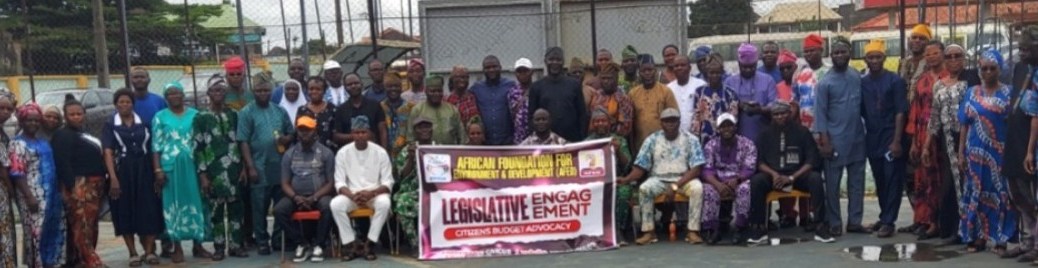
In one of such initiatives, a Citizens–Legislative Dialogue had held in Ota, bringing together 15 elected Local government councillors and representatives of 10 thematic Citizen Groups to strengthen ward-level representation, participatory governance and public service delivery. For the trained community leaders who participated, it was more than another stakeholder meeting. It was an opportunity to take grassroots voices directly to the people elected to represent them, exchange perspectives, ask questions and better understand how the Local Government Legislative Council works.
The legislative delegation was led by the Leader of the House, Hon. Gbadamosi Mutairu, who was represented by the Deputy Leader, Hon. Oseni Lateef Ishola. Representatives of the 10 Citizen Groups brought perspectives from different wards, communities and thematic areas.
From Training to the Dialogue Table
The journey to the dialogue table did not begin that day. It formed part of a broader process through which AFED has been strengthening citizens’ capacity to participate meaningfully in local governance. The project actually began with the mobilisation and selection of 49 women, youth and community leaders from different wards, communities and sectors across Ado-Odo/Ota. The participants, who were organised into thematic groups focusing on health, agriculture, education, electricity, road infrastructure, gender-based violence, women and youth empowerment, conflict prevention, leadership ethics, and media and communications, subsequently went through four intensive three-day training modules covering Environmental Justice; Civic Space and Citizens’ Rights; Governance and Participatory Budgeting; and Advocacy and Strategic Communication.
The Citizens–Legislative Dialogue therefore represented a significant progression—from building citizens’ knowledge and capacity to creating a platform where that knowledge could be put into practice. Before citizens sat face-to-face with their ward councillors, AFED had also engaged the Local Government Management Team and the Executive and Legislative arms of the council, gradually laying the groundwork for a more direct relationship between communities and those who represent them.
Welcoming participants, AFED Executive Director Adeshola Afariogun said the community leaders were deliberately selected from across Ado-Odo/Ota to ensure that different communities and interests were represented in the dialogue.
“We deliberately selected participants from communities across the Local Government to ensure broad grassroots representation,” Afariogun said.
According to him, the engagement was also designed to bring councillors closer to the trained community leaders and the constituencies they represent.
“The dialogue gives councillors an opportunity to meet these community leaders, understand the constituencies and thematic issues they represent, and establish channels for sustained engagement,” he added.
Afariogun also raised concerns about the gender imbalance in the Legislative Council, noting that only one of the 15 councillors present was a woman.
“With only one woman among the 15 councillors here, there is clearly a need to give greater institutional attention to issues affecting women,” he said, advocating the establishment of a Gender-Based Violence Committee within the legislature to provide a dedicated platform for addressing gender-related concerns.
Turning voices into engagement
Opening the interactive session, the facilitator, Oghogho Olabisi, who has experience in similar citizen–legislative engagements with the Lagos State House of Assembly, urged participants to move beyond merely identifying community problems and focus on how citizens could engage their representatives more effectively.
“How can citizens effectively present their concerns to the legislature? How accessible are councillors?” Olabisi asked, challenging both sides to examine their respective roles in making local governance work. Setting the tone for an interactive discussion on improving communication, accessibility and engagement between residents and their ward councillors, the poser quetions were:
“What are the responsibilities of citizens and elected representatives and are the existing communication channels working?”
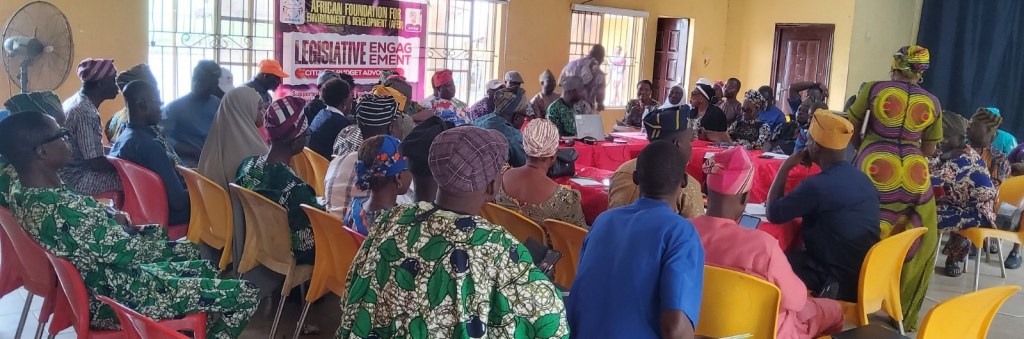
In response, participants identified community meetings, Area Community Development Committee platforms and WhatsApp groups as important channels for communicating with representatives. They, however, stressed that digital communication should complement—not replace—inclusive ward and community meetings. The Deputy Leader, Hon. Ishola, called for the harmonisation of relevant community communication platforms to improve information sharing and ensure that engagement is not restricted by political affiliation.
The councillors also responded to questions from participants, clarified their legislative responsibilities and explained how community concerns could be channelled to the Legislative Council.
Beyond elections
One message emerged strongly from the dialogue: citizen participation cannot begin and end at the ballot box. Participants agreed that engagement between residents and their elected representatives should become a continuous process through which citizens contribute ideas, raise concerns, monitor public services and participate in community development.
The dialogue ended with a shared commitment to better communication, greater accessibility and sustained collaboration between councillors and residents across Ado-Odo/Ota Local Government Area. Participants also agreed to use existing community structures and communication platforms to channel grassroots concerns to councillors and the Legislative Council for consideration.
Afariogun thanked the councillors and Citizen Groups for their participation and acknowledged CIVICUS for supporting the initiative. The Citizens–Legislative Dialogue was organised under AFED’s Community Environmental Justice and Civic Action Labs project to strengthen citizen participation, ward-level representation and accountability in local governance.
By Sanmi Falobi, Guest Writer/Executive Editor, Social Devt News

