The Nigerian Chapter of the International Press Institute (IPI) on Tuesday, May 6, 2025, announced the removal of the name of the Executive Director, International Press Centre, Mr Lanre Arogundade, from the Department of State Security’s watchlist after about forty years.
IPI Nigeria President, Mr. Musikilu Mojeed made this known in Abeokuta, Ogun State at the 3rd Nigerian Media Leaders’ Summit convened by Journalism Clinic led by veteran Journalist Taiwo Obe with media owners and top editors in attendance.
Mr. Mojeed said the Director-General of the DSS, Adeola Oluwatosin Ajayi, informed IPI Nigeria of the development during a recent engagement with the Service.
The DSS decision followed sustained and intensive campaign by IPI Nigeria to get Mr. Arogundade’s name removed from the watchlist. The renewed campaign became necessary when Mr. Arogundade’s name was not removed despite previous assurance.
For about forty years, Mr Arogundade was subjected to persistent harassment and embarrassment, including brief detention by security operatives at the Murtala Muhammed International Airport, Lagos.
IPI Nigeria says it welcomes the decision and commends the DSS for finally removing Mr. Arogundade’s name from the watchlist.
Media executives present at the Abeokuta summit applauded the announcement while Mr. Arogundade, who was also among them, expressed his gratitude and that of his family to IPI Nigeria for the commendable effort.
Mr. Arogundade’s journey to the watchlist started during the military regime when he served as the president of the National Association of Nigerian Students (NANS) between 1984 and 1985.
“When beggars die, there are no comets seen; The heavens themselves blaze forth the death of Princes” – Williams Shakespeare (Julius Caesar).
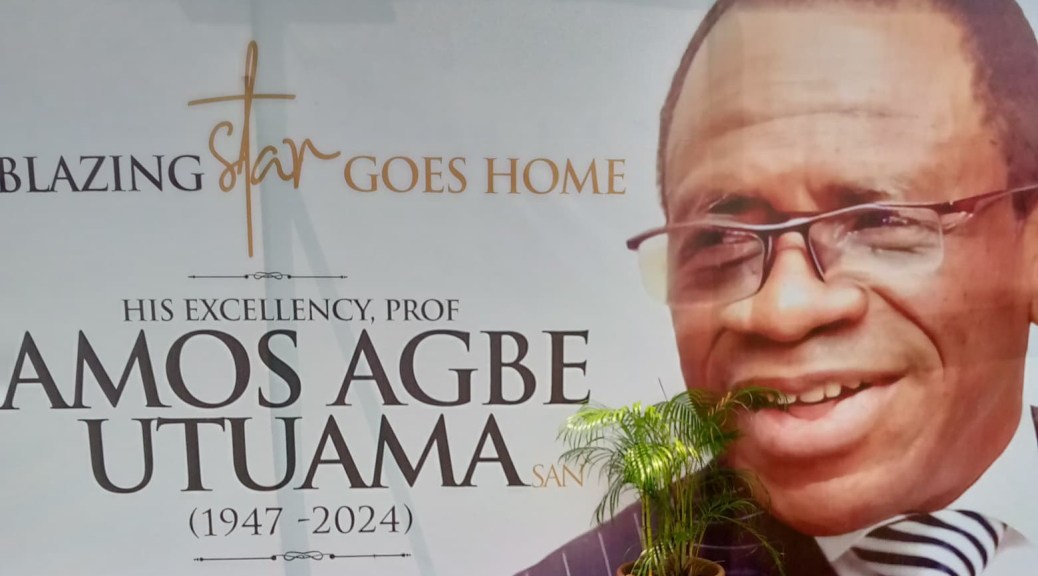
The former Deputy Governor of Delta State, and a distinguished Alumnus of the University of Lagos, Prof. Amos Utuama SAN, has been laid to rest in his hometown, Otu-Jeremi, near Ughelli, in Delta State, in a “blaze of glory.”
The 2-day event commenced with a Service of Songs at St. Andrew’s Catholic Church, Otu-Jeremi on Tuesday, 29th April, 2025.
Dignitaries present at that occasion included the former Governor of Delta State, Chief James Onanefe Ibori, under whom the late Prof Utuama served as Attorney General and Commissioner for Justice for 8 years (1998-2007), after which he became Deputy Governor to Dr. Emmanuel Uduaghan (2007-2015). The present Governor of Delta State, Elder. Sheriff Oborevwori, his wife, and a host of Commissioners and members of the Federal and State Legislatures were also in attendance. Senior members of the Bench and Bar, from all over the country, captains of industry, Traditional Rulers and High Chiefs, as well as several Unilag Alumni members, were also present.
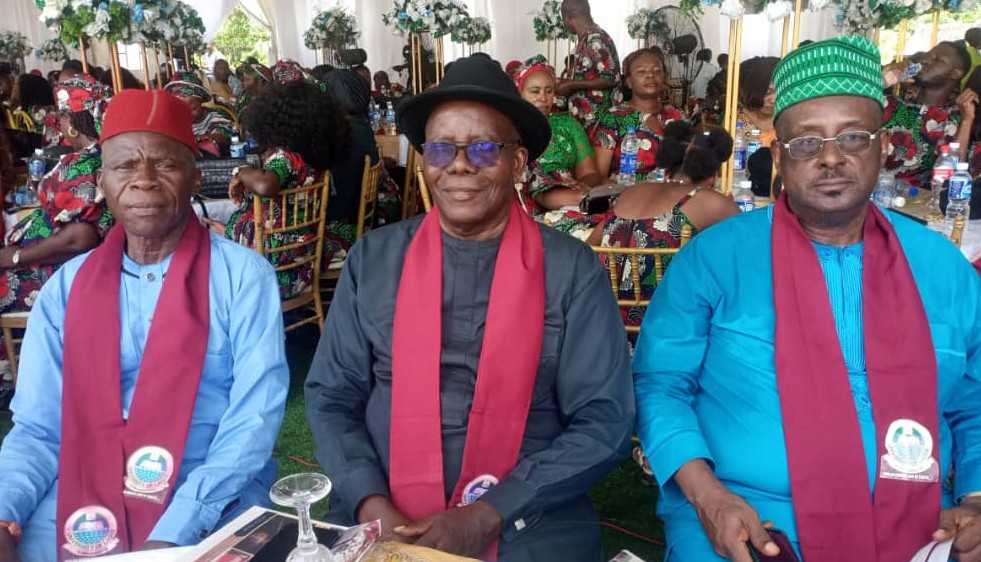
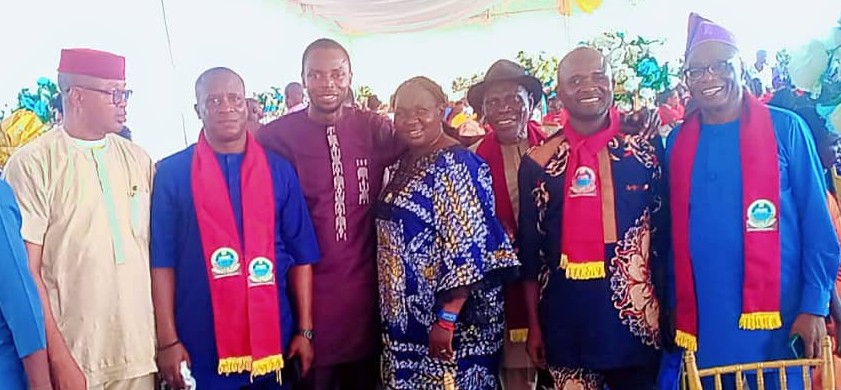
The Church service was held on Wednesday, April 30, 2025 at the Warri Cathedral, after which his burial took place, privately, at his residence at Otu-Jeremi. The entertainment of dignitaries and guests took place at the Otu-Jeremi Primary School ground, at which the Speaker of Delta State House of Assembly, Hon Dennis Guwor, several Commissioners and Honourable members of the Legislature, members of the Bench and Bar, several Chiefs, as well as a full compliment of Unilag Alumni members from both the Warri and Asaba branches, were visible present.
The Immediate Past Chairman of the Warri Circle, Dr. Babalola Falobi, represented the National President (Worldwide), Engr. Ifeoluwa Oyedele, FAEng, while the new Chairman of Warri Circle, Deacon Tony Onakpoma, and the Chairman of Asaba Branch, Barr. Emmanuel Diei, and numerous Alumni members, were also present at the event. The Unilag Alumni Association was well represented and properly recognised at the event.
The late Prof. Amos Utuama died a few months ago, at the age of 77 years. May his soul rest in peace.
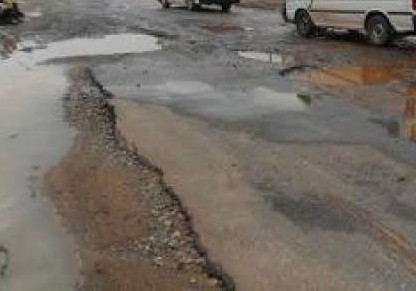
Concerned stakeholders, citizen groups and individuals have lamented the increasingly hazardous condition of the Ibadan-Ife-Ilesa Expressway, which has significantly deteriorated in recent months, with the current state of disrepair now posing serious risks to road users and impeding economic activities across the region.
According to Chief Abiola Falayajo, a concerned citizen and one of the arrowhead of the call for rehabilitation of the road, the critical highway, which serves as a major transport corridor, connecting key towns in Oyo, Osun and Ondo States, has suffered significant deterioration, resulting in deep potholes which pose a serious risk to road users, leading to accidents, burst tyres and exposure to hazards and attack by assailants.
In a statement, as a Save our Soul (SOS) open letter to His Excellency, President Bola Ahmed Tinubu, Chief Falayajo lamented that the road is in a very critical condition and that there is the need for the urgent rehabilitation.
“I, a concerned citizen of Nigeria, humbly bring to your esteemed attention the urgent need for the rehabilitation of the Ibadan-Ife-Ilesa Expressway. This critical highway, which serves as a vital economic and social lifeline for millions of Nigerians, is now in a state of severe disrepair, posing grave risks to the lives and livelihoods of those who depend on it daily”, he stated.
“The Ibadan-Ife-Ilesa Expressway is not just a regional road; it is a strategic national asset that facilitates trade, commerce, and movement between major states, including Oyo, Osun, Ondo and Ekiti, as well as other parts of the country. However, its current condition has become a source of pain and concern for commuters, businesses, and transporters.
Large potholes, eroded road sections, and structural failures have turned what should be a smooth transit route into a dangerous journey marked by frequent accidents, vehicle breakdowns, and tragic loss of lives”, he added.
“Your Excellency, I am positive, and appreciate the Renewed Hope Agenda and your administration’s commitment to infrastructure development. I am positive that under your leadership that Nigeria will witness significant progress in road rehabilitation and national development. It is in this spirit that I earnestly appeal for your intervention to ensure that this expressway receives the urgent attention it so desperately needs”, he further stated.
It would be recalled that Chief Falayajo is not the only one concerned about the deteriorated condition of the Ibadan-Ile Ife-Ilesa road. Over the past year, several other groups, including students of the Obafemi Awolowo University, commuters and travelers alike have been calling for urgent repairs of the road.
In a recent media report by the Nation newspaper, Senator Sharafadeen Alli, representing Oyo South Senatorial District in Senate and Senator Lere Oyewumi, representing Osun West Senatorial District had appealed to the aggrieved people of Oyo and Osun states as well as other road users to exercise patience on the Ibadan-Ife-Ilesa Highway project, assuring that efforts are on to get the project completed as soon as possible.
According to the report, the lawmakers explained that they had also written to the President, seeking special intervention to ensure that funds were made available for the speedy completion of the highway.
“All of us, as lawmakers in Oyo and Osun states, we are working on it. And we have written the President, seeking for special intervention to provide funds for the completion of the highway. We know how important the road is, and we are working on it”, Senator Sharafadeen Alli was quoted to have said.
Similarly, other stakeholders including the members of the Osun State Council of Obas, have appealed to the Federal Government to fix the Ibadan-Ife-Ilesa Express Road.
In a communiqué issued at the end of their monthly meeting in Osogbo, in June 2024, they described the Ibadan-Ife-Ilesa Express Road as a death trap for motorists. The Council noted that the road is one of the major Federal Government roads in the South West, linking several states together and appealed to President Bola Tinubu to quickly intervene and fix this important road.
Meanwhile, available information have it that the road had been awarded for repairs to KOPEC Construction Company. It was supposed to be supervised by Oyo and Osun States Field Office of the highway development and management initiative (HDMI) phase II programme under sukuk funding. However since it was awarded, the work has been abandoned with less than 5% work done. The highway, which is about 224km from Iwo road in Ibadan to the Brewery Area in Ilesa, was also noted to have been included and captured in the 2024 appropriation budget as ‘Emergency/palliative repairs of Ibadan-Ife-Ilesa dual carriageway in Oyo and Osun states.
Concluding the SOS open letter to President Tinubu, Chief Falayajo stated further: “I kindly appeal to your esteemed office to direct the Federal Ministry of Works and other relevant agencies to prioritise the reconstruction and maintenance of this road. A swift and decisive action in this regard will not only prevent further loss of lives but also enhance economic activities, improve regional connectivity, and restore public confidence in governance.”
“Your Excellency, I trust in your dedication to the well-being of Nigerians and remain hopeful that this appeal will be met with the prompt action it deserves” Chief Falayajo further stated.
In the already saturated social environment of dealing with patriarchal contexts that limits and hinder the communication rights of girls and women, the emerging manifestation of Misogynistic actions and Tech-Facilitated Gender-Based Violence (TFGBV) is a growing subject of concern. This is so because these acts have been found to infringe on the communication rights of women and girls, online and offline. Indeed, this emerging trend has become increasingly visible as more Nigerians turn to digital platforms for communication, business, and social interaction.
According to a recent report, which entailed perspectives from expert discourse, social media monitoring and focus group sessions, it was revealed from the monitoring of social media platforms, that the advancement in the use of technology and digital devices, has translated the manifestation of Gender-Based Violence (GBV) from the physical/social realms to technological and social communication platforms.
Indeed, while technology has opened doors to new opportunities, it has also created avenues for abuse, particularly of women and marginalised groups. As the digital spaces for communication expanded across social media platforms, so has the infringement, repression and oppression of the communication rights of women and girls translated from the traditional forms of physical violence to digital spaces as Online Gender Based Violence (OGBV), otherwise known as Tech-Facilitated Gender-Based Violence (TFGBV).
According to the report entitled, ‘Trends & contexts of Misogyny and Tech-Facilitated Gender-Based Violence in Nigeria’, “many women face daily harassment on platforms such as Twitter, Facebook, and Instagram.”
The report, produced by Journalists For Christ International Outreach (JFC), the organisation for Christian Journalists and allied professionals in Nigeria, under a project, entitled ‘countering misogyny and online gender-based violence through monitoring, digital counter-narratives and advocacy actions’ is with the support of the World Association for Christian Communication (WACC) and Bread for The World – German Protestant Agency for Diaconia and Development.
Misogyny and TFGBV: twin evil of same coin
In Nigeria, girls and women often bear the brunt of acts that stems from patriarchal ideologies. Indeed, Misogyny and TFGBV have emerged as common manifestations that inhibits and repressed the communication rights of girls and women in digital spaces, as perpetrators now use social media platforms like X (formerly Twitter), Facebook and Instagram, among others, as platforms to perpetuate forms of violence against women.
These acts includes cyberbullying: bullying with the use of digital technologies; Doxing: revealing or publishing private information about a person online; Sexting: the act of sending sexual text messages, including nude, seminude, or suggestive photos; Online sexual harassment: Sharing of unwanted, online sexual messages, photos, or videos, with the intent to make victims feel threatened, exploited or humiliated; Trolling: deliberately upsetting other people by posting inflammatory content, including making dehumanising and derogatory statements or name-calling, body shamming, use of derogatory statement and spreading false information to create confusion or controversy about an issue that relates to the target, among others,
Case studies: Misogyny, TFGBF and denigration of women
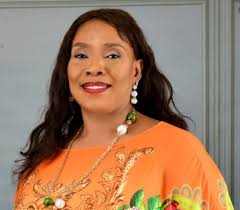
It would be recalled that when Zenith Bank Plc, one of the leading commercial banks in Nigeria, announced the appointment of Dr Adaora Umeoji as its Group Managing Director/Chief Executive Officer (CEO), effective June 1, 2024, the announcement was hailed and widely celebrated as a significant landmark. The significance Dr Umeoji’s appointment, which was made public by the bank’s Company Secretary, Mr Michael Otu, is hinged on the fact that Umeoji is the first female GMD/CEO in the bank’s 35 years of existence.
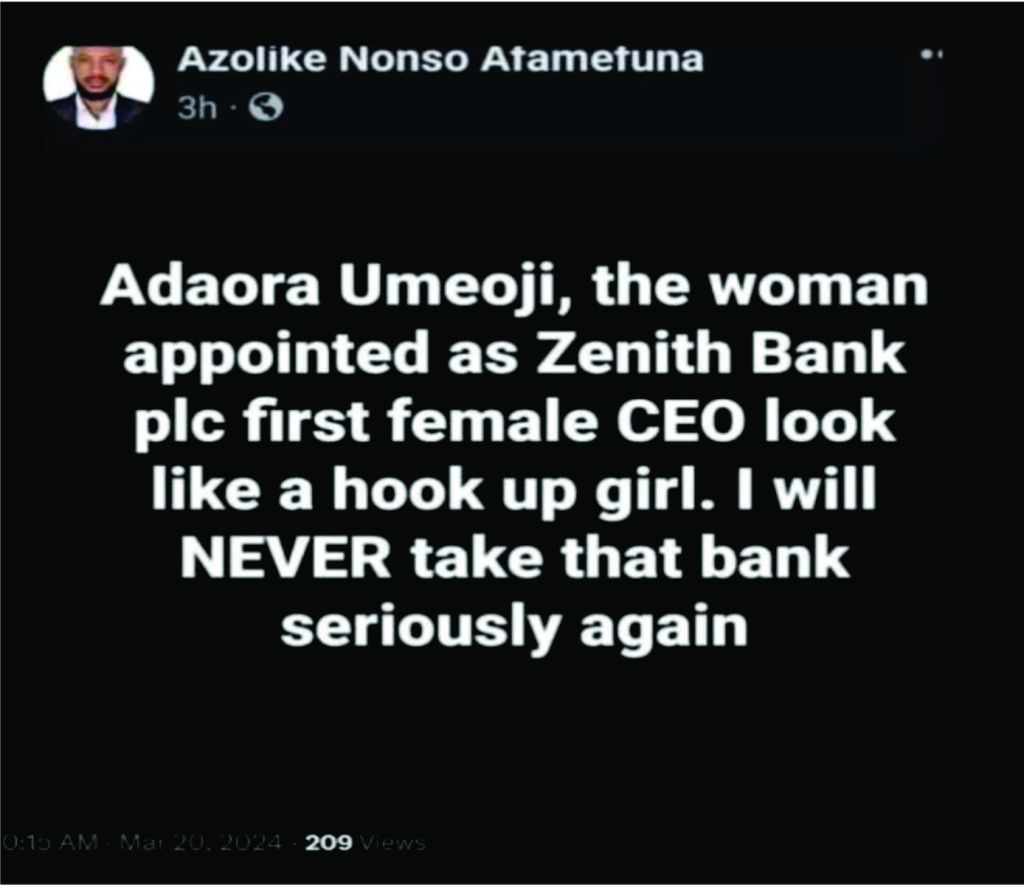
However, the release of the official picture of the new CEO was to become a subject of misogynistic statements by some persons online, among which was a post by a Facebook account holder by the name Azolike Nonso Afamefuna. The crux of the matter and the grouse of the Facebook post made by Afamefuna, on March 20, 2024, sequel to the announcement of Umeoji as the CEO of Zenith Bank was that she was ‘too beautiful’ to be a professional banker. Discarding her professional qualifications and experience, the post had insinuated that Dr Adaora Umeoji’s emergence as the bank’s CEO was because of her beauty and sexual escapades, rather than her professional qualifications or achievements. In the post, which was widely condemned, and which the account holder, later deleted with an apology, Afamefuna had stated that Umeoji looked like a ‘hook-up girl’, (a terminology which generally refers to a lady who is involved in casual sexual relationships).
The analysis of the post, which was one of the case studies referenced in the JFC report, was meant to objectify and demean her, disregarding all her qualifications and hard-earned positions through the management cadre of Zenith Bank to becoming CEO. The post according to the analysis in the report is a misogynistic statement that trivialises her career success and qualifications and as such was meant to reinforce harmful stereotypes that women, regardless of their achievements, are judged by their looks and not their professional competence. Ultimately, the post exemplifies how Misogyny undermines women in positions of power, portraying their presence as diminishing rather than empowering.
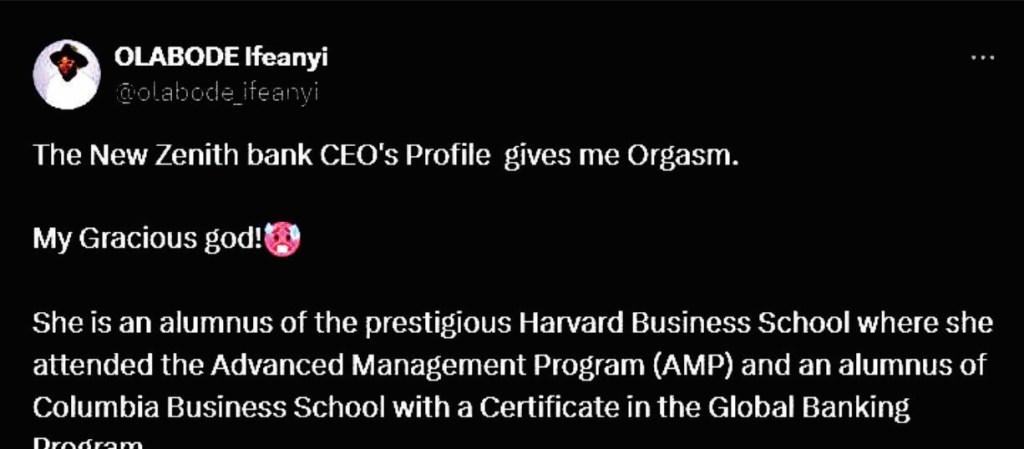
In a related post on X, a post by @olabode_ifeanyi had inadvertently stated that the “new Zenith Bank CEO’s profile gives me orgasm”. Though the content of the post was positive and celebrated the achievement of Dr Umeoji, the sexualisation of the title by the writer was interpreted to have a ‘mysogynistic intent’ by viewing her professional achievements through a sexual lens.
Though he later apologised and deleted the post, claiming that he was excited by the achievements of the newly appointed CEO, some social media users had reacted that the writer would not have used the word ‘orgasm’, if a man with a similar profile were to be appointed as the bank’s CEO.
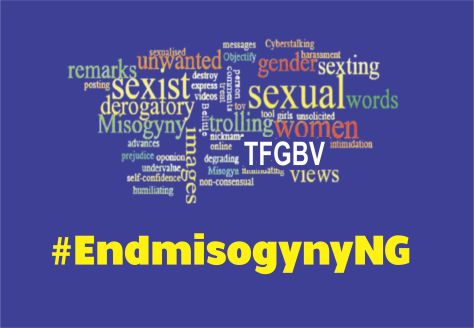
In responding to the emerging indicators, Blessing Oladunjoye, the project officer for JFC Nigeria, under the #EndMisogynyNG campaign initiative noted that Misogyny and tech-facilitated harassment and prejudice against women are becoming prevalent on social media platforms, though unknown by some perpetrators who just see it as catching fun.
According to her, “some of the comments and expressions on social media including sexual remarks, non-consensual posting of sexual images or videos, and related snide posts to demean women, were intentional, and stem from personal ideologies and background”. She lamented that keeping silent or overlooking such acts will continue to fuel the prevalence of Misogyny and TFGBV.
Blessing Oladunjoye
Giving further insight, she stated that the report, which entailed a social media monitoring exercise conducted between January and September 2024 on the trend of misogyny and tech-based GBV revealed that misogynistic content and cyberbullying are majorly spread on Facebook (74.2%), followed by X (formerly Twitter) and Instagram (12.1% each), while TikTok only takes 1.5%.
According to her, the study examined 500 social media posts and identified 66 instances of cyberbullying, online harassment, and misogynistic content directed at women. Additionally, the study found that while some female genders were not exempted from the act, males were the most that posted misogynistic content.
“This makes it clear that misogyny/OGBV are perpetrated largely by the male gender with a representative value of 60.6%, females also participated, representing 16.7%, the undetermined is 9 representing 13.6% and a combination of both males and females was 9.1%”.
She highlighted the widespread discrimination against women in society, especially those who are at the highest levels of their professions and fields of practice, as a serious issue that must be addressed to propel sanity in society, noting the importance of educating the general public about the dangers posed by misogynistic content in society.
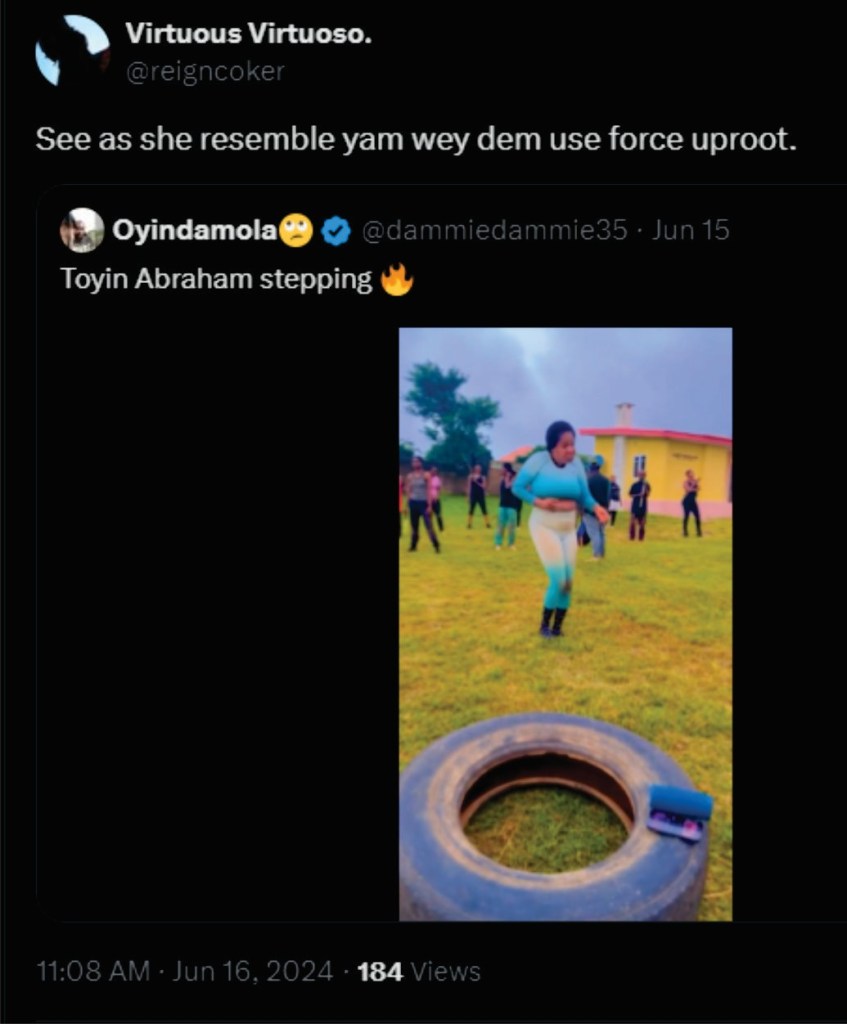
In another inference as contained in the report, Toyin Abraham (a Nollywood actress), in a demeaning and disrespectful manner was objectified with her legs described as ‘a yam that has been forcibly uprooted.’ While the original post which was viral on Facebook and Instagram was that of a short video with the headline, ‘Toyin Abraham shows off her amazing dance steps’ and ‘Actress Toyin Abraham Flaunts her Amazing Dancing Moves!’, the headline used by an X user @reigncoker on the short (7seconds) video post was a headline which was a derisive and deliberate statement to belittle and degrade her, reflecting an underlying attitude of Misogyny and disrespect for her achievements. The choice of words, expressed in indigenous pidgin language objectifies the actress, who was dancing, during what appears to be a work-out/exercise session.
According to the analysis, comparing her leg to ‘yam’, a staple food, is “an unflattering metaphor which is misogynistic and also reinforcing negative stereotypes”.
Other referenced case studies, beyond that of Dr Adaora Umeoji and Toyin Abraham include misogynistic statements against Funke Akindele another Nollywood Actress, and other persons, of the female gender.
Understanding and mitigating Misogyny and TFGBV
There are several general definitions and explanations about Misogyny. While the Collins dictionary defined it as ‘a strong dislike of women’, the Cambridge dictionary defined it as ‘feelings of hating women or the belief that men are much better than women’ and Merriam Webster dictionary defined Misogyny to mean ‘hatred of, aversion to, or prejudice against women’.
Referencing internetmatters.org, the report alluded that misogyny in the online space is largely found in videos, images and forums or comment sections. It includes name-calling or use of slur language suggesting women are lesser than men, or use of vulgar images or photos and content that puts down women.
While Misogyny is generally defined as the dislike, hatred of, contempt for, or prejudice against women or girls, typically exhibited by men, or acts and actions showing feelings of dislike for women, an adaptation of the broad 5 statement of definitions by london.gov.uk explained Misogyny to include acts or attitudes that “objectify women, such as to treat a person like a tool or toy, as if they have no feelings, opinions, or rights of their own; belittle women or girls in conversation, such as using sexist nicknames or using derogatory remarks; seek to control women’s behaviour; use intimidating or humiliating behaviour to destroy a woman’s self-confidence and undermine her; treat women differently from men in social and professional settings; and pursue/express unwanted sexual comments or advances on women.
Tech-Facilitated Gender-Based Violence (TFGBV) on the other hand is described as “the form of gender-based violence which is predominantly carried out online, on digital spaces/platforms. It can be described as targeted harassment and prejudice against women through technology-based, online channels or platforms.”
According to Mrs Ugonma Cokey, the Vice President of JFC and the focal lead of the #EndMisogynyNG Project, cyberbullying of women as a form of tech-based gender-based violence is on the rise. She noted that data from research and Focus Group Discussions (FGDs) with about 100 people, including female journalists, students from tertiary institutions, professionals and men, has exposed that there are syndicates of online predators whose mission is to cyberbully women, noting that this validates general perspectives that women are often harassed and objectified in their lines of profession and through sexual text messages, and social media posts/contents to misrepresent and dehumanise the female gender.
Ugonma Cokey
“Women seeking leadership positions in their career advancement are frequently stigmatised as a result of societal male dominance. Women with disabilities are also the victims of online gender-based violence as they encounter profiling by the members of the public while they also receive sexual advances from the opposite gender”, she noted.
Mrs Cokey emphasised the importance of collaborating with men for strategic role-playing to combat misogyny and tech-based gender-based violence against women, as the majority of the content is perpetuated by the male gender.
Impact of Misogyny, TFGBV and need for collaborative actions
The increasing attacks on women on social media and other platforms are taking a psychological and emotional toll on the victims, as “it tends to force women to conform to societal pressures, often against their will,” Mrs Funmi Falobi, a mass communication lecturer and gender advocate, lamented.
“Mysogyny and TFGBV often targets women and this breaks the willpower of women and reduces women’s participation and contribution in society.It causes psychological harm, leading to a defeatist attitude and stalled ambitions. It limits the potential of women and can destroy ambition, conforming women to societal stereotypes. It also leads to depression, suicidal thoughts, and stigmatisation”.
Funmi Falobi
Suggesting the mitigation strategy to challenge tech-based gender-based Violence, Mrs Falobi, who is the coordinator of the Initiative for social Impact and Sustainable Development (ISISD) as well the gender expert for the JFC #EndmisigynyNG movement called for increasing awareness and more collaboration among civil society stakeholders to stem all forms of attack against female gender across the social strata
She noted that everyone, including the media, has a key role to play.
“Promoting responsible social media practices and collaborating with institutions to create awareness are essential steps in mitigating misogyny and TFGBV. Increased media reporting on the issues and encouraging storytelling to educate others are vital in the fight against misogyny, TFGBV and indeed any form of repression of the rights of women/girls.”
She also urged journalists and the media to report on women’s issues with an inclusive mindset and without prejudice, and to refrain from using sexist language when disseminating information, as this could further encourage misogyny in society.
Mr Lekan Otufodunrin, JFC President and the Project Coordinator, also urged journalists to maintain professionalism while doing their jobs and prioritise peace consciousness when reporting issues around gender-based violence.
Lekan Otufodunrin
He noted that journalists have powerful roles to play to reshape perspectives in society, both online and offline and as such, it is imperative for them to focus on the narratives that will create positive impacts on society generally.
He noted that the issues around Misogyny and TFGBV are of global concern and as such, the initiative by JFC Nigeria as a member of the WACC Africa membership network is a pilot scheme that calls for broader stakeholders’ involvement in focusing on achieving the priority purpose of providing information, assessing trends in manifestation and taking mitigation actions to address emerging incidences of gender discrimination and rights repression within the online/digital space.
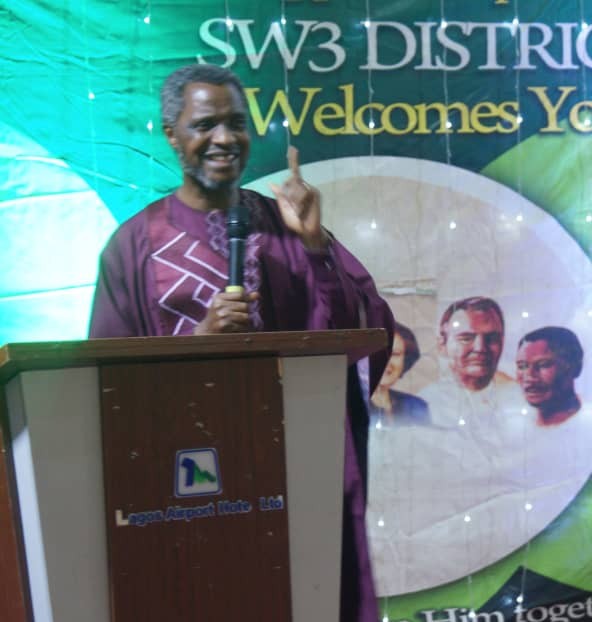
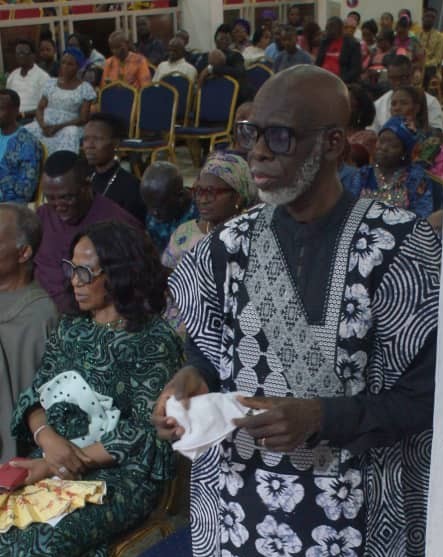
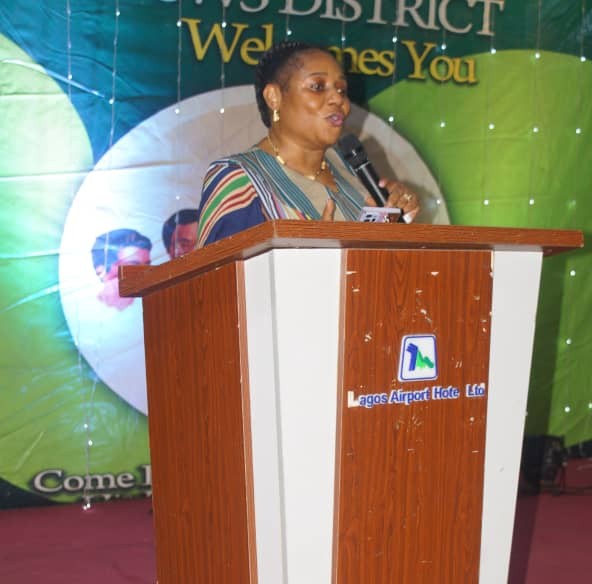
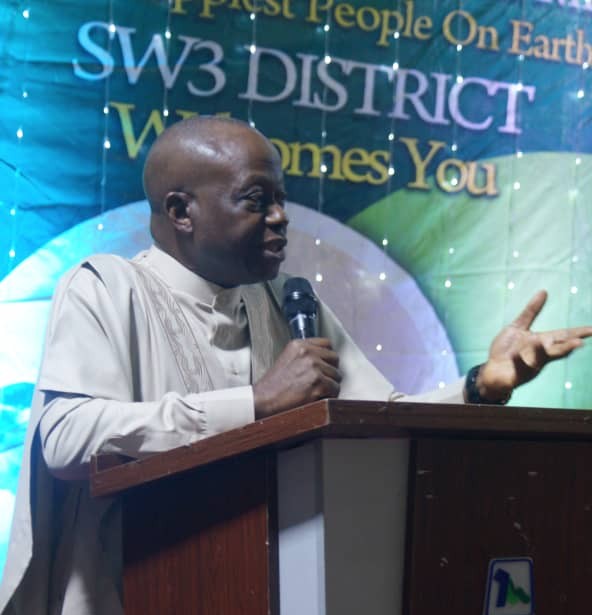
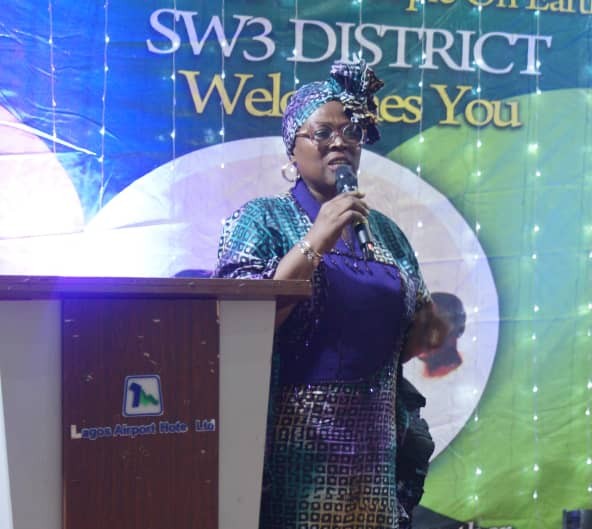
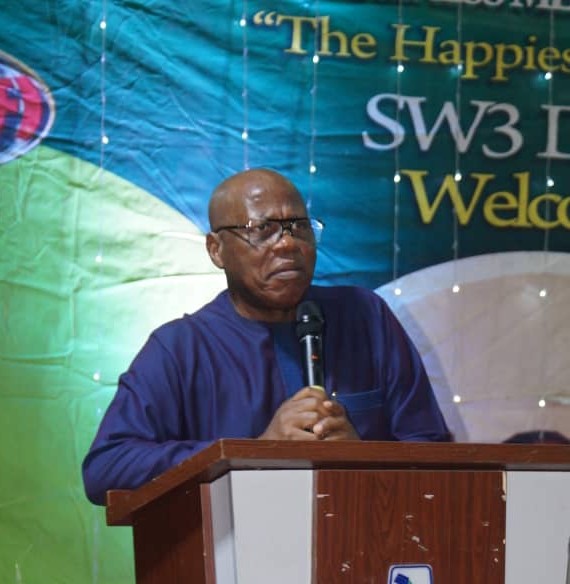
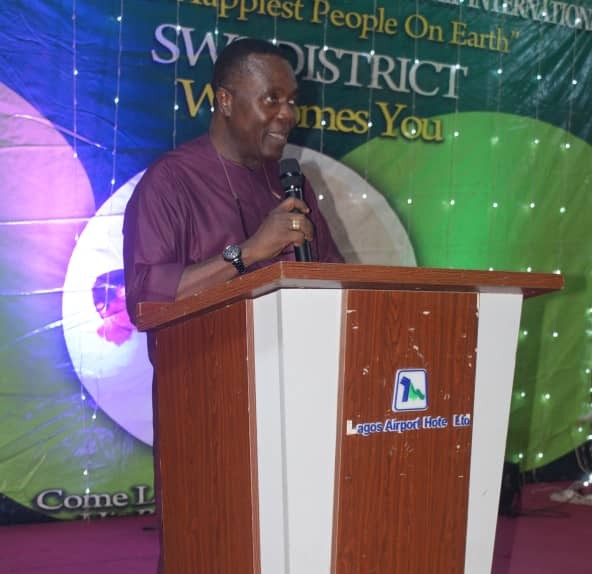
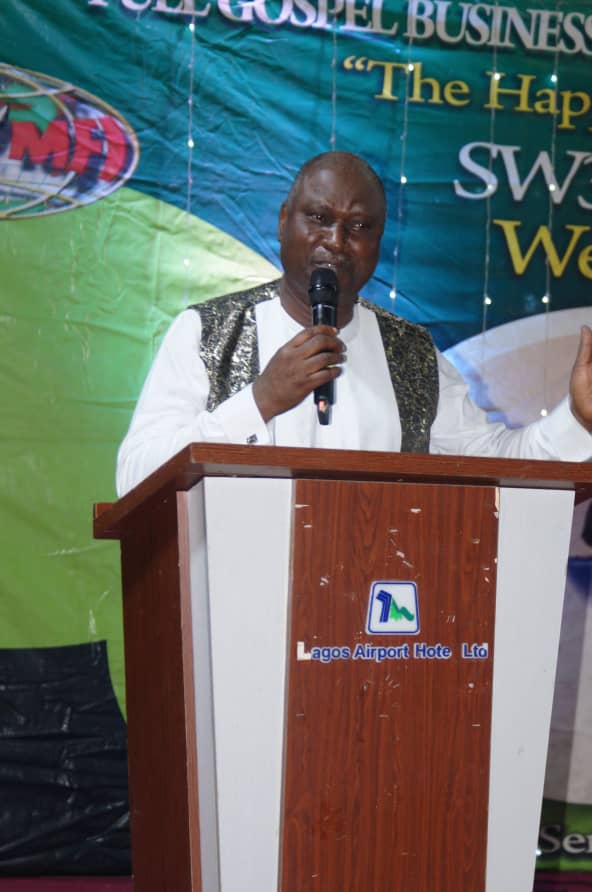
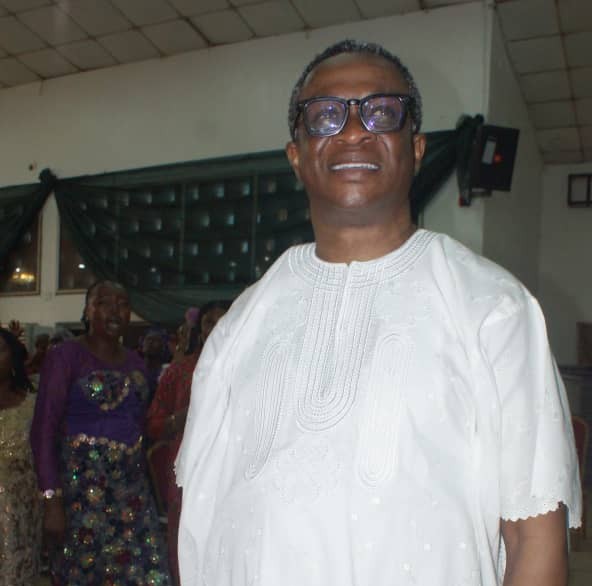
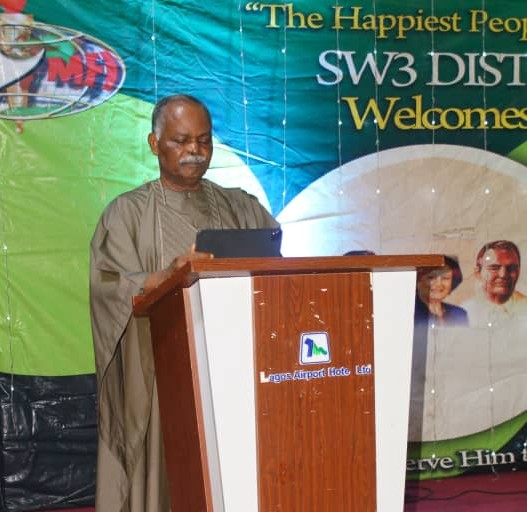
When faith embeds business in an atmosphere of praise, it creates a powerful synergy where spiritual principles and professional endeavours align. That was what played out as Mr. Sunny Beyioku, District Coordinator, South West 3 of the Full Gospel Businessmen’s Fellowship International, led accomplished career and business men in praising God at the International Praise Day 2025 which held on Saturday, February 8, 2025 at Airport hotel, Ikeja, Lagos.
Gratitude to God, fellowshipping for greater impact
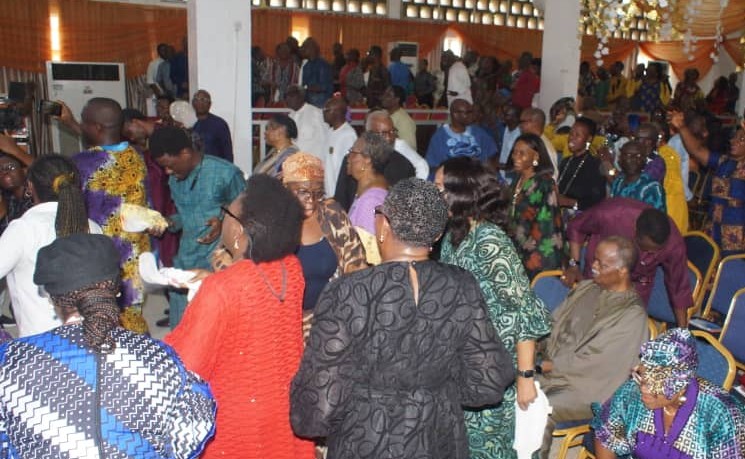
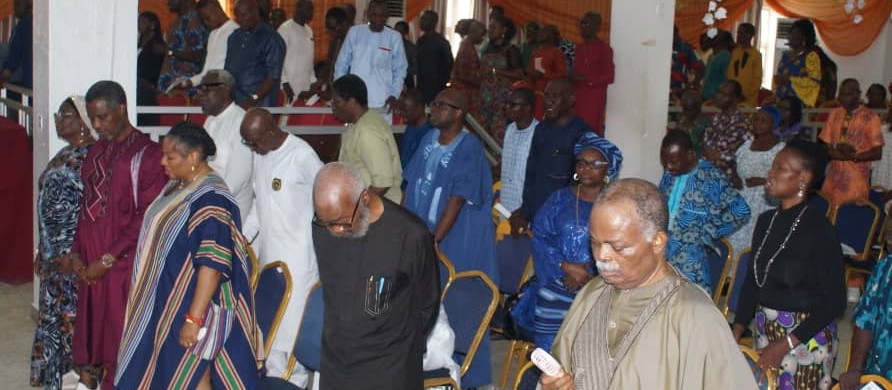
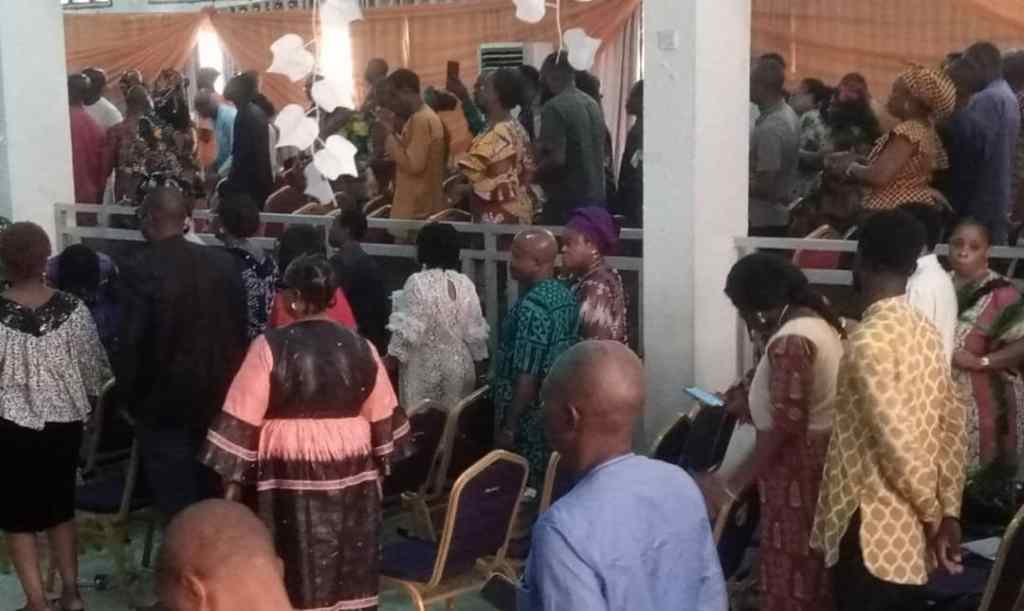
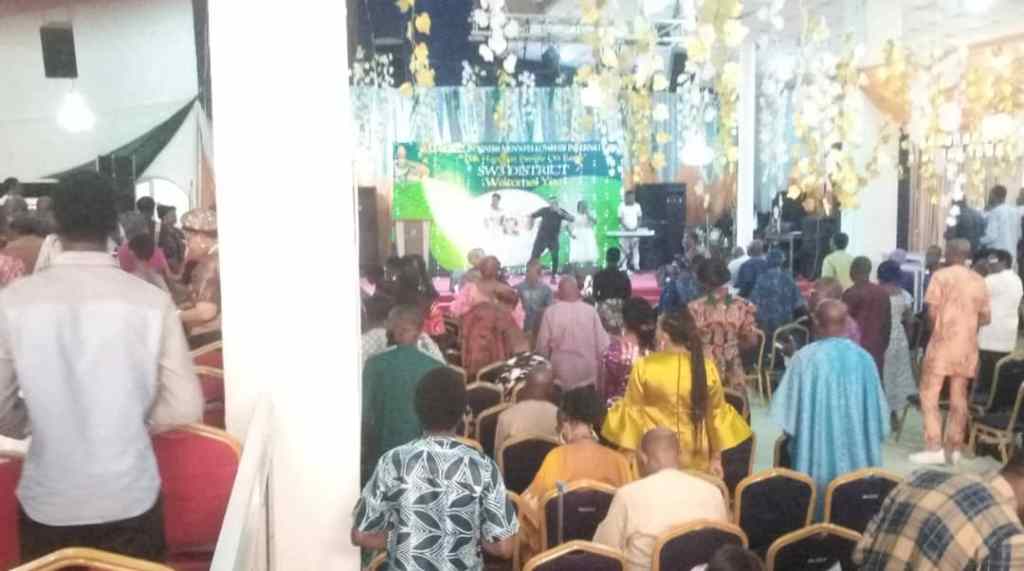
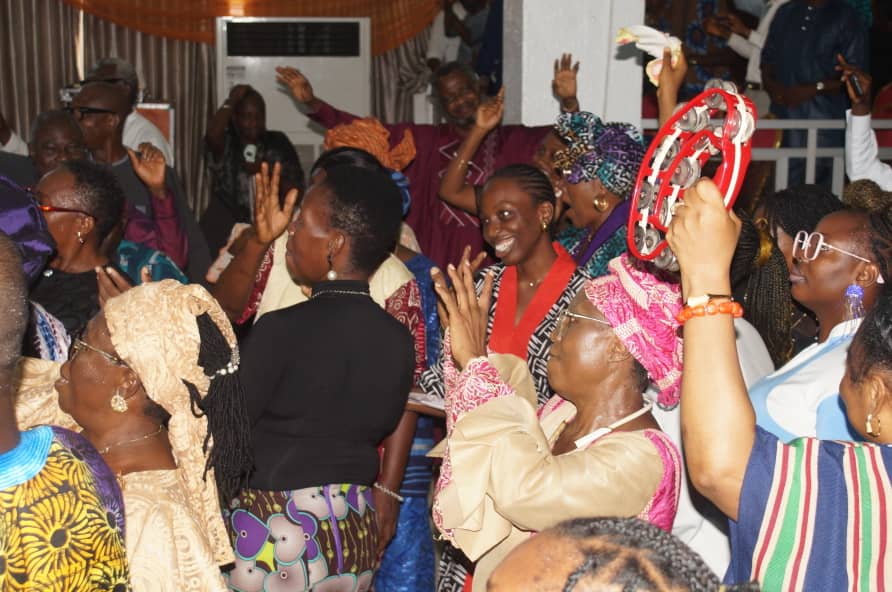
The event, which brought together entrepreneurs, business leaders, and professionals from across the city for a transformative day of worship, inspiration, and empowerment was a powerful fusion of faith and business, including series of heartfelt testimonies, intermittent prayer sessions, electrifying praise and deep worship sessions in appreciation to God for His faithfulness over the past year, while also thanking Him in appreciation ahead of wonderful things to manifest in the new year.
The event also provided the opportunity for the consolidation of friendship, networking, fellowship and strategic business connection under an atmosphere of worship and prayer within the fold of members across several chapters.
Joy overflowing as men danced to the lyrics, hymnals and worship sessions
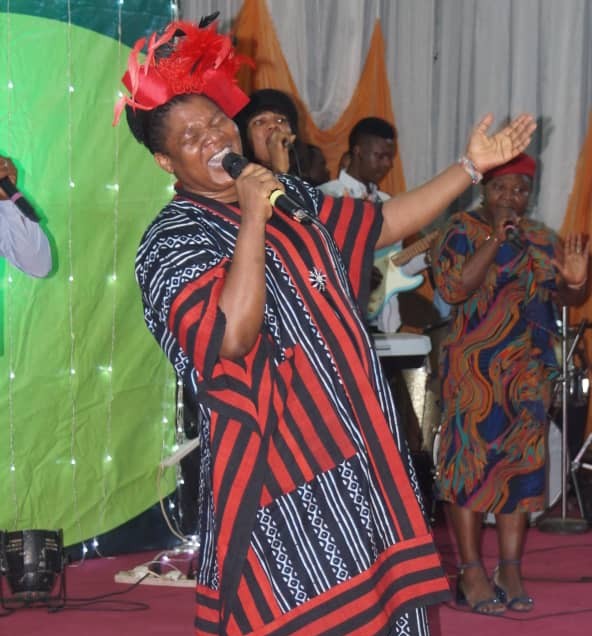
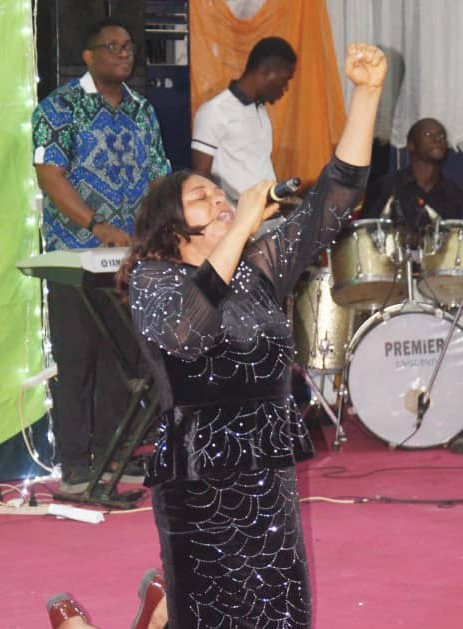
It was a ‘no-holding-back’ session as men, not minding their social status, positions or financial prowess danced and swayed to the rhythm and beat of melodious songs and high praises by renowned Gospel Artists which included Bukola Bekes, Dancia Ngozi and Joy Ogbetere.
Bukola BekesDancia NgoziJoy Ogbetere
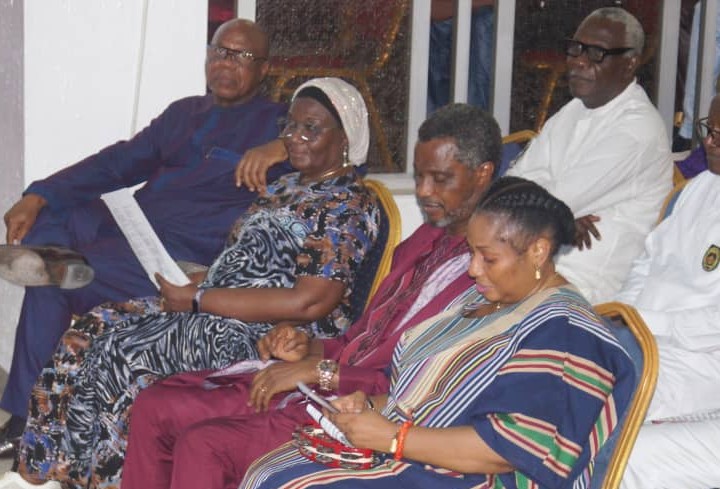
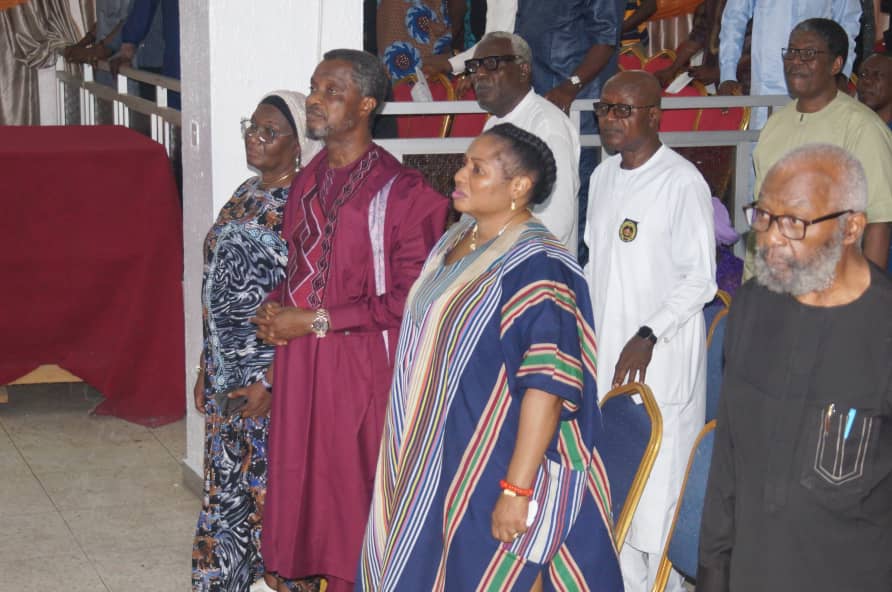
Dancing to the melody and serving as anchors of sessions and as persons executing tasks at the event were accomplished and distinguished businessmen, career professionals and leaders across 17 zones and almost 100 chapters under SW3, most of whom were present with their wives. They include: Dr. Wole Olufon, Engr. Charles Aladewolu, Ambassador Tony Ewelike, Engr. Banjo Adeyoju, Mr. Fola Aguda, Barr. Tunji Omole, Pharm. Ifeanyi Atueyi, Sir. IK Onyemekara and Pharm. Jude Elue.
Others were: Mr. Biola Ayeni, Engr. Femi Adesanya, Mr. Akin Oluwole, Mr. IK Obazee, Dr. Dapo Collins, Dr. Taiwo Makinde, Engr. Titus Abiola, Dr. Muna Chira, Dr. Kehinde Makinde and Engr. Olasina Giwa, among others.
The annual international praise day is a way of ushering members into the new year, thanking God for His wondrous works, what He has done and the anticipations of greater things in the new year. It is to be noted that the members of FGBMFI, who are also called the ‘Happiest People on earth’ is not only for men, as women are well integrated to play strategic roles under the Ladies of the Fellowship (LOF) platforms, hence the event had women; wives of members and other guests in attendance.
Sharing insights and a testimony about his work and membership as a member of FGBMFI for over 30 years, Engr. Charles Aladewolu related the vision of the founder of the Full Gospel Business Men’s Fellowship International (FGBMFI), Demos Shakarian, who upon receiving the vision of the FGBFMI in 1952 had to go through phases of trails and undertook intense prayers, seeking the face of God for intervention in manifesting the vision. According to Engr. Aladewolu, he too had to depend on God upon his election as Vice president of a chapter and then later as president, when he became a member, some 30 years ago.
Engr. Charles Aladewolu
“The person who brought me to the Full gospel fellowship about 30 years ago is my friend who is still with me today. God used him to bring me to the fellowship and since that time, till now, God has been faithful in taking me from one height of accomplishment to the other” he said.
Looking Ahead
FGBMFI SW3’s Praise Day 2025 has undoubtedly set the tone for a new year of faith-centered business practices. The event demonstrated that when faith is embedded into business environments, it leads to greater prosperity, ethical leadership, and, most importantly, a deeper sense of purpose.
As the event wrapped up, attendees left feeling renewed, inspired, and ready to take on the challenges of their industries, armed with both faith and renewed mindset to accomplish greater success in respective endeavours.
With the 2025 Praise Day event, FGBMFI chapters under SW3 are now buoyed and inspired to commit to greater service in implementing chapter programmes and initiatives and advancing the gospel under the unique mandate of the FGBMFI principles, in both the marketplace and the communities.
Here are snapshots of pictorial and video highlights.
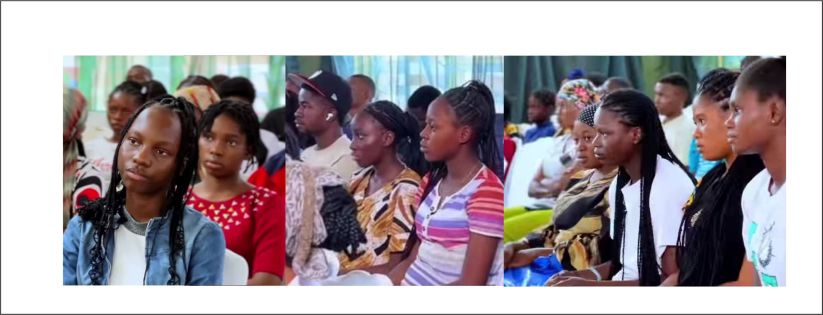
About 250 students from communities across Oriade Local Government Area of Osun state are on the edge of having their aspirations for tertiary education fulfilled, courtesy of the Ogbeni Olajide Awe Foundation (OOAF), which, as part of its educational advancement initiatives shall be purchasing and donating UTME forms to 250 students that will be writing the 2025 JAMB exams. The initiative, which is up-scaling the previous year’s gesture where about 100 UMTE forms were purchased for indigent students is part of the foundation’s commitment in advancing education for the youths.
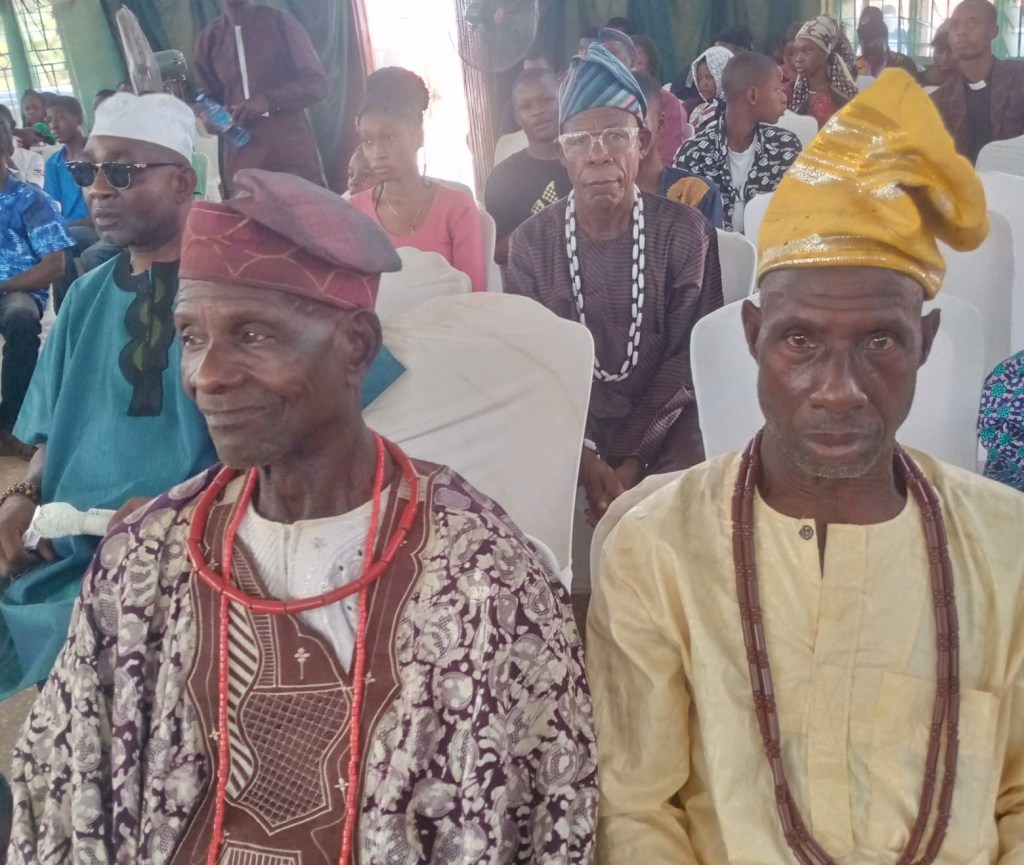
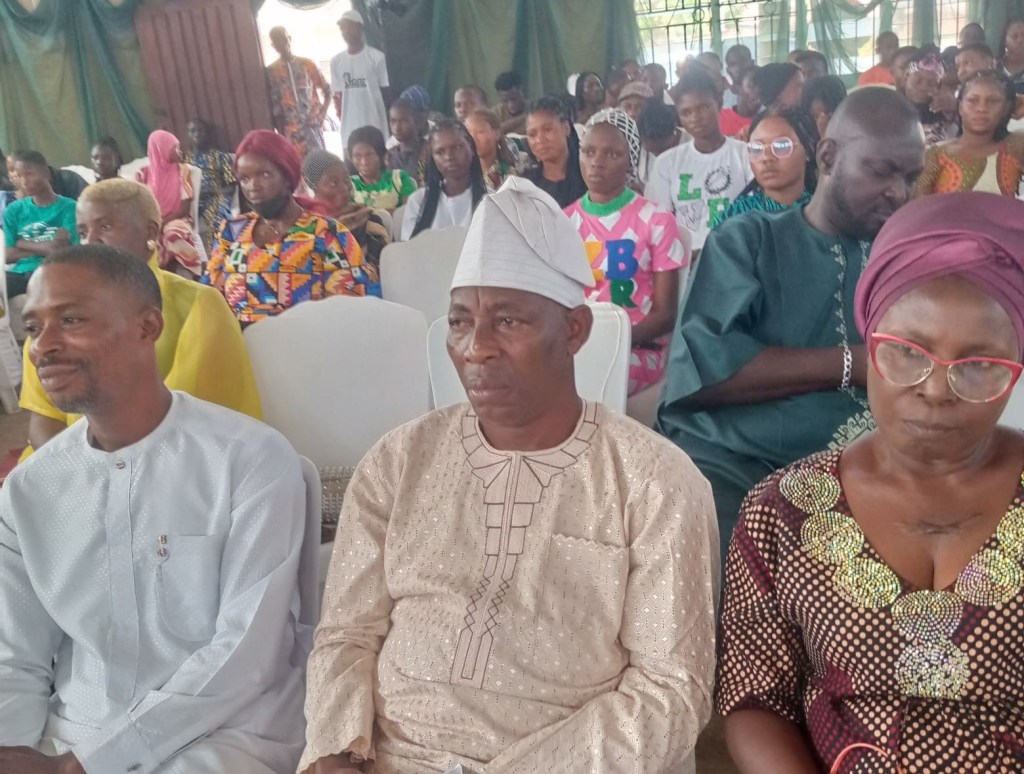
The event, which was also organised as part of the official physical launch of the Ogbeni Olajide Awe Foundation, held at the auditorium of the Youth Empowerment Centre, in Iwoye Ijesa, Oriade Local Government Area of Osun State.
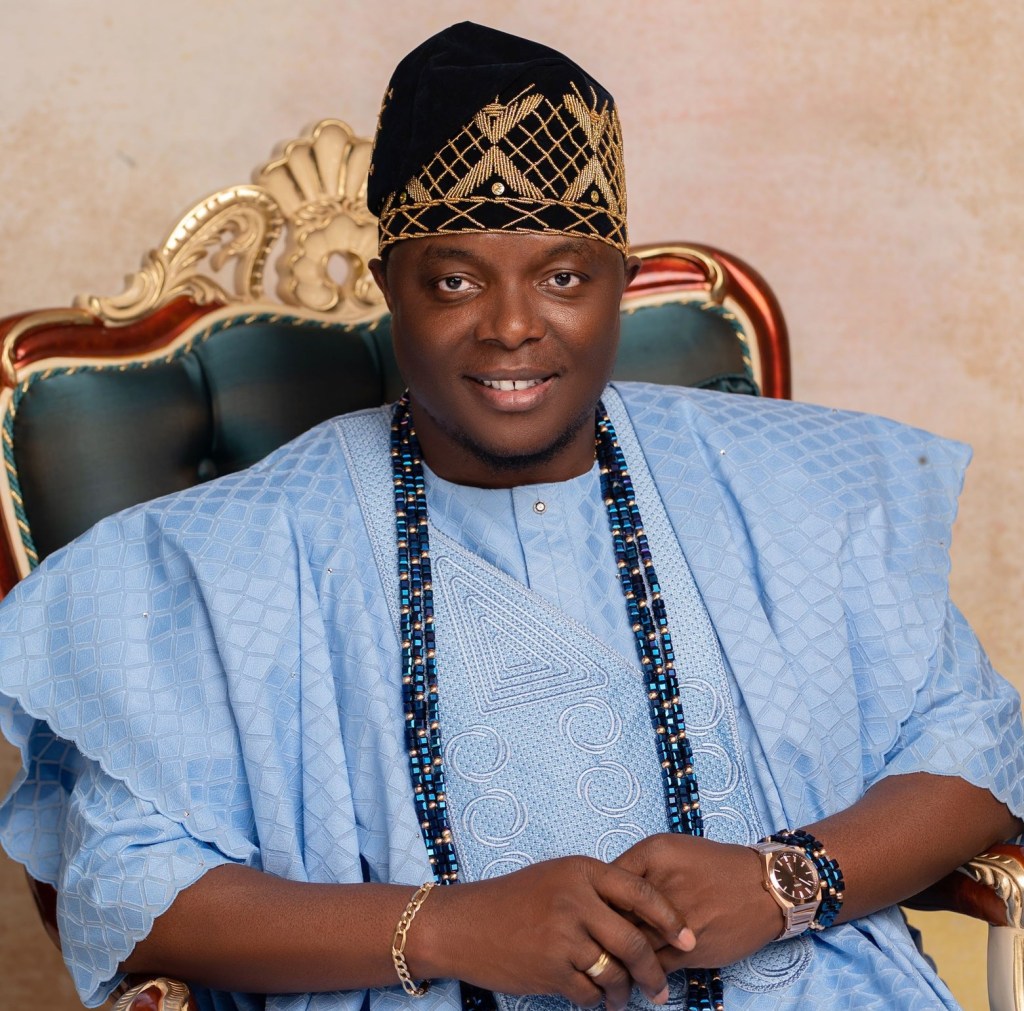
According to the founder of OOAF, Olajide Awe, who was subsequently honoured with the Chieftaincy title of Ariwajoye of Iwoye-Ijesa, by His Royal Majesty, the Oniwoye of Iwoye-Ijesa Kindgom, Oba Ogidiolu Amos Adewumi, Otokobo II, the foundation’s intervention is aimed at bridging gaps in access to education, alleviate poverty, and inspire hope through impactful initiatives.
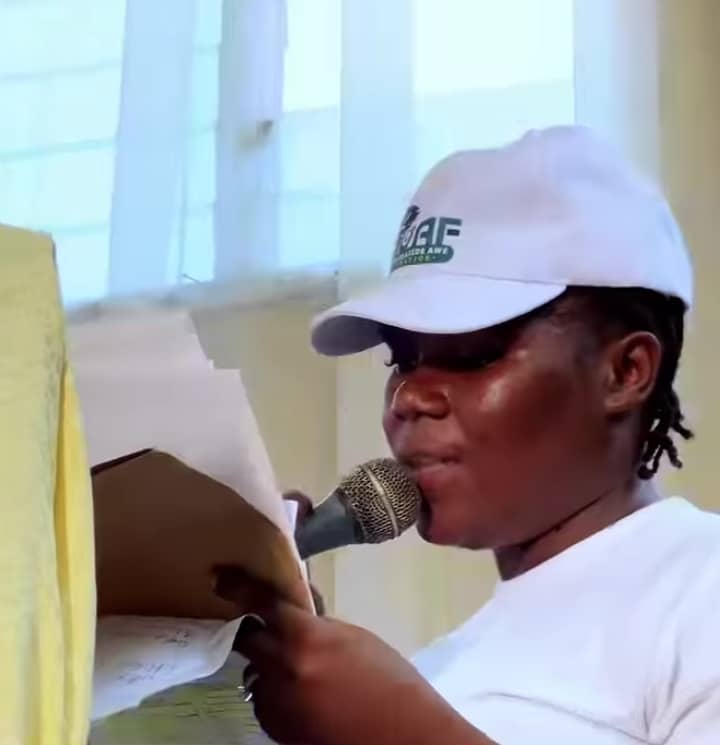
“It is with a heart full of gratitude and humility that I stand before you on this momentous occasion for the physical launch of the foundation. Today, we gather here not just to celebrate an achievement but to reaffirm a commitment to a purpose much greater than ourselves: the empowerment and education of young minds in our community. First and foremost, I give all glory to God for His grace and favour that have made this day a reality”, he said.
OOAF founder, Olajide Awe
Olajide Awe noted that the gesture, is a way of giving back to society and that the initiative aligns with his tradition of celebrating his birthday, which falls due annually on January 3.
He added that the initiative is to contribute in easing the financial burden on families and as well inspire students to pursue academic excellence.
In his welcome speech, he noted that the OOAF was birthed with a simple, yet profound mission: to empower lives and bring smiles to faces, particularly through education without any political undertone.
“Education is the cornerstone of progress, the tool that transforms individuals and uplifts communities. It is our firm belief that by investing in education, we are building a brighter and more prosperous future for all. Education is not a scam. After carefully observing those deprived of education, analysing those who have experienced the transformative power of schooling, and interacting with passionate learners, I have realised one thing—if there is anything worth pursuing in life, it is education’, he said.
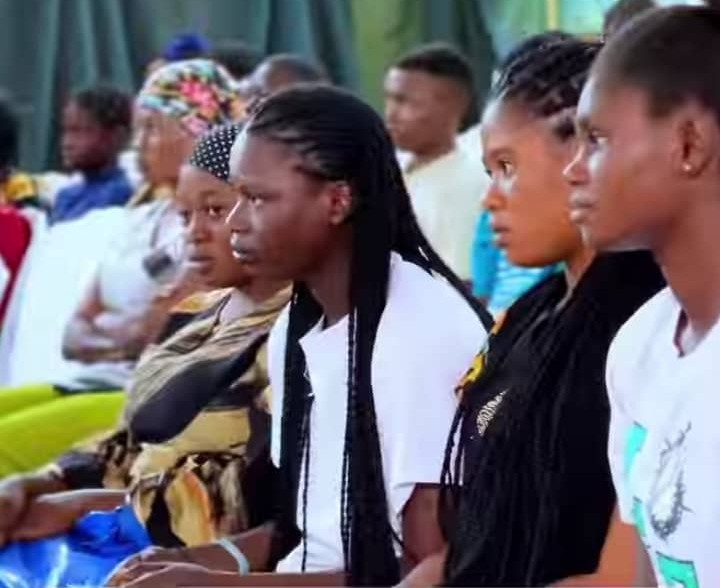
Cross-section of beneficiaries
“In January 2024, during the virtual launch of this foundation, we provided 100 UTME registration forms to deserving candidates and supported them with tutorials. Today, as we mark this physical launch, we are proud to distribute 250 UTME registration forms, ensuring more young minds have access to opportunities that can shape their future.
“However, we cannot do this alone. This is a mission that requires collective effort. I invite everyone here—our traditional rulers, clergymen, distinguished guests, my network of friends, and community members—to join hands with us on this journey. Your support is vital. Together, we can break barriers, create opportunities, and build a brighter future for the next generation. This is a movement powered by hope, fueled by education, and strengthened by community. Join us as we transform lives—one student at a time”, he added.
Overwhelmed and surprised by the unexpected and unanticipated honour bestowed on him as a Chief, the Ariwajoye of Iwoye-Ijesa expressed his gratitude for the support of the royal fathers and other eminent personalities who graced the occasion.
“I appreciate the presence of your Royal Majesty, The Oniwoye of Iwoye Ijesa Kingdom, Oba Ogidiolu Amos Adewumi, Otokobo II; Your Royal Majesty, the Owaloko of Iloko ijesa, Oba (Dr) Akeem Olusayo Ogungbangbe, Ajagbusi Ekun VI; Your Royal Majesty, the Onitegun of Itegun Ijesa, Oba Oluwaseyi Ogunniyi, and Your Royal Majesty, Elegboro of Ijebu Jesa, Oba Engr Moses Olufemi Agunsoye, Abikehin Ekun.
Connected by Royalty; the Owaloko of Iloko ijesa & the Oniwoye of Iwoye Ijesa Kingdom
I also appreciate the presence of the Iwoye-Ijesa Council of Chiefs, the Clergymen present, our distinguished speakers, my beloved mother and dear family members, all student bodies, beneficiaries, and members of this great community”, he added.
The Oniwoye of Iwoye Ijesa Kingdom, the Onitegun of Itegun Ijesa & OOAF Founder
Meanwhile, the Coordinator of the Foundation, Elizabeth Bamisaye, who is in charge of the registration of students under the scheme, noted that the foundation as a non-governmental, non-profit organization is solely launched to help provide for the less privileged in all sphere of life.
“We would be touching the young and the old as we further progress in life. We are presently starting with students who are done with secondary school and looking forward to writing UTME in 2025. We would register them, tutor them, and give them guidance in their choice of schools and discipline,” she noted.
She added that the foundation has recorded some testimonies.
Elizabeth Bamisaye
“Last year, we obtained JAMB forms for about 70 students and guided them through tutorial classes. As a result, we achieved notable successes. If I am not mistaken, in the entire Oriade Local Government Area, one of our students achieved the highest score of 262, along with other impressive scores such as 251, 245, 236, and 228, which rank among the best results last year. Several of our students also gained admission into higher institutions. So, without a doubt, there are indeed testimonies.
“There are also testimonies from the parents and guardians, including the Oniwoye of Iwoye Ijesa, Oba Amos Adewumi Ogidiolu, Otokobo II, who stated that providing JAMB forms free of charge is one of the successes achieved under his reign as king”, she added.
Giving his perspectives, Michael Babayemi, President of the Federation of Iwoye Ijesha Students’ Union noted that he would be glad to be part of the expected impact of the initiative.
“The programme, being the first of its kind, was really impactful. I’ve not had students message me about a particular course (JAMB) for a long time now, but they’ve been doing that now.
Elizabeth Bamisaye and Michaeal Babayemi
Judging from last year’s results, it has helped lots of students and I believe this year’s will be better than last year’s. I have been responding to the students and telling them the right desks to submit all they need to submit.
If there’s any area I can be of help, I’ll gladly render my assistance/help,” he added.
According to the programme statement of the foundation, other initiatives ahead, apart from educational support shall include skill acquisition, capacity building, and community development projects.
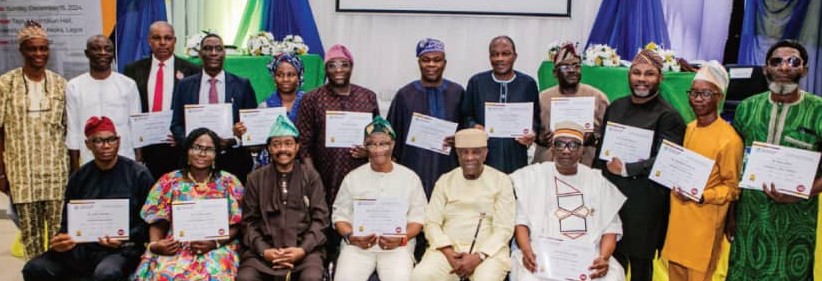
The University of Lagos (UNILAG) Alumni Association has been reconstituted to achieve greater advancements. This is coming on the heels of the election of new National Executive Council (NEC) members at the 2023 Annual General Meeting (AGM) held at the Tayo Aderinokun Hall, UNILAG, on Sunday, December 15, 2024.
The election, which was part of the AGM confirmed Engr Ifeoluwa Oyedele, FNSE, FAEng, re-elected to steer the Alumni affairs for the next two years as President (Wordwide). The AGM, attended by alumni members, both physically and virtually, also served as the inauguration ceremony for the 15 new NEC members tasked with running the affairs of the UNILAG Alumni Association.
According to a statement by the National Publicity Secretary, Mrs Funmi Falobi, the unveiling of the new NEC was sequel to the submission of the reports of the search and electoral committees, respectively, noting that the search committee which had Dr John Momoh, OON, NPoM, as Chairman, produced officers for the position of National President (worldwide), the Vice President 1 and National Secretary, while the electoral Committee, which was chaired by Asiwaju Dr Michael Olawale-Cole, CON, MFR , supervised the elections of officers for other positions.
The statement noted that while the tenure of the National President, Vice President 1, National Publicity Secretary and National Social Secretary was renewed, other members of the NEC assumed new roles.
UNILAG Alumni NEC, 2024-2026
The 15-member 2024-2026 UNILAG Alumni national officers include Engr IfeOluwa Oyedele, FNSE, FAEng, President (Worldwide); Chief (Dr) Bala Yesufu, National Vice President 1; Mr Lekan Ajisafe, National Vice President 2; Barr Bayo Osikoya, FCIArb, National Secretary; Mr Olumide Akinola, National Assistant Secretary; Mr Abayomi Owoeye – National Treasurer; Mr. Adeyemi Ayadi – National Internal Auditor; Mrs Yetunde Moriamo Shitu, National Financial Secretary; Prof Olugbenga Akingbehin, National Legal Adviser; Mr Francis Shonubi, National Social Secretary and Mrs Funmi Falobi, National Publicity Secretary.
The others are Mr.Tope Smart, Mr Olalekan Fatodu, Mr Bala Abdul and Dr Abdul Gbadamosi, who are to serve as National Ex-Officio Members.
In a remark sequel to the inauguration ceremony, the President (Worldwide), Engr. Ifeoluwa Oyedele, FNSE, FAEng, commended the Search and Electoral Committees for a job well done, while calling on Akokites home and abroad to become more involved in the Association in order to take it to greater heights.
Engr Ifeoluwa Oyedele, FNSE, FAEng
“Your physical presence at the University of Lagos, as well as the attendance by online participants to be part of the AGM, demonstrates your unflinching support and trust in the administration as we strive to take our alma mater to greater heights. We extend our gratitude to the Search and Electoral Committees for a job well done in advancing the course of our association”, he said.
Appreciating the members for attending the AGM, he noted: “This remarkable turnout is a testament to the enduring spirit of excellence and unity that defines us as Akokites. Your enthusiasm and unwavering dedication are an inspiration for us to continue building on the solid foundation of our shared history.
“As the new tenure begins, we look forward to your cooperation, support, and constructive feedback that will spur our association to greater advancements”, he said.



















 Social Development News (SDN)