USAID supports university to advance education, employment for deaf youth

By sdnonline

The U.S. Agency for International Development (USAID) awarded a three-year, $2.05 million grant to Washington, DC-based Gallaudet University to support initiatives to advance education, employment, and life opportunities toward the empowerment of deaf, hard of hearing, and deafblind children and youth in Nigeria.

In collaboration with its partners, the Nigerian National Association of the Deaf (NNAD) and Wesley University, Ondo, Gallaudet will manage the implementation of the Strengthening Education Systems and Local Capacity of Deaf and Hard of Hearing Nigerians (Deaf-E3) activity.

Deaf-E3 activities include: Capacity building: Discovering Deaf Worlds, a U.S-based international deaf advocacy organization, and NNAD will conduct an initial needs assessment and stakeholder survey to identify NNAD’s organisational capacity priorities and design training modules to enhance the advocacy, leadership, and organisational capacities of NNAD and its stakeholders.

Also, training educational professionals on multimodal/multilingual pedagogical approaches to education. This research-based activity will identify best practices and identify effective training methodologies and assessments, with the goal of producing a pedagogically deaf-centric, barrier-free, and multimodal/multilingual educational programming for deaf children. The activity will produce two manuals on multimodal/multilingual approaches that can be used by educational professionals nationwide.

Similarly, promoting best practices related to general and educational interpreting within a Nigerian context. A working group of deaf leaders and Nigerian Sign Language (NSL) interpreters will create and disseminate guidelines to effective communication by enabling deaf consumers and NSL interpreters to work more collaboratively.

Equally, collaborating with USAID and its partners to increase capacity to engage with deaf, hard of hearing, and deafblind stakeholders nationwide.

This activity was inspired by Dr. Isaac O. Agboola, a beloved Gallaudet alumnus, faculty member, and dean who passed away in 2017. Dr. Agboola had a long-held dream of self-determination for the Nigerian deaf community.

“Dr. Agboola wanted to bring Gallaudet home to Nigeria, and Deaf-E3 fulfills that wish,” said Dr. Khadijat K. Rashid, Gallaudet’s Interim Dean of the Faculty.

“Gallaudet has welcomed students from Nigeria for many years, and in fact, there are more Gallaudet alumni from Nigeria than from any other country outside the U.S. and Canada. We look forward to building on these relationships, and to collaborating with deaf, hard of hearing, and deafblind leaders and community members in Nigeria to foster awareness, advocacy, education, and employment.”

Chidi Olujie, President, the Nigerian National Association of the Deaf, said, “I extend my great appreciation to everyone who worked on this project. We would not have come this far without our shared commitment to creating a conducive learning environment for deaf Nigerians and their families. We expect this project to have a long-term, positive impact on the Nigerian deaf community’s education, empowerment, and employment.”

Gallaudet University, federally chartered in 1864, is a bilingual, diverse, multicultural institution of higher education that ensures the intellectual and professional advancement of deaf, hard of hearing and deafblind individuals through American Sign Language and English.

REPLACE, ROLAC initiate measures on access to justice for women, PWDs

By Funmi Falobi

No doubt, women, children and people with disability are the most vulnerable groups in any society. Many a times, their rights are often infringed upon while many do not have access to justice. In the case of arrest, detention and trial, these vulnerable groups suffer human rights infringement.

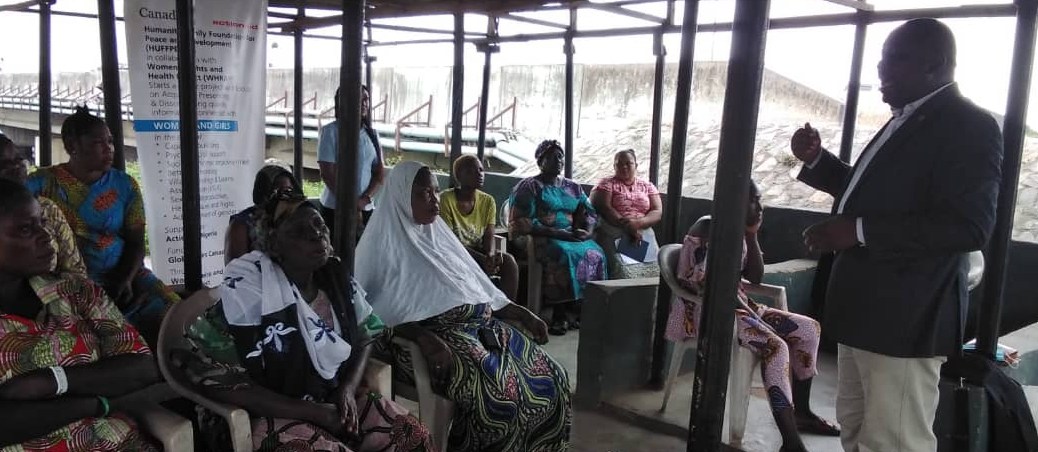
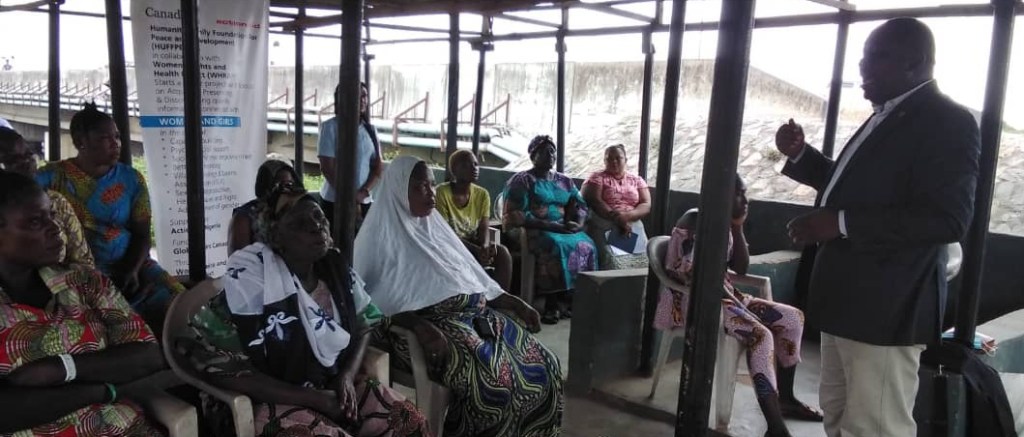
In order to bring to the fore the injustices vulnerable people go through and ensure that their rights are protected, the Rights Enforcement and Public Law Centre (REPLACE) with support of Rule of Law and Anti-Corruption (ROLAC) has held a consultative meeting with civil organisations on “Access to Justice for Vulnerable Persons.”

The seminar focused on the importance of the Police Duty Solicitor Scheme (PDSS) and how to ensure the scheme become effective and implemented across the country to ensure access to justice for women and people with disability.

According to the Executive Director, REPLACE, Felicitas Aigbogun-Brai, there is need to change the narrative on how the police treat women and PWDs arrested. “In detention, there should be provision of sanitary pad for women. The way you treat a woman is different from man. People should be treated with dignity,” she said.

She explained that the seminar became imperative in order to get the input of people on the field in providing legal services for women, PWDs based on their knowledge and to give robust document to the police.

On how PDSS has effected change in the legal system, Aigbogun-Brai said “there is now Family Support Unit in Lagos police. There is a slight change in how they treat victims of domestic violence and sexual offences, but for others, no change.”

Similarly, Chibogu Obinwa, ROLAC Gender Specialist said the organisation believes in human rights especially that of women and PWDs, hence, the need to look into the PDSS and see how it would assist the work of legal service providers and civil society organisations in ensuring access to justice for vulnerable people.

Delivering her speech, Legal Aid Council, Lagos State Coordinator, Iyabo Akingbade declared that a lot has happened in the legal system in Nigeria and that the police are now on their toes.

Represented by Grace Adenubi, Assistant Director, Legal Aid Council, Akingbade said the essence of the Police Duty Solicitor Scheme is not to monitor the police but to ensure that there is compliance with the rights of the people and to promote legal and human rights of suspects, and not to torture them while in detention.
While stressing that there should be consistence and awareness, she stated that there is police advisory committee to ensure the scheme works, such as “to ensure the law works and that ‘bail is free’ is not only on paper. Doing so will put the police in better light and someone will not be afraid to go to the police station”, she noted.

“Police duty is to cooperate and ensure the scheme works. They are to give access to meet and interview the suspects. Solicitors are to look at the cell environment, whether their rights are being infringed upon. There should be a follow up to know compliance,” she said.

In broadening the discourse, participants were divided into groups to formulate a communique on guidelines for the police on women, PWDs in detention as well as legal service providers.
The organisers noted that communique from the group activities would serve as part of the training document for civil society organisations, the police and senior officers at the station level to spread the awareness to other officers.

USAID partners UNICEF to improve water, sanitation, hygiene in Northwest Nigeria

By sdnonline

The U.S. Agency International Development (USAID) has awarded $10 million (N4.1 billion) over three years to UNICEF to support the Nigerian government’s initiative to improve water, sanitation, and hygiene (WASH) services in Kebbi, Sokoto and Zamfara States in the Northwest.

Known as Improving Sanitation, Hygiene and Safe Drinking Water in Northwest Nigeria, the activity to be managed by UNICEF will provide life-saving WASH services to more than 300,000 people in need of assistance.

The assistance will help to build community-centered approaches to deliver, operate, and manage sustainable WASH services in rural areas, as well as foster resilience in communities in collaboration with the state governments. It will also help rebuild dilapidated infrastructure and support communities to increase access to proper sanitation, adopt proper hygiene behaviors, and improve water quality.

“USAID is dedicated to ensuring clean water for more Nigerians,” Mission Director Dr. Anne Patterson said. “This new activity with UNICEF will help reduce waterborne diseases to keep more people, especially children, healthy.”

According to the 2019 National Outcome Routine Mapping of WASH services (WASHNORM), 30 percent of Nigerians lack access to basic water services and less than 10 percent have access to safely managed water services. While 44 percent of Nigerians have access to basic sanitation services, 23 percent, or 46 million people, lack access to proper sanitation. Access to safe hygiene facilities nationwide is low, at 16 percent.

In Nigeria, Sokoto and Kebbi states have the lowest levels of access to basic water services at 38 percent and 39 percent, respectively. Access to basic sanitation is also low in Kebbi, Zamfara and Sokoto at 35 per cent, 38 percent, and 41 per cent, respectively. Only five percent of people in Sokoto and one percent in Kebbi have access to safely managed water services.

This shortage of clean water supply, toilets, and handwashing facilities in households across Nigeria presents a formidable challenge. Poor access to WASH services is the major cause of diarrheal morbidity and mortality in Nigeria and is associated with at least 70,000 deaths in children under five each year.

Lessons from the COVID-19 pandemic have also reinforced the importance of adequate and safe water, basic sanitation, and proper hygiene practices to stem the spread of the disease in developing countries, including Nigeria.

“We are extremely grateful for the timely and much-needed WASH support from the U. S. government,” said Peter Hawkins, UNICEF’s Country Representative for Nigeria. “The ongoing COVID-19 pandemic, coupled with prevailing challenges and gaps in WASH services in northwest Nigeria is detrimental to the development of children and rural communities. This assistance is a testament to USAID’s commitment to the children and people of Nigeria.”

USAID distributes 5.2 million storybooks to early primary pupils in Adamawa, Gombe

The U.S. Agency for International Development (USAID) has supported the distribution of supplementary Hausa reading materials – Ina Son Karatu! (I Want to Read! in Hausa) – to 157,000 primary grade learners in Adamawa and Gombe states.

The USAID Strengthening Education in Northeast Nigeria (SENSE) activity, implemented by the American University of Nigeria (AUN), developed the packages for the two states, which contain more than 5.2 million copies of educational reading materials produced with USAID’s evidence-based early grade reading methodology using global best practices.

“Through years of conflict, education in the northeast has been decimated,” USAID Mission Director Anne Patterson said. “Working with AUN, we are helping to rebuild the system by providing materials that employ evidence-based methods to start thousands of children off on a lifetime of reading.”

At ceremonies in Gombe on May 26 and Yola on May 19, each learner received a take-home booklet that contains up to 30 different stories and books at varying levels designed to help them advance their reading competence over a whole academic year. SENSE has encouraged parents to ask their children to read the stories to them after school to further improve their reading proficiency.

Over three years, SENSE will reach more than 200,000 learners, and train and provide teaching materials to 5,000 teachers to improve reading in the Hausa language. SENSE helps enable the education systems in Gombe and Adamawa to deliver accessible high-quality education that responds to the needs of all children.

The SENSE approach to encouraging reading is supported by research on effective methods of teaching reading in the early grades. A USAID-supported study by the American Institutes for Research identifies that the availability of plentiful reading materials in different forms relevant to the reader’s background, language, and interests for independent reading results in significantly higher results.

The SENSE activity has also trained and supplied teachers and learners with Mu Karanta! Hausa teaching and learning materials developed under its sister USAID Northern Education (NEI) Plus activity, and the Reading and Numeracy Activity funded by UNICEF.

Digital security, trauma management panacea to Journalists’ safety

By Funmi Falobi

Journalists perform the important roles of informing, educating and entertaining the public. They are imperative in the development of any society as they serve as the watchdog of the society and voice of the people.

However, they face a lot of challenges in carrying out their works. They are threatened, harassed and authorities also use laws to limit their performance. When undergoing risky assignments, they also become endangered species especially in conflict situations and investigative reporting.

As part of efforts to equip Nigerian journalists with necessary training that would improve their safety, the International Press Centre, IPC, with the support of the International Freedom of Expression Exchange (IFEX) organised a training workshop to enlighten journalists on the issue of digital security and trauma management.

The online training entitled, “Safety, Security and Management of Trauma in Coverage of Dangerous Assignments” is one of the components of a project on ‘Enhanced Safety Awareness for Nigeria Journalists.’

In his address, Executive Director, IPC, Lanre Arogundade declared that the workshop was expected to enhance the capacity of journalists to manage difficult safety challenges while carrying out their work. Stressing that, participating journalists are expected to be able to practice with increased confidence and manage dangerous situations effectively.

“Increased reporting risks especially as occasioned by Covid-19 require that journalists have enhanced safety knowledge and consciousness. Indeed, the importance of journalists’ safety while reporting cannot be over emphasised, since journalists have to face the challenge of publicising information in a new and changing, but repressive environment, despite being poorly equipped and in some cases having limited knowledge and skills.

“When the media is constantly attacked and intimidated, the entire society suffers information-scarcity. Governments, business, civil society and individuals all lose when the media cannot do its job of bringing reliable information to the public.
Safety also borders on protecting the state of mental health of journalists, as they are usually on the frontlines of difficult and overwhelming incidents, such as crime scenes, road accidents, natural disasters and wars.

“Journalists also undertake the dangerous assignment of investigating corruption and other criminal activities, all of which could make them susceptible to threats, attacks, anxiety, stress and burnout,” he said.

Taking the participants through the use of technological devices, Gillo Cutrupi, IFEX Consultant on Digital Security, encouraged journalists to always use licensed apps in order to safeguard their information.

Speaking on the topic, “Safety Reporting and the Challenges Online and Offline,” Cutrupi enjoined journalists to keep their mobile devices updated.

“When you are conversing, you have to be security conscious. Don’t release any important images, information that might go on social networks. Be mindful, don’t click on links you’re not sure of, it might lead you to links that are not secured,’ he said.

The information security expert therefore advised journalists to always do a checklist of what they would need whenever they are going on any assignment.

Similarly, Fisayo Soyombo, an award winning investigative journalist cautioned the participants to be weary of who they trust while carrying out dangerous assignment.

Speaking on the topic, “Dangerous Assignments: Lessons on Safety,” he enjoined journalists to always have a plan when covering dangerous assignments.

” Use the social media but with discretion. Have a risk exit plan and don’t under estimate the risk of being found out,” he said.

Soyombo therefore admonished journalists to seek professional advice before embarking on any dangerous assignments.

On her part, Dr. Uzo Israel, Lecturer/Consultant, Clinical Psychologist, University of Lagos urged journalists to always have positive perception. According to her, “how you interpret stress would determine whether it is negative or positive.”

Speaking on the topic, “Managing Stress, Trauma” Israel maintained that the Covid-19 pandemic affected our social and financial life and people have different perceptions about the covid-19 vaccine, while negative attitude will affect one’s health.

While encouraging journalists to embrace relaxation exercises due to the nature of their work, she said, “research shows relaxation exercises are effective in stress management. If we practice relaxation therapy very well, we are on our way to manage stress.

“It has been found that stress causes ulcer than anything else. Stress causes premature aging. If you reduce your stress, your ulcer will reduce.

“You can adapt to relaxation exercises no matter your condition. By all means, find time to relax and meditate,” she added.

International Day of Families: JFC urges families, professionals to use technologies for positive impact

As the world celebrates International Day of Families, Journalists for Christ (JFC) International Outreach, the Association of Christian Journalists in Nigeria has urged families to bond with each other without the distractions of electronic gadgets.

Based on the theme for this year, “Families and New Technologies,” JFC also charged the media to deploy the use of technology in their reportage to ensure social development and wellbeing of all.

In a statement signed by the JFC President, Lekan Otufodunrin, the association said this year’s theme is a clarion call for parents to pay more attention to training and nurturing their children as stated in Proverb 22:6.

No doubt the COVID-19 pandemic has reiterated how technology can shape the world positively and journalists can leverage on this to provide adequate coverage to issues bedevilling Families across Nigeria and the world at large.

” We believe that this year’s theme is a reminder for parents to deploy the use of technology in every way possible to monitor and protect their families in the face of kidnap,rape, robbery, abuse, and other vices that are increasing by the day.

“Most importantly, this is the time to remind professionals to put the spotlight on issues affecting families, with the aim of driving social change and development.

“Our publication titled – ‘Muffled Voices’ highlighted some of the challenges that Internally Displaced Person’s (IDPs) encounter and the low reportage of these issues by the media,” he said.

JFC noted that the IDPs in camps also belong to specific families and the media should not neglect them in their reportage.

U.S. Ambassador visits Akwa Ibom, inspects HIV control facilities

By sdnonline

U.S. Ambassador Mary Leonard has visited Akwa Ibom to inspect the HIV control facilities in the state.

The Ambassador and a delegation from the U.S. Agency for International Development (USAID) led by Mission Director Anne Patterson met Governor Udom Emmanuel and other senior state officials toured hospital and HIV control facilities supported by USAID.

With Governor Emmanuel, Ambassador Leonard discussed the success of HIV control in Akwa Ibom State as a result of a “surge” in U.S. assistance through the President’s Emergency Plan for AIDS Relief (PEPFAR) and the state abolishing user fees for treatments. The two officials also spoke of malaria control, the investment climate in the state ahead of the arrival of a new Sheraton hotel, and Akwa Ibom’s participation in the new USAID ‘State 2 State’ activity to improve governance.

“The United States applauds Akwa Ibom’s achievements toward HIV epidemic control,” the ambassador told the governor. “Your commitment to abolish user fees has been critical to increasing use of HIV services and has made Akwa Ibom a model we hope other states will follow.”

Leonard also visited a U.S.-supported HIV ‘Situation Room’ within the state Ministry of Health. A technology-based platform that keeps service providers, community service managers, and public health decision makers connected, the Situation Room helps the state ensure transparency and availability of real time data, and greater data integrity. Data generated in the Situation Room guides interventions and course corrections and has been a critical tool in Akwa Ibom’s historic growth of HIV treatment from 20 to 80 percent of people living with HIV in the state.

She also visited a ‘One Stop Shop’ in Uyo that provides HIV medicines and therapy and other health services for more than 7,000 members of vulnerable populations in a safe and stigma free space. She also visited the U.S.-supported General Hospital Etinan, where a staff of 135 provides anti-retroviral therapy for more than 3,300 patients, including a 45-bed inpatient capacity.

The Ambassador met with leaders of the Akwa Ibom state Task Force on Human Trafficking established by Governor Emmanuel in August 2020. She commended officials on their efforts to combat human trafficking, and said she hopes other states will follow their example. She encouraged officials to follow up formation of the Task Force with effective anti-trafficking legislation.

Belemaoil donates test kits to support USAID’s HIV/AIDS eradication efforts in Akwa Ibom

By sdnonline

On behalf of the U.S. government, Ambassador Mary Beth Leonard has accepted a donation of HIV rapid test kits from Belemaoil, a leading Nigerian oil and gas firm, to support activities by the U.S. Agency for International Development (USAID) to eradicate HIV and AIDS in Akwa Ibom State.

The handover took place in a ceremony between Ambassador Leonard, who is leading the U.S. delegation on a tour of the U.S. government activities in Akwa Ibom, President and Founder of Belemaoil Nigeria Ltd. Tein Jack-Rich,

the Secretary to the State Government Dr. Emmanuel Ekuwem, USAID Nigeria Mission Director, Dr. Anne Patterson, and the State Commissioner of Health Prof. Augustine Umoh.

The donation brings together the U.S. strategy under the President’s Emergency Plan for AIDS Relief (PEPFAR) implemented by USAID, Centers for Disease Control (CDC), and Department of Defense and the oil giant Belemaoil through its corporate social responsibility program to deepen private sector involvement in Nigeria’s health sector to strengthen healthcare and achieve HIV epidemic control in the Akwa Ibom.

“We celebrate the incredible strides made in Akwa Ibom over the last two years to control HIV,” Ambassador Leonard said at the ceremony. “We are committed to continuing this partnership to help ensure that residents of Akwa Ibom who need these services can access them without barriers. We also encourage other private sector partners to support the national HIV response.”

The test kits, with a testing capacity of 74,600, will support prevention of mother-to-child transmission services within antenatal clinics and provide critical HIV testing services to numerous young children and others who are at risk.

Even with the challenges of the COVID pandemic, Akwa Ibom, with USAID’s support, has made remarkable progress in its efforts to eradicate the epidemic. The number of people receiving lifesaving HIV treatment in the State has increased from 19 percent to 82 percent, with 35,000 people in 2019 to over 156,000 in 2021.

Jack-Rich added: “This contribution is part of our commitment to consistent engagement through reputable partners like USAID to support states and communities in the Niger Delta, and indeed all across Nigeria.”

An estimated 1.9 million Nigerians are living with HIV/AIDS, according to the U.S.-supported Nigeria HIV/AIDS Indicator and Impact Survey (NAIIS) of 2018. The United States, through PEPFAR, supports 80 percent of all HIV/AIDS treatment services provided in Nigeria.

Through PEPFAR, USAID supports 16 states, including Akwa Ibom, to deliver client-centered HIV treatment services to over 500,000 individuals and delivers HIV test kits, medicines, and laboratory reagents to provide life-saving HIV treatment to over 1.4 million Nigerians throughout the country. USAID also provides comprehensive services to over 500,000 vulnerable children and their caregivers impacted by HIV

… … Enhancing sustainable socio-economic development issues