Strengthening civic space for citizens’ engagement
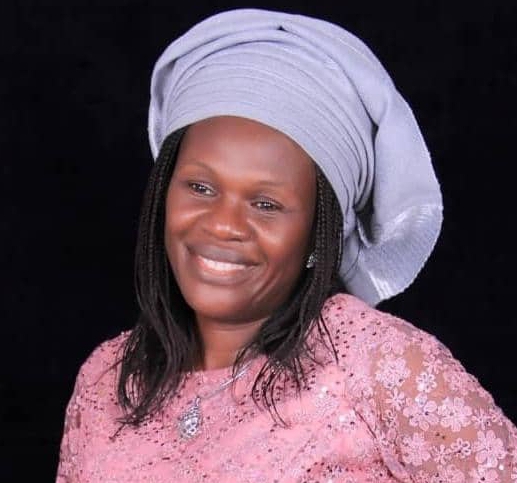
Olunike Asaolu: Exit of an Amazon
By Funmi Falobi
She was not just a woman but a woman of impact. She was a light that shone to touch every one around her; and her smile always conspicuous.
Dr. Olunike Asaolu was a woman with purpose. Though her impact was short, it was such that positively affected every one around her.
No wonder, the testimonies about her revealed a life well spent in fulfilment and character worthy of emulation.
A dexterous lecturer, she was diligent in her tasks and ready to give helping hands to people around her. A good team player, a woman of integrity and valour. A role model per excellence, she believed in possibility irrespective of challenges.
“…Despite all odds and storms, you struggled from nobody to somebody. Everyone who came across your way testifies to your integrity, honesty, probity, accountability, doggedness, resilience, humility, meekness, submissiveness, modesty and love for humany,” the husband, Barrister Sunday Asaolu succinctly described her.
While many were still looking up to her for inspiration, the cold hand of death suddenly took Olunike away on Good Friday, April 15, 2022. This, causing a great vacuum in the hearts of family members, friends and associates.
People from all walks of life gathered to eulogise the life and time of the Dr. Olunike, an erudite scholar in the field of communication studies.
In his sermon at the funeral rites on Friday, April 29, 2022, Pastor Adekoya Olusegun reading from the Book of Ecclesiastes 3:1-6, 11-12 said just like Dorcas in the Bible, Dr. Olunike Asaolu was a good woman. Saying: “you don’t need to cry for this woman. She has made her impact in life. You are the one that need to know where you are going.
“The message this morning is: What will you leave behind? What would people remember you for? Repent your ways. It is the good work you do that will follow you. How will your relationship be with the Lord when you finally go?
While encouraging the people to live a righteous life, he said any life without Christ is in crisis.
Earlier at the service of songs at the Redeemed Christian Church of God, RCCG Strong Tower Parish, Akoka, Yaba, tributes poured in from her husband, family members, friends, institutions and associations.
Born on 17th April, 1976, Dr. Olunike Asaolu nee Adio-King, attended Ire-Akari Grammar School, Okota-Isolo from 1987-1992. She attended Federal Polytechnic, Offa, Kwara State between 1994 and 1997 where she obtained National Diploma (ND )in Business Administration with Upper Credit. She gained admission into the prestigious Department of Mass Communication, University of Lagos where she bagged her first degree with (Honours) and second degree in 2004 and 2009 respectively. She had her doctorate degree from Lagos State University (LASU).
Her journalism career began during her National Youth Service Corp in Lagos where she served with the Guardian Newspapers from 2005-2006. Thereafter, she joined The Punch Nigeria Limited in 2009 where she covered the education sector. Her investigative skills made positive impact in the sector and the Nigerian society in general.
She ventured into academics in 2012 when she joined Yaba College of Technology (YABATECH) Lagos, first as a Part-Time Lecturer and was employed into full service in September 2014. As a lecturer, Nike served in various capacities as Class Adviser of Full and Part-Time classes, Project Supervisor, School Examination Committee Member (SEC), School Departmental Secretary, Counsellor, and a wonderful team player. She was also the author of the book, “Pragmatic Approach to Feature Writing: An Indispensable Tool for Journalists.”
She was a member of professional bodies which include the Nigerian Institute of Public Relations (NIPR), Nigeria Union of Journalists (NUJ), African Council of Communication Education (ACCE), and the Association of Communication Scholars and Professional of Nigeria (ACSPN).
In 2004, she married her husband, Barrister Sunday Asaolu and the union is blessed with three lovely children. Though family, friends and associates would sorely miss her, the consolation that her exit from this phase of life, after a brief illness, is to a greater glory of life eternal with her Creator.
Malaria: US partners Nigeria to produce first slide bank
By sdnonline
As part of efforts to reduce malaria disease, U.S Army Medical Research Directorate-Africa/Nigeria (USAMRD-A/N) in partnership with Nigerian agencies will launch the National Malaria Slide Bank (NMSB) Project.
The agencies include State Ministries of Health in Akwa-Ibom and Benue, the National Malaria Elimination Programme, and the Nigerian Ministry of Defense.
The project will produce Nigeria’s first bank of validated, domestically developed slides for malaria microscopy training, external quality assurance, and future research purposes.
Over the past year, the United States and Nigeria together advanced the fight against malaria, despite immense challenges posed by the COVID-19 pandemic. Committed and courageous frontline health workers, especially nurses, midwives, and community health workers, across the country went the extra mile to ensure essential malaria services were sustained. Their efforts saved lives and supported community resilience.
The U.S. President’s Malaria Initiative (PMI) has partnered with Nigeria to fight malaria since 2011, contributing $768 million to date and $74 million in FY 2021. PMI’s Annual Report, released today, showcases how the strong partnership between the United States and Nigeria enabled robust and effective malaria services to continue in 2021, even as COVID-19 caused enormous strain on the health system.
Through PMI funding and programs, 58 million bed nets, 130 million fast acting medicines, and 82 million malaria test kits have been delivered to clinics and communities since 2011. In addition, 24 million preventive treatment doses were delivered to pregnant women and 13 million doses to children during the rainy season. In the past year, more than 3,666 health workers received training that amplified their ability to detect and treat malaria, while strengthening the health system overall and providing key skills to fight COVID-19 and future pandemics.
USAID Mission Director Anne Patterson said, “I think what Nigeria is doing to advance more effective malaria prevention, treatment, and control is so important, especially the introduction of innovative tools to make better use of the data in real-time, and also to enhance quality of care via community-based health workers.”
Assisted by PMI investments, Nigeria is progressing its fight against malaria using proven and cost-effective methods that save lives and promise a more healthy and prosperous future for families and communities.
Acting U.S. Global Malaria Coordinator Julie Wallace said, “With perseverance and strong global commitment we can end malaria in our lifetime. The United States is proud of our work with Nigeria in combating this deadly, yet entirely preventable, disease.”
USAMRD-A/N), also with support from the PMI, has been able to increase and strengthen the capacities of medical laboratory scientists in malaria microscopy, rapid testing, quality assurance, and laboratory supervision.
Easter advert: Sterling Bank apologises, says message insensitive
By sdnonline
Sterling Bank Plc has apologised to Nigerians over its provocative Easter advert saying the message “was insensitive.”
The bank came under fire on 17th April when in its Easter email advertorial message to its customers compared the resurrection of Jesus Christ with Agege bread.
In a signed statement by its Chief Executive, Abubakar Suleiman, the bank said,”the content of the infographic and the message it contained was insensitive and failed to consider the very sober nature of the event being commemorated, the resurrection of Jesus Christ.”
“On behalf of the Management and Staff of Sterling Bank PLC, I write to tender our unreserved apology to you and members of our nation’s Christian community for our Easter message email of 17 April 2022.
“While the message had no malicious intent, there is no place for content that fails to fully account for the feelings of billions of people all over the world. Our honest intent was to join our millions of customers in Nigeria and worldwide in celebrating this solemn event, but our execution fell short on this occasion,” the statement said.
Suleiman explained that the bank policies are clear on what constitutes acceptable customer communication, and “this message should not have been released to our customers. On this occasion, our editorial processes fell short of our policy standards.”
“We will further sensitize our workforce to ensure this unfortunate lapse in judgement never repeats itself.
“We thank you for your continued trust in us and apologise again for this unfortunate incident.”
Nigerians, APCON condemn Sterling bank over noxious Easter advert
By sdnonline
Condemnations keep rolling in for Sterling Bank Plc over its offensive Easter advert where it compared the resurrection of Jesus Christ with Agege bread.
Similarly, Advertising Practitioners Council of Nigeria (APCON) declared that it would take necessary actions to ensure the bank is sanctioned for the provocative advert, which the bank had release as an email advertorial, early Sunday Morning, on a day when Christian faithfuls all over the world commemoratively celebrated the death and resurrection of Jesus Christ.
The advert from the Sterling bank, where Jesus’ resurrection was compared with ‘rising’ of Agege bread,’, was viewed as distasteful and noxious by many.
According to Achike Chude, a public affairs analyst, the advert is an insult on Christianity and capable to cause social crisis.
“It was a very insulting comparison, very insensitive and irresponsible. I wonder what was going on in the mind of those that conceptualised the concept. Relating Jesus with Agege bread is grossly insensitive. This is the kind of statement, if christians are not peaceful people, could create social crisis.
‘”The bank should look for those responsible and deal with them adequately. This is an insult on Christianity,” he said.
President, Journalists for Christ (JFC) International Outreach, Lekan Otufodunrin, said it is surprising that the bank could trivialise the focal point of Christianity.
“The advert is very insensitive, coming on the Resurrection Sunday.
I’m surprised the bank can trivialise something that is very important to Christian faith. The bank should have avoided anything that could be misinterpreted,” he stated.
To Barrister Nihinlola Aluko-Olokun, “literarily, there was nothing wrong with the advert but from religious perspective, it is distasteful.”
The bank, in its effort to apologise became defensibe instead of remorseful.
“The apology is worse than the offense. Setting up condition for apology is rubbing salt on the injury. It seems the bank is out there to undermine Christianity and what Easter stands for. It is immature and provoking,” said Chude.
Consequently, advertising regulatory body in Nigeria, APCON disclosed that the distasteful advertisement was neither submitted nor approved for exposure by Advertising Standards Panel (ASP).
In a signed statement by APCON Registrar/Chief Executive, Dr. Olalekan Fadolapo, “APCON will take necessary actions to ensure that Sterling bank is sanctioned for the exposure of such offensive advertisement according to law and that no religious beliefs nor faith is ridiculed or any blasphemous advertisement exposed in any guise.”
While the dust is yet unsettled, some Christian groups have demanded for an immediate, non conditional apology from the management of Sterling Bank, to avoid some drastic actions against the bank.
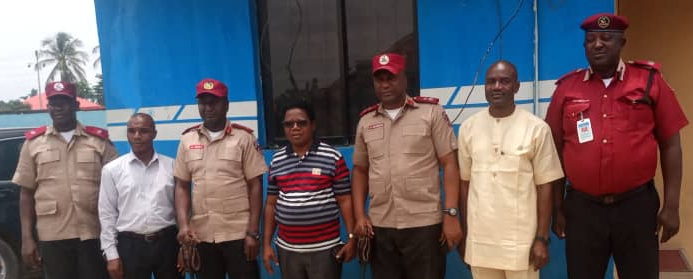
EASTER: FRSC opens diversion spots on Lagos-Ibadan Expressway
By SDNonlime
Federal Road Safety Commission (FRSC) on Thursday opened diversion spots on the Lagos-Ibadan Expressway for easy movement during the Easter celebration.
The Sector Commander Lagos Corps Commander, Olusegun Ogungbemide with his Ogun State counterpart Corps Commander, Ahmed Umar, held a meeting with officials of the Federal Ministry of Works led by Engineer Adebote at the FRSC Mowe command where it was agreed that critical corridors on the Lagos-Ibadan Expressway should be opened for free flow during the Easter.
After the meeting, the team inspected the level of work at the construction site on the expressway and it was unanimously agreed that all diversions at the constructions spots should be opened from Thursday 14th April till Tuesday 19th April, 2022 for easy and seamless movement by motorists plying the road since there will be high influx of vehicles traveling in and out of Lagos during the festive season.
Olusegun Ogungbemide used the opportunity to inform the public that FRSC Lagos is ready to provide the necessary safety and traffic control needed by motorists during the Easter special patrol as over 2000 personnels (both Regular and Special Marshals), 57 patrol vehicles, eight Bikes, three Ambulances, two Tow trucks, seven Breathalyzers would be deployed on major highways in Lagos State, to monitor, control traffic, and clear obstructions along critical route within the state during the Easter Special Patrol exercise.
The Special patrol, involving regular and special marshals, which kicks off on Wednesday 13th April, 2022 till Wednesday 20th April, 2022 will focus on Overloading, Speed limit violation, tyre violation, light sign violation among others.
FRSC Lagos Sector Commander admonished road users to play their role by obeying rules and also cooperate with the FRSC officials and sister agencies along the critical corridors in ensuring free flow of traffic and a crash free celebration”.
He also advised the public to always call the FRSC toll free number 122 in case of any emergency on the highway.
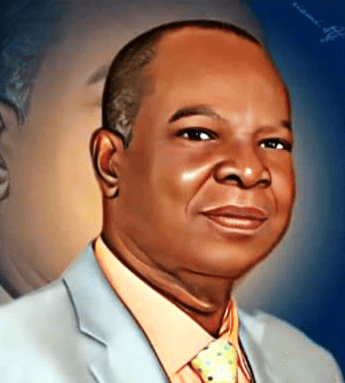
Celebrating Akin Akingbulu, Community radio advocate at 65
-By Funmi Falobi-
He is renowned for his contribution to the development of broadcasting media and inclusion of disability in Nigeria media. Dr. Akin Akingbulu, an expert in media and communication development, is the Executive Director, Institute for Media and Society (IMS), a media/communication support non-governmental organisation based in Lagos, Nigeria.
It was an event of encomium and outpouring of commendations for the change agent at a quiet colloquium in honour of Akingbulu as he turns 65 on 4th April, 2022. The virtual event attracted academia, media experts and civil society organisations.
From Professor Ayo Ojebode, Department of Communication and Language Art, University of Ibadan, Professor Abigail Ogwezzy-Ndisika, Mass Communication Department, University of Lagos, Dr. Fasiku Gbenga to Mariam Menkiti, Dr Tade Ogidan, Mr Lanre Arogundade, Jake Epelle, Anike Ade Trasure, and his childhood friend, Fasalejo Emmanuel and a host of others, it was all good commendation to Akingbulu’s contribution in the area of community radio in Nigeria and democratising communication education in the nation.
Described as humble and proactive personality, “It is great that Dr. Akingbulu is being celebrated. The life of activists and development advocates is usually modest and often go without much celebration. That must change and is changing by this gathering. Dr. Akingbulu and everyone present here, know that the years of activism and development is not where it ought to be. On this note we at the WFD wish him most wonderful and energetic years ahead,” said Adebowale Olorunmola, Country Representative, Westminster Foundation for Democracy (WFD).
No doubt, Akingbulu’s contribution in training media practitioners in ensuring inclusion for Persons with Disability (PWD) cannot be over emphasised. Today, the story is changing gradually.
“On behalf of the community of disability in Nigeria, we celebrate this icon, researcher, full of humility, integrity, love of God and his family.
“You fought with us to achieve disability in media space; advocate for employment of PWD in media organisations; bring to the consciousness of NBC the issue of disability and inclusion of PWD in media programming.
“Your work, policy will remain in the sand of time. The world celebrates you sir,” said Jake Epele, President, Albino Foundation.
Akingbulu works as a consultant in areas of media health and pluralism, media/communication policy, political communication as well as capacity building for civil society and government institutions. He has consulted for the Government of Nigeria and international institutions at home and abroad.
He has been the Coordinator of the Initiative on Building Community Radio in Nigeria and the Nigeria Community Radio Coalition since 2003. He was a member of the Working Group appointed by the Government of Nigeria to draft a Community Broadcasting Policy for the country in 2006.
The communication expert has conducted research and published on issues in the media and communication sector.
He worked in the education and youth development institutions of the public sector; in the media with Independent Communications Network, publishers of The News, and PM News titles, and the Independent Journalism Centre (IJC), Lagos.
He holds a PhD in Communication from the University of Ibadan, Nigeria.

