All posts by socialdevelopmentnews

I am Funmi Falobi, Development Journalist, PR professional, Social Entrepreneur and lead contributor/Editor, Social Development News. Beyond journalism, I am also passionate about advancing social causes and empowerment, especially for children, youth and women.

Floral School elects new prefects, urges them on quality leadership

=By our correspondent=

The Floral Schools, comprised of nursery, primary and college, have elected new prefects and class representatives for the 2018/2019 academic year.

 Speaking at the swearing-in programme, the Proprietress, Mrs. Kemi Bamidele said that the event is an opportunity to see that the children are exposed early in life into leadership position, adding that parents should assist their wards in embracing quality leadership.

 She said, “What we are doing today is not ordinary. It is time to see the children appointed early in life. Parents should teach them to be good leaders and let them see what it entails to be a good leader. Let them come to school on time, do the right thing at the right time and we shall see them in greater heights in life.”

index11

index9 Cross section of class captains and prefects

index13

 In her speech, the Head Teacher, Nursery, Mrs. Tayo Taiwo explained that aside academic qualification, the school also looked at some qualities before choosing the class representatives and electing the prefects.  She said the school teaches leadership and character building and called on parents to help the pupils and students grow better daily in good leadership qualities.

 “Aside academics, we look at character and we want them to know that personality is important and that they are not ordinary. We saw some qualities like patience, tolerance, leadership roles before choosing them and we want parents to please maintain those qualities.

 “We see the stars in them and as parents, let’s nurture them, teach them the word of God, pray for them and pray with them. Teach them to obey authority, parents and teachers. Children, you are going places in life,” she said.

Also contributing, Head Teacher, Primary, Mr. Femi Roberts told the children that leadership position is not part of the fundamental human rights but that they must earn it. “Leadership position is not your right, you must earn it. You must learn to be responsible aside academic prowess”, he noted, charging them to behave and conduct themselves in a manner to meet up the expectation of their appointment and election as class captains and school prefects, respectively, and that the leadership qualities they possess should be manifested beyond the school environment.

thumbnail (2)

index4

thumbnail (1)
The swearing-in ceremony

 Similarly, the Chairman of the Election Committee, Mr. Sunday Bankole declared that the election was free and fair. He said the children campaigned and presented their manifestos before emerging winners in respective positions.

 “These children are great. What we are doing today is not just fun, parents should guide the children. We had ballot boxes and papers for the elections, the pupils voted and we have the results. There was a rerun for two candidates and this also helped the pupils in understanding leadership.  You should not be angry if you do not win the post you vied for, but every one of you is a winner and you all are prefects,” he said.

 Barrister Olufemi Abodunde, who conducted the swearing-in exercise, the urged the elected prefects to be consistent and have sense of duty.

 Meanwhile, speaking on behalf of the prefects in the primary section, the Head Boy, Romilogo Falobi, thanked the teachers and parents for their supports and the pupils for believing in them. “I want to thank my parents for their support. I thank my teachers for teaching me leadership. And on behalf of other prefects, I thank the pupils for voting for us. We will do our best to make the school better”, he said.

index1
Barrister Olufemi Abodunde, Romilogo Falobi and Mrs. Kemi Bamidele
index3
With Parents, Mr & Mrs Sanmi Falobi
index2
With fellow prefects and their parents

Jamal Khashoggi: AFEX Condemns Gruesome Murder of journalist, task UN on action against Saudi Arabia

The African Freedom of Expression Exchange (AFEX), a network of prominent media and freedom of expression organizations across the continent, has condemned the October 2, 2018 gruesome murder of renowned Saudi journalist, Jamal Khashoggi, in the Saudi consulate in Istanbul, Turkey, saying a country that indulges in such barbaric behaviour ought to be ostracized by the civilized world.

In a statement signed by Felicia Anthonio, issued on October 29, 2019 from its Secretariat in Accra,  AFEX called on the United Nations to demonstrate its commitment to the safety of journalists and ending impunity for crimes against journalists by taking decisive action against Saudi Arabia which, “despite the overwhelming evidence of official complicity in the murder of the journalist, has engaged in bare-faced denials, duplicity, peddling falsehoods and then grudging admission laced with half-truths.”

Chair of AFEX Steering Committee, Mr. Edetaen Ojo, said: “There can be no acceptable excuse or justification for the failure of the United Nations to take action against Saudi Arabia for this heinous state-sponsored crime against a journalist at a time when the international community, led by the UN, is trying to implement a series of measures to address the problem of crimes against journalists and end impunity for such crimes. A failure by the UN to sanction one of its members whose agents were responsible for this gruesome murder would rightly raise serious questions about its commitment to the safety of journalists and ending impunity for crimes against them.”

According to Mr. Ojo, “Given the evident use of Saudi Government resources to facilitate the brutal murder of Jamal Khashoggi and the involvement of multiple Saudi officials in the crime, including the initial efforts to cover it up, we have no faith any investigation conducted by Saudi Arabia or its ability to bring all those responsible to justice. Its continued refusal to disclose the whereabouts of the journalist’s remains is evidence that the country is still unwilling to come clean and make a full disclosure.”

He therefore called on the UN to launch an independent international investigation into the murder to establish the extent of involvement of various officials within the Saudi government, including who issued the order for the killing of the journalist and all those who played a role in the incident.

Mr. Ojo stressed that “It is only by so doing that the UN can convince the world that it is truly serious in its efforts, as outlined in various resolutions and plans on the subject adopted since 2012 by its organs and agencies such as the General Assembly, the Human Rights Council and UNESCO, aimed at ensuring the safety of journalists and ending impunity for crimes against journalists. To do nothing would be to give a stamp of approval to impunity!”

AFEX said it was seriously concerned about the lack of outrage coming from African governments over the incident, which gives the impression that African leaders are unconcerned about the act of barbarism that has shocked decent people and governments around the world.

It noted that with the exception of South Africa, which has expressed “concern” over the “disappearance” of the Saudi journalist, no other African government has commented on or condemned the action, while the South Africa itself continues to conduct business with the Gulf state despite allegations that government officials were involved in Khashoggi’s murder.

AFEX observed that African cultures and traditions are founded on the values of truth, fairness and justice, as a result of which it is difficult to understand the basis of the silence of African leaders in this matter.

According to the AFEX network, “besides the requirements of international norms and standards, even under African cultures and traditions, no society would condone the kind of behaviour that Saudi Arabia has exhibited.  All across the continent, the unlawful and unjustifiable killing of an individual such as in the case of Khashoggi would be considered a taboo or repugnant conduct and visited with drastic punishment.”

The Network therefore called on African leaders to have the moral courage to stand for fairness and justice and, accordingly, join the rest of the international community in unequivocally condemning the abhorrent action of Saudi Arabia.

Towards 2019: CCG urge electorates to vote well-meaning leaders

=By Sanmi Falobi=

The Centre for Constitutional Governance (CCG), Lagos has urged Nigerians to ensure that only leaders who mean well for the country and have the capacity to deliver are voted into the various political positions in the fort-coming 2019 general elections.

The Executive Director of the Centre, Dr. Adewale Balogun, who stated this in a press statement noted that that Nigerians have a wide range of choices to choose from and should stop behaving as if they do not. In his words, “there are a good number of candidates being fielded for the various positions by the different registered political parties in the country, so I see no reason why Nigerians should limit themselves”, he said.

In the statement signed by Juli Iregbu, CCG’s programme officer, Dr. Balogun also condemned votes buying and selling, especially as witnessed in recent times and even in the political party primaries. According to him, “vote buying obstructs the democratic process by interfering with the rights of citizens to freely decide who will represent them and their interests, ultimately, it undercuts citizens’ ability to hold their elected officials accountable after they must have bought themselves their mandates.

While also condemning the evidenced lack of transparency and internal democracy in the way and manner the political parties primaries were conducted, he called on INEC to improve in their efforts to ensure that the political parties and their candidates comply with laid down regulations in the Nigerian electoral laws on the electoral process such as the ones against the over-monetization of process and refusal of political parties and candidates to adhere to the stipulated campaigning time-frame as is already been witnessed.

Finally, he appealed to Nigerians, especially the Youth to “shun violence and to work together to support credible candidates with vision, focus and a mentality that is totally disparate to the present politics of business as usual and its attendant greed and colossal pillaging that have sucked majority of the people into avoidable poverty, degradation and lack of say.”

#OSUNDECIDES2018: IPC CONDEMNS HUMILIATION OF JOURNALISTS

-By Funmi Falobi-

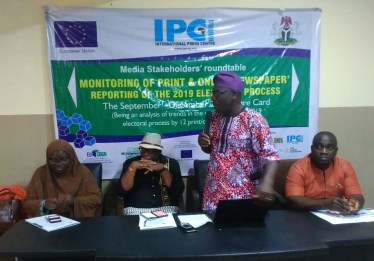
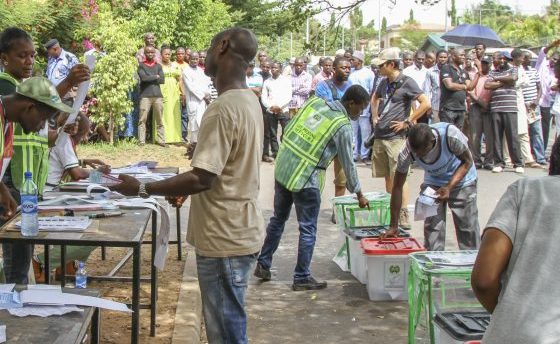
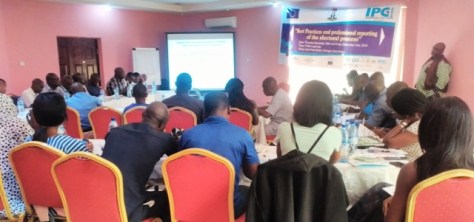
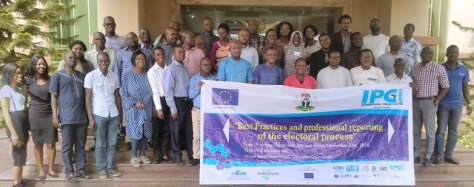
The International Press Centre (IPC) has condemned the humiliation of journalists during the Osun State governorship election which ended Thursday, September 27, 2018.

According to report from Premium Times, 22nd September, 2018 “A mob attacked Oladipo Abiodun a Premium Times election observer at CAC, Ward 3 polling until at Isokan Local Government Area of Osun State. He was harrased by some persons because they suspected he was taking pictures. Mr. Abiodun’s jacket was torn and his tag was destroyed by hoodlums.”

“Kemi Busari, a Premium Times journalist who covered the Osun rerun election, was briefly arrested by the police this morning for taking pictures at Polling Unit one, Ward 8, Orolu Local Government Area. Mr. Busari who arrived the polling unit at about 7.40a.m. thought it fit to capture the voting process, but this landed him in police custody.”

“Some journalists were sent back mid-way on their journey to cover the rerun election in Ifon Osun, Orolu Local Government Area. They were sent back by police officers who were on the spot to barricade the entrance to the polling unit. The incident happened around 11.30a.m.”

The barred journalists were from diverse platforms such as Premium Times, The Cable, Sahara Reporters and some local media.

IPC Director, Mr. Lanre Arogundade said: “The various humiliations faced by journalists during the Osun State governorship election was very unfortunate and an impediment on democracy. The various incidents only portray what is likely going to occur during the forthcoming general election if immediate actions are not taken.”

“We therefore call on all media stakeholders and international agencies to dialogue and chart the way forward for a peaceful environment for journalists to carry out their responsibilities during the general elections.”

IPC once again condemns the humiliation of journalists in the just concluded Osun State governorship election, and demands a public apology from the Nigerian Police Force.

EU, UK, US commend Osun election, call for violent free re-run

=By Funmi Falobi=

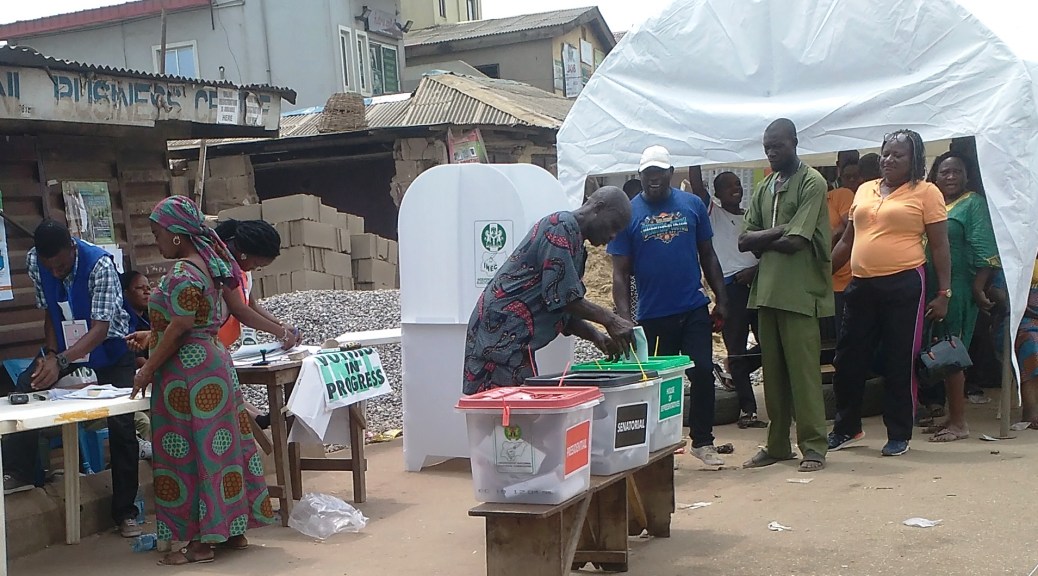
The Missions of the European Union, the United Kingdom and the United States have commended the conduct of the Osun governorship election and called for violent free rerun exercise on Thursday, September 27.

The missions while extolling the people of Osun State, Nigeria as well as the Independent National Electoral Commission, INEC, and security operatives for peaceful voting,  urged all stakeholders to embrace credible completion of the electoral process as INEC has declared a rerun in seven polling units.

According to a statement, the missions “observed the voting in Osun State September 22.  We commend the people of Osun for voting peacefully, the Independent National Electoral Commission for the improved organisation of the election, and security services for their conduct.

“We urge that all continue to support a peaceful, free, fair, and credible completion of the process as INEC re-runs the election in seven polling units where — through no fault of their own — voters were not able to cast their votes and have them counted last Saturday. We stress the importance that the re-run should take place without any violence, intimidation, or vote buying.”

Consequently, the missions advised that whoever wins the election after Thursday’s vote should be magnanimous in victory, and whoever loses should be gracious in defeat.

Oversea study: U.S embassy to open four new offices in Nigeria

=By Funmi Falobi= 

The United States embassy said that it has plans to open four new American Centers in Nigeria in the coming year.

Public Affairs Officer, Russell Brooks disclosed this on Tuesday in Lagos at the 2018 Education USA College Fair. According to him, Education USA is a U.S. Department of State network of over 425 international student advising centers in 180 countries, 55 centers in Sub-Saharan Africa and two centers in Nigeria: U.S. Consulate in Lagos and U.S. Embassy in Abuja.


He said that the purpose of the fair is to encourage international students to study in the United States, enhance mutual understanding and provide options for graduates.

“A top priority for us is to support Nigeria in its effort to develop the huge potential of its economy and of its human capital. In order to do that, one leg of our effort is to help enhance educational opportunities for young Nigerians.

 “Over one million international students choose to study in the U.S. every year. According to the Institute of International Education (IIE) Open Doors Report, over 11,000 Nigerian students are currently studying in the United States.  Many of them are self-financed, but many also received scholarships.  Nigeria is the top sending country in Sub-Saharan Africa.

 “Education USA is a U.S. Department of State network of over 425 international student advising centers in 180 countries, 55 centers in Sub-Saharan Africa, two centers in Nigeria: U.S. Consulate in Lagos and U.S. Embassy in Abuja with plans to open four new American Centers in the coming year,” he said.

 Brooks emphasised that Nigerians would benefit from studying in the United States saying “a degree from a U.S. college or university leads to additional schooling and/or jobs.  International students may seek practical training through the Curriculum Practical training (CPT) and Optional Practical Training (OPT).”

 He therefore encouraged each student to get to know all the schools represented at the fair and to consider carefully which might be a good fit for them.


MRA inducts NBC into its ‘FOI Hall of Shame’

-By Funmi Falobi-
 

Media Rights Agenda (MRA) on Monday named the National Broadcasting Commission (NBC) this week’s inductee into the “Freedom of Information (FOI) Hall of Shame,” saying that its overall performance in the implementation of the FOI Act over the last seven years falls far short of what is required of a public institution covered by the Act.

 Announcing the induction of the NBC in a statement in Lagos, MRA’s Programme Officer, Mr. Idowu Adewale, said although the Commission had shown a degree of responsiveness to requests for information from members of the public, as a key actor in the information and communication sector in Nigeria whose responsibilities include providing a framework to ensure the delivery of accurate and reliable information to Nigerians by the broadcast media, it ought to be among public institutions clamouring for the effective implementation of the Act as a way of advancing the flow of information to citizens.

 Adewale accused the NBC of failing to fulfill several of its duties under the FOI Act, particularly its proactive disclosure obligations, as it has neglected to publish the categories of information listed for proactive disclosure under Section 2(3) of the FOI Act on its website or anywhere else, adding that it is thereby denying citizens of vital information relating to its activities, businesses and operations as well as key information specifically relevant to the broadcast sector in Nigeria.

He said: “According to an analysis conducted by Media Rights Agenda on the Attorney-General of the Federation’s reports to the National Assembly on the implementation of the FOI Act between 2011 and 2017, the NBC only submitted one report in 2014 on its implementation of the Act, out of seven annual reports which it ought to have submitted to the Attorney-General of the Federation under Section 29 of the Act as of February 1, 2018.”

Referring to the “Database of FOI Desk Officers in Public Institutions in Nigeria,” recently released by the Attorney-General of the Federation, Mr. Adewale noted that the document further attests to the fact that the NBC is in continuing breach of other aspects of the FOI Act as it shows that the institution has also disregarded the provisions of Section 2(3)(f) of the Act, which requires every public institution to designate an appropriate officer and publish the title and address of such an officer to whom applications for information by members of the public should be sent.

 According to him, the NBC has persisted in this breach despite elaborate guidance on this issue provided by the Attorney-General of the Federation to all public institutions in his Implementation Guidelines on the FOI Act, issued in 2013 as well as reminders that his office has sent to the Commission along with other public institutions to designate such an official and send the person’s details to the office of the Attorney-General.

 He similarly accused the NBC of also being in breach of Section 13 of the FOI Act, which mandates every public institution to ensure the provision of appropriate training for its officials on the public’s right of access to information and for the effective implementation of the Act.

He contended that “the breaches of various provisions of the FOI Act by the NBC and the obvious disregard by the institution of its duties and obligations under the Law constitute a setback both to efforts at implementing the FOI Act and the broadcasting industry in Nigeria.”

 Adewale noted that the NBC has demonstrated a degree of responsiveness to requests for information as it is known to have responded to some request for information from members of the public. But he argued that the Commission still has a long way to go in ensuring that the objective of the FOI Act is fulfilled, adding that its overall performance in the implementation of the Act and compliance with its provisions was clearly below the level expected of any public institutions.

 He urged the NBC to take steps to improve on its current level of compliance with the provisions of the Act, especially in the areas of its proactive disclosure and reporting obligations as well as the training of its officials.

 According to him, the NBC should use its website to proactively publish much of the information that it holds, particularly those categories of information which the Act requires all public institutions to proactively disclose, adding that by so doing, the Commission would not only be bringing itself into compliance with the Law but would also lessen the burden of repeatedly processing individual requests for information touching on such issues.

 Adewale called upon the Director General of the NBC to take urgent steps to ensure the provision of appropriate training for the staff and officials of the Commission so as to acquaint them with their duties and obligations under the FOI Act as well as to make them aware that Nigerians now have a right of access to information which public institutions are obliged to respect and give effect to.

 He called on the National Assembly to exercise its powers as the ultimate oversight body in the implementation of the Law and accordingly institute measures to ensure that the NBC and other public institutions which are failing to comply with their obligations under the FOI Act are compelled to fully implement the Law, adding that the failure of the National Assembly to review the level of implementation of the Act since its passage or to take steps to ensure more effective implementation was extremely disturbing.

 MRA launched the “FOI Hall of Shame” in July 2017 to draw attention to public officials and institutions that are undermining the effectiveness of the FOI Act through their actions, inactions, utterances and decisions.

CISLAC prods stakeholders’ on primary healthcare funding

=By Funmi Falobi=

There is no doubt that the primary healthcare systems are imperative toward achieving success in the health sector. The centres are the first point of contact to the people especially at the grassroots in accessing healthcare services in the country. They provide the necessary healthcare delivery for the survival of the rural people, especially women and children.

However, while adequate health system is key to the survival of every society, in Nigeria, Primary Health Care facilities are bedeviled by low maintenance culture, inadequate accessibility to facilities and services, unethical attitudes of health personnel, ill-equipped and poor infrastructural services and human resource gaps.

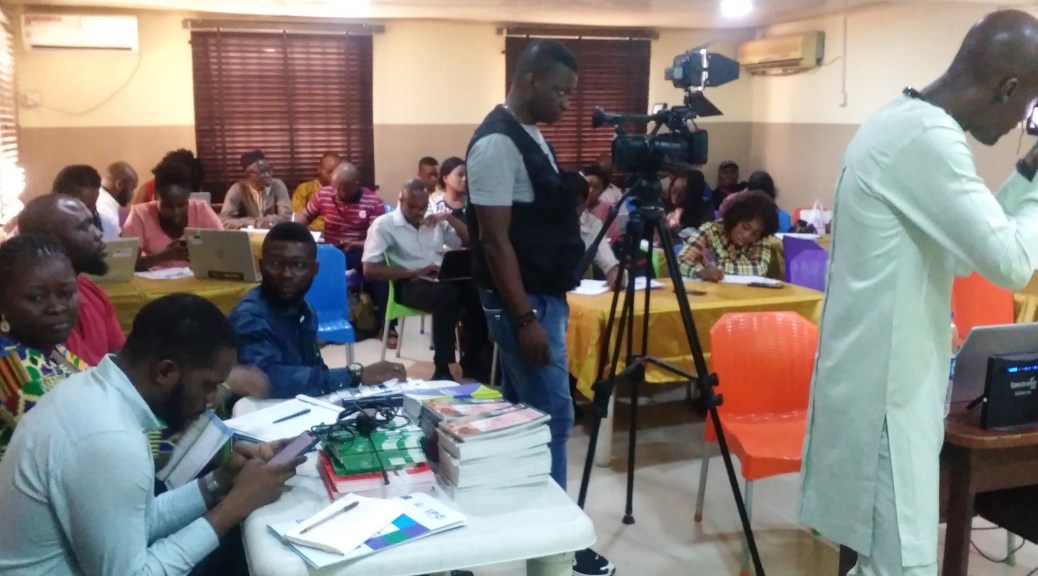
Bothered by this trend, and in order to have more media reportage focusing on primary healthcare systems and its challenges, the Civil Society Legislative Advocacy Centre (CISLAC) organised a media workshop on” Basic Healthcare Funding in Nigeria” for journalists in order to unlocking potential in primary healthcare financing through investigative journalism.

According to Dr. Jibril Bashar, Health Policy and System Development Unit, Ahmadu Bello University, ABU, who was a guest speaker at the workshop, health financing is a shared responsibility in which clients need satisfaction but that due to attitude of healthcare personnel, they are not getting the necessary health outcomes.
Speaking on the topic, “Financing for Primary Healthcare: Harnessing Domestic Funding Opportunities, Enabling Policies and Legislation” he said many people lack financial protection to access healthcare services. He therefore suggested that health care financing mechanism should provide sufficient financial protection so that no individual or household is impoverished because of the need to use health services.

According to him, “Public spending on health is about $7 (N2,500) per capital in Low Income Countries (LICs), over $100 (35,500) in Middle Income Countries (MICs), and $2600 (923,000) in High Income Countries ( HICs). Nigeria‘s out-of-pocket spending is 95.7% instead of the recommended benchmark of 20%.”
He noted that “Nigeria is 75.7% below benchmark: na dthat while “Nigeria is expected to spend N34,260, government is spending N1,671 for individual in 2018”. He noted further that “Most spending is on curative instead of preventive” and that “Nigeria budgets 5.95% instead of 15% for health.”

“Social health insurance accounts for about 1% of all health spending in LICs, 15% in MICs, and 30% in HICs. With the rebasing of Nigeria’s economy during President Goodluck Jonathan administration, Nigeria is now a Middle Income Country (MIC) and this should reflect in our standard of living. The country is no longer eligible for cheap loans to revitalise Public Healthcare Centres (PHCs)”, he added.

“If we have huge amount for concurrent, nothing will come up but capital expenditure will bring development. Funds are limited, needs are insatiable. It’s not possible to give the ministries all the money they need even in developed countries hence, the 15% benchmark in health,” he said.

Speaking on the maternal mortality rate in the country, he said there is delay in identification, delay in decision making, delay in accessing facility and delay at the facility. According to him, “National Health Insurance Scheme (NHIS) will go a long way to reduce catastrophe government spending. It will go a long way in sharing the burden.”

He noted further that “Nigeria has to prioritise public spending in health according to its own morbidity, mortality, and availability of funds. A great degree of impact can be made in making accessible health interventions at a low cost through sustainable domestic financing.”

On the state of PHCs across the country, Bashar urged the media to liaise with legislators saying, “We are far from it but there is room for improvement. We have less than 36,000 doctors in Nigeria, inadequate personnel who don’t derive satisfaction at work, but we believe we will get there. We have our challenges but policies are coming up.”

In her submission, Health Editor, Independent Newspaper, Chioma Umeha, called on the media to focus on public education on communicable and non-communicable diseases, nutrition, maternal/child healthcare. “Without PHC you can’t achieve Universal Healthcare Coverage (UHC). PHC can meet 80% health needs of a person throughout his/her life time,” she said.
In his message, CISLAC Executive Director, Mallam Auwal Ibrahim Musa , said that the situation of primary healthcare worsens, as financial and political commitment from the government is lacking and in cases where there have been pronouncements, they have been partially or entirely not implemented.
“The ultimate goal of the project is to promote policy implementation of government’s commitment to primary healthcare in Nigeria. This is so because, the challenges facing primary healthcare in Nigeria are complex and essentially arising from poor legal and regulatory frameworks and implementation, economic and socio cultural challenges.

“Also, a dearth of infrastructure, health personnel and equipment plaque the Nigerian primary health care system. Thankfully, health is on the concurrent list of the government. This only signifies that if indeed the government wants to pay attention to the prevalent health condition it can easily be achieved through serious implantation of health policies and redeeming of pledges at all levels,” he said.

“With your mandate to informing the public, you have the role to investigate these initiatives of the government to ascertain the progress made since its launch and also engage our state governments to ascertain how they are faring in adopting these initiatives in their development agenda,” he urged the participants.

In addition, the Programme Manager, CISLAC, Chioma Kalu , declared that media play important role if the country will achieve revitalisation of PHCs. According to her, “we feel that if we’re going to ask government to revitalize PHC, the media have important role to play; legislators are also very key and we can’t by any chance ignore the media. To bring about change, the media will write and get attention of duty bearers in PHC. Media should be carried along and do their own investigative journalism.”

Speaking on “Unlocking Potentials from Primary Healthcare through Investigative Journalism” she said it is expected of the media and civil societies to speak up on the deplorable state of health centres in the country, bad attitude of health workers and their being overworked, poor payment, crowding by patients, few health personnel.

Focusing on accessibility to health centres, affordability of health services and attendance at health centres, Kalu said, “It’s time we start doing things differently in this country and have ideas on how to change things in the country. Healthcare affects us directly and media should focus on it. Healthcare actually supposed to be provided by the government. The media should play the watchdog role in order to rebuild the PHC.”

Consequently, participants among others, recommended full-fledged community consultation in planning and processes establishing Primary Health Care to enable ownership, attendance and monitoring; strategic community-oriented advocacy in demanding accountability from the policy and legislative realms and strengthened judicial institutions to enable social equity and justice, and appropriate implementation of existing legislation.

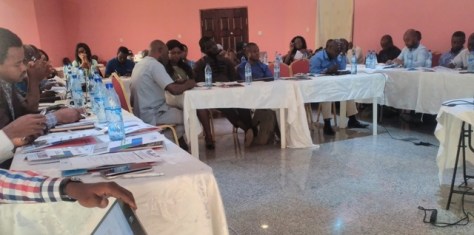
cisclac workshop
Cross section of participants at the workshop