All posts by socialdevelopmentnews

I am Funmi Falobi, Development Journalist, PR professional, Social Entrepreneur and lead contributor/Editor, Social Development News. Beyond journalism, I am also passionate about advancing social causes and empowerment, especially for children, youth and women.

Hope for IDPs as JFC, WACC foster welfare, rights issues in Nigeria

By SDNonline

A faith-based media NGO, Journalists For Christ (JFC) International Outreach, in partnership with World Association for Christian Communication (WACC) and the Bread for the World (German Protestant Agency for Diaconia Development), have launched a project aimed at bringing to the limelight for institutional attention, the rights and welfare issues faced by Internally Displaced Persons (IDPs) in Nigeria.

According to the President of JFC, Mr. Lekan Otufodunrin, “The project entitled, ‘Advancing the Rights and Welfare of IDPs Through the Media’, will help to consolidate our work in alleviating the pitiable living conditions of IDPs.”

Otufodunrin, former Online Editor and Director, Special Publications at The Nation Newspaper stated further that “The project will run from September 1, 2021 to August 31, 2022.”

Otufodunrin, in a statement, also said the project would provide information on the trend in reportage of IDPs and training for journalists and writers on enhanced reporting of IDP issues.

“A small team of journalists across the country will be commissioned to write special investigative reports on IDPs issues and engender stakeholders’ engagement; and conduct series of media-driven advocacy to advance the welfare of IDPs.

“Overall, the one-year project is expected to drive positive reportage of IDPs in the media and attract policy change to improve the welfare and rights of IDPs.

“The new project will build up on two earlier projects; Monitoring Media Reportage and Portrayal of IDPs in Africa and Managing Internal Displacements in Nigeria supported by WACC and Otto Per Mille( Weldesian Church), Italy,” he added.

He further stated that, “As a media based organisation, we are among others, committed to advocating for the communication rights of all citizens, including many who are voiceless.

“Across the country, the population of IDPs is growing and there is need for more media focus on their plight.”

“Overall, the one-year project is expected to drive positive reportage of IDPs in the media and attract policy change to improve the welfare and rights of IDPs.

“The new project will build up two earlier projects; Monitoring Media Reportage and Portrayal of IDPs in Africa and Managing Internal Displacements in Nigeria supported by WACC and Otto Per Mille (Weldesian Church), Italy,” he stated.

He also said, “As a media based organisation, we are among others, committed to advocating for the communication rights of all citizens, including many who are voiceless.

“Across the country, the population of IDPs is growing and there is need for more media focus on their plight.”

Focus, hardwork, God factor has helped me in life – Prof Tola Sunday

By Funmi Falobi

Oloruntola Sunday, Professor of Mass Communication, University of Lagos has attributed his achievements in life to hardwork, focus and divine Providence.

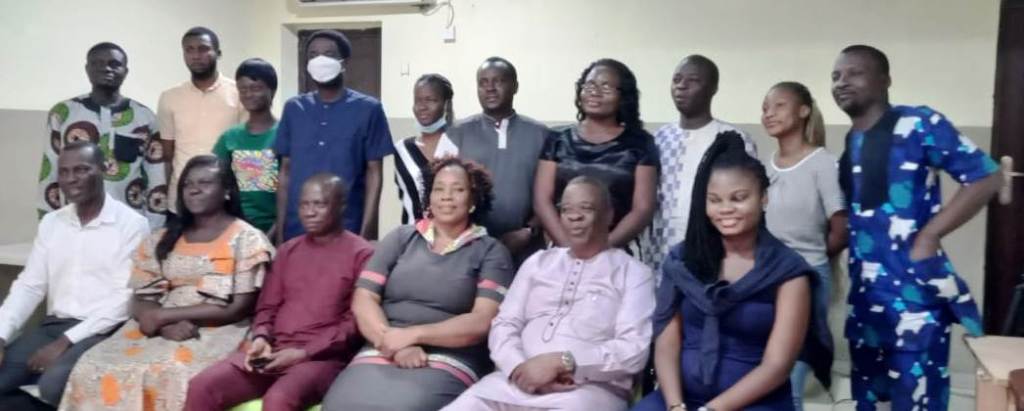
Speaking at a forum organised by the Journalists for Christ (JFC) International Outreach, a faith-based organisation for journalists and allied professionals to celebrate his recent Professorial promotion, Sunday said there are always challenges in life but with focus and determination, one will overcome.

Speaking on the topic, “My Newsroom to Classroom Story: Lessons and Opportunities” the University don stressed that challenges will come but with determination, victory is sure.

Recounting how he moved from the newsroom to the classroom, Sunday said he spent 12 years as a reporter and it took him 10 years before his appointment was confirmed at UNILAG.
“God has really been merciful to me”, he declared.

Giving insights on the route in the path to being a professor, he disclosed that it took his determination and doggedness to attain his desired academic height despite many limiting conditions. According to him, he could not do his doctoral degree programme in Unilag because he did not have the required grade. So he went to the University of Agriculture Abeokuta, UNAAB, for his PhD in the field of Agric Communications.
“At every point in life challenges will come but don’t let what you pass through affect you.

“I always tell my students that you can become whatever you want. Don’t let anything bring you down,” he maintained.

While explaining that the association one keeps and one’s vision for life goes a long way in achieving one’s goal, he added that “if you’re in a place and your vision tallies with someone, don’t leave that person.”

“My path has crossed with some people who have been instrumental to my growth. I always pray that my promotion will not be delayed and God bless the work of my hands.

“Be focused, don’t be lazy. Do your little efforts but don’t forget God’s factor,” he said.
He said it took a lot of effort transversing Abeokuta, where he was a doctoral student to Unilag, where he was a lecturer, sometimes, attending lectures in the morning as a doctorate student in Abeokuta, teaching his class as a lecture in Unilag in the afternoon and going back to Abeokuta for a late afternoon lecture.

While advising students to be diligent in their studies, he said “you are lucky, mass communication has been unbundled. It depends on which aspect you want to focus on. If you’re going into academics, be focused. There are lots of potential for you if you know what you’re doing. There are lots of opportunities, there are scholarships if you are focused.”

To practising journalists he said, “do your job. Have a vision and don’t let the immediate needs take you away from the future. Do whatever you’re doing very well for somebody is watching and at appropriate time there will be reward.”

The fellowship members commended the University don for his contribution to the advancement of communication in Nigeria and at the global scene.

While recounting how they started together as colleagues in the newspaper industry, JFC President, Lekan Otufodunrin averred that his doggedness and determination has brought him the feat.

HUFFPED sensitises Lagos residents on GBV

By Funmi Falobi

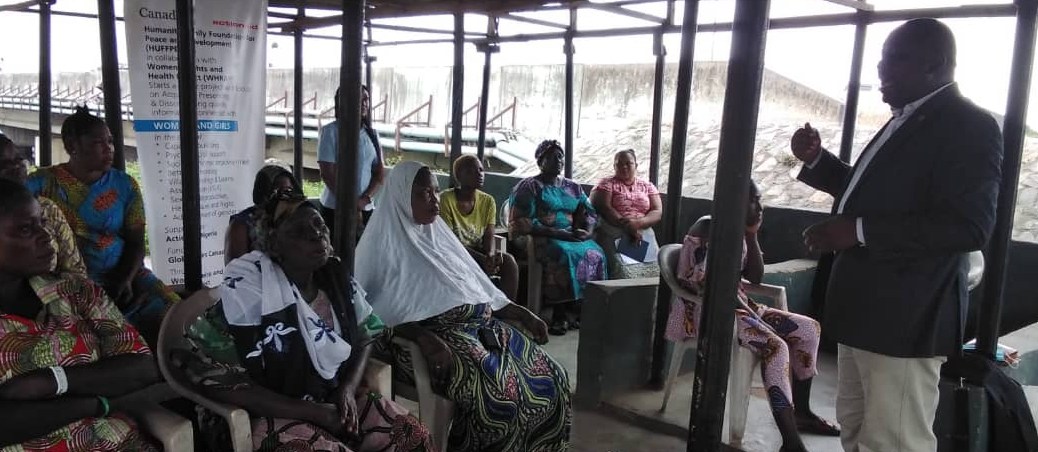
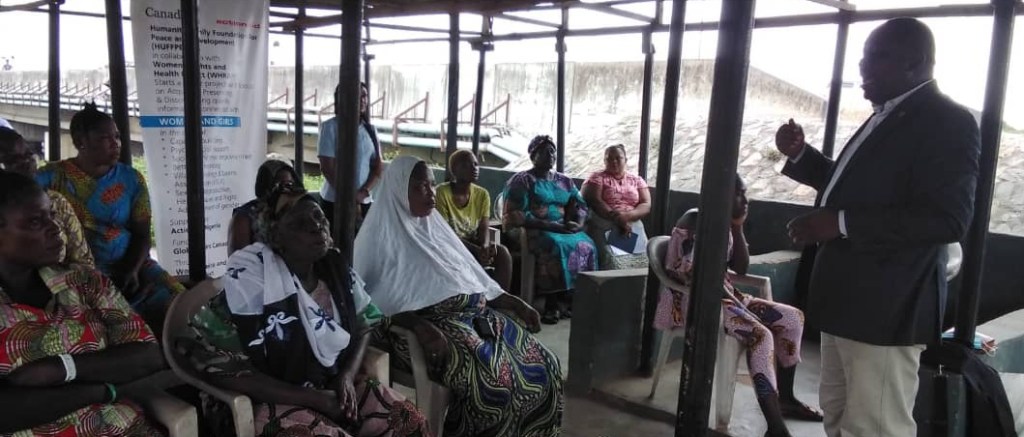
In order to reduce the rate of Gender Based Violence (GBV) in Lagos state, a Non-Governmental Organisation, Humanity Family Foundation on Peace and Development (HUFFPED) has carried out a sensitisation programme for residents and uniform service men in Ikorodu Local Government Area of the state.

The programme organised by HUFFPED in collaboration with Women’s Rights and Health Project (WHRAP) was supported by ActionAid Nigeria and funded by Global Affairs Canada through the Women’s Voice and Leadership Nigeria Project.

According to the Executive Director, HUFFPED, Kemi Adeyeye , the programme becomes imperative with the increase in report of gender based violence in the society. She noted that there was no intervention looking at Gender Based Violence which affects both male and female but only violence against women.

“In Nigeria, the most common is male against female. Our culture does not allow women to voice out when they face violence,” she said

While declaring that there is need to look at GBV holistically, she stated that beyond the perpetrators, there is also the issue of the drivers of GBV which include social, cultural, physical and psychosocial issues

She said, “In marriage, people use religion, not thinking of emotional impact on women. In the case of inheritance, the male take possession while the woman can’t own a land. We have a lot of unwritten laws which people use to perpetrate gender based violence.”

Similarly, Adenigba Henry, Team Lead, Surveillance Group, Spotlight Initiative, United Nations International Emergency Fund (UNICEF) Ikorodu, affirmed that elimination of violence against women and girl child is a thematic area in United Nations, UN, intervention.

According to him, people are coming out to report cases of GBV and so, the rate is reducing because they know there will be penalty and sanction.

“Before, we expose the survivors and issues of discrimination and stigma became rampant but now, we are exposing the perpetrators and give adequate punishment.

“We want people to know that when they see something, they should say something and do something. They should speak up when they know the perpetrator. People can speak under the condition of anonymity. You can report to the surveillance group, Child Rights Law Implementation Committee, gender desk at police stations. Even within the community, there is a surveillance group,” he said .

The programme was an enlightening one for the participants and they agreed to work together towards fighting the scourge of GBV in the society.

A participant, Mrs. Saka Rashidat, Treasurer, Community Development Council, CDC, Ikorodu Local Government Area explained that though there was no much report on GBV in the area but there have been cases of elderly person’s defiling young girls.

“GBV has never happened in my community. NGOs should do seminars to orientate people especially men that it is not good. Parents should also be orientated on how to take care of their children especially the girl child,” she said.

Another participant, Mr. Abayomi Bamidele, First Chairman, CDC, Ikorodu Central stated that GBV is becoming alarming and that advocacy and general awareness will make a lot of impact in stemming down the trend.

“The government also has role to play. Policing should get closer to the people. We need to have a database of people in the country which will be easier for security personnel to track perpetrators. Our teeming youths should be gainfully employed to reduce GBV. As a community leader, we meet regularly with the exco which include the youth leader. We will discuss this at the meeting and encourage people to do away with crime, especially GBV,” he said.

World Environment Day: U.S. Consulate, YALI alumni plant trees with schoolkids

By SDNonline

Though this year’s World Environment Day, 5 June 2021, is gone and past, some of its importance would remain visible in the ecosystem, especially in relation to preventing, halting, and reversing environmental damages to our ecosystems.  In Lagos, as in other major cities of the world, the Day was commemorated with landmark activities. In commemoration of World Environment Day, Acting U.S. Consul General Brandon Hudspeth on Saturday participated in a tree planting event with students of St. Savior’s School, Ebute Metta, Lagos.

The event was organized by members of the Young Africa Leaders Initiative (YALI) under the auspices of the Mandela Washington Fellowship Alumni Association, with the support of a public diplomacy grant of the U.S. Consulate General. As part of the activities to commemorated the Day, Hudspeth, alongside General Manager of the Lagos State Environmental Protection Agency (LASEPA) Dr. Dolapo Fasawe and Assistant Director at the Lagos State Ministry of Environment Folasade Adeyoju, joined the students to plant a tree on the grounds of the school.

Hudspeth noted that the tree planting activity underscores the U.S. government’s commitment to supporting initiatives that raise awareness about the importance of protecting the environment.

“We are thrilled that our YALI alumni are partnering with St. Savior’s School for today’s tree planting activity. Children have the potential to be powerful agents of change. By focusing on school-aged children, giving them tools and knowledge to change behaviors, future generations will be better prepared to care for the environment,” Acting Consul General Hudspeth said.

He expressed optimism that the involvement of the students in the tree planting activity will shape their perspective about environmental conservation and restoration of our ecosystem. He also acknowledged the positive impact of work performed by the YALI alumni to build linkages between different communities and government institutions in Nigeria to promote environmental conservation efforts.

“Our main goal is to implement a campaign that will involve community members, local organizations, and government institutions to inspire and educate Nigerians on the importance of a clean environment for human health and a strong economy,” Hudspeth added.

In her remarks, LASEPA General Manager Dr. Dolapo Fasawe lauded the schoolkids and their teachers for their commitment toward protecting the environment. According to her, tree planting plays an essential role in mitigating the impact of climate change. “Planting trees is one of the most important things we can do to contribute to the health of the planet,” Dr. Fasawe noted.

Responding, Head Teacher, St. Savior’s School, Ebute Metta, Mrs. Lawrencia Izedonmwen, expressed the commitment of the school to promote environmental education and responsibility by creating awareness and empowering schoolchildren in its host community.

Following the tree planting activity, YALI alumni members moved to the Sabo-Yaba community of Lagos for a clean-up exercise as part of activities marking World Environment Day.

EU, UK, US, Canada, Ireland disappointed over FG’s Twitter ban

By SDNonline

The diplomatic missions of Canada, the European Union (Delegation to Nigeria), the Republic of Ireland, the United Kingdom and the United States of America have expressed their disappointment over Nigeria government’s ban of Twitter.

According to the diplomatic missions, the action of the Federal Government contravenes the fundamental human right of freedom of expression and access to freedom of information.

In a joint statement, the diplomatic missions said, “We convey our disappointment over the Government of Nigeria’s announcement suspending #Twitter and proposing registration requirements for other social media.

“We strongly support the fundamental human right of free expression and access to information as a pillar of democracy in Nigeria as around the world and these rights apply online as well as offline. Banning systems of expression is not the answer. These measures inhibit access to information and commerce at precisely the moment when Nigeria needs to foster inclusive dialogue and expression of opinions, as well as share vital information in this time of the COVID-19 pandemic.

The path to a more secure Nigeria lies in more, not less, communication to accompany the concerted efforts of Nigeria’s citizens in fulsome dialogue toward unity, peace and prosperity. As Nigeria’s partners, we stand ready to assist in achieving these goals.”

Twitter Ban: MRA, IPC threaten to lodge complaints before AU, UN bodies

Media Rights Agenda (MRA) and the International Press Centre (IPC) have condemned the Federal Government’s indefinite suspension of Twitter in Nigeria and threatened to lodge a formal complaint before the appropriate agencies of the African Union (AU) and the United Nations (UN) if the Government does not immediately rescind the ban, arguing that the action is an unjustifiable violation of the rights of all Nigerians to freedom of expression and access to information, while also contravening the relevant instruments of both bodies.

In a statement issued in Lagos, the non-governmental organisations condemned the Government’s action as a violation of international norms and standards, citing the African Commission on Human and Peoples Rights’ Resolution 362 on the Right to Freedom of Information and Expression on the Internet in Africa, adopted on November 4, 2016 at its 59th Ordinary Session; the Declaration of Principles on Freedom of Expression and Access to Information in Africa, adopted by the Commission in November 2019, at its 65th Ordinary Session; and recent UN Human Rights Council resolutions touching on the matter.

In the statement signed by MRA’s Executive Director, Mr. Edetaen Ojo; and the Executive Director of IPC, Mr. Lanre Arogundade, the organisations noted that in its Resolution 362 of 2016, the African Commission has expressed concern at the practice by African States of “interrupting or limiting access to telecommunication services such as the Internet, social media and messaging services.”

Besides, they said, the Declaration of Principles also provides in Principle 38 (1) and (2) that “States shall not interfere with the right of individuals to seek, receive and impart information through any means of communication and digital technologies, through measures such as the removal, blocking or filtering of content, unless such interference is justifiable and compatible with international human rights law and standards” and that “States shall not engage in or condone any disruption of access to the internet and other digital technologies for segments of the public or an entire population.”

The organisations also cited the UN Human Rights Council resolution on the promotion, protection and enjoyment of human rights on the Internet, adopted at its 38th Session in July 2018, in it asked “all States to address security concerns on the Internet in accordance with their international human rights obligations to ensure the protection of all human rights online, in particular freedom of opinion and expression, freedom of association, and privacy, including through democratic and transparent national institutions, based on the rule of law, in a way that ensures freedom and security on the Internet so that it can continue to be a vibrant force that generates economic, social and cultural development.”

In addition, they noted that in its latest resolution related to the matter, which was adopted at its 45th Session in October 2020, the Council has also unequivocally condemned “measures in violation of international human rights law aiming to or that intentionally prevent or disrupt access to or dissemination of information online and offline, which undermine the work of journalists in informing the public, including through practices such as Internet shutdowns or measures to unlawfully or arbitrarily block or take down media websites, such as denial of service attacks” and called on “all States to cease and refrain from these measures, which cause irreparable harm to efforts at building inclusive and peaceful knowledge societies and democracies.”

The organisations called on the Federal Government to urgently take steps to comply with these internationally agreed norms and standards and retrace its steps from its current path, which puts Nigeria in danger of becoming a rogue nation that is constantly violating international human rights law as well as the principles of international law.

Ojo, said: “The Government’s claim on the persistent use of the platform for activities that are capable of undermining Nigeria’s corporate existence is not only unsubstantiated, but is clearly bogus and illogical. The pertinent questions here are: who is the government accusing of using the platform for activities capable of undermining Nigeria’s corporate existence? Is it the owners of Twitter that are posting such tweets? Is it foreigners using the platform for such activities? Or is it all Nigerians who are on Twitter or some of those Nigerians who use Twitter? The Government needs to be specific on this.”

According to him, “If some Nigerians on Twitter are using it in a manner that displeases the Government, how is banning Twitter for all Nigerians, in contravention of international norms an appropriate response? And if the government is convinced that people should not be allowed to post whatever they like on Twitter, no matter how divisive, hateful or inciting, why was the Government itself so angry when Twitter deleted a tweet by President Muhammadu Buhari, which it adjudged to be in violation of this same principle? Why did the Government opt to embark on this highhanded response which violates the rights of all Nigerians to freedom of expression and access to information instead of appealing Twitter’s decision on President’s Buhari’s post or challenging it in a judicial forum?”

Similarly, Mr. Arogundade said: “On the surface the government claims it is fighting Twitter but in reality what it is doing is waging war against its own citizens by infringing on their fundamental and socio-economic rights despite their being constitutionally guaranteed. If anything, the threat by the Minister of Justice, Mr. Abubakar Malami (SAN), to prosecute anyone that disobeys the ban is indicative of the fact that if this government has its way all social media platforms would be shut down because they have become veritable avenues for citizens to express their disaffection with its acts of mis-governance”.

Arogundade added that, “the ban does not show that the government is serious about the welfare or economic well-being of the citizens otherwise it would have given due consideration to how the decision would disrupt businesses that are transacted by many individuals and corporate bodies on Twitter and affect investor confidence in the Nigerian economy before rushing to make the announcement.”