Towards 2019: Stakeholders tasked on greater inclusion of PWDs

= By Funmi Falobi =

 There is no gainsaying that People With Disabilities (PWDs) suffer discrimination and are often marginalized in the society. Numbering about 25 million, PWDs represents a significant portion of the electorates that cannot be wished away.

As the build up to the 2019 elections in Nigeria garner steam, it becomes imperative to ensure that those in authorities pay attention to the needs of these people so as not to deny them of their rights before, during and after elections as available statistics infers that these groups of people are have been marginalized and remain marginalized from exercising their rights of voting and being voted for.

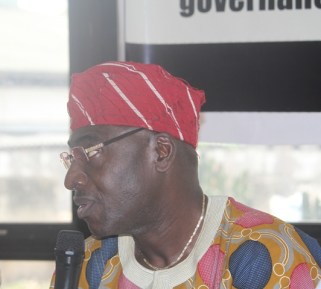
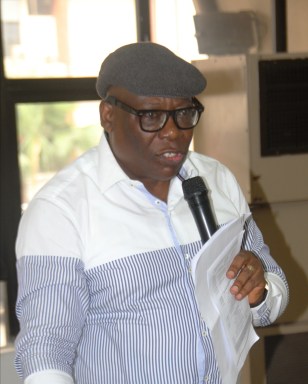
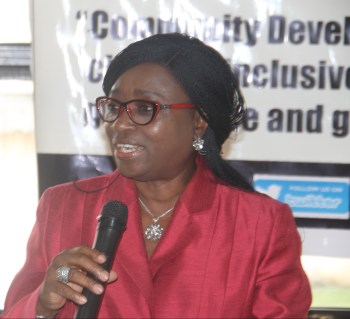
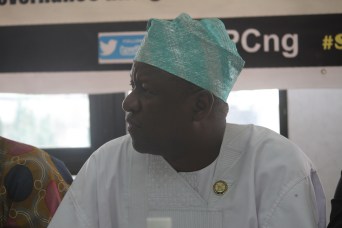
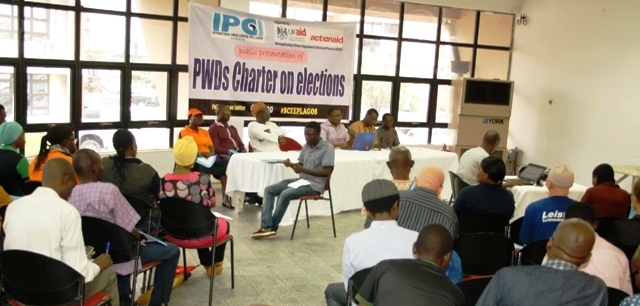
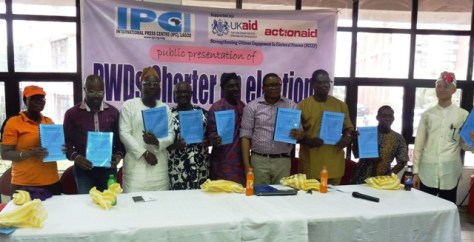
Hence, premised on emerging issues on the need to advance the rights of People With Disabilities (PWDs) to actively participate in elections and positively engage the electoral process, the International Press Centre (IPC) held a one-day forum and public presentation of a draft document of “PWDs Charter on Elections in Nigeria”. The programme,  which held at Ikeja, Lagos State is part of activities being funded under the Strengthening Citizens Engagement in Electoral Process (SCEEP) project, being implemented in Lagos by IPC and supported by ACTIONAID Nigeria and the UKAID through the Department for International Development (DFID).

Presenting an overview of challenges affecting PWDs participation in elections, Dr. Dele Seteolu, Department of Political Science, Lagos State University (LASU) outlined the challenges of PWDs as captured in the charter under five PWDs cluster groups – women with disability, people with physical challenges, people with albinism, people with visual impairment, persons with hearing impairment and people with leprosy cases.
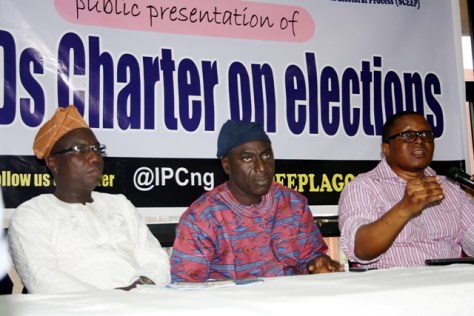
2According to him, most women with disability (WWD) face extreme difficulties that did not necessarily result in obtaining their voters cards such as passing through long queues and going back and forth for several weeks before acquiring voter’s cards, the non-recognition of their disability conditions by Independent National Electoral Commission, INEC officials during the voting process and the frequent breakout of sporadic violence.

“Political parties have traditionally marginalized women in Nigeria, which discourages WWD from attempting to participate in them. Therefore, they prefer to confine their roles to voting at election, which has unfortunately remained a source of relative deprivation in Nigeria,” he said.

He explained that political parties did not fulfill their campaign promises, particularly of presenting some PWDs for elections. On the other hand, People With Albinism (PWAs) have been dissatisfied with the ways elections have been used to disenfranchise members of their cluster in Nigeria. Using the 2015 general elections as benchmark, some of the PWDs in this cluster acknowledged that though it “was fair and peaceful on a general note,” most of them could not exercise their rights to vote immediately on arrival as earlier promised. Also, most of them were frustrated that the available materials for voter “information and education” were usually not presented in colours that they could easily comprehend.

People with Visual Impairment (VIs) confirmed that some of their voters’ cards were stamped. However, special queues were not formed for this PWD cluster in spite of the fact that they were a people “who could not see.”

In addition to that, brailed ballot papers were not available for them to make independent choices of candidates they wished to vote at the elections. Moreover, INEC officials at the Polling Stations (PSs) practically prevented the trusted guides that brought them from assisting them to cast their votes. Instead, the INEC officials “assigned members of the security forces, whom they did not trust, to guide them to cast their votes. In other words, they were denied the secret ballot quality of the voting process and they were not listened to “when they needed INEC officials’ attention”.

Also, despite repeated pleas, “INEC and the political parties did not provide written or other forms of necessary information for People with Visual Impairment (VIs) to have access to voting materials”. For instance, there was “no advertisement … on the available media about political activities for the generality of PWDs.

While there was unrestrained “stigmatization” which made it extremely difficult for people with leprosy to form a queue during elections, it was evident that INEC did not expect this cluster to participate in the elections because “no specialist was provided to meet our exceptional needs.” Thus, they were unable to register as voters “since the card readers could not capture fingertips” while neither INEC and the political parties bothered about the situation.

Similarly, INEC has consistently failed to provide a key means of communication with people with hearing impairment, PWHI, during elections in Nigeria.

As a way forward, Seteolu noted that it was imperative for inclusion of PWDs in the electoral process.  According to him, Independent National Electoral Commission, INEC, should employ qualified PWDs and saddle them with the tasks of ensuring the participation of this constituency in the political processes and in electoral preparatory process. They could also serve as election observers and be involved in the mobilization of PWDs to participate in elections.

Also, INEC and the political parties should develop clear and simplified voting guidelines for PWDs: braille for the visually impaired, audios for the blind and television-based sign language for the deaf. PWDs should be engaged to perform these roles.

Similarly, INEC should ensure that polling stations are visible and accessible to all PWDs.

 INEC should endeavor to make the voting process easier by sorting out their logistics issues to ensure prompt arrival to the polling stations with voting materials on election days.

INEC should, before the elections, sensitize its staff that they will encounter PWD and prepare them for the type of voting-related challenges they might have to help them surmount. There are skilled PWDs that INEC could use as facilitators for such sensitization.

 Political Parties should ensure that PWDs are appointed into their administrative structures and offered opportunities to contest and be voted for on their platforms.

Political parties should include members of all PWD clusters in their campaign teams for elections, security agencies should ensure the protection of voters at polling stations, especially for PWDs; security agencies should not allow themselves to be used to harass and intimidate PWDs, among others.
P1070681.JPG

A representative of the PWDs, Mrs. Adedoyin Beyioku-Alase, Founder/National President, Deaf Women Association of Nigeria, said there is need for INEC to provide interpreter for PWHI in order to exercise their rights. “All what the doctor said is true. We want our leaders to hear, when there is violence, we will be the last to hear, when people are shouting, running at polling booths.

“We want to vote and be voted for. There should be provision of interpreter for us by INEC. Disability is not the problem but for the society to accept us and provide our needs,” she said.

On his part, Mr. Lanre Arogundade, Director, IPC, said, “the demand is beyond the media, we should tell the political parties to include these demands. They should employ PWDs as their agents.”

He declared that SCEEP has helped communities in Lagos State and also working with women to enlighten them on how they can emerge political candidates.

INEC representative, Mr. Olufemi Akinbiyi said people with disabilities are key to the success of INEC activities given their population of close to 25 million people. He noted that for PWDs to explore their importance and to demand their rights from the politicians, the first and the most significant step to take was to undergo voter registration. He therefore urged people with disabilities to register and vote people they can trust. He added that priority voting for PWDs has been introduced during elections to ensure that PWDs are assisted to easily vote during elections.

“2019 election will be a greater improvement as PWD is concern. We have our master plan for 2019 election and we will ensure some of these demands are included. Some of the policies will have to get National Assembly endorsement,” he said.

National Orientation Agency, NOA, Lagos Director, Mr. Waheed Ishola expressed his organization’s readiness to support PWDs and other stakeholders to make sure their rights were not infringed upon. In his words, “the National Orientation Agency is your friend and will link you up with other government agencies. Just make sure you put yourselves together with one voice and not be fragmented”.

Commenting on the PWDs charter, he said the PWDs charter on elections would ensure that government reckons with and provides good environment that would drive their demands. He  also noted that disability was not the end of any person, urged PWDs to get registered so that they could have a say during election, using their strength and numbers. He thereby encouraged them to not just vote for people they can trust, but also aspire for any political position of their choice.


Go, achieve success, FSD/NAGODE urge prospective entrepreneurs

BY ‘SANMI FALOBI <

Being an entrepreneur is not just about learning a vocational skill, but the application of knowledge gained to meet the needs of others. This was the charge to set of 20 potential entrepreneurs who recently completed a six-week vocational skills acquisition training from the Field of Skills and Dreams vocational training centre of the Foundation for Skills Development (FSD), Ikeja, Lagos.  The training, which covered hair dressing, fashion designing, catering/cake baking and electrical installations, was sponsored by Nagode Industry limited.

Giving a goodwill remark at the graduation ceremony for the new would-be entrepreneurs, Mr. Sandeep Kapoor, Nagode’s Group Chief Operating Officer (GCOO), charged the emerging entrepreneurs to approach life with a positive mindset, premised on an attitude of gratitude and service to others.

“Each and every one of you should have a heart of gratitude and see how to add value to life’, he said. “There are two attitudes to life. One attitude is to think that life and the society has been unfair such that you think you are doing so much, yet not getting anything back as you desire to have; while the other attitude is to see life in a positive light, appreciating what you have and be willing even to give back to make the lives of others better,” he said.

“The outcome from the two attitudes is that one will give you frustration and negative emotions while the other attitude is about being fulfilled and to lift up other people and give motivation for living,” he expounded.

He therefore charged the graduating trainees to see life in positive light, building positive relations in advancing in life. “The relationship that you have built through this training should be sustained. We would want to see this relationship continue and see what progress you are making and what help we can render beyond our sponsorship”, he added.

Also speaking, Mrs. Toyin Ogunmade, Group Human Resource Manager, Nagode, advised the grandaunts not to succumb to pessimism but to be optimistic in making a success of their entrepreneurial pursuit.

IMG_20171004_110248
L-R: Sandeep Kapoor, Toyin Ogunmade and Omowale Ogunrinde

“Don’t despise what you have learnt. You might have all the knowledge but if you have a bad attitude, nobody will relate with you, so you should have the right attitude. Believe in yourself and have the right attitude. Your attitude will help you to become that person that you want to be, so ensure that your attitude speaks for you and be diligent in the course your  have set for yourself,” she said.

FSD’s Executive Director, Mrs. Omowale Ogunride also didn’t mince words in charging the prospective entrepreneurs on the importance of having the right attitude. “You have absolutely no reason to be idle. It is not only about the skills you have gained, but also the discipline to do right things to be able to make progress. People will not help you if you don’t have the rights attitude”, she said.

Buttressing her points, she added: “It is not just about having the acquisition of a new knowledge or skill, but applying the skills. So don’t just say you have acquired some skills but put those skills into use by starting something to earn some income”.

thumbnail8
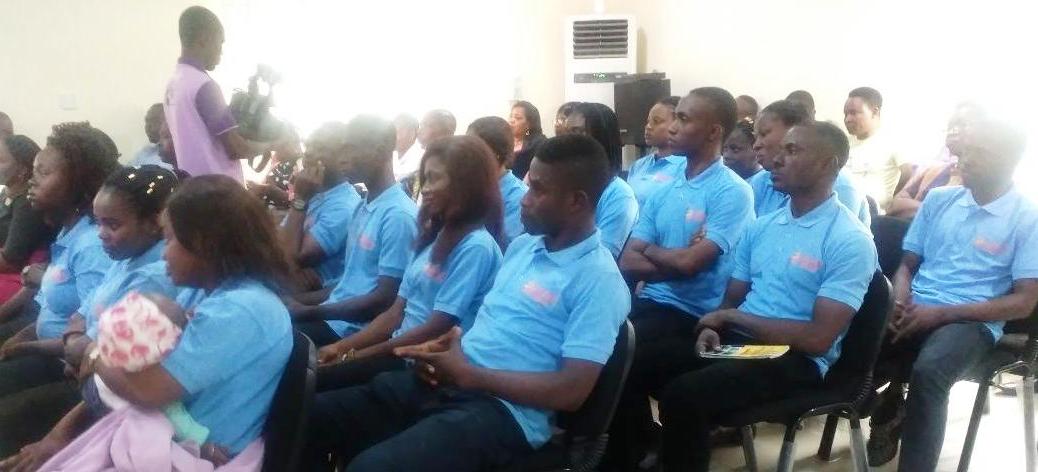
Cross section of the FSD/Nagode trainees at the ceremony

Speaking with sdnonline, some of the trainees shared their skills learning experience and gave hints on their next step actions.

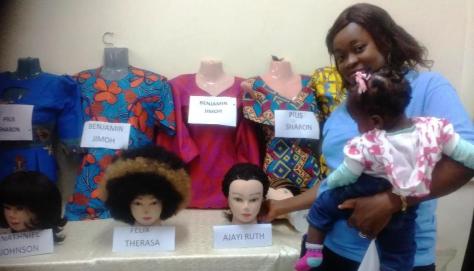
“It was a little challenging for me attending the training because I had a baby and I had thought I would not be accepted as I had been rejected at other places because I had a baby”, Mrs. Ruth Ajayi who was trained in Hair dressing stated. “But at FSD, they listened to me and gave me a chance, accepting that I could be coming with the baby because I didn’t want to put my baby in day care, and so I was coming with my baby every day. It was bit challenging coming and getting here by 8am every day, day but I had to cope since they gave me the chance to attend.” She added.

With pride in her eyes, she applauded FSD and Nagode for giving her an opportunity to improve her life through the skills gained, and thankful for the take-home equipment and starter kits she is going home with. “I am so happy they gave me a standing hair dryer and hand dryer as take home kit. They also gave me something to use to treat the hair in additional to some other things in the starter pack tool kits. For now, I don’t have a shop yet, so I will be doing home service and these kits would be useful to me. If a customer is living around my home, I will use the standing dryer, but if the customer is far away, I will go with the hand dryer and other tools that I have”, she said.

thumbnail14.jpg
Proud and happy: Ruth Ajayi with baby

On how she will forge ahead, she states thus: “Though there are so many hairdressers out there and hairdressing may be common, but it depends on the way you do your own; for me, with what I have learned here, I know I am more advanced than others out there and so I am not afraid of competition because I know I have learned more here. I came here empty, but now going with knowledge, so I am not afraid”.


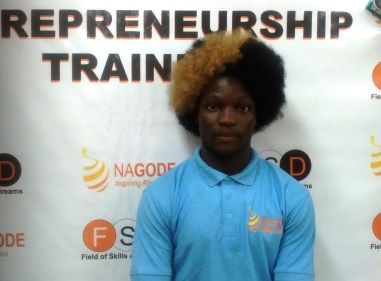
For Nathaniel Johnson who also was trained in hair dressing, all is set for him to start earning money out there. “I have passion for hairdressing and now I have learnt what I need to know. I can fix, I can braid, I can do washing and setting and all other things.


My next plan is to get a shop and start working. I like to own a shop in Ikeja or Lekki where I can get many customers”, he said.

IMG_20171004_122749
-Nathaniel Johnson-

On what his unique selling point is, he said: “I will package myself to be different. We have learnt many things to make us different from others and that is what I shall be applying. I have been taught about salon hygiene and how to treat and manage customers, how you talk to them, how you address them and things like that. These are what I shall be applying to make a difference. ”

Benjamin Jimoh, who learnt fashion designing, said nothing is more gratifying as the new opportunities of having a skill that will take him off the streets.

“I used to be a street hawker, moving around Lagos to sell things in traffic; selling toothpaste, tooth brush, sanitary pads and others. I move around Lagos selling these things wherever I find traffic, until I was told to come and attend the training”, he stated.

“My experience in FSD has been impactful as I have learnt many things. I cannot go back again to the streets to hawk.  I was one of the best in the training and with that, I cannot go back to street hawking. My plan is to start from home as I don’t believe I need to have a shop before I can start. I am starting from home before I now establish myself to own a shop. My target is to have customers from Egbeda area in Lagos and as time goes on, I will spread to other parts of Lagos. My specialization is sewing for females, like the gown, skirt and all ladies wears. I will be sewing only for women” he added.

For Mrs.  Odutola who learnt cake making and decoration, an immediate benefit of the training to her is that it has afforded her the ability to make pastries as contribution to family subsistence and family living. img_20171004_124235.jpg

“In these six weeks, I have been able to learn how to make different types of cake and how to combine colours. I have learnt how to make fondants, butter icing, royal icing and making various cakes such as Madera cake, sponge cake, coconut cake and chocolate cake.  I can also make pastries such as meat pies, egg roll, etc. Now I make cake for my immediate family at home”.

On her next plan of action, she hopes to continue with her home-made cakes and sell to neighbours. A bigger dream is to be able to also help others gain vocational skills. “By the grace of God, I am hoping that in the next few years, I would be able to pick up some other people the way I have been picked and empower them also to be able to have some vocational skills”, she declared, with an air of high hopes.

DLTdmLrU8AMgp73.jpg
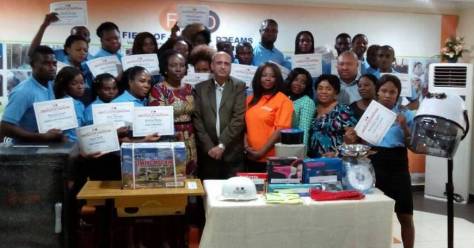
A new life beckons: cross section of the trainees proudly displaying their certificates and take-home entrepreneurial tools in a photo session with FSD/Nagode team.

African economy should be home grown-Aliko Dangote

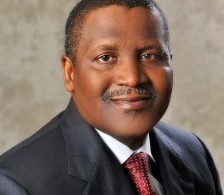
Africa’s most successful business leader, Aliko Dangote has noted that the way to go in achieving a sustainable African economy is to learn to use home grown resources, rather than depending on foreign export. He made this during an interview session at the Financial Times’ 4th annual Africa Summit (http://APO.af/qv2dZF) at Claridges in London.

In the interview, conducted by FT editor, Lionel Barber, in the presence of Nigerian vice-president Professor Yemi Osingajo, Congolese presidential hopeful Moise Katumbi, and about 300 business leaders, Dangote said the key to his success include self-sufficiency and backward integration, a manufacturing strategy that extracts value from entire processes. “We are not going to import anything any longer,” he said. “In Nigeria, we are learning how to produce the entire value chain”, he added.

Noting that in 2007, Nigeria was the second largest importer of cement after the US, Dangote told the audience of business elites: “Today, we have not only satisfied domestic needs; we have become a leading exporter of 6-7M tonnes of cement”.

Diversifying into agriculture, Dangote has eyes on the dairy industry motivated by the fact that “98% of all milk consumed in Nigeria is imported.” Same for rice. Dangote Group has invested heavily in rice production by investing in local farmers and then offering to buy back the 1M tonnes at open market prices that they are growing. “Soon, we will be able to feed not only Nigeria, but the entire 320M large West African market.”

By 2100, Africa will represent 49% of the world’s population, up from 30% today. “If you don’t think big, we won’t grow at all,” he said, adding: “In Africa, you have to play long-term.”

Asked by Barber which African nation, apart from Nigeria are good growth opportunities, Dangote answered: “I’d have to pick Nigeria. I am a big fan of Nigeria. We are only using 8% of our land.”

 
*By ‘SANMI FALOBI: Sourced from APO Group – Africa Newsroom*

Our dream country: Teens, children speak on Nigeria at 57

By Funmi Falobi

Children across the country are looking forward to a nation where their dreams can be realized. This was the feedback from cross-section of Nigerian children who bared their minds on the nation’s 57th independence celebration.

Speaking with sdnonline.net, Agholor Success said she wants to see a Nigeria where the children and the youth will be given opportunity to display their talents without limitation. “I want the government to give us chance to showcase our skills. Nigerian government should empower us and help us learn various skills acquisition that will help us to be useful to the society which will prevent us from joining bad company. I want to see an improved Nigeria”, she said.

Bolu Akinwale on her own want the government to make education less stressful for Nigerians. ” Education is very stressful in Nigeria. I want the government to look into the issue of post UTME examinations by the tertiary institutions. A situation where examinations is not uniform is not fair on the students especially the brilliant ones,” she said.  According to Akinwale, the youths should also be given the opportunity to attain political leadership position in Nigeria. “The youth and teens should be built up and allow to be leaders to make Nigeria great. Many are leaving the country to study abroad and work there. If our nation encourages the youth, they will not prefer to study and live in foreign nations, but would want to do what they can to contribute to development of Nigeria. We pray for good leaders in the nation. We need creative leaders, our leaders should help us and give us opportunity so that we can develop our nation,” she said.

On his part, Ayomide Babatunde want to see a nation where there is improved standard of living. “I want Nigeria to be better. Government should do more in the area of education and improve the standard of living of the citizens. Many are living in poverty and this affects children greatly,” he said.

“I want the Nigerian government to ensure better and affordable education for us. I want to see an improved economy where the naira will be higher than the dollar,” said Michael Okoro.

Meanwhile, Nigerians have been urged to imbibe the attitude of appreciations and thanksgiving to God instead of lamentation in order to witness a turnaround for better in the country.

Speaking on the topic entitled, ”The Power of Praise,” in commemoration of this year’s celebration, which also was also the Thanksgiving Sunday in many churches across the country,   Assistant Pastor, Redeemed Christian Church of God (RCCG), Lagos Province 25, Area 10, Demola Ojo said in spite what the nation is facing, God will deliver Nigeria from its adversities and make it great among comity of nations, if as a people, we can praise God.

“God can deliver us from whatever Nigeria is experiencing if we form the habit of praising Him. If we imbibe the act of praises in Nigeria, God will also fight the battle of this nation. There are people holding this nation at jugular but if we praise God, He will silence them,” he said.

Reading from the book of 2Chronicles 20:20-24, he said if God could fight for the Israelites and the people of Judah, God will also deliver Nigeria. “God inhabits the praises of His people; He will arise and defend us. The economy will be buoyant and things will turn around for everyone of us,” he said.

“Whenever any person praises the Almighty, miracles happen. Praising God guarantees victory. When a person has an attitude of appreciation, God will always defend that person.  Praise guarantees opened doors.  When the Israelites praised God, He granted them victory. He will also give us victory when we form the habit of praising Him”, he said.


Curbing poverty through skills acquisition: The FSD/ NAGODE partnership example

> By ‘SANMI FALOBI <

As part of efforts in creating sustainable livelihood, which is a key pillar of goals to be achieved under the UN Sustainable Development Goals (SDGs), specifically goal No.1 which aims to “end poverty in all its forms everywhere”, one of Nigeria’s foremost independent vocational, technical and entrepreneurship training institute, the Foundation for Skills Development (FSD) through its Field of Skills and Dreams vocational training centre has partnered with Nagode Industries Limited, to build the capacity of select Nigerians with skills to become self reliant and income generators.

Unveiling the partnership at an induction ceremony for twenty trainees sponsored by Nagode Group at the FSD training centre at Acme Crescent, Agidingbi, Ikeja-Lagos, Executive Director/Founder of FSD, Mrs. Omowale Ogunrinde noted that the impact of the FSD/NAGODE partnership is not just the sponsorship of the trainees for a six-week entrepreneurial and skills empowerment programme but the fact that 20 unemployed citizens have been taken off the streets, which overtime translates to employment of at least 100 more Nigerians when the trainees establish their businesses after acquiring the requisite vocational skills capacity.

“Beyond the numbers, the impact of this partnership is that these trainees shall be getting exceptional training. This six weeks training, partnering with Nagode is to remove twenty people from the streets and train them in hair dressing, fashion designing, catering/cake baking and electrical installation for them to be able to get a job or set up businesses of their own”, she said.

The Nagode Group, whose mission is driven by ‘values that enables their customers to succeed and be a catalyst for empowerment and entrepreneurship’, was recently recognized by the World Economic Forum (WEF) as one the 16 fastest global growth companies in Africa.  Founded in 1960 but incorporated as an organization in Nigeria in 1988, Nagode Group, as a leading B2B chemical and allied services organization involved in manufacturing, distribution and logistics services has over the years demonstrated commitment and contribution to the growth of the Nigerian Economy.

Giving a goodwill remark at the induction ceremony, Mr. Sandeep Kapoor, Nagode’s Group Chief Operating Officer (GCOO), charged the trainees to see the training as an opportunity to make a living and livelihood for themselves.

“The government and private sector employment have failed the country, so you have to take your lives in your own hands and do what you want to do. The small business industry is now the major employers and you now have an opportunity to learn and earn something for yourself, so don’t let it end here, but take it further”, he said.

Giving insight into why Nagode Industries is partnering FSD on the skills acquisition training, Kapoor said it was a core of the organization’s social obligation to impact society. According to him, the sponsorship of the trainees is the first step of the partnership arrangement with FSD as the organization hopes to have more trainees in batches.

“The contribution for this training is from Nagode Industries through a foundation that was set up with certain amount of profit from the group to do things like this, as well as through health care services. We see a great potential in terms of getting people self sustained and we hope to reach more people as we expand our work. The people being trained today also are able to expand their families’ well being”, he added.

Throwing more light on the guiding values of the Field of Skills and Dreams vocational training centre, Ogunrinde said FSD’s core mandate is to empower people with skills to be self reliant and self sustainable.

MRS OGUNRINDE
Mrs. Omowale Ogunrinde

“What we have been doing since first of May 2003 when the idea of FSD was birthed is what we are still doing today – empowering people with skills to be able to set up their own business and get jobs in the industry. We are focused on professional skills acquisition. This is not a place you come just to get a rough idea, but a place you come to learn a vocational skill after which you are able to start a business of your own. Our success stories are verifiable, they are real and amazing and to God be the glory, we have been able to have partners that has sent us to take our vocational training to Calabar, Ibadan and Enugu to do the same thing we are doing here – ensuring that the skill is professional enough to bring a change in status and income for people that we have trained”, she explained.

“For this programme, Nagode is sponsoring twenty people and we have other partners sponsoring people like that for different vocational skills training. The most important thing is not about how many people are being sponsored but the fact that for each person that is trained, a soul is taken off the street and being equipped with skills to contribute to society”, she added.

With the sort of commitment to professional entrepreneurial and vocational skills training demonstrated by FSD over the years, it is not in doubt that within the framework of achieving the SDG key target to “end poverty in all its forms everywhere” and its associated targets aims, among which are to eradicate extreme poverty for all people everywhere and reduce at least by half the proportion of men, women and children of all ages living in poverty; the kind of partnership initiated between Nagode industry and FSD, when replicated by other corporate organizations, institutions, government bureau, corporate businesses and individuals would certainly go a long way in the drive in meeting set targets of the SDGs, particularly SDG target goal no 1 which aims to, “end poverty in all its forms everywhere”.

20170821_113516.jpg
Cross section of trainees with representatives of FSD and Nagode indutries

Strengthening fight against corruption with ‘Report Yourself’

By Funmi Falobi.  


In order to strengthen the fight against corruption in Nigeria, the United States Diplomatic Mission to Nigeria in collaboration with BudgIT, a non-governmental organization has launched ‘Report Yourself’, a web-based platform that leverages citizen engagement to fight corruption in the country.


The project which is on http://www.reportyourself.org/ is the initiative of religious leaders in the nation as their own contribution towards curbing corruption among the citizens. The platform was developed with the support and guidance of the Religious Leaders Anti-Corruption Committee (RLAC), the Socio-Economic Rights and Accountability Project (SERAP), The Social and Economic Rights Action Center (SERAC), with the support of the U.S. Consulate in Lagos State through the Bureau of International Narcotics and Law Enforcement. The web platform was developed by BudgIT.

During the official launch ceremony in Lagos, U.S. Chargé d’ Affaires, David Young explained that ‘Report Yourself’ puts the power to report corruption in the hands of the Nigerian people.


“I hope that Report Yourself starts a new movement in citizen engagement and I hope every Nigerian who is affected by corruption will feel empowered to share their experiences.  The tide will turn against the culture of corruption when Nigerians recognise that they must fight as one to stamp out this scourge that has hampered development and stifled prosperity,” he said.

David Young urged Nigerians to demonstrate their commitment to the fight against corruption by making use of the innovative online platform which seeks to address the daily instances of corruption faced by millions of Nigerians.

‘Report Yourself’ offers Nigerians the means to instantaneously report corruption, bribery, and graft with the option of filing an official complaint with the Nigerian Police Force Public Complaints Rapid Response Unit.

“Through the State Department’s Bureau of International Narcotics and Law Enforcement, we are working to increase the capacity of Nigerian law enforcement agencies and the justice sector,” remarked Chargé Young.

Accordingly, Bishop Emmah Isong, National Publicity Secretary, Pentecostal Fellowship of Nigeria (PFN) said Nigerians who have encountered incidence of corruption should speak out and report it on the platform. “Corruption thrives in silence. The inclusion of religious leaders in the fight against corruption in Nigeria is important because we control the population. After citizens have finished work from Monday to Friday, 99 percent find themselves in churches, mosques. Adding to voice of corruption is very important. What the government fight on hours of the day, religious leaders fight on the pulpit. And the truth is that many respect their religious leaders,” he said.

Imam Shefiu, Chief Imam, the Islamic Platform and Director, Strength in Diversity and Development Center said there is need to fight Satan in Nigeria which is corruption. “Religious leaders are working with other NGOs to report corruption. We must come up and say it. If you can’t say it, report it, if you can’t report it, pray about it. We want to ensure everyone of us has the platform to report corruption. He explained that religious leaders would go round churches and mosques to enlighten people to use the platform. According to him, once a month, religious leaders would preach about corruption in churches and mosques.

Also, Felix Morka, Executive Director, Social and Economic Rights Action Centre, SERAC, said that our tolerance of everyday bribery encourages corruption. According to him, ” we, the people must enlist in the struggle against corruption. We must shun bribery and challenge these practices at churches, mosques, on the streets. People steal millions in the offices. We all must be bothered. This platform makes us massive soldiers to fight corruption”. He said.

Stanley Achonu, Manager, Operations, BudgIT, declared that there is grand corruption in Nigeria. “You heard about billions being looted, it started from petty corruption. If you have had experience in getting drivers license, international passport, marriage registry, or experience with police at checkpoint, you would have experienced corruption at low level and religious leaders can mount pressures on the authority. It is not about religious leaders but collectively we can join hands with President Muhammadu Buhari to fight corruption. Petty corruption kills, it deprives people access to amenities.”.

On his part, Head, Nigeria Police Force, Public Complaint Rapid Response Unit (NPF PCRRU), Assistant Commissioner of Police, ACP Abayomi Shogunle, urged the media to help the public know that there is a complaint unit at the police force, PCRRU where they can complain and get justice. He added that the reports that concern the force on the ‘Report Yourself’ platform should be forwarded to the force.

“The fight against corruption is what everybody should key in. One controversial issue is bail and it’s free. PCRRU is for ordinary Nigerians not people that can engage the services of lawyers”, he noted.

During the event, participants received a guided demonstration of the ‘Report Yourself’ platform. In addition, religious leaders, members of law enforcement, and civil society representatives renewed their commitment to fight against corruption.

David Young said, “the cost of corruption comes down on people, it should not be measured in money but on people. Corruption harms millions of Nigerians. It is not measured in money but daily pains it cause the citizens. In Nigeria and the world, corruption is not only about the millions stolen, but impact it has on the millions of people.”

U.S. Supports Children Orphaned by HIV/AIDS with Micro-Grants

The U.S. Diplomatic Mission to Nigeria is to support the economic well being of 50 women caregivers, particularly the vulnerable children orphaned by HIV/AIDS in five local communities in Apapa local government area of Lagos with a N2.9 million micro-grant. The support is under the U.S. Ambassador’s PEPFAR Small Grants Program.

According to a statement from the Public Affairs Section (PAS). U.S. Consulate General, Lagos, 27 local organizations have received funding under the U.S. Ambassador’s PEPFAR Small Grants Program in fiscal year 2017, one of which is Blissful Life for Women and Children.


“Under the U.S. Ambassador’s PEPFAR Small Grants Program, a local non-governmental organization, Blissful Life for Women and Children, will provide training to the beneficiaries of the micro-grants in the areas of business and vocational skills and trade mentorship, and will receive trade articles and supplies. Ten older orphans and vulnerable children whose parents are living with HIV will also benefit from the training”, the statement stated.


At an event held in Lagos and attended by senior local government officials, health, and community leaders, Acting U.S. Consul General Will Steuer said, “The people and government of the United States continue to stand shoulder to shoulder with Nigeria and Nigerian families in the fight against the HIV/AIDS epidemic.”

“Today’s event highlights the importance of supporting families, especially children who are affected by HIV/AIDS through programs that not only support treatment for the infected, but also to improve the socio-economic wellbeing of families affected by the HIV/AIDS epidemic, as the PEPFAR Small Grants Program seeks to do.”

Beneficiaries of the various training programs are expected to empower themselves and their families by building small businesses that will create more reliable income flows and improve their standard of living.

The U.S.-Nigeria partnership on HIV/AIDS began in 2004 through the U.S. President’s Emergency Plan for AIDS Relief (PEPFAR). From 2004 to 2016, United States support for HIV prevention, care, treatment, and support programs in Nigeria has totaled more than 4.3 billion U.S. dollars in support of the Nigeria HIV/AIDS response.


… Enhancing socio-economic and sustainable development issues & initiatives.