Assent to digital rights, freedom bill, MRA tasks Buhari

=By Funmi Falobi=

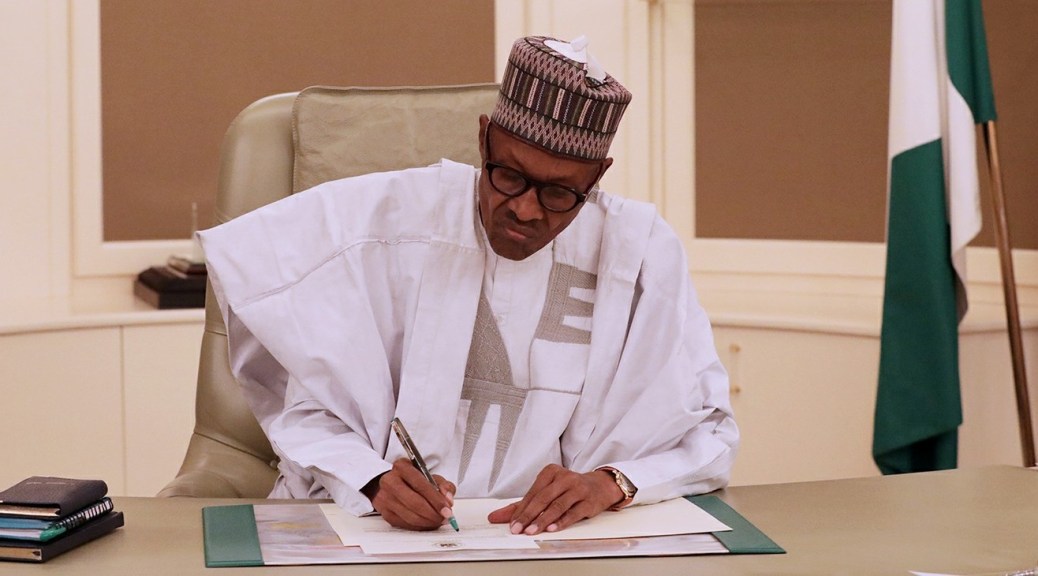
Media Rights Agenda (MRA) has called on President Muhammadu Buhari to sign the Digital Rights and Freedom Bill into law as soon as he receives it from the National Assembly, in order to demonstrate the administration support for Internet freedom for Nigerians.

In a statement in Lagos, MRA applauded the leadership of National Assembly for the speedy passage of the Bill by both the House of Representatives and the Senate and urged them to ensure that a clean copy reaches the President for signature in the shortest time possible in order to bring their efforts to fruition.

The Bill, which was passed by the House of Representatives on December 19, 2017, was similarly passed by the Senate on Tuesday, March 13, 2018. 

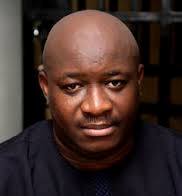
Mr. Edetaen Ojo, Executive Director of Media Rights Agenda (MRA), described the proposed Law as “a strong piece of legislation that seeks to effectively protect the rights of Nigerians on the internet and in the digital environment in accordance with the global norms and standards that Nigeria has helped to establish.”

Calling on President Buhari to assent to the Bill without delay, he said: “The Bill provides a comprehensive framework for the advancement, protection and enjoyment of human rights on the Internet and in the digital environment, consistent with Nigeria’s regional and international obligations under various international human rights instruments, some of which Nigeria has led in bringing into being by co-sponsoring.”

Ojo said, “Nigeria played a leading role on the global stage in 2012 when it led in co-sponsoring the landmark Resolution on the Promotion, Protection and Enjoyment of Human Rights on the Internet at the UN Human Rights Council in Geneva,alongside Sweden, the United States, Brazil, Turkey and Tunisia, wherein it was affirmed that “the same rights that people have offline must also be protected online, in particular freedom of expression, which is applicable regardless of frontiers and through any media of one’s choice.”

Observing that the resolution has brought Nigeria tremendous respect and acclaim from around the world, he urged the President to sign the Digital Rights and Freedom Bill “in keeping with the groundbreaking direction and guidance which this Resolution provided to the global community on human rights online.”

In addition, Mr. Ojo said, the Digital Rights and Freedom Act will help boost an innovative environment for Nigerians, as well as accelerate the country’s development in the digital age by allowing all Nigerians take maximum advantage of emerging opportunities, adding that this will be beneficial to the government and its efforts to ensure the economic growth of Nigeria including its recent Enabling Business Environment initiative.

edet
Edetaen Ojo

“The Bill, when it becomes Law, will bring Nigeria’s domestic law, policy and practices with regards to the protection of human rights on the Internet into conformity with this international norm that we were central as a nation in developing and bequeathing to the global community,” he said.

MRA also called on all other stakeholders, especially the media and civil society actors, to lend their voices to the Digital Rights and Freedom Bill by advocating for speedy presidential assent and subsequently, to monitor its implementation and ensure that its provisions are applied in practice.  

Ojo said: “This piece of legislation will ultimately impact the personal and professional lives of every Nigerian who is connected to the Internet as well as those who will be connected in the future. It is therefore essential for all stakeholders to contribute to this process in every way possible including through advocacy, by writing about it, facilitating discussions and debates, playing their roles in ensuring its implementation and encouraging other members of society to do so as well.”

He also praised Paradigm Initiative for leading and coordinating the multi-stakeholder efforts that characterized the development and drafting of the Bill and resulted in its speedy passage by the National Assembly, saying it has once again demonstrated the power of civil society to positively affect the fortunes of Nigeria and Nigerians.

Hate speech: Drop bill that recommends death sentence, IPC urges Senate

*Calls on DSS to release Tony Ezimakor

=By Funmi Falobi=

The International Press Centre (IPC) has called on the Senate to drop the proposed hate speech bill that seeks to recommend death sentence for purveyors of hate speech.

The bill which is being sponsored by Senate Spokesperson, Senator Aliyu Sabi Abdullahi proposes that anyone found guilty of any form of hate speech could face death by hanging upon conviction.

But the IPC Director, Mr. Lanre  Arogundade, in a signed statement  said that what the country needs today is engagement by multiple stakeholders to determine what actually constitutes hate speech and agree on effective measures for dealing with such,  stressing that“a draconian law that hallmarks dictatorship cannot be the solution to hate speech in a democratic society.”

He also said that such a bill if it becomes a law would definitely pose a major threat to freedom of expression, freedom of the press and safety of journalists.

‘Much as we do not welcome hate speech, we do not also welcome a law that would gag citizens and deny the public the right to know, ” he said.

Similarly, Arogundade also called for the release of Tony Ezimakor, Daily Independent’s Abuja Bureau Chief, who was arrested and detained by the Department of State Services, DSS headquarters in Abuja on Wednesday, February 28 after honouring an invitation from the security agency.

The IPC Director said in the alternative, the DSS should immediately charge Mr. Ezimakor to court if the agency is convinced that he has committed any offence known to the law of the country.


Hate speech takes centre stage at Nigeria media summit

-By Funmi Falobi-

The second Nigeria media summit has begun in kano, discussing “Hate speech : halting the tide before it is too late.”

The summit was declared opened by the executive Governor of Kano state, Dr Abdullah Umar Ganduje, under the chairmanship of Alhaji Sani Zoro, former President, Nigeria Union of Journalists (NUJ) and  now chairman, House of Representatives committee on Information.

The focus of the summit is very apt as the nation prepares for the 2019 general elections.

Recalled that during the 2015 elections, hate speech was utilized by some political parties, politicians and their supporters thereby generating tension in the country.

Papers presented at the summit focused on the “Role of Journalism in the Digital Age” by Lanre Arogundade,Director International Press Center ,”Why hate speech is not free” by Dr Garba Abari, Director General, National Orientation Agency (NOA), and “The  Media against hate speech: Upholding ethical standards” by Mr Yau Sule, Executive Director, Center for Information and Technology.

Over 400 Journalists including 33 State councils of NUJ across Nigeria attended the summit.

_20180221_230716
L-R: Qasim Akinreti, (Lagos NUJ Chairman), Muhammad Garba ( former NUJ President and now Commissioner for Information, Kano State), Sekinah Lawal(Lagos NAWOJ Chairperson) and Lekan Osiade (of Lagos NUJ) at the summit.

Nigeria hosts journalists across the globe in 2018 IPI Congress

-By Funmi Falobi-

Nigeria will host journalists across the globe in the 2018 International Press Institute (IPI) congress. The congress with the theme: “Why Journalism Matters and How to Make People Like it” will hold in June.

Addressing a news conference in Abuja, IPI Director,  Barbara Tronfi expressed the joy of IPI members globally to come to Nigeria and share experiences of journalism practice .

She visited all facilities put in place by  local organising committee and the IPI Secretariat in Nigeria.

The IPI director is also scheduled to meet the media executives in Abuja and Lagos. Specifically, she is meeting the media owners of Television Continental,TVC, Asiwaju Bola Tinubu and Mr. John Momoh of Channels Television.

On Friday, Tronfi will pay a courtesy visit to the Governor of Lagos  state.

The IPI congress, which shall have two vehicles branded for it shall start with a pre-congress workshop with the theme, “Covering Elections-Possible Partnership.” The former chairman Independent Electoral Commission INEC Professor Attahiru Jega will deliver a short presentation at the pre-congress workshop while the Liberian President George Weah will lead other very important dignitaries to the main event.

Ilasamaja residents cry out over IKEDC load shedding, billing

-By our Correspondent-

Residents of Ilasamaja has called on the National Electricity Regulatory Commission (NERC), the Minister of Power, the Lagos State Government as well as other electricity regulatory bodies to as a matter of urgency prevail on Ikeja Electric to commence installation of prepaid meters in their community. According to Engineer BayoAsunmo and AlhajiRamoniSemiu, who are members of the Community Development Association,Ikeja Electricity Distribution Company (IKEDC) has turned the community into a conduit pipe where money is raked in to the purse of the company without justification.

The two community leaders claimed that they were surprised that demanding for their rights as a community has turned a crime. According to them, they had visited the Alausa’s office of the body to submit the community resolutions on installations of prepaid meters to the Chief Executive Office (CEO) of the company on or before January 31, 2018. We were even held to a meeting with a staff from the Public Affairs Unit, who assured us that something urgent would be done. To our surprise, the undertaking commenced a load shedding, removing four transformers on daily basis without any recourse to our letter.

Asunmo, who is also an engineer, said ‘load shedding in this age, when other electricity distribution companies has moved on. That aside, they know what to do; they had been on Temitope feeder as a way out for years and we expected them to have completed that arrangement.’Ramoni, however, called on the company to immediately reverse the load shedding arrangement and install prepaid meters in all houses within the community.

In an interview with Adetire Adebowale, a resident of the area, ‘We demanded for prepaid meters because on daily basis, we never had supply that exceeded four hours; and most of our meters are coded; so they bill us what they like.

‘Rather than accede to our demand, load shedding is what Isolo undertaking commenced. Surprisingly, they claim the load shedding would ensure 18-hour regular supply. But daily supply has not exceeded six to seven hours.

Also, Yinka Adewole, observed ‘the community is a law abiding community, and we have not said we won’t pay, but we want a billing system that is commensurate with supply; and that can only be achieved through installation of prepaid meters.

‘We therefore call on government regulatory bodies to urgently intervene and prevail on the Chief Executive Officer (CEO) of Ikeja Electric to commence installation of prepaid meters without delay,’ he added.

Ahmed Adeola, accused the undertaking of insincerity in its load shedding. He said: ‘They use their load shedding to manipulate people of the communities. A good example is the filling station within the area. The day their transformer was supposed to go off, they removed all other fuse, except the one that belongs to the filling station.

In its reaction, Fadeke Omo-Omorodion, the PRO of Oshodi Business Unit, said Ibalex Feeder where Ilasamaja is fed is overloaded and the only way out is to load shed.

The community therefore call on necessary government bodies to intervene.

Farmers lament as poor funding mechanism stifle agriculture

=By Funmi Falobi=

Though Nigeria, the acclaimed giant of Africa is one of the countries thriving in agriculture in the continent, inaccessible funding opportunities largely hampers food production and agro allied investments by budding farmers and entrepreneurial agricultural investor.  This was the outcome of interaction with a number of agric entrepreneurs by sdnonline.

It would be recalled that one of the cardinal programmes of President Muhammadu Buhari, when he assumed office in 2015 was to improve the agriculture sector in order to ensure food security in the country. In this stead, the federal government therefore earmarked billions of naira to the sector in order to assist farmers increase food production in the country and eventual exportation of farm produce. Comparatively, there had been an increment in the budgetary allocation to agriculture as the agriculture sector received an allocation of N92 billion and N118.98 billion in the 2017 and 2018 appropriation act, respectively.

However, as laudable as government initiative is, farmers especially grassroots and budding agric entrepreneurs lament that they do not have access to the loan that will help them in their farming activities to boost and increase production. To many of these farmers, accessing loan in the banks is still a major problem as the interest rate is not encouraging. As a result, many of the farmers still engage in manual labour instead of mechanized farming which is the global standard for result oriented farming.

According to Mr. Vincent Amakudi, a farmer, who specializes in crop farming, funding is a major issue affecting farmers in the country. He notes that whether it is manual or mechanized labour, “Farmers will be able to do a lot when there’s funding.”

Mr. Femi Oke, Chairman, All Farmers Association of Nigeria (AFAN), Lagos chapter, explained that the challenges facing farmers are enormous including finance. He noted that though the Bank of Industry (BOI) is expected to grant N250,000 minimum to farmers, but he queried, “are they complying?”.

“Although Federal Government budgeted money for agriculture but BOI can only give those that are into processing. We were told that they will recapitalize BOI that it will not be under the Central Bank of Nigeria, but the bottleneck is still there. Many farmers are not accessing this loan, we are just hearing it.

“In machinery, we are still using manual methods but things have gone mechanized. Bulldozer is very necessary for those in crops before using hoe and cutlass but an average farmer can’t afford it. We want government to come to our aid. Government should come, let’s discuss how to collaborate,” he said.

Buttressing the need for accessible funding, an anonymous entrepreneurial farmer who is into poultry, piggery and fishery explained that getting loan in Nigeria is still very difficult.

“When I approached a bank for loan; I was told I would pay 20 percent interest. Then, how much would remain for farming?, she queried.

“Government is not encouraging research in agriculture. Accessing loan is still difficult. Federal Ministry of Agriculture does not get to the grassroots. Federal government should help the state governments because grassroots farmers are in the states,” she noted.

“Government should subsidize feeds for livestock farmers and encourage more trainings for students. A nation that can feed itself is self sustainable,” she added.

It would be recalled that before the advent of crude oil, the country relied mainly on agriculture for its Gross Domestic Profit (GDP). However, the discovery of crude oil changed the narrative and today, the nation depends majorly on crude oil for its revenue as the massive cash flow from the exportation of crude oil resources by Nigeria over the past fifty years has led to the reckless abandonment of the once vibrant Agro-allied Sector of the economy.

However, as the government is advocating more citizens’ participation in agriculture in order to ensure food security and combat poverty and with the rate the population is increasing in Nigeria, it is evident that a lot still needs to be done to make the agric sector attractive, especially in the area of financing and subsidy support in acquiring machinery for mechanized farming.


When IPC/Actionaid brought citizens to interface with LASG officials on inclusive participation

=By Funmi Falobi=

Nigerian citizens have again been encouraged to participate in governance and engage the government in order to ensure development at the grassroots.

This was the summation at a stakeholders’ policy dialogue on “Community Development Charter as a Tool to Enhancing Citizens/Inclusive Participation in the Electoral Process, Governance and Grassroots Development in Lagos State. The dialogue, which brought about 120 community stakeholders from six local government areas in Lagos State – Lagos Mainland, Somolu, Amuwo-Odofin, Ifako/Ijaiye, Ikorodu and Surulere to interface with key officials of the Lagos State government on using community development charter to enhance grassroots development, is an initiative by the International Press Centre (IPC) with support from ActionAid and UKAid as part of a project to strengthen citizens’ participation in electoral process.

In his remark, Mr.  Lanre Arogundade, Director, IPC, explained that the project which has been running since 2014 has been able to produce community charters on development challenges of communities in the select six local government areas.

IMG_3102
Arogundade

“There is no doubt Lagos State is the centre of excellence but a lot still need to be done. Hopefully, in the coming period, we will be able to extend it to other local government areas in the state” he said, noting that the charter have been harmonized and as such there was the need to amplify the voices of grassroots communities in order for them to have more inclusive participation in governance.

On his part, Mr. Kenneth Okoineme, Policy and Governance Adviser, ActionAid Nigeria, declared that inclusive participation in governance will enhance development at the grassroots. “For us at ActionAid, we are seriously interested in people having attention in governance. As citizens, we should make sure government policies are implemented, we should engage the government for development”, he said, while giving a brief goodwill remarks.

In his keynote address, Mr. Richard Akinnola, Executive Director, Media Law Centre, said that engaging the government affects every citizen and the charter will serve as a guide for the government to know the challenges of the people and how to tackle them.

img_2982.jpg
Akinnola

Going through the charter, he observed that the issues of road, infrastructure, schools, hospitals affect everybody saying “I have been in Lagos for over 30 years, I’ve never lived in a house that has pipe borne water except borehole.”

“In Okota-Isolo, our challenge is inner roads. We have been talking about restructuring but no government, whether federal or state level is ready for it. We do meetings with local government chairmen and we are told there is limit to what they can do.

“Government has reneged against its manifesto and promises. What IPC is doing will help Lagos State because government can access each local government challenges. This is a wonderful thing even to guide the government. But how do we guide the government in providing the infrastructure? On the issue of budget, how many of us know how much is budgeted for our area? There is something called Public Impact Litigation. If we have direct link with government, it will help us. The challenges we face get bigger every day. We need to engage the government because there is a limit citizens can do. We can put government on its toe on some of those issues,” he said.

img_2988.jpg
Oladapo

Director, Press and Public Relations, Ministry of Information and Strategy, Mrs. Toro Oladapo , encouraged the citizens to embrace due process in their dealings in order not to suffer any loss as a result of government project in their locality. “I’m happy efforts of the state government have been recognized by IPC. Governor Ambode practices government of inclusion for development of Lagos. The citizens accused the past government that all it did was in urban areas and Ambode being a grassroots man, engaged in grassroots development.

“If we don’t give attention to due process in what we do, people without necessary papers will lose their property when government embarks on projects, especially when such property obstruct  infrastructural development. Let’s follow due process. Everybody wants to have property in Lagos because it’s lucrative. Town hall meetings by the government were to engage the citizenry through which 114 roads had been done. Budget is also done through citizens’ participation because the governor’s policy is government of inclusion.”

img_3026.jpg
Joseph

Also contributing, Honourable Kehinde Joseph, Special Adviser to the governor on Civic Engagement, stated that  civic engagement involves everybody and that is what the Lagos state government has been doing. “Most of the town hall meetings have a lot to do with us. When people have issues, they do not write to tell government. In Lagos, if a contractor does bad job, you have right to complain to the government”, he said.

On his part, Honourable Kehinde Bamigbetan, Special Adviser to the Governor on Community Affairs, said Lagos State University and Lagos State Polytechnic , LASU/LASPOTECH radio stations will take off next year respectively. “This will help to take care of people in the areas, inform them about government programmes in the areas and also create awareness for the people in the community. “

He acknowledged that Lagos State does not have enough buildings for those who are of school age but added that the government is devoting 12.5% of its budget to education to take care of the over 10 million children of school age. He added that because of the number of project that need to be done, the government has to prioritize its capital project. He said the Lagos State government will continue to reach out to the people with its programmes and plans and seek their inputs.

IMG_3107.JPG
Bamigbetan

“We have 24 million people in Lagos out of which 10million are youths. We need 1,800 schools, we don’t have enough space, so about 12.5 percent of this year’s budget will focus on education. There are 5,300 private schools that are not registered with government. We are working to have Education Trust Fund. We will be all inclusive in the way we handle road issues in the state. There are181 roads coming around. Two roads each year in each council. The governor is committed, Lagos State Public works has mandate to construct five roads in each local government area”, he added.

The representative of Senator Gbenga Ashafa, Mr. Rotimi Ishola who also graced the event and had an interactive session with participants from his constituent, expressed his pleasure at the organization of the forum and called for more of such, especially at the divisional levels so the citizens are more deeply engaged on issues affecting them.

The participants thereafter engaged the duty bearers on different development challenges of the communities, calling on the Lagos state government to ensure that citizens are more entrenched and are more widely consulted as stakeholders in democratic governance and in the decision making process of governance in Lagos State.

Seek help when abused, group implores at rally on Gender Based Violence

=By Tobi Oyetunde=

Against the growing spate of gender-based violence, two gender rights advocate groups have urged citizens facing any form of domestic violence to speak out and seek help early, rather than bearing the brunt of abuse, which may lead to loss of lives. This was made known at a rally by WOMEN ARISE For Change Initiative and CEE-HOPE, in Ebute-Metta, Lagos aimed at sensitizing residents to desist from any act of Gender Based Violence (GBV).

According to Dr. Joe Okei-Odumakin, President, Women Arise, GBV is a menace which must be wiped out of the society and the country as a whole. She noted that though GBV is mostly seen in the cases of a man beating a woman or a husband maltreating his wife, instances where men are being violently abused by women, especially their wives is now on the rise and should be curbed before it gets to a state where it can no longer be controlled.

“What was common is, husband beating wife, but it is now the other way round and it is increasing in fast pace. We are urging both men and women to say no to violence before it ruins our lives and community. Violence should not be given a place in the society.” Dr. Okei-Odumakin said.

She added that the law would not excuse any form of gender-based violence under any circumstances and advised anyone that engages in violence of any form, or abuse of his or her spouse to desist from such act as it is a crime against law and humanity.

She said: “The law knows no gender; if you take part in any act of GBV, you will be arrested and made to face the wrath of justice”.

women arise3She therefore encouraged those experiencing violence to speak out so that such a person can be duly advised and helped before it leads to injury or death.

“We are here to tell you that silence is no longer golden, there is no shame in crying out. If you refuse to voice out, it could lead to death. Whether you are a man or woman, the earlier you speak, the better,” she said.

“Don’t try to stay in any relationship where you are being abused because you love your partner. This could lead to death. A home is meant to be peaceful and a place where calm is, not an abattoir or a boxing ring.” She added, noting that there are many organizations that take care of people going through abuse and which can help in managing marital violence.

On her part, Betty Abah, Executive Director, CEE-HOPE in a chat with sdnonline noted that domestic violence,  from all indication, is gender -blind.

“Both men and women can be victims. There is therefore urgent need to sensitize victims on how they can seek help when situation gets out of hand and how to seek a safe way out.”  she noted.

“Being alive is more important than any cultural consideration that may perpetuate violence or force victims to remain in perpetual bondage especially when it involves physical violence,” she added.

The rally was also in solidarity to clamour for justice in the on-going case involving the death of a Lagos-based engineer, Mr. Lawrence Ameh Idoko, who was reportedly stabbed to death by his wife, Mrs. Folashade Bashira Idoko.

… Enhancing socio-economic and sustainable development issues & initiatives.