WPFD2021: JFC tasks govt on press freedom, charges journalists on ethical reporting

By sdnonline

As media organisations and associations worldwide commemorate the World Press Freedom Day, Monday, , May 3, 2021, Journalists for Christ (JFC) International Outreach, the association for Christian Journalists and allied professional in Nigeria, has called on the Nigerian government to ensure the necessary freedom for the Nigerian press in order to carry out its professional role of informing the public

The organisation also urged media professionals in the country to ensure access to verified and reliable information for the people.

According to JFC President, Lekan Otufodunrin, the theme for this year’s celebration ” Information as a Public Good” is very apt considering the urgent need, more than ever before, to ensure that people have access to the right information at all times.

“New media technologies have enhanced freedom of expression, dissemination and access to information, but the level of misinformation and dissemination have become worrisome.”

“Fake news have become the order of the day with many false information and harmful content being disseminated regarding the COVID-19 pandemic and other major crises,” he said.

He explained that in line with the statement by UNESCO Director General, Audrey Azulay, this year’s celebration should call attention to the  essential  role of free and professional  journalists  in  producing  and  disseminating this information, by tackling misinformation and other harmful content.

Otufodunrin therefore called on the Nigerian government to ensure the press is not gagged saying, “In this regard, the media in Nigeria and worldwide needs the necessary freedom and support to be able to play it’s expected role in properly informing and educating the public.

“Hence, the information people get should be empowering and lifesaving for public good not harmful to individual and corporate existence.”

Workers Day: JFC calls for improved working conditions for journalists

By sdnonline

As the world celebrates the Workers Day, Journalists for Christ (JFC) International Outreach has called on media owners to improve working conditions for Journalists and other media workers.

While commending Journalists for their efforts in ensuring the society is well informed JFC President, Lekan Otufodunrin declared that the economic downturn is taking its toll on the media practitioners and the industry.

“On the occasion of today’s Workers Day celebration worldwide, Journalists For Christ congratulates journalists and other media workers for work they are doing in their various organisations, institutions and agencies.

“We acknowledge the challenges journalists have to cope with due to economic and other factors that have affected conditions of service and led to loss of jobs.

“We call on media owners in Nigeria to improve on the working conditions of their staff and provide necessary facilities to ease the job they have to do,” he said.

Otufodunrin said that workers retained should be adequately renumerated, while those retrenched should be paid their entitlements promptly.

“The situation where staff of media organisations are not paid for months and are expected to still perform optimally is not realistic and should not continue.

“We implore media owners and managements to explore and adopt new business models and use of new technologies to enhance their production for sustainability,” he advised.

JFC prayed that God would continue to grant both workers and owners the wisdom needed to sustain their operations.

Consul General Lauds U.S.-Nigeria Private Sector Partnership to Improve Cancer Patient Care

By SDNonline

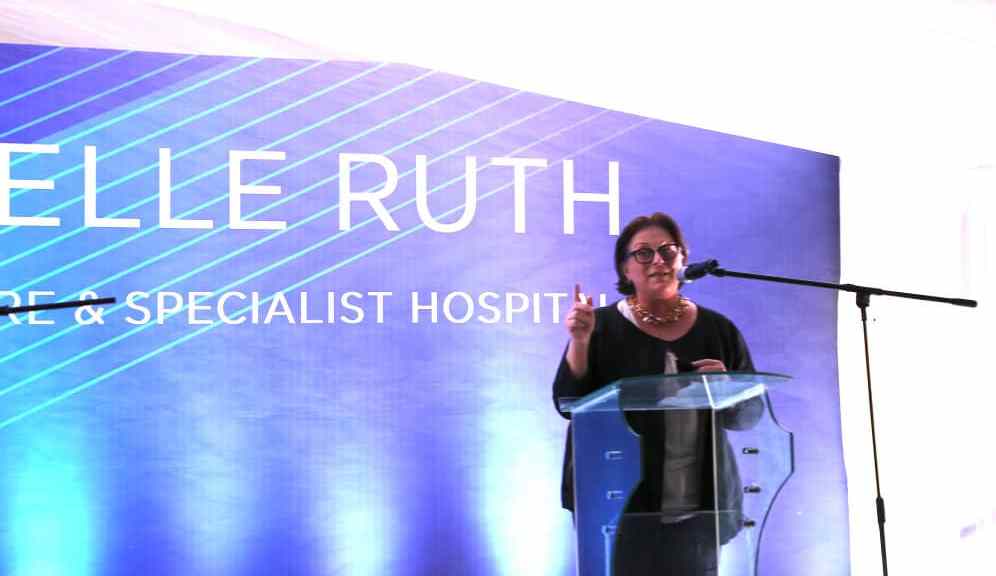
U.S. Consul General Claire Pierangelo joined dignitaries including Speaker of the House of Representatives Femi Gbajabiamila and Lagos State Governor Babajide Sanwo-Olu for the formal opening of the Marcelle Ruth Cancer Center & Specialist Hospital (MRCC) in Lagos.

The new healthcare facility founded by Dr. Modupe Elebute Odunsi, is equipped with cutting edge American medical diagnostic equipment and is reputed to be Nigeria’s first comprehensive cancer treatment center.

Delivering remarks at the event on Friday, Pierangelo noted that the establishment of the MRCC represents yet another example of the strong partnership between American and Nigerian private sectors to significantly improve public health outcomes.

She also noted that the United States continues to lead the world in medical research, innovation and technology providing solutions to tackle the scourge of cancer and bringing happiness to many, as demonstrated by the ingenious medical devices developed by Varian and GE Healthcare.

She lamented the heavy emotional and financial burden cancer places on patients and their loved ones and expressed optimism that the new health facility will make cancer treatment available locally and significantly reduce medical tourism for cancer care.

“We can only hope that more centers like the MRCC will emerge and that all stakeholders in the health system continue to take big strides towards defeating cancer. Varian, GE and other U.S. medical equipment suppliers are ready to be reliable partners in such effort,” Consul General Pierangelo said.

“It is heartwarming to know that Marcelle Ruth Cancer Center & Specialist Hospital is the first comprehensive healthcare center in Nigeria and perhaps the whole of Africa, with the most advanced radiotherapy treatment. With these diagnosis and treatment capabilities now available in Nigeria at MRCC, Nigerians do not need to travel overseas again to seek medical solutions for any kind of cancer,” she added.

According to the International Agency for Research on Cancer, Nigeria recorded nearly 125,000 new cases of cancer in 2020 and about 79,000 cancer-related deaths. That means every hour, fourteen Nigerians are diagnosed of cancer and nine die as a result. By IAEA recommendations, Nigeria should have, at a minimum, 150 working medical linear accelerators. However, there are currently only between 3-5 working machines in the country at any given moment.

Secretary Blinken’s Virtual Travel to Africa

By SDNonline

Secretary of State Antony J. Blinken will embark tomorrow, April 27, on his first virtual trip to Africa, where he will visit Kenya and Nigeria and engage with young people from across the continent.

Secretary Blinken will begin his virtual travel to Africa meeting with Young African Leadership Initiative (YALI) alumni. In a “Ten Questions with Tony” event, YALI alumni will have an opportunity to engage with the Secretary on a range of topics, including the role of youth in the future of Africa, economic development, democracy and good governance, climate change, and health. Through YALI, the United States works with public, private sector, and civil society partners across the continent to develop initiatives and economic opportunities to support the creativity, innovativeness, and energy of Africa’s youth.

Secretary Blinken will then travel virtually to Nigeria, where he will underscore the shared goals of strengthening democratic governance, building lasting security, and promoting economic ties and diversification. People-to-people connections, underpinned by the dynamic Nigerian diaspora in the United States, amplify and strengthen our relationship. During his visit, Secretary Blinken will meet with President Buhari and Foreign Minister Onyeama to reiterate the value of the bilateral relationship and discuss issues of shared importance. Blinken will also participate in a health partnership event to underscore the collaboration to combat the pandemic as well as long-term U.S. investments in combatting infectious diseases. He will meet with a beneficiary of a PEPFAR program and a Nigerian health care worker.

The Secretary’s virtual trip to Kenya will celebrate the 57-year bilateral relationship. Blinken will meet with President Kenyatta and Cabinet Secretary Omamo to reaffirm the strategic partnership, discuss future cooperation to promote democracy and expand trade, and explore avenues to address global challenges, including climate change and the COVID-19 pandemic. The Secretary will also visit Kenyan-based renewable energy companies that, thanks in part to U.S. government engagement, are a model of innovative clean energy alternatives in Africa. Finally, as part of the solidarity with Kenya amid the global pandemic, we will highlight a U.S.-donated Mobile Field Hospital to which the United States is providing essential COVID-19 medical supplies through AFRICOM and the Massachusetts National Guard’s State Partnership Program.

World Malaria Day: U.S. partners Nigeria in prevention, treatment

By SDNonline

In its Annual Report released to the U.S. Congress, the President’s Malaria Initiative (PMI) said that in 2020, despite the constraints of COVID-19, PMI helped Nigeria provide 14.7 million treatment doses at the facility and community levels, 8.2 million of which were for pregnant women and children.

PMI distributed 7.1 million insecticide-treated mosquito nets (ITNs), provided 7.2 million rapid test kits, and trained 9,300 health workers to properly diagnose and treat patients for early detection of the disease.

Led by the U.S. Agency for International Development (USAID) and implemented together with the U.S. Centers for Disease Control and Prevention (CDC), PMI works with partner organizations to benefit more than 41 million people across Nigeria.

Use of ITNs is one of the most effective measures to prevent malaria. Since 2010, PMI has supported Nigeria in the distribution of more than 61 million bed nets, which are now in use in 43 percent of Nigerian households, up from just 23 percent at the start of the initiative.

“Malaria is one of the leading causes of death among children in Nigeria,” said USAID Mission Director Anne Patterson, who oversees PMI activities in collaboration with CDC leadership. “We are pleased to see our partnership with Nigeria has had clear success and will continue this support with proven methods of prevention and treatment against malaria.”

Nevertheless, malaria remains an onerous burden among the poorest and the most vulnerable echelons of Nigerian society. During pregnancy, the disease can pose a life-threatening risk to both mothers and babies; malaria also causes adults and children to miss work and school, contributing to economic hardship.

PMI works with Nigeria’s National Malaria Elimination Program to scale-up proven, cost-effective, and life-saving malaria control interventions centered around ITN distribution, intermittent preventive treatment for pregnant women, diagnostic testing, and treatment.

Simultaneously – and equally important – PMI helps to strengthen health systems and build the skills of health workers to deliver malaria services. PMI also enhances the capacity of federal and state health officials to manage malaria control activities.

U.S. Global Malaria Coordinator Raj Panjabi said, “Science shows we can beat malaria and we can beat it in our lifetime. Yet we need bold action to stop COVID-19 from holding us back. The United States is proud to partner with Nigeria to continue the fight.”

U.S. launches new $90 Million malaria control effort in eight Nigerian states

-By FUNMI FALOBI-

U.S. Agency for International Development (USAID) Mission Director Anne Patterson joined Dr. Perpetua Uhomoibhi, Coordinator of Nigeria’s National Malaria Elimination Program on Tuesday to launch a new activity to control the country’s leading killer of children – malaria – in rural areas of eight vulnerable states.

Over the next five years, the $90 million President’s Malaria Initiative for States (PMI-S) will serve as the flagship activity for the global U.S. President’s Malaria Initiative (PMI) in Nigeria. Since 2010, PMI has provided $712 million in investments, including the distribution of over 61 million insecticide treated bed nets (ITN), which are now in 43 percent of all households, twice the rate before the intervention.

“In Nigeria, members of low-income households in rural areas are seven times more likely to contract malaria than urban dwellers,” Patterson said. “Because these communities also have limited access to prevention and treatment services, it is critically important to reach these populations to reduce malaria.”

In partnership with state governments, PMI-S will improve the quality of and access to malaria services, promote evidence-based decision-making, boost drug drug-based prevention and treatments, and strengthen health systems and program management.

The new activity builds on the success of earlier PMI-supported malaria interventions in Nigeria, which has helped the national rate of malaria infection decrease by 16 percent – even higher for children under five – since PMI began operating in Nigeria. PMI has also helped increase the likelihood a pregnant woman receives malaria prophylaxis fourfold.

Led by USAID and implemented with the U.S. Centers for Disease Control and Prevention (CDC), in the last year, in addition to distribution of ITNs – provided 22 million doses of prophylaxis to pregnant women, 6.9 million doses to children, and 129 million treatment doses at health facilities and in communities. Another 62 million rapid tests helped health workers properly diagnose and treat patients for malaria and other fevers. PMI-S is implemented by Management Sciences for Health (MSH).

World Earth Day: U.S. Embassy educates children, plants trees

By sdnonline

To commemorate World Earth Day on April 22, 2021, the U.S Embassy’s Green team, led by Ambassador Mary Beth Leonard and Deputy Chief of Mission Kathleen FitzGibbon, visited the LEA Primary School in Gwarimpa to meet the 20 ECO-Scholars sponsored by the Embassy’s recycling program, plant trees, educate the children on the need to recycle, and donate school supplies and learn about the progress of the 20 ECO-Scholars sponsored by the recycling program. The Embassy will plant 20 trees to represent the 20 Eco Scholars sponsored by the Green Stripe Initiative program.

Ambassador Leonard noted, “There is no greater way to put words into action than to witness the transformation of American recyclables into the bright eyes of Nigerian students. As the United States convenes the Leaders’ Summit on Climate today, we recognize that only together with government, the private sector and civil society can we succeed in reducing emissions and transitioning to welcome the benefits of climate action including job creation and innovation.”

The Green Stripe Initiative’s focus has been on increasing efforts to recycle paper, glass, cardboard, and plastic. While great strides have been made in this regard, Green Stripe will additionally focus on other tangible areas of impact such as energy consumption, waste disposal, and water usage. With each step along the way, GSI seeks greater community involvement as we focus on a greener Earth for all.

On the recycling front, the Embassy has been working with a local partner, Chanji Datti, who collects recyclables and converts them into raw materials for further use. To this end, revenues generated from recyclables collected from Mission members, have been used by Chanji Datti in conjunction with the Flexisaf foundation to support 20 ECO-Scholars at the LEA School in Gwarimpa, Abuja.

The embassy commends Transcorp Hilton for supporting this year’s World Earth Day by providing additional trees to plant. This affirms the importance of the public and private sectors working together to reduce emissions and to combat climate change.

U.S. govt supports additional 45,000 people living with HIV in Oyo, Ondo States

By sdnonline

The, U.S. government will identify and place an additional 45,000 People Lving with HIV (PLHIV) in Oyo and Ondo states on life-saving antiretroviral treatment as part of efforts to move Nigeria towards HIV epidemic control.

The U.S. President’s Emergency Plan for AIDS Relief (PEPFAR), administered by the U.S. Centers for Disease Control (CDC), is providing HIV treatment to more than 23,000 PLHIV in Oyo State and over 12,000 PLHIV in Ondo State.

United States Consul General Claire Pierangelo disclosed this during the launch of the HIV Antiretroviral Treatment (ART) Surge programs in Oyo and Ondo States which held on Wednesday and Thursday respectively.

“The PEPFAR Antiretroviral Treatment (ART) Surge program identifies people living with HIV and places them on treatment for life. HIV treatment not only reduces HIV-related illnesses and death but also helps prevent new infections,” Pierangelo remarked.

Speaking during a courtesy and advocacy visit to the Ondo State Government House, Pierangelo thanked Deputy Governor Lucky Aiyedatiwa and senior members of the administration for their commitment to work with all stakeholders, as the state implements the PEPFAR ART Surge.

She urged the Ondo State Government to remove all barriers hindering people living with HIV from accessing free services offered by the U.S. government through the PEPFAR program. Specifically, she highlighted the negative effect of user-fees as a major barrier to PLHIV accessing treatment and urged the elimination of such fees. In addition, she advocated removal of antenatal care charges for pregnant women living with the virus.

In Oyo State, Consul General Pierangelo met with the Secretary to the State Government, Mrs. Olubamiwo Adeosun, who represented Oyo State Governor Seyi Makinde. They discussed the U.S. government’s PEPFAR support in Nigeria’s policy development, human capacity building, and strengthening health systems, including the provision of state-of-the-art laboratories and pharmaceutical warehouses.

While in Ibadan, the Consul General also visited the University College Hospital where she toured the U.S. CDC-supported ART clinic, as well as interacted with program beneficiaries and management staff of the facility.

Pierangelo requested Oyo and Ondo state governments to prioritize the procurement of additional HIV test kits to support the current PEPFAR efforts. The additional test kits are necessary for identifying PLHIV in various communities, and the rapid and sustained effort to put them on life-saving medications. This effort will ensure that they live normal, productive, and healthy lives, and break virus transmission.

In 2020, despite the COVID-19 pandemic, more than 8.2 million people received PEPFAR­-supported HIV counseling and testing services in Nigeria. In each week of 2020, the U.S. government, through PEPFAR helped place 6,000 newly identified HIV-infected Nigerians on treatment, while also supporting quality HIV services for over 1 million HIV-infected Nigerians already in PEPFAR-supported care.

Furthermore, more than 1.2 million pregnant women received HIV testing and counseling to prevent mother-to-child transmission, and about 1.3 million orphans and vulnerable children received PEPFAR-supported care and supportive services.

In Nigeria alone, the U.S. government has invested more than $6 billion in the national HIV/AIDS response, toward supporting both national and state governments to identify and treat people living with HIV.

… Enhancing socio-economic and sustainable development issues & initiatives.