Category Archives: Uncategorized

International Day of Families: JFC urges families, professionals to use technologies for positive impact

As the world celebrates International Day of Families, Journalists for Christ (JFC) International Outreach, the Association of Christian Journalists in Nigeria has urged families to bond with each other without the distractions of electronic gadgets.

Based on the theme for this year, “Families and New Technologies,” JFC also charged the media to deploy the use of technology in their reportage to ensure social development and wellbeing of all.

In a statement signed by the JFC President, Lekan Otufodunrin, the association said this year’s theme is a clarion call for parents to pay more attention to training and nurturing their children as stated in Proverb 22:6.

No doubt the COVID-19 pandemic has reiterated how technology can shape the world positively and journalists can leverage on this to provide adequate coverage to issues bedevilling Families across Nigeria and the world at large.

” We believe that this year’s theme is a reminder for parents to deploy the use of technology in every way possible to monitor and protect their families in the face of kidnap,rape, robbery, abuse, and other vices that are increasing by the day.

“Most importantly, this is the time to remind professionals to put the spotlight on issues affecting families, with the aim of driving social change and development.

“Our publication titled – ‘Muffled Voices’ highlighted some of the challenges that Internally Displaced Person’s (IDPs) encounter and the low reportage of these issues by the media,” he said.

JFC noted that the IDPs in camps also belong to specific families and the media should not neglect them in their reportage.

U.S. Ambassador visits Akwa Ibom, inspects HIV control facilities

By sdnonline

U.S. Ambassador Mary Leonard has visited Akwa Ibom to inspect the HIV control facilities in the state.

The Ambassador and a delegation from the U.S. Agency for International Development (USAID) led by Mission Director Anne Patterson met Governor Udom Emmanuel and other senior state officials toured hospital and HIV control facilities supported by USAID.

With Governor Emmanuel, Ambassador Leonard discussed the success of HIV control in Akwa Ibom State as a result of a “surge” in U.S. assistance through the President’s Emergency Plan for AIDS Relief (PEPFAR) and the state abolishing user fees for treatments. The two officials also spoke of malaria control, the investment climate in the state ahead of the arrival of a new Sheraton hotel, and Akwa Ibom’s participation in the new USAID ‘State 2 State’ activity to improve governance.

“The United States applauds Akwa Ibom’s achievements toward HIV epidemic control,” the ambassador told the governor. “Your commitment to abolish user fees has been critical to increasing use of HIV services and has made Akwa Ibom a model we hope other states will follow.”

Leonard also visited a U.S.-supported HIV ‘Situation Room’ within the state Ministry of Health. A technology-based platform that keeps service providers, community service managers, and public health decision makers connected, the Situation Room helps the state ensure transparency and availability of real time data, and greater data integrity. Data generated in the Situation Room guides interventions and course corrections and has been a critical tool in Akwa Ibom’s historic growth of HIV treatment from 20 to 80 percent of people living with HIV in the state.

She also visited a ‘One Stop Shop’ in Uyo that provides HIV medicines and therapy and other health services for more than 7,000 members of vulnerable populations in a safe and stigma free space. She also visited the U.S.-supported General Hospital Etinan, where a staff of 135 provides anti-retroviral therapy for more than 3,300 patients, including a 45-bed inpatient capacity.

The Ambassador met with leaders of the Akwa Ibom state Task Force on Human Trafficking established by Governor Emmanuel in August 2020. She commended officials on their efforts to combat human trafficking, and said she hopes other states will follow their example. She encouraged officials to follow up formation of the Task Force with effective anti-trafficking legislation.

Belemaoil donates test kits to support USAID’s HIV/AIDS eradication efforts in Akwa Ibom

By sdnonline

On behalf of the U.S. government, Ambassador Mary Beth Leonard has accepted a donation of HIV rapid test kits from Belemaoil, a leading Nigerian oil and gas firm, to support activities by the U.S. Agency for International Development (USAID) to eradicate HIV and AIDS in Akwa Ibom State.

The handover took place in a ceremony between Ambassador Leonard, who is leading the U.S. delegation on a tour of the U.S. government activities in Akwa Ibom, President and Founder of Belemaoil Nigeria Ltd. Tein Jack-Rich,

the Secretary to the State Government Dr. Emmanuel Ekuwem, USAID Nigeria Mission Director, Dr. Anne Patterson, and the State Commissioner of Health Prof. Augustine Umoh.

The donation brings together the U.S. strategy under the President’s Emergency Plan for AIDS Relief (PEPFAR) implemented by USAID, Centers for Disease Control (CDC), and Department of Defense and the oil giant Belemaoil through its corporate social responsibility program to deepen private sector involvement in Nigeria’s health sector to strengthen healthcare and achieve HIV epidemic control in the Akwa Ibom.

“We celebrate the incredible strides made in Akwa Ibom over the last two years to control HIV,” Ambassador Leonard said at the ceremony. “We are committed to continuing this partnership to help ensure that residents of Akwa Ibom who need these services can access them without barriers. We also encourage other private sector partners to support the national HIV response.”

The test kits, with a testing capacity of 74,600, will support prevention of mother-to-child transmission services within antenatal clinics and provide critical HIV testing services to numerous young children and others who are at risk.

Even with the challenges of the COVID pandemic, Akwa Ibom, with USAID’s support, has made remarkable progress in its efforts to eradicate the epidemic. The number of people receiving lifesaving HIV treatment in the State has increased from 19 percent to 82 percent, with 35,000 people in 2019 to over 156,000 in 2021.

Jack-Rich added: “This contribution is part of our commitment to consistent engagement through reputable partners like USAID to support states and communities in the Niger Delta, and indeed all across Nigeria.”

An estimated 1.9 million Nigerians are living with HIV/AIDS, according to the U.S.-supported Nigeria HIV/AIDS Indicator and Impact Survey (NAIIS) of 2018. The United States, through PEPFAR, supports 80 percent of all HIV/AIDS treatment services provided in Nigeria.

Through PEPFAR, USAID supports 16 states, including Akwa Ibom, to deliver client-centered HIV treatment services to over 500,000 individuals and delivers HIV test kits, medicines, and laboratory reagents to provide life-saving HIV treatment to over 1.4 million Nigerians throughout the country. USAID also provides comprehensive services to over 500,000 vulnerable children and their caregivers impacted by HIV

Electoral Reforms: CSOs demand electoral amendment for media, INEC, women, youths, PWDs

By sdnonline

No doubt, Nigeria is enjoying democracy to an extent but the truth remains that the nation nascent democratic system can still be better with the amendment of it’s electoral process to deepen citizens participation in democracy.

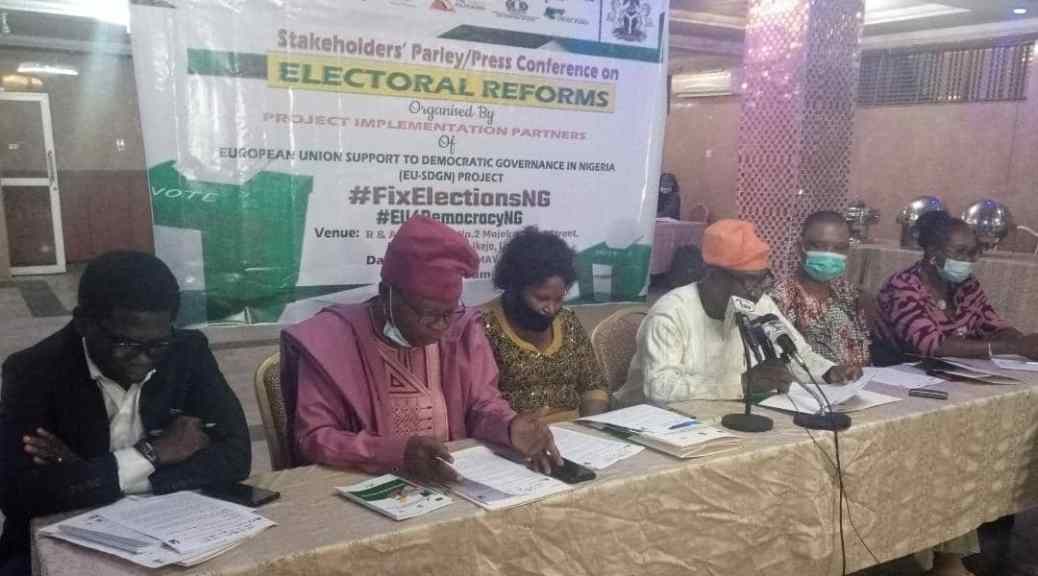
As part of efforts to deepen citizens democratic participation, civil society organisations (CSOs) have called on the National Assembly to hasten the process of the electoral reforms to ensure the concerns of critical stakeholders are adequately met.

The coalition organisations with support of the European Union Support to Democratic Governance in Nigeria (EU- SDGN) are: Institute for Media and Society (IMS); International Press Centre (IPC); Centre for Citizens with Disability (CCD); CLEEN Foundation; Inclusive Friends Association; National Institute for Policy and Strategic Studies (NIPSS), and Nigeria Women’s Trust Fund.

Others are: Policy and Legal Advocacy Centre (PLAC); Premium Times Centre for Investigative Journalism (PTCIJ); The Albino Foundation; Yiaga Africa; Centre for Democracy and Development (CDD); Kimpact Development Initiative (KDI) and Peering Advocacy and Advancement Centre in Africa (PAACA).

Speaking at a joint press conference in Lagos, Lanre Arogundade, Executive Director, International Press Centre (IPC), explained that there is the need for the National Assembly to adopt a set of citizens’ priorities for the 2021 Electoral Amendment Bill

“We are here gathered to further amplify these and related issues for the purpose of enlisting the support of the media, as the fourth estate of the realm, with the constitutional mandate to monitor governance and hold the government accountable to the people, for the citizens-driven electoral reforms that we seek.

“In the above regard the underlining principle behind our call on you to play a vanguard role in the process is for the media to ensure that the National Assembly is accountable to key stakeholders in the Nigerian electoral process in making any amendments. Among these stakeholders are the civil society, the women, the youths, the people living with disability and the election management body itself – the Independent National Electoral Commission. Any amendment that fails to reckon with the demands of these groups will not help to strengthen the electoral processes,” he said.

Parts of the demand of the coalition on media include: That there should be recognition of, distinction between and provision for free access and paid access for political parties and candidates to the media during election campaigns; that public media (broadcast and print) should provide equitable airtime/coverage to all political parties and candidates during election campaigns- under both free and paid access arrangements; that Public media (broadcast and print) should grant the usually underserved and marginalised groups, particularly Women and People With Disabilities (PWDs), special discounted airtime/advert rates during election campaigns.
That the media should publish airtime/space tariffs before, during and after elections.
That the penalty for contravention of the provisions in Section 100 should be restricted to the offending entity (the media house). It should not be extended to the “principal officers” and “other officers’ of the media house.

“One important frontier at which information could serve as public good is the electoral process and that is why we are proposing some amendments that will ensure that the media is not encumbered in the coverage and reportage of political parties and candidates, especially as self-regulatory frameworks, including the Nigerian Media Code of Election Coverage require that the media should give them equitable access while also promoting the inclusive issues of women, youths and people living with disabilities. Indeed, all the frameworks governing media role in elections require that journalists should adhere to the ethical and professional imperatives of fairness, balance, accuracy, conflict sensitivity and avoidance of hate speech.

,”The above demands reflect our rejections of the proposed amendments to the Electoral Act in the bill before the National Assembly especially in Section 100 (6 (a) of the bill proposing that the fine for media houses be increased to N 2millon in the first instance and N5million upon subsequent conviction a d Section 100 (6) (b) proposing that: “Principal officers and other officers of the media house to a fine of N2 million or to imprisonment for a term of 12 months,” Arogundade declared.

In the current Electoral Act 2010 (as amended) the penalties for contravention of the provision in Section 100 (3) and100 (4) as stipulated in Section 100(6) is: A maximum fine of N 500, 000 in the first instance, and a maximum fine of N1million for subsequent conviction.

While maintaining that there is high expecrtation from the media, Executive Director, Institute for Media and Society (IMS), Dr. Akin Akingbulu said the electoral law must ensure the media perform it’s role without inhibitor.
“The expectation from the media is very high. Media should ensure equal and equitable coverage of political parties, women and people with disabilities during electoral process,” he said.

In the area of inclusion issues, the coalition organisations eiterated their demands for the National Assembly to give utmost consideration to: protecting the voting rights of the blind and visually impaired voters;
regulating the cost of nomination of candidates to promote political inclusion and;
promoting the inclusion of women, youth, and persons with disability in politics.

“Electoral reform remains the only way an inclusive electoral system can be achieved. Hence, the continued call for the enabling legal instruments wherein inclusive participation of all Nigerians to participate in the electoral process (without being disenfranchised, without fear of attack by hoodlums and political hooligans, without fear of insecurity, without denials based on gender or disability, and without any restrictions in the ease to emerge as a candidate, and without any inhibition to vote and the votes to count during the election, etc) is guaranteed.”

Similarly, David Anyaele, Executive Director, Centre for Citizens with Disability (CCD) declared that access to voters education and political positions are great challenges for people with disability.

“There is no enabling platform for people with disability to make our voice heard and become visible. Access to voters education and political positions are our great challenges . People think because of our condition we cannot participate in the electoral process,” he said.

Director of Programmes, Women Advocate Research and Documentation Centre (WARDC) Mary George-Peluola, stressed that women still face a lot of challenges which hamper them from pursuing their political career and getting political leadership positions.

Adeola Ekine Chairperson, Nigeria Association of Women Journalists (NAWOJ) Lagos State Chapter, enjoined women to support each other in every area including politics and urged media houses not to be gender biased in sharing responsibilities.

On his part, Chairman of Lagos State Council of Radio and Television Theatre Art Workers Union (RATTAWU), Dare Durosinmi called on media houses in Nigeria to provide life insurance for journalists during the electoral process.

On the Issue of INEC and conduct of credible and acceptable elections, the CSOs therefore demand for: Strengthening the financial and operational independence of the Independent National Electoral Commission (INEC); publication of polling unit level results by INEC to promote transparency in the results process; legitimising the use of technology in the electoral process through electronic accreditation of voters; electronic voting, electronic collation and transmission of results;
Introducing stiffer sanctions for electoral offences and establishment of the Electoral Offences Commission;
Improving election security and comprehensive regulation of the conduct of security personnel on election duty;
Introduction of early voting for Nigerians on essential election duty and voting rights for Nigerians in the diaspora;
Eliminating judicial actions/proceedings that ridicule or make a mockery of citizens will and choices in electing their representatives.

According to the coalition organisations “It was a welcome development when the National Assembly began a process in 2020 to amend the electoral laws..The urgent need for a new law is founded on the broad-based consensus by all Nigerians and electoral stakeholders on the need for a more credible and improved electoral process that encourages active citizens’ participation while genuinely guaranteeing their rights in choosing leaders that will provide quality representation and sustainable governance. There’s no doubt that over the last two decades of uninterrupted civil rule, there is still a deep yearning for reforms that can significantly inspire citizens’ trust in democracy.

“However, the silence from the National Assembly on the Electoral Amendment bill since the public hearing in December 2020 and the retreat to consolidate citizens’ feedback into the bill in late January 2021 is worrying. Nigerians deserve that the elected representatives readily respond to the needs of the people and grant the request for a new electoral law that genuinely captures the wishes of the people. This delay in concluding the process serves as a reminder of the failed process in 2018 and the lost opportunity to consolidate Nigeria’s democracy in 2019.”
WPFD2021: JFC tasks govt on press freedom, charges journalists on ethical reporting

By sdnonline

As media organisations and associations worldwide commemorate the World Press Freedom Day, Monday, , May 3, 2021, Journalists for Christ (JFC) International Outreach, the association for Christian Journalists and allied professional in Nigeria, has called on the Nigerian government to ensure the necessary freedom for the Nigerian press in order to carry out its professional role of informing the public

The organisation also urged media professionals in the country to ensure access to verified and reliable information for the people.

According to JFC President, Lekan Otufodunrin, the theme for this year’s celebration ” Information as a Public Good” is very apt considering the urgent need, more than ever before, to ensure that people have access to the right information at all times.

“New media technologies have enhanced freedom of expression, dissemination and access to information, but the level of misinformation and dissemination have become worrisome.”

“Fake news have become the order of the day with many false information and harmful content being disseminated regarding the COVID-19 pandemic and other major crises,” he said.

He explained that in line with the statement by UNESCO Director General, Audrey Azulay, this year’s celebration should call attention to the  essential  role of free and professional  journalists  in  producing  and  disseminating this information, by tackling misinformation and other harmful content.

Otufodunrin therefore called on the Nigerian government to ensure the press is not gagged saying, “In this regard, the media in Nigeria and worldwide needs the necessary freedom and support to be able to play it’s expected role in properly informing and educating the public.

“Hence, the information people get should be empowering and lifesaving for public good not harmful to individual and corporate existence.”

Workers Day: JFC calls for improved working conditions for journalists

By sdnonline

As the world celebrates the Workers Day, Journalists for Christ (JFC) International Outreach has called on media owners to improve working conditions for Journalists and other media workers.

While commending Journalists for their efforts in ensuring the society is well informed JFC President, Lekan Otufodunrin declared that the economic downturn is taking its toll on the media practitioners and the industry.

“On the occasion of today’s Workers Day celebration worldwide, Journalists For Christ congratulates journalists and other media workers for work they are doing in their various organisations, institutions and agencies.

“We acknowledge the challenges journalists have to cope with due to economic and other factors that have affected conditions of service and led to loss of jobs.

“We call on media owners in Nigeria to improve on the working conditions of their staff and provide necessary facilities to ease the job they have to do,” he said.

Otufodunrin said that workers retained should be adequately renumerated, while those retrenched should be paid their entitlements promptly.

“The situation where staff of media organisations are not paid for months and are expected to still perform optimally is not realistic and should not continue.

“We implore media owners and managements to explore and adopt new business models and use of new technologies to enhance their production for sustainability,” he advised.

JFC prayed that God would continue to grant both workers and owners the wisdom needed to sustain their operations.

Consul General Lauds U.S.-Nigeria Private Sector Partnership to Improve Cancer Patient Care

By SDNonline

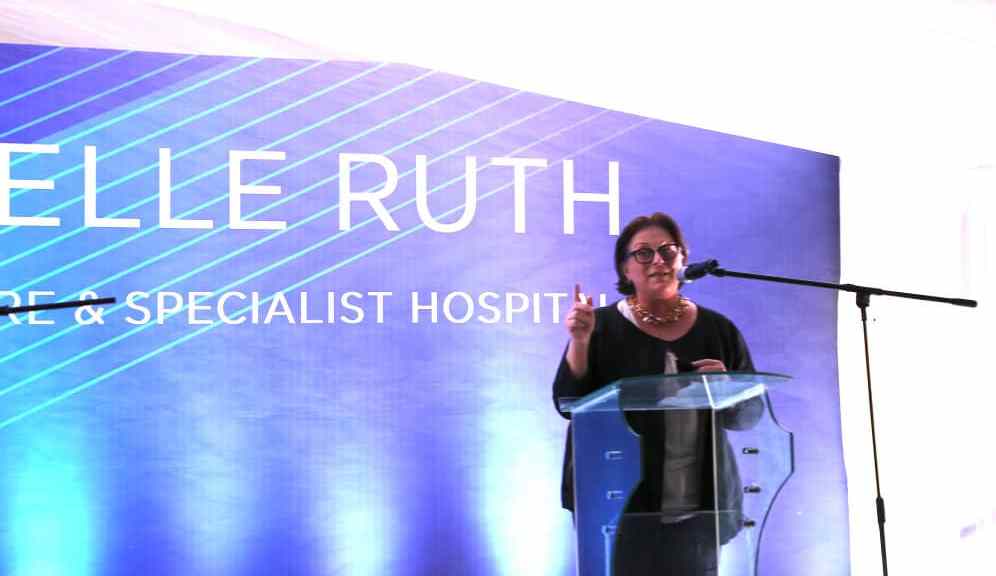
U.S. Consul General Claire Pierangelo joined dignitaries including Speaker of the House of Representatives Femi Gbajabiamila and Lagos State Governor Babajide Sanwo-Olu for the formal opening of the Marcelle Ruth Cancer Center & Specialist Hospital (MRCC) in Lagos.

The new healthcare facility founded by Dr. Modupe Elebute Odunsi, is equipped with cutting edge American medical diagnostic equipment and is reputed to be Nigeria’s first comprehensive cancer treatment center.

Delivering remarks at the event on Friday, Pierangelo noted that the establishment of the MRCC represents yet another example of the strong partnership between American and Nigerian private sectors to significantly improve public health outcomes.

She also noted that the United States continues to lead the world in medical research, innovation and technology providing solutions to tackle the scourge of cancer and bringing happiness to many, as demonstrated by the ingenious medical devices developed by Varian and GE Healthcare.

She lamented the heavy emotional and financial burden cancer places on patients and their loved ones and expressed optimism that the new health facility will make cancer treatment available locally and significantly reduce medical tourism for cancer care.

“We can only hope that more centers like the MRCC will emerge and that all stakeholders in the health system continue to take big strides towards defeating cancer. Varian, GE and other U.S. medical equipment suppliers are ready to be reliable partners in such effort,” Consul General Pierangelo said.

“It is heartwarming to know that Marcelle Ruth Cancer Center & Specialist Hospital is the first comprehensive healthcare center in Nigeria and perhaps the whole of Africa, with the most advanced radiotherapy treatment. With these diagnosis and treatment capabilities now available in Nigeria at MRCC, Nigerians do not need to travel overseas again to seek medical solutions for any kind of cancer,” she added.

According to the International Agency for Research on Cancer, Nigeria recorded nearly 125,000 new cases of cancer in 2020 and about 79,000 cancer-related deaths. That means every hour, fourteen Nigerians are diagnosed of cancer and nine die as a result. By IAEA recommendations, Nigeria should have, at a minimum, 150 working medical linear accelerators. However, there are currently only between 3-5 working machines in the country at any given moment.

Secretary Blinken’s Virtual Travel to Africa

By SDNonline

Secretary of State Antony J. Blinken will embark tomorrow, April 27, on his first virtual trip to Africa, where he will visit Kenya and Nigeria and engage with young people from across the continent.

Secretary Blinken will begin his virtual travel to Africa meeting with Young African Leadership Initiative (YALI) alumni. In a “Ten Questions with Tony” event, YALI alumni will have an opportunity to engage with the Secretary on a range of topics, including the role of youth in the future of Africa, economic development, democracy and good governance, climate change, and health. Through YALI, the United States works with public, private sector, and civil society partners across the continent to develop initiatives and economic opportunities to support the creativity, innovativeness, and energy of Africa’s youth.

Secretary Blinken will then travel virtually to Nigeria, where he will underscore the shared goals of strengthening democratic governance, building lasting security, and promoting economic ties and diversification. People-to-people connections, underpinned by the dynamic Nigerian diaspora in the United States, amplify and strengthen our relationship. During his visit, Secretary Blinken will meet with President Buhari and Foreign Minister Onyeama to reiterate the value of the bilateral relationship and discuss issues of shared importance. Blinken will also participate in a health partnership event to underscore the collaboration to combat the pandemic as well as long-term U.S. investments in combatting infectious diseases. He will meet with a beneficiary of a PEPFAR program and a Nigerian health care worker.

The Secretary’s virtual trip to Kenya will celebrate the 57-year bilateral relationship. Blinken will meet with President Kenyatta and Cabinet Secretary Omamo to reaffirm the strategic partnership, discuss future cooperation to promote democracy and expand trade, and explore avenues to address global challenges, including climate change and the COVID-19 pandemic. The Secretary will also visit Kenyan-based renewable energy companies that, thanks in part to U.S. government engagement, are a model of innovative clean energy alternatives in Africa. Finally, as part of the solidarity with Kenya amid the global pandemic, we will highlight a U.S.-donated Mobile Field Hospital to which the United States is providing essential COVID-19 medical supplies through AFRICOM and the Massachusetts National Guard’s State Partnership Program.