All posts by socialdevelopmentnews

I am Funmi Falobi, Development Journalist, PR professional, Social Entrepreneur and lead contributor/Editor, Social Development News. Beyond journalism, I am also passionate about advancing social causes and empowerment, especially for children, youth and women.

Ekiti: Where govt officials renege on following budgetary allocation

By Emmanuel Ukudolo, Ishaya Ibrahim, Funmi Falobi and Seyi Babalola

There is widespread impunity in Ekiti State with misappropriation of public funds. Government officials seem to have made it a habit of dipping their hands into the public purse and spending at will without recourse to the budget in five Local Government Areas.

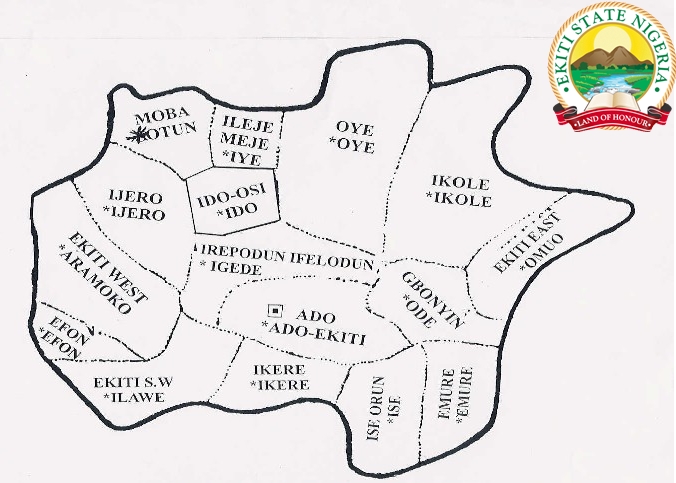
Auditor General of Local Governments in Ekiti State, Dr. Iyadunni Victoria Oke made allusion to  these breaches in the audit certificate she presented on Ekiti West Local Government Area, Ijero Local Government Area, Ikere Local Government Area, Ilejemeje Local Government Area and Irepodun/Ifelodun Local Government Area, where she posited that her observations reflect a true and fair view of the local government areas as at 31st December, 2022.

Investigations into the books of Ekiti West Local Government Area revealed that these breaches occurred in overhead cost, transfer and purchase of assets, overshooting the budget by almost half of the amount budgeted, without a supplementary approval by the local government approving authorities.
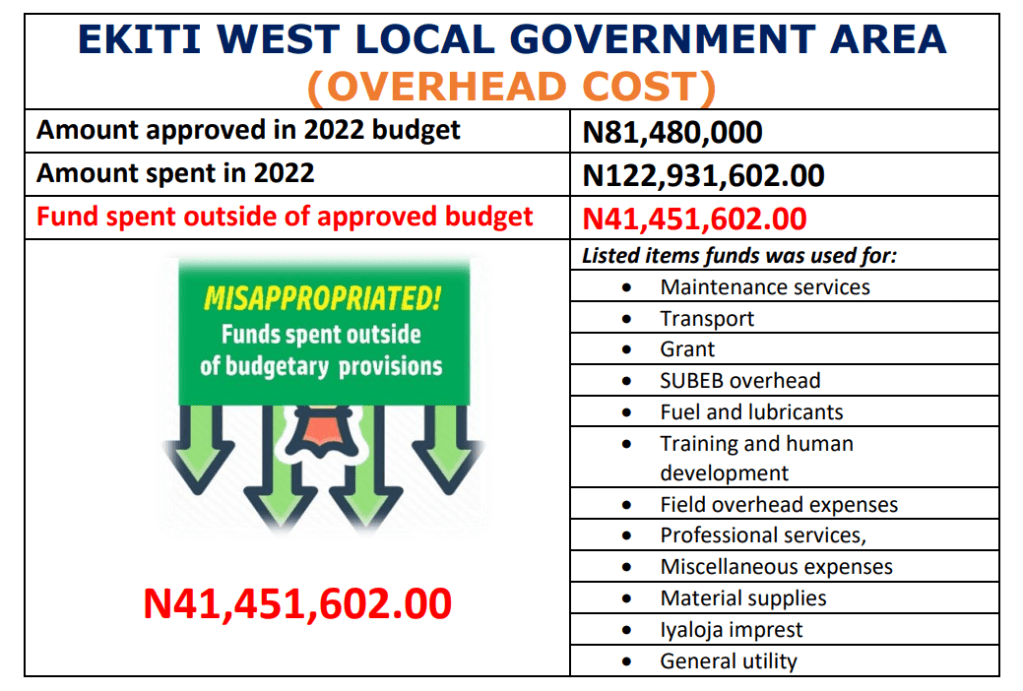
For instance, in Overhead Cost, the total budget for the year ended 2022 was N81, 480, 000 but Ekiti West Local Government Area spent N122, 931, 602.00, exceeding the budget by a total of N41, 451, 602.00. 
Items captured in the Overhead Cost include maintenance services, transport,  grant, SUBEB Overhead,  fuel and lubricants,  training and human development, field overhead expenses, professional services,  miscellaneous expenses,  material supplies, Iyaloja Imprest and general utility.
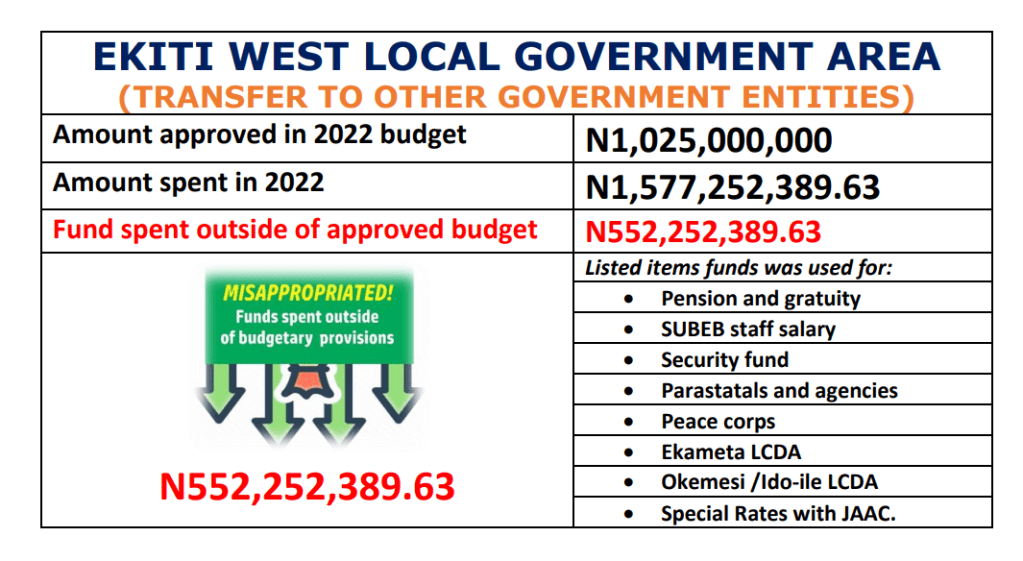
Under transfer to other government entities, the total budget for the year 2022 was  N1,025,000,000 but what was spent without supplementary approval was N1,577,252,389.63, overshooting the year 2022 budget by  N552, 252, 389.63. As usual there is no supplementary budget to approve the excess based on the impunity which seems to have eaten deep into Ekiti West LGA.
Items captured under transfer include pension and gratuity,  SUBEB staff salary,  Security fund,  Parastatals and agencies, Peace Corps, Ekameta LCDA, Okemesi /Ido-Ile LCDA and  Special Rates with JAAC.
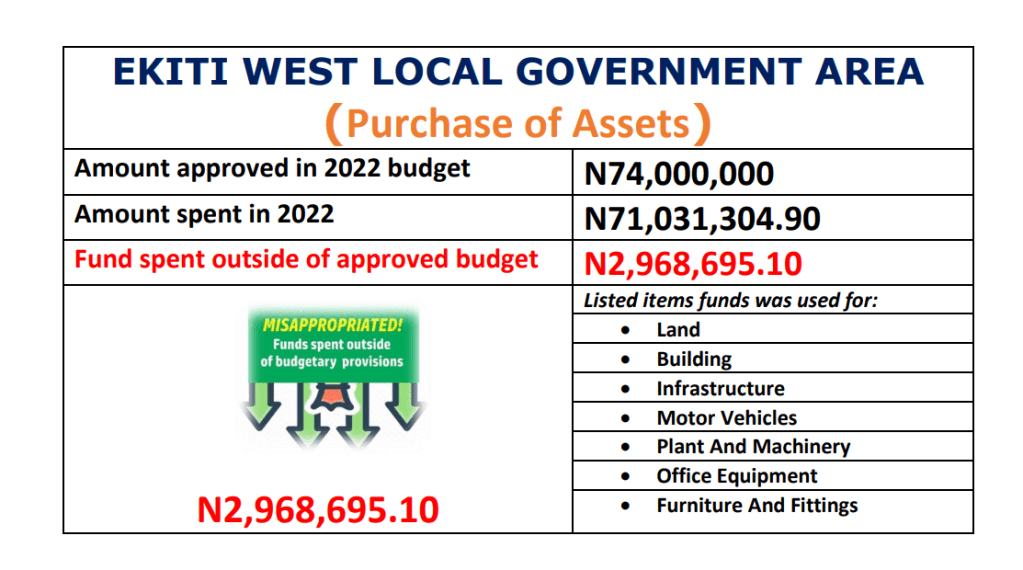
For Purchase of Assets, the total  appropriation for the Year  was  N74,000,000 but what was spent without budgetary approval was N71,031, 304.90, again exceeding the budget by  N2, 968, 695.10 kobo.
Items covered under this subhead include: land, building, infrastructure,  motor vehicles, plant and machinery, office equipment, furniture and fittings. 
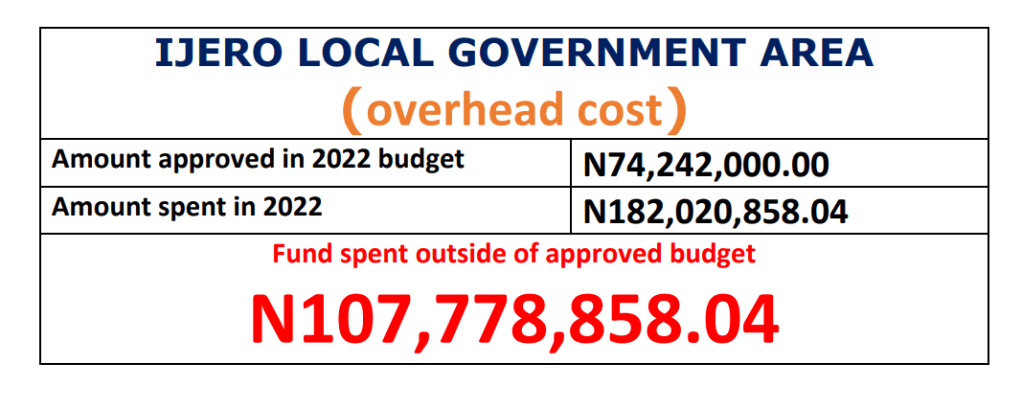
This same trend was replicated in Ijero Local Government Area where budget for overhead cost was N74, 242,000.00  whereas what was spent without budgetary approval was N182, 020, 858.04, surpassing the budget by N107, 778, 858.04 kobo. 
The trend continued in Ikere Local Government Area where no amount was captured in the 2022 budget for Iyaloja, yet the local government paid a sum of N155, 256, 935.23 to the Iyaloja of the state. 
To be specific, N300,000 was paid to the Iyaloja as stipend for 12 months, N78, 162, 600 was paid for Iyaloja’s Logistic Security and another N76, 794,335.23 kobo was paid to the same  Iyaloja as Assist/workshop claims without being captured in the 2022  budget. 
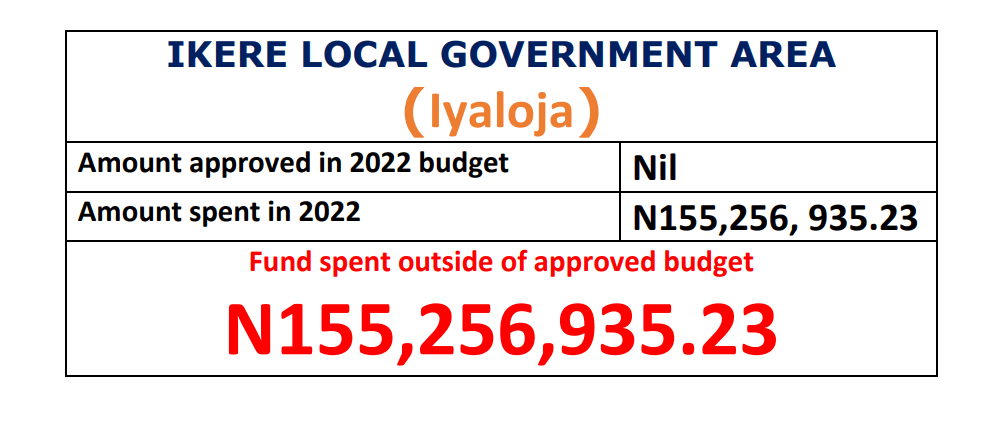
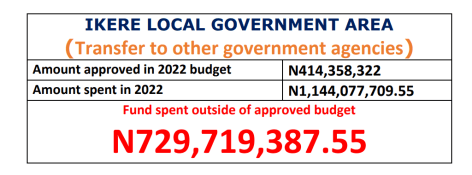
Ikere LGA also overshot the budget for the year 2022  in transfer to other government agencies.  For instance, the total budget for transfer in the affected year was N414, 358,322, whereas what was spent was N1, 144,  077, 709.55, exceeding the budget by N729, 719, 387.55 kobo almost N1 billion.  In fact, the practice of overshooting the budget was carried over from the year ended 2021.
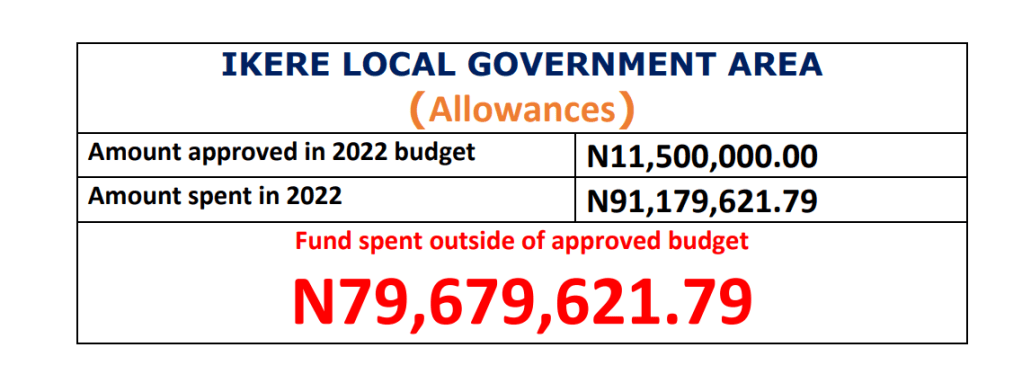
In fact the Ikere Local Government Area is so neck deep in impunity in the area of allowances also. For the year 2022, the budget captured N11, 500,000.00 for allowances but government officials spent N91, 179, 621.79 on allowances, exceeding what was provided for in the budget by N79, 679, 621.79 kobo. 
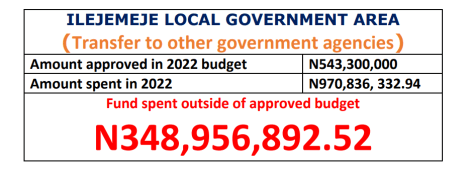
Ilejemeje Local Government Area is not left out in the mess pervading almost all the local  government areas in Ekiti State. For instance, under transfer to other government agencies, the Local government budgeted N543, 300, 000 for transfer to other government agencies, whereas  what was spent out of budgetary approval was N970, 836,  332.94 kobo, overreaching appropriation for the year by N348,  956, 892.52 kobo.
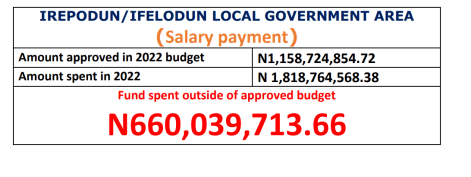
The cankerworm also spilled over to Irepodun/Ifelodun Local Government Area under the subhead of Salary payment for the year ended December 31, 2022.  The Local Government Area  budgeted N1,158, 724, 854.72 kobo, whereas it spent N 1,818, 764, 568.38 kobo, consequently spending  a whooping N660,039, 713.66 without budgetary approvals. 

The same holds true for social contributions, where the sum of N6, 550,000 was approved for the local government but as a result of inherent impunity, officials of the local government  spent N56,512, 399.11 kobo without any supplementary consent.
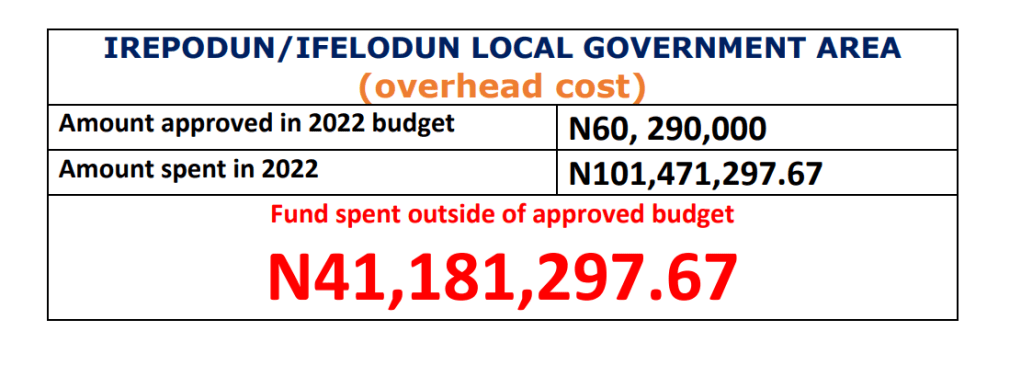
The same level of executive lawlessness was exhibited in overhead cost, where  the total budget  approved for the local government under the subhead was N60,  290, 000, whereas officials of the local government went ahead to spend N101, 471, 297.67 Kobo, exceeding what is approved by  N41, 181, 297.67 kobo. 

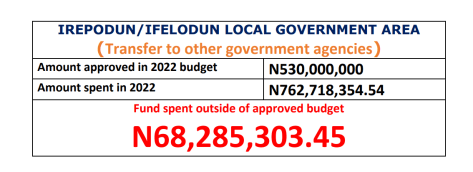
This financial lawlessness was also carried further to the subhead, transfer of other government entities, where N530, 000,000 was approved in the budget but what was spent for the year was N762,  718, 354.54 kobo, exceeding approval by N68, 285, 303.45 kobo. The same trend holds  true for allowance and others.
Reacting to this  ugly development, Chairman, Institute of Chartered Accountants of Nigeria (ICAN) , Ekiti State, Mrs. Funmi Alonge, said the local government officers involved should be called to explain what happened if there is no virement.
“If there is no virement, then they should be called to explain. Ideally, they should not have spent beyond their budgetary allocation,” she said in a telephone interview with one of our team members.  

She said although inflationary trends could sometimes lead to spending beyond budgetary allocation, but that when such happens, officers who dispense such funds must provide a clear explanation for the gap. 

 “Most times, the amount allocated and funds expected do not match and the cost of things are also increasing. For instance, if you budgeted N3, 000 on fueling before, look at the cost of fuel now. If you budgeted N189 per litre, look at it today. So, the amount budgeted will be at variance because the cost of things are escalating every day, and unfortunately, the revenue remains the same. But there should be a system for explanation. Once something is very wide like that, it calls for questioning. The officer in-charge should have been called to explain the reason for the gap.” 

In his reaction, Policy and Research Officer at Corporate Accountability, Advocacy and Public Participation Africa (CAPPA), Zikora Ibeh said the practice of local governments in Nigeria spending beyond their budgetary allocations indicates a deficiency in due process and weak financial management and oversight structures. 

“This pattern poses a significant threat to the financial health of any state and fosters fiscal indiscipline, leading to financial mismanagement, misappropriation, and the potential rise in public debt as governments may need to borrow to cover deficits. This prevalent issue across multiple local governments in the country is also the reason why local authorities are unable to finance capital projects, undermining economic development and effective governance.”

According to him, when local authorities fail to adhere to their budgets without due process, they undermine public trust and raise concerns about transparency and accountability in their financial management.

“ In the long run, this practice will ultimately destabilise the macroeconomic stability of any state, leading to adverse effects on its development prospects.”

>>Budget Infographics: Innate communications<<
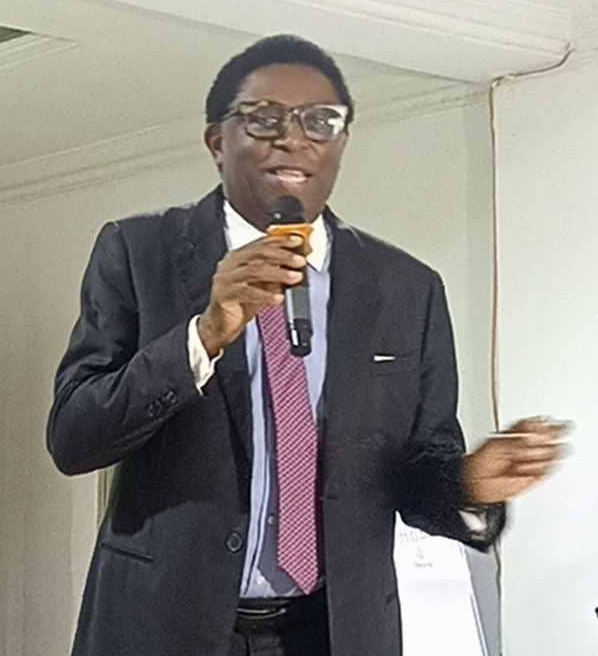
Financial expert, Tilewa Adebajo warns NASS on danger of securitisation of Ways and Means

By Funmi Falobi

Financial expert, Mr Tilewa Adebajo has raised concern on the adverse consequences to the economy of the securitisation of Nigeria’s Ways and Means advances.

He noted that such an act by the Senate validates the conversion of Nigeria’s huge Ways and Means indebtedness to further loans as bonds and other securities. “Securitisation means the government now issues treasury bills and bonds to pay off the Ways and Means.”

Securitisation of the Central Bank’s ways and means advances was a feature of the Muhammadu Buhari administration. The Senate approved President Buhari’s request, sources say, without including it in the Order Paper. It was intended to restructure N22.7trn loans which the Federal Government took from the CBN under the ‘Ways and Means Provision.’ Securitisation increased Nigeria’s Debt to GDP ratio to 38.4 per cent in the public debt balance.

“Ways and Means was never supposed to exceed N1 trillion, yet now it has surpassed N30 trillion, which is against section 38 of the Central Bank of Nigeria Act. Under Section 38 of the CBN Act, the government is granted the authority to borrow from the apex bank, but such overdraft should not surpass five per cent of the government’s revenue from the previous year. It should also be repaid by the end of the financial year the loan was obtained,” he said.

Speaking at the Audit Reporting Training organised by FrontFoot Media Initiative held in Lagos, Adebajo said that such an action has compounded Nigeria’s indebtedness.

“Ways and Means financing is now 30 times more than is legally allowed. Securitization of Ways and Means is an illegal act. Nigeria’s deficit is increasing annually. Now 95 per cent of Nigeria’s revenue goes for debt service,” he said.

Adebajo noted that while regular citizens cannot do much to stop the spendthrift direction of the Federal and State governments, the media and professional groups should be more active in calling out any misbehaviour and wrong direction.

“Unfortunately, the citizens are too busy struggling with survival. The key responsibility falls on the media and the elite. The elite have compromised. The media are not pulling their weight,” he noted.

While urging the citizens to pay close attention to the country’s financial management, Adebajo advised, “Anytime you have a budget, ask for the audited accounts for the same year. What did you say you would do? What did you really do? What revenue target did you project? What was the actual revenue? What was the expenditure projection? What was actually spent and on what?”

On his part, Emeka Izeze, Director and Partner, FrontFoot Media Initiative said the “Audit Reporting Training: X-Raying State Government Audit Reports” is a flagship capacity development programme.

“It is a targeted training of journalists which we are undertaking under the auspices of the Wole Soyinka Center for Investigative Journalism and the sponsorship of the MacArthur Foundation,” Izeze asserted.

The Lagos workshop is the fourth in its series to train the media to pay close attention to the audit report for its significance. Earlier workshops were in Benin, Awka, and Abuja.

Canada Adds Deserving Feather to Environmentalist Nnimmo Bassey’s Clustered Cap

>By Betty Abah<

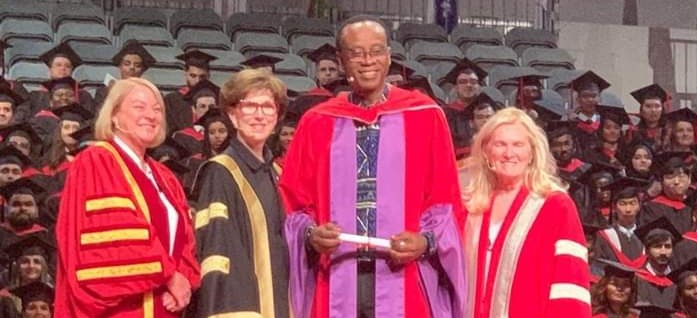
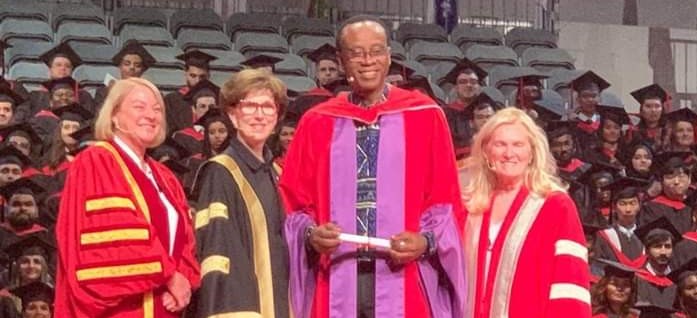
On October 13, 2023, York University in Toronto, Canada conferred on Nigeria’s and Africa’s leading environmental advocate, Dr. Nnimmo Bassey an honorary Doctorate of Law in recognition of his environmental advocacy work, writings and general contribution to humanity’s advancement.

The letter from the awarding university reads thus: “In conferring this degree, the Senate of York University wishes to recognize your contributions as an activist, architect, environmentalist, author, and poet. You have enriched academic discourse, shedding light on the complex intersections between environmental degradation, social justice and human rights. As one of Africa’s leading environmental and human rights advocates, your work has had a transformative impact for those who are most negatively impacted by toxic industries, and uncovered solutions to some of the most pressing social-ecological problems currently facing the globe.”

Dr. Bassey, 65, is Nigeria’s most visible environmental advocate and the most outspoken on the debacle of the Niger Delta region of Nigeria where the rich endowment of fossil fuel has morphed into a multileveled resource curse amidst gross environmental degradation of the area in addition to other socioeconomic fallouts of oil find. The trained architect is also an advocate for food security and is a writer, columnist, profuse poet, authoring almost 20 books from poetry, architecture to environmental subjects They include such popular titles as ‘We Thought It Was Oil But it was Blood’ (poetry); ‘To Cook a Continent: Destructive Extraction and the Climate Crisis in Africa’ (environmental discourse) and ‘Living Houses’ (architecture).

Dr. Bassey co-founded and led Nigeria’s foremost environmental rights campaign NGO, the Environmental Rights Action/Friends of the Earth Nigeria for two decades before starting ecological think-tank nonprofit, the Health of Mother Earth Foundation (HOMEF) a decade ago. He was the first African to lead the global environmental rights group, Friends of the Earth International which he chaired for two terms. He has also founded and led other major organisations including Oil Watch International, Oil Watch Africa and in recent years started Fishnet Alliance, agitating for the human and socioeconomic rights of fisherfolks across Africa. He is on the board of scores of local and international organisations and initiatives.

His profuse pen through which he articulates the planet’s painful plights has also seen him at various literary intersections including being at the leadership of the Association of Nigerian Authors (ANA) as General Secretary in the 1990’s and as a columnist with the The Guardian Newspaper, one of Nigeria’s flagship dailies.

This latest recognition for Akwa Ibom-born Dr. Bassey is just one of several from across the planet, the advocacy for whose wellbeing he has tirelessly undertaken in more than three decades. Some of them include being one of ‘TIME Magazine’s 100 Most Influencial Persons of 2009’ (Hero of the Environment); ‘Rights Livelihoods Award’– Sweden (aka Alternative Nobel Laureate)– 2010; ‘The Rafto Prize’ (National human rights honour in Norway)– 2012. He has also been awarded the Nigerian national honour of the Member of the Order of the Federal Republic (MFR).

This honorary award from the Canadian university is the second from a foreign university for Nnimmo as he is popularly known in the local and international activism circles. In 2019 he was similarly honoured with a doctorate degree by the University of York, England.

But what stands Dr. Bassey out for most of us who have been incredibly blessed to work and walk at close proximity with him is his generosity, genuine love for people (one boss who gives wings to his staff, mentees and younger activitists and dreamers in a complex world, continuing to support them long after they have left the organisation or his supervision), humility and untainted integrity. And that’s not to mention his deep sense of humour! An uncommon role model-leader aka the ‘Living Ancestor’ in the words of his countless mentees. For someone rated as one of the five eminent Climate Change activists globally in a documentary some years back, his down-to-earth and accessible nature bear the genuine portrait of a truly profound mind for indeed the greatest are ultimately the humblest.

Nigeria as a country and our generation are indeed blessed to have such an icon to call a son, indeed, an exceptional son of the soil fighting with utmost sincerity and passion to expose the destructive impacts of the extractive industry and other big corporate abusers, for a right to natural food for all and giving voice to the oppressed and voiceless majority across the remotest parts of Nigeria, Africa, South Ameria, and indeed across the globe, and with countless results to show. Here is a man who could today be addressing the European Parliament, or the USA Senate or leading a global group of activitists on a rally at an international conference on the streets of Copenhagen, interacting with youngsters in a Finland settlement and in the next couple of days is interacting so naturally with fishermen and women whose fishing routes or farms have been polluted in Ikarama community, Bayelsa State, or catching a joke with local chiefs or a group of young mentees in Makoko settlement in Lagos.

Towering Nnimmo (six-foot-four), married to the amiable Evelyn, herself also an architect and blessed with three sons, is simply an enigma. These global recognitions are not one bit a surprise for anyone who knows the workaholic tea lover. Rather, they are a sure sign of greater things to come for a truly deserving and truly, truly remarkable human!

Go, dear Boss, go!

Ms Abah is a Lagos-based writer and activist, and founder of child’s rights NGO, CEE-HOPE

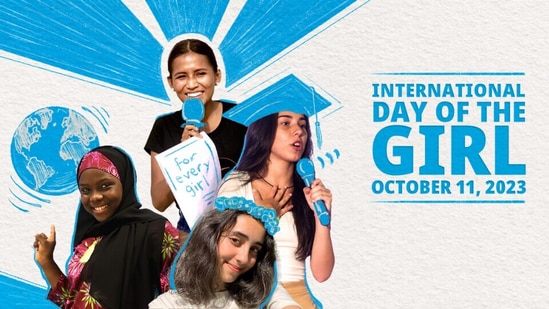
IGD2023: WSCIJ urges joint action to protect girls’ rights in Nigeria amid global concerns

By sdnonline

Wole Soyinka Centre for Investigative Journalism (WSCIJ) has called for joint action to protect the rights of girls in Nigeria.

Executive Director/CEO, WSCIJ, Motunrayo Alaka said the 2023 theme for the International Day of the Girl Child, ‘Invest in Girls’ Rights: Our Leadership, Our Well-being,’ underscores the urgent need to increase investment in girls’ education, health, violence prevention programmes and overall well-being to protect their rights and support them to maximise leadership opportunities.

According to a 2022 UNICEF report, 6 million girls are out of school in Nigeria – 3.9 million at the primary and 3.7 million at the junior secondary levels, implying that over 50 percent of Nigerian girls are not attending school at the basic education levels. Despite the federal Child Rights Act (2003) prohibiting marriage below the age of 18 in Nigeria, 43 percent of teenage girls are married before their 18th birthday, and 16percent are married before the age of 15. Hence, Nigeria ranks among the highest on the African continent for early child marriage, according to the United Nations Development Programme in 2020.

This data validates a recent report from the United Nations – Secretary-General, António Guterres, who mentioned that the world is still 300 years away from ending child marriage and its ripple effect globally is 110 million young women and girls out of school and about 340 million girls and women will face extreme poverty by 2030. This alarming analysis is a clarion call for the media, government, CSOs and other stakeholders to intensify their efforts as champions of equality, equity and inclusivity to protect girls and women’s rights through nuanced investigative reportage, multilevel advocacy and timely sustainable interventions that defend the girl-child and protects her rights to live, learn and dream.

“At the Wole Soyinka Centre for Investigative Journalism (WSCIJ), we are dedicated to improving the reportage of girls and women-focused issues, empowering female journalists to champion the cause of equality in the news, newsroom and facilitate the evolution of gender policies and practices that affect girls and women representation as leaders. All these and more we continue to support with the Report Women! programme, initiated in 2014,” Alaka said.

She explained that the centre has trained and rewarded female journalists on leadership projects centred on women and girls empowerment. The programme has also produced documentaries and published research reports under the Report Women! Programme on the gender status of news and newsroom leadership, the gender policy and practice in Nigerian newsrooms and assessment of the Report Women! FRLP fellowship. With a forthcoming report on the representation of women in the leadership of news and newsrooms in Nigeria, the centre aims to contribute to a more inclusive media landscape.

“In the upcoming fourth quarter, WSCIJ will launch a website featuring 500 female expert sources across eight sectors, reflecting its commitment to amplifying the voices of women in news and news programmes. We urge everyone, particularly the journalists and media managers, to champion this cause within their spheres of influence, transcending traditional, economic, religious, social, and security-related challenges.

“Together, let us create a future where the rights of the girl child are protected, and opportunities for leadership and growth are accessible to all,” she said.

IGD2023: Invest in girls leadership rights, digital literacy, ISISD charges govt, stakeholders

By sdnonline

As the world celebrates the 2023 International Girls’ Day, Initiative for Social Impact and Sustainable Development has called on the government and stakeholders to invest in leadership rights and remove every barrier to digital literacy for girls to be able to compete favourably in the technology age.

Speaking on this year’s theme, “Invest in Girls Rights: Our Leadership, Our Well-being,” ISISD Coordinator, Funmi Falobi said that girls cannot be left behind in the era of leadership and technology innovation if we want gender equality to thrive.
” No doubt the world now evolves around technology and it is important our girls are not left behind in this innovative drive to thrive and fulfil their potential.
We must invest in leadership rights for girls and they must be encouraged to take up leadership roles early in life which will boost societal well being.
“Although we have reached a point that we recognise this day as International Girls’ Day, much still needs to be done to improve lives for girls”, she added.

She noted that digital literacy will enable girls to use digital platforms and resources to find, evaluate, and obtain information which would help students become lifelong learners and help to engage them in the process of acquiring academic skills as well as stay connected and be informed about the things that are revolving around society.

“Digital literacy enhances both formal and informal learning, and it is of great importance that young girls are capacitated with digital literacy information so that they are empowered and their confidence and self-esteemed is boosted in decision-making, and healthy-conscious living, among others.”

Falobi however noted that as good as technology is to the good of all, there are some challenges with it, which may be inimical to the growth and development of the girl child.
“Investing in the rights of girls helps to boost their leadership skills and their well-being. While technology brings an open window for development of potential of the girl child, care should be taken to guide the girl child from being a victim of manipulated tendencies through online gender-based violence”, Falobi warned.

International Day of the Girl Child is an annual and internationally recognised observance on October 11 that empowers girls and amplifies their voices. Like its adult version, International Women’s Day, celebrated on March 8, International Day of the Girl Child acknowledges the importance, power, and potential of adolescent girls by encouraging the opening up of more opportunities for them. At the same time, this day is designated to eliminate gender-based challenges that little girls face around the world, including child marriages, poor learning opportunities, violence, and discrimination.

Call for interest: Training on Gender Mainstreaming

By Tobi Oyetunde (Freelance Correspondent).

Journalists and media professionals are invited to register as participants at a one-day virtual training to engage journalists on how to integrate gender perspective into their investigative reports.

The virtual training will be led by Juliana Francis, an award-winning investigative journalist as part of Report Women News and Newsroom Engagement Project implemented by the Wole Soyinka Centre for Investigative Journalism with support from the Bill and Melinda Gates Foundation.

The training will provide journalists with the skills and knowledge needed to mainstream gender into investigative reporting.

To facilitate the training alongside Francis are Olufunke Fayemi, Chief Producer of Voice of Nigeria, and Blessing Oladunjoye, Publisher of BONews while Abosede Adeniran-Aderemi of TVC shall moderate the programme.

The one-day virtual training is scheduled for Friday, October 13, 2023 at 11:00am WAT.

The training is open to all journalists, regardless of their level of experience.

To apply to attend the training, please register through this link: http://bit.ly/JulianaFrancisTraining

Internet Access: Nigeria has no plan in place for citizens

By sdnonline

As the world commemorate International Day for Universal Access to Information (IDUAI), it is ironic that Nigeria has no plan in place for the realisation of the goal for its own citizens.

This was contained in a joint statement by three freedom of expression and media development organisations on Thursday, 28th September, 2023 calling on Federal and State Governments to take urgent measures to facilitate access to the Internet for all Nigerians in accordance with the government’s international obligations. They stressed that access to the internet is no longer a matter of mere convenience but a fundamental prerequisite for full citizenship and participation in modern society.

In a joint statement signed by Dr. Akin Akingbulu, Executive Director of the Centre for Media and Society (CEMESO); Mr. Lanre Arogundade, Executive Director of the International Press Centre (IPC); and Mr. Edetaen Ojo, Executive Director of Media Rights Agenda (MRA) in commemoration of this year’s International Day for Universal Access to Information (IDUAI), the organisations urged the government to take immediate and comprehensive action to bridge the digital divide by exploring innovative solutions to provide universal and affordable internet connectivity to all citizens, regardless of their location or economic status.

According to them, universal access to the internet has become imperative in the digital age “with many countries in Africa and elsewhere in the world already providing or ensuring high quality Internet connectivity for all their citizens free of charge”, which makes it “unacceptable that millions of Nigerians continue to wallow in digital wilderness”.

The organisations are the Nigerian members of the International Freedom of Expression Exchange (IFEX), a global network of freedom of expression organisations, and its continental network, the African Freedom of Expression Exchange (AFEX), and are collaborating under the banner of the Partnership for Media and Democracy (PAMED).

They recalled in their joint statement that Nigeria was a co-sponsor of the United Nations Human Rights Council resolution A/HRC/20/L.13 of July 5, 2012, wherein the global human rights body called on “all States to promote and facilitate access to the Internet”.

They argued that having worked with a handful of other countries, namely the United States, Brazil, Sweden, Turkey and Tunisia, to initiate and propose the idea to the world for all States to facilitate access to the Internet for their citizens, it is ironic and reflects negatively on Nigeria that more than 11 years after the resolution was adopted, it has no policy or plan in place for the realisation of the goal for its own citizens.

The organisations also cited the provisions of Paragraph 37 of the Declaration of Principles on Freedom of Expression and Access to Information in Africa, adopted by the African Commission on Human and Peoples’ Rights, which imposes a mandatory obligation on member States of the African Union to, “in cooperation with all relevant stakeholders, adopt laws, policies and other measures to provide universal, equitable, affordable and meaningful access to the internet without discrimination.”

The organisations noted that while a significant portion of Nigeria’s population enjoys the benefits of the online world, there remains a sizable segment of the society that is excluded, marginalized, and disadvantaged due to their lack of access to the internet, arguing that such exclusion raises critical questions about the status of such people as citizens in the digital age where many public services and other benefits are now available only to those who are online.

Observing that this year’s celebration of the International Day for Universal Access to Information is focusing on the importance of the online space for access to information, they argued that the digital age has transformed the way we live, learn, work, and communicate and that access to the internet had become a necessary means for the exercise of the rights to freedom of expression, access to information and other human rights online.

The organisations insisted that those who are currently not online are being unjustifiably denied their full citizenship rights and benefits, including access to critical public services and other benefits that exist online in the digital age and urged Federal and State Governments to take advantage of this year’s celebration of the international right to information Day to commit themselves to redressing this undesirable reality.

They also called on Federal and State governments to take urgent steps to boost public trust and confidence in the internet, including by putting an end to attacks on journalists, bloggers and other citizens for expressing themselves online, describing such practices as a violation of the right to freedom of expression as well as the spirit of the 2012 UN Human Rights Council resolution co-sponsored by Nigeria, which affirmed that “the same rights that people have offline must also be protected online.”

The organisations also urged the government to ensure that all members of society, including vulnerable groups such as children and adolescents, are protected online by adopting appropriate policies and legislation, undertaking media and digital literacy programmes, among other measures.

They appealed to the government to take special care as it launches 5G telecommunication networks and services in Nigeria to ensure that the introduction of the technology in the country bridges rather than exacerbates the digital divide, including by ensuring that the services are affordable for ordinary citizens.

Experts charge women to be impactful, purposefully valuable

In order to enhance productivity tendencies, women have been charged to be value-oriented and impactful in achieving their goals of a better society.

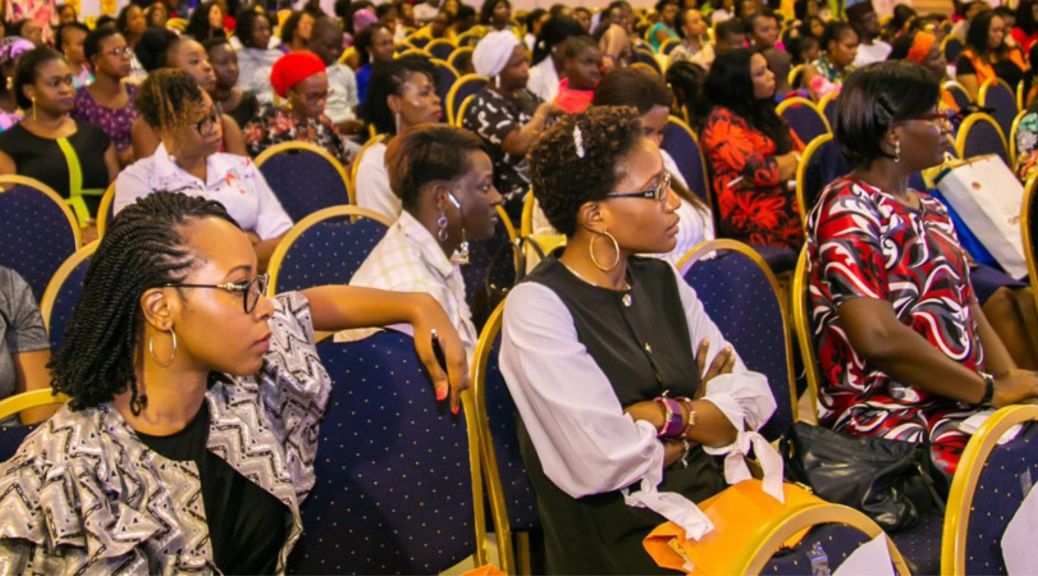
The charge came at a programme held in Lagos on Wednesday, 27th September, 2023, to celebrate the one-year anniversary of the Initiative for Social Impact and Sustainable Development (ISISD).

The event which was held virtually with the theme: “Becoming a Woman of Value: Sharing Perceptions and Lessons” had in attendance women from all walks of life.

Becoming a Woman of Value

Speaking at the programme, Head, Talent and Career Management, Premium Trust Bank, Mrs. Folasade Jinadu said a woman of value is one who knows her worth and exudes it. She gets inspired in spite challenges.

Jinadu said a woman of value could be characterised as one who has self awareness, self respect, emotional intelligence, self love and ambitious.

“To be a woman of value you must answer the question: who are you? When you have self awareness, it will help you in your relationship with others,” she said.

The human resource expert explained that becoming a woman of value is a journey from where you are currently to your desired destination.

According to her, a woman of value must be able to lead herself before leading others.

“You become a woman of value by standing up for your values. You have something to offer and you can express it. However, you bow to superior opinion. You stand for what you believe in as a woman of value. You must have your own guiding principles and be open minded,” she said.

Jinadu added that a woman of value “contribute to the lives of people around her while not appearing superior to them. She does not belittle others and does not allow anyone to bring her down. She contributes meaningfully at the table and she is a confident woman who stands up for herself and others.”

Healthy living imperative

Delivering her speech, Chief Nursing Officer with the Lagos State Government, Mrs. Folawe Apansile, enjoined women to take cognisance of their health and be intentional in their diet and well being.

Apansile, who is also a marriage counsellor said women must exercise to keep fit always.

” A woman of value is intentional about her health. You cannot be valuable when you are not healthy. You must be concerned about your health, exercise regularly, go for medical check up and take charge of your mental health. Be happy with yourself and do not let anyone decide your happiness for you,” she said.

More insights

Similarly, former chairperson, National Association for Women Journalists (NAWOJ), Sekinah Lawal counselled women on the use of drugs. She said women should desist from self medication and take their health seriously.

In her contribution, Mrs. Boade Akinola urged women not to stop learning and chose their friends intentionally. “Learning is a continuous process, women must not stop learning. Have people of value as friends. Choose your friends wisely and you will be respected if not, there will be problem of acceptability,” she advised.

Professor Helen Bodunde, Department of Communication and General Studies, Federal University of Agriculture Abeokuta, Ogun State, advised women in the area of effective communication. She explained that a woman of value is one who knows how to communicate appropriately using words. “You must understand language skills and how to use it appropriately. You must have listening ears. Anger should be far from you in any engagement. As a woman of value, you must be a woman that reads a lot and relate with happens around her. Have records of events which will help you to know when to intervene.”

Women of impact

Earlier, the ISISD Coordinator, Funmi Falobi, said the theme became imperative looking at what is happening around the world and the role women play in contributing to the growth and development of the society.

We all know women are the backbone of families and communities. They provide care, support, and nurturing to their families and are essential to the development of children. Women also play a significant role in community building and often take on leadership roles in organisations. We can simply say, they offer value,” she said.

But how can they offer this value and play these many roles without adequate knowledge and indeed being valuable themselves?” Falobi queried.

Feature image courtesy: Guardian.ng