All posts by socialdevelopmentnews

I am Funmi Falobi, Development Journalist, PR professional, Social Entrepreneur and lead contributor/Editor, Social Development News. Beyond journalism, I am also passionate about advancing social causes and empowerment, especially for children, youth and women.

APC, DIDEOLU FALOBI AND OSUN GOVERNORSHIP RUN: WHEN LEGACY MEETS POSSIBILITY

The stage is set, the lights are on, and Osun State once again finds itself at the edge of political drama. The question before us is not new, yet it carries fresh weight: with the incumbent governor of the Peoples Democratic Party (PDP) seeking another term, who dares to wrestle power away from him?

Ordinarily, such a debate belongs to professional politicians, party strategists, and the endless chatter of political analysts. Yet in Osun, politics is not the pastime of politicians alone — it is the heartbeat of the people. Whether one shrugs it off or follows it passionately, the reality remains: the decision of who governs Osun is not merely the headache of the gladiators in politIcal Agbada, but the collective burden — and aspirations of its citizens.

For the All Progressives Congress (APC), the leading opposition party in Osun State, the next two to three months are critical. The Party must answer the defining question: Who shall bear the party’s flag against the PDP incumbent?
Big names and known political power brokers have already thrown their hats into the ring, plotting and lobbying, whispering in corridors of influence. Some of them have tasted power before; won elections, lost elections and have failed re-contested elections. Some of them were asked to step aside, and now stepping up their game, aiming for the highest political office available. Some have, hanging on their neck, public perception of under-performance, low performance, and twisted self-centred performance.
The inter-play of politics in Nigeria is often a mixed bag, and every political gladiator seeking for the office of the Osun State Governor is constitutional guaranteed to do so; it’s a race open for the good, the not so good, and the bad; irrespective of what the perception is.
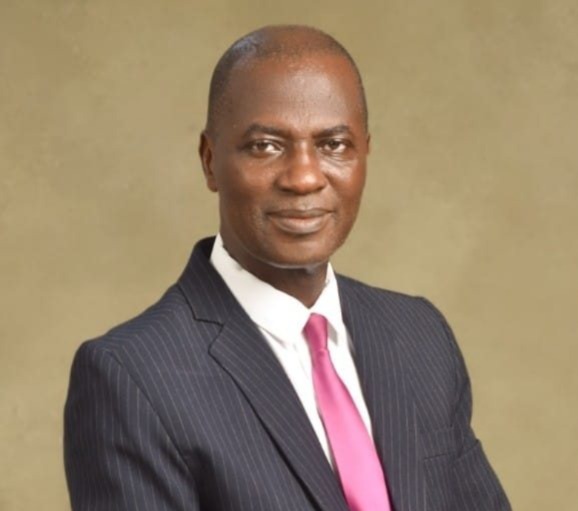
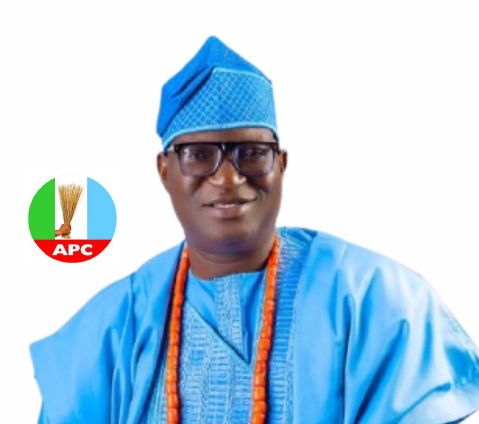
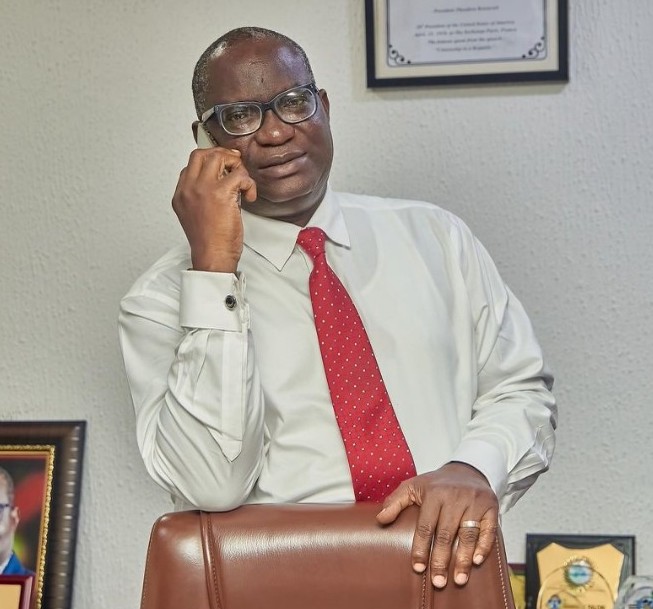
However, in the midst of the political gladiators, one name that is beginning to rise like a quiet storm within the Osun APC fold is that of Engr. Dideolu Falobi, FNSE, FIoD.
The Power of a name, the Weight of a Legacy
In Osun, names are not mere syllables. They are signatures. They carry history, trust, and sometimes scars. Each political era in the State has been defined by names etched in either service or controversy, cross-cutting the tenures of Isiaka Adeleke, Bisi Akande, Rauf Aregbesola, Olagunsoye Oyinlola, Gboyega Oyetola, and now Ademola Adeleke. These names are more than individuals; they are associated with political seasons, and the public perception of either performance, under performance or bad performance is a reality that the people of Osun live with.

As the decision ahead the Osun 2026 governorship election gather momentum, there appears a light in the horizon via a fresh, relatively unfamiliar name — Dideolu Falobi.
On the surface, he is not a product of entrenched political blocs, nor a veteran of the Osun political power wars.
That should make him a push-over in the conventional political script. Yet politics in today’s Nigeria is no longer conventional.
Beneath the surface, something intriguing is happening: a ‘newcomer’ is gathering momentum, powered not by patronage of “stomach infrastructure,” but by goodwill, service, and the quiet force of community trust.

This is where legacy meets possibility. For Dideolu Falobi, his bloodline does not entitle him to power. Instead, his strength comes from a different foundation: years of building, serving, and inspiring. His heritage is not a political burden but a mantle of service waiting to be extended into leadership.

Dideolu Falobi: The New Breed Leader
So, who is this man daring to interrupt the political chessboard of Osun?
Dideolu Falobi is not your typical politician. He is a technocrat, a community builder, and a leader by achievement rather than ambition. Born in Iwoye-Ijesa in Oriade LGA of Osun East, Dideolu Falobi grew up in Ilesa where he attended Methodist High School before proceeding to the University of Lagos, graduating with a B.Sc. in Electrical Engineering in 1987.
His professional path is both impressive and instructive. From rising to Junior Partner at Edison Group & Partners, to leading electrification projects across Nigeria and The Gambia, to becoming Managing Director of Kresta Laurel Limited in 2005, Dideolu Falobi has consistently turned challenges into landmarks.

Under his leadership, Kresta Laurel executed projects for institutions like the Central Bank, Shell, UBA, Silverbird Group, and the Bank of Industry. He also chairs Hieno Technologies Limited, extending his influence into Nigeria’s industrial growth.


Yet beyond boardrooms and skyscrapers, Dideolu Falobi has written his story in the heart of communities. For nearly two decades, he transformed his alma mater as President of the Methodist High School Old Students’ Association, delivering modern classrooms, labs, a library, a multipurpose hall, water projects, and even an astronomy observatory — the first in Osun State.
He didn’t stop there. He founded the Ijesaland Development Foundation, advancing rural and regional development. He chairs the Iwoye-Ijesa Development Committee, proving that rural voices matter. On the national stage, he convenes the Think Tank on Nigeria, a platform of over 250 professionals brainstorming policy reforms. He served as National Chairman of the UNILAG Faculty of Engineering Alumni Association, mobilising resources to uplift education.

While his leadership résumé is decorated with fellowships, recognitions, and thought leadership, more importantly, his name tells of someone who has been working where politicians often fail: in real problem-solving.

Beyond an aspiration, what stuff is Dideolu Falobi made up of?
Running for governor of Osun is not a tea party. It demands grit, vision, and capacity. And in these, Dideolu Falobi does not come empty-handed. The roles he has played over the years has been the manual of competence:
• Bobajiro of Ilesa; custodian of tradition.
• Convener, Think Tank on Nigeria; A reform driver.
• Founder, Ijesaland Development Foundation; a regional development advocate.
• MD, Kresta Laurel Limited; a business leader.
• Chairman, Board of Fellows, Nigerian Institution of Safety Engineers; Professional depth.
• Vice President, Board of Trustees, Osun Country Club; Socially relevant.
• APC member, rooted in Ward 4, Iwoye-Ijesa, Oriade LGA; politically committed.

But beyond the résumé, his candidacy signals something refreshing:
• He is free from old political baggage.
• He has demonstrated results, not just promises.
• He embodies a generational bridge — carrying heritage, yet aligned with the yearnings of the youth.
• He channels energy, competence, and integrity in equal measure.

Who shall bell the cat?
As political permutations dance across Osun’s West, East, and Central divides, the APC faces a choice. Will they recycle the usual faces, weighed down by yesterday’s battles, or will they dare to offer a fresh, credible alternative?

In all of these, Engr. Dideolu Falobi is emerging as a symbol of rebirth — the bridge between the legacy of yesterday and the innovation of tomorrow. And perhaps, just perhaps, the story of governance of Osun is about to turn a new, fresh and flourishing page.

However, power, in all ramifications, ultimately belongs not to the moneybags or the career political gladiators, but to God, who rules in the affairs of men — and who sometimes chooses the least expected vessels to reset history, and who resets history, in the most unexpected ways, in the space of times and seasons.
…. It’s all a matter of time. As day and night happens, so does the Creator shape the affairs and paths of humanity, and Dideolu Falobi, at the central, definitely has a part to play in turning the tide of things for the good of Osun, the State of the Living Spring. There’s work to be done; in parts, in pieces and in holistic service.

This article is written by Oluwasanmi Owokusile, a social advocate, cum strategic media-communications consultant.

ECI @ 25: TINUBU COMMENDS LEADERS FOR UPHOLDING CORE VALUES

The leaders and members of Eko Club International (ECI), the premier global organisation of Lagos indigenes, has been commended for upholding its core values by President Bola Tinubu. This is coming on the heels of the club’s 25th anniversary this month.

In a congratulatory message from the Presidency, President Tinubu acknowledged ECI’s significant contributions in promoting Lagos’s rich cultural heritage, sponsoring medical outreach programs, providing scholarships to the underprivileged, financing skill acquisition initiatives, and supporting entrepreneurship.

‘As Eko Club International celebrates 25 years of remarkable growth with 25 active chapters across the USA, UK, Canada, and Europe, President Tinubu affirms that the organisation’s unique history and impactful activities have positioned it for enduring generational influence’, the statement from the Presidency stated.

While encouraging ECI’s leaders and members to reflect on past achievements and prepare for even greater contributions in the future, the President thanked the members for their steadfast support and wishes the organisation continued success and greater impact in the years ahead.

ECI, is a community-based organisation of Lagosians in the Diaspora, established to foster cooperation and collaboration, unity, brotherhood and sisterhood amongst its members, to empower its members politically, socially and economically and to contribute positively to the advancement and prosperity of Lagos State.

According to available information, the genesis of Eko Club International, can be attributed to the vision of a group of Lagosians from Eko Club Houston and Canada, made up of the trio of Sam Dipeolu, T.J Abass and Yesir Ganiyu representing Eko Club Houston at a meeting with members of Eko Club Canada. The meeting was held at Mrs. Abiola Nosiru’s residence on February 15th, 2000.

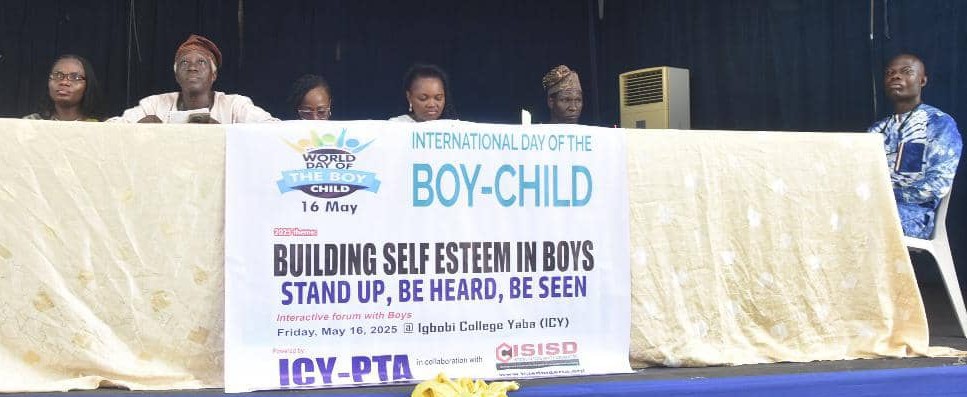
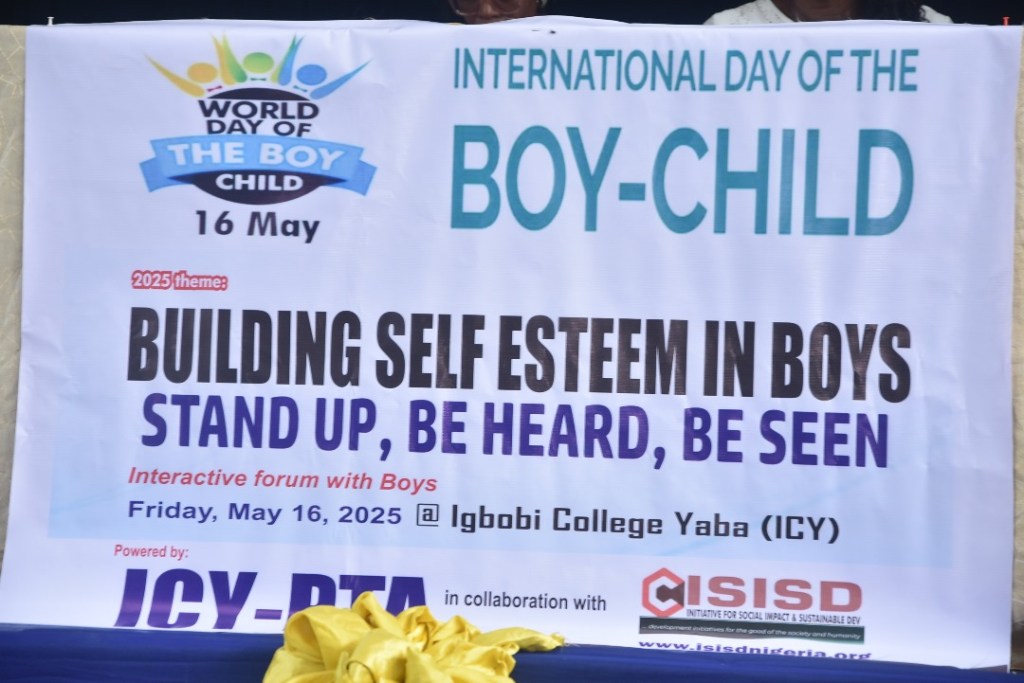
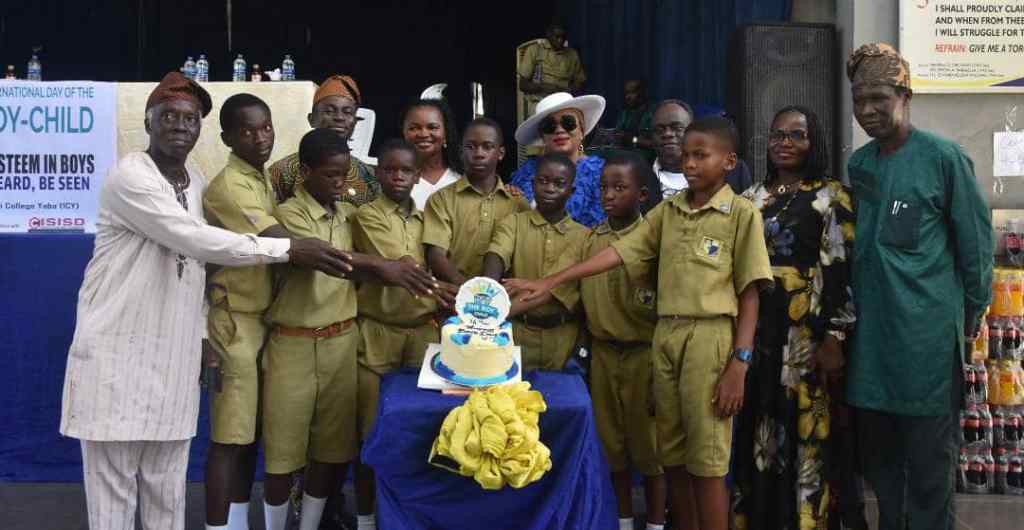
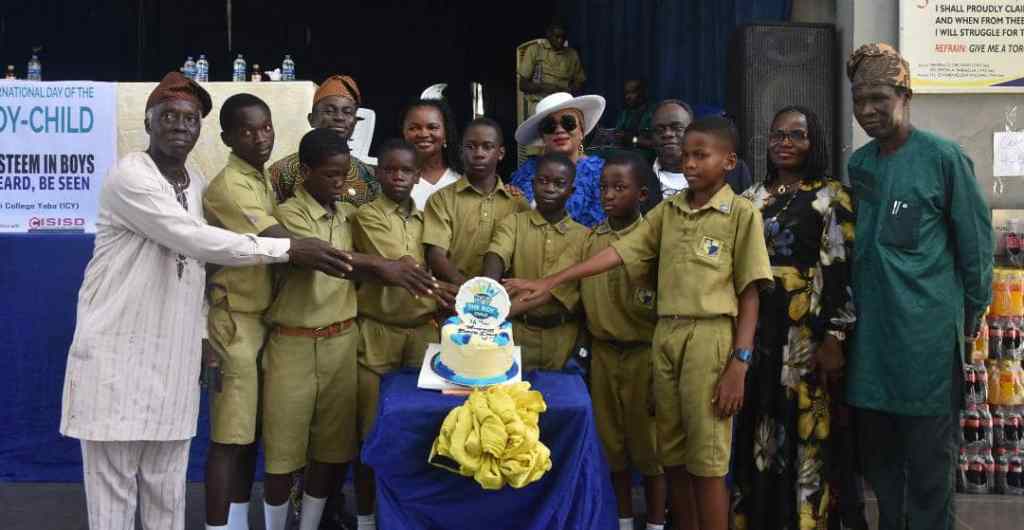
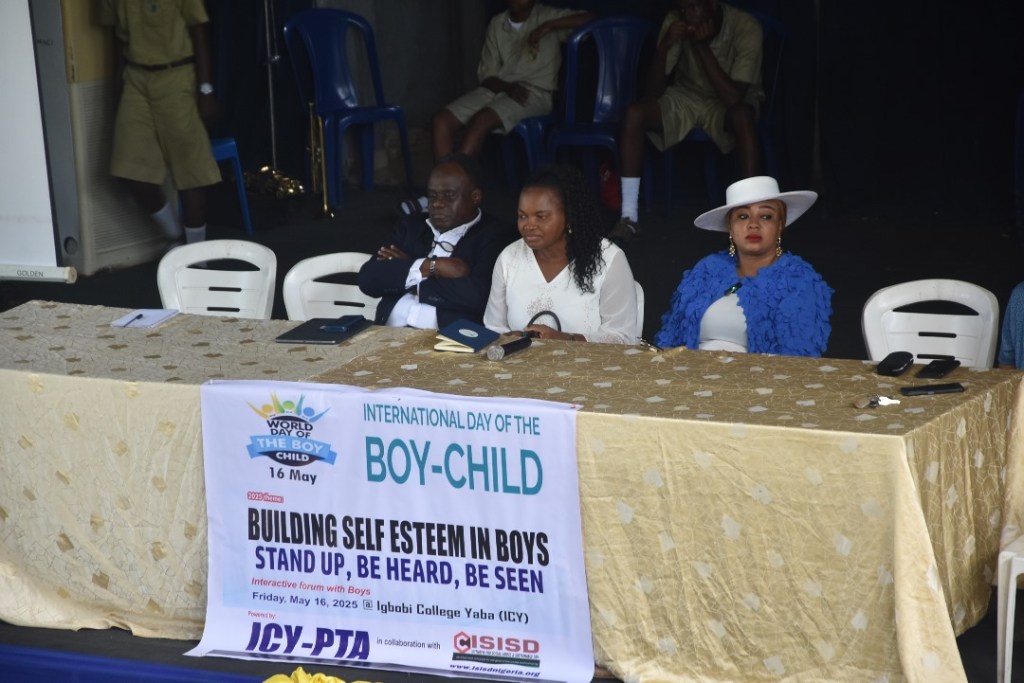
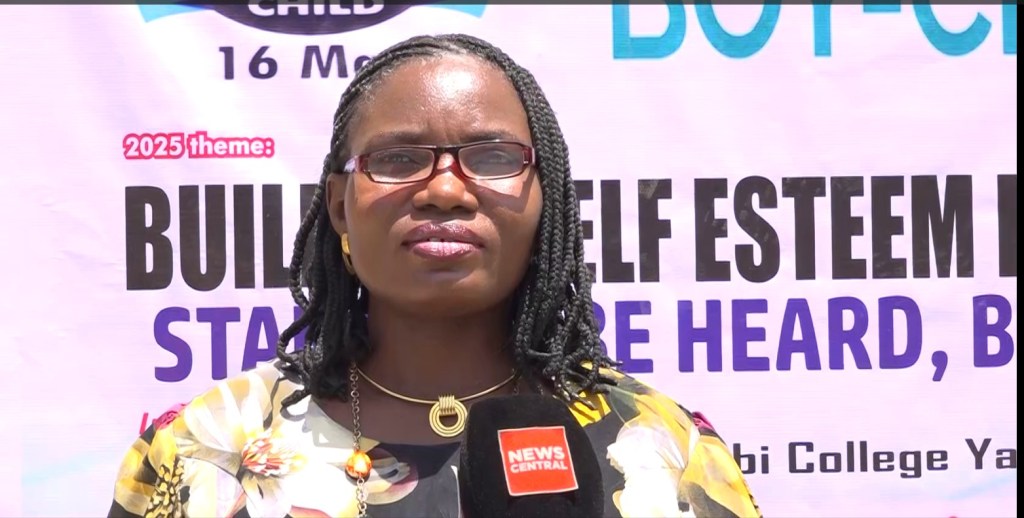
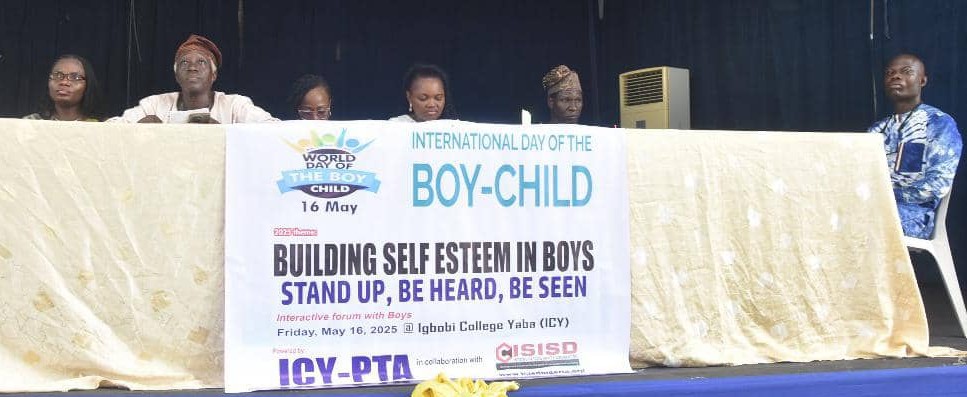
2025 WDBC: Building Self Esteem in Boys

By SDN

The world of the boy child is a peculiar one that must be given attention. This is so because neglect of the boy child is tantamount to creating a dysfunctional society where the untrained boy would become a threat to the trained girl, and society in general.

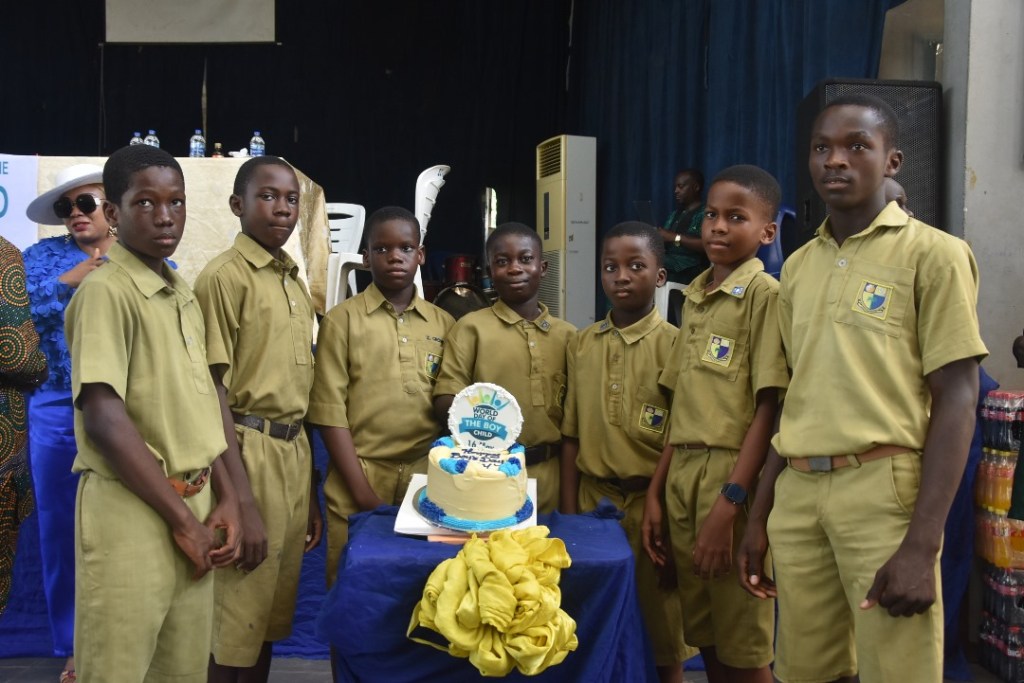
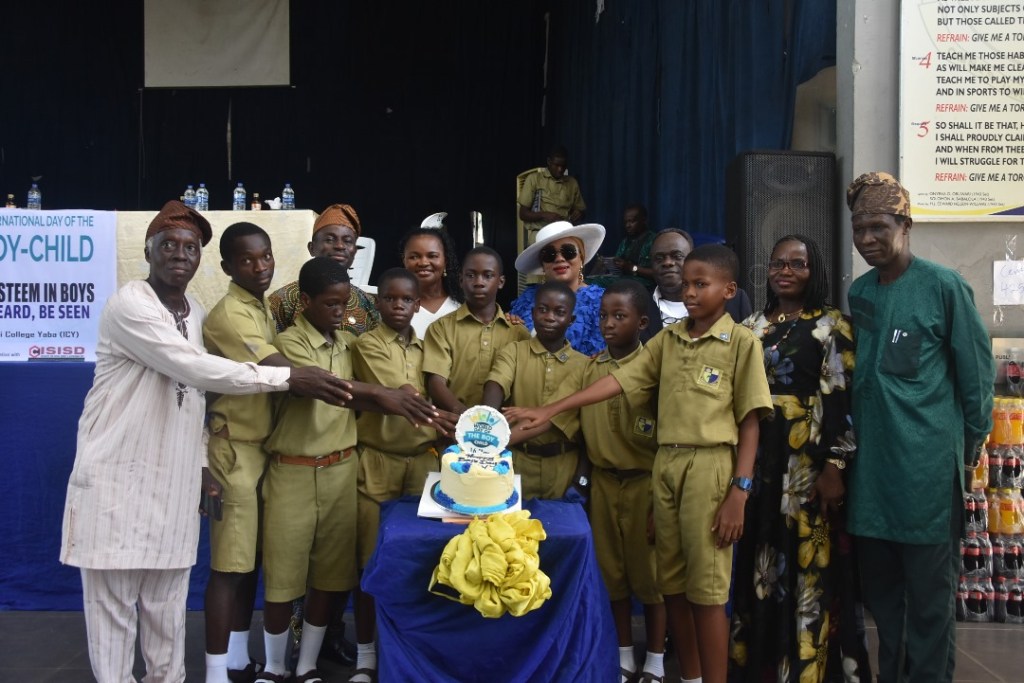
This, among others necessitates the call for concerted attention for the boy child and for which May 16 was initiated as the World Day of the Boy Child (WDBC) by Dr Jerome Teelucksingh of the University of West Indies, Trinidad & Tobago. The WDBC is also widely acknowledged as the International Boys Day, a day to celebrate the positivity of boys and proffer solutions to myriad of challenges being faced by boys and adolescent males globally.

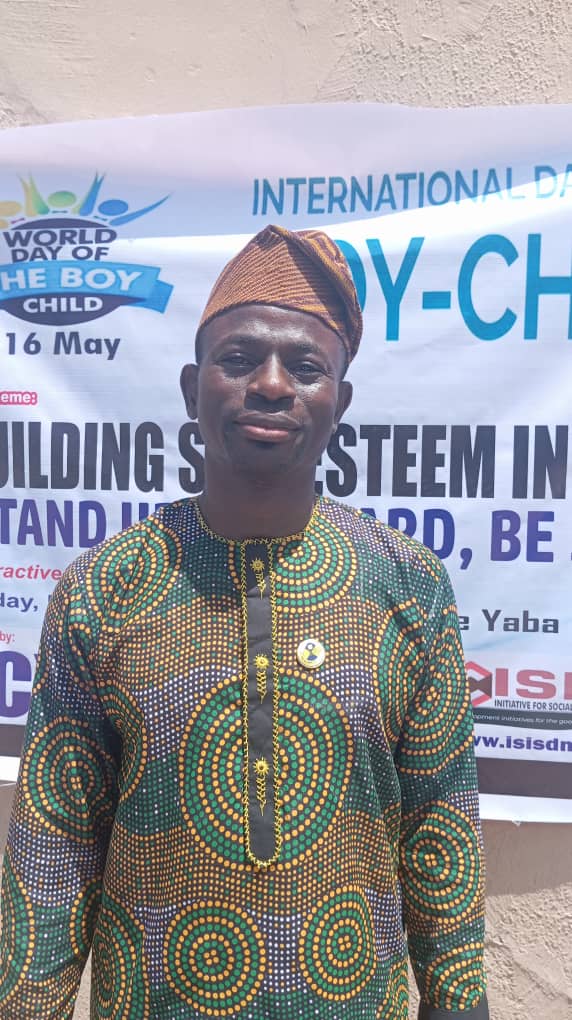
The 2025 theme: “Building Self Esteem in Boys: Stand up, Be heard , Be seen,” is coming at the heels of neglect and vulnerability of boys in the society.

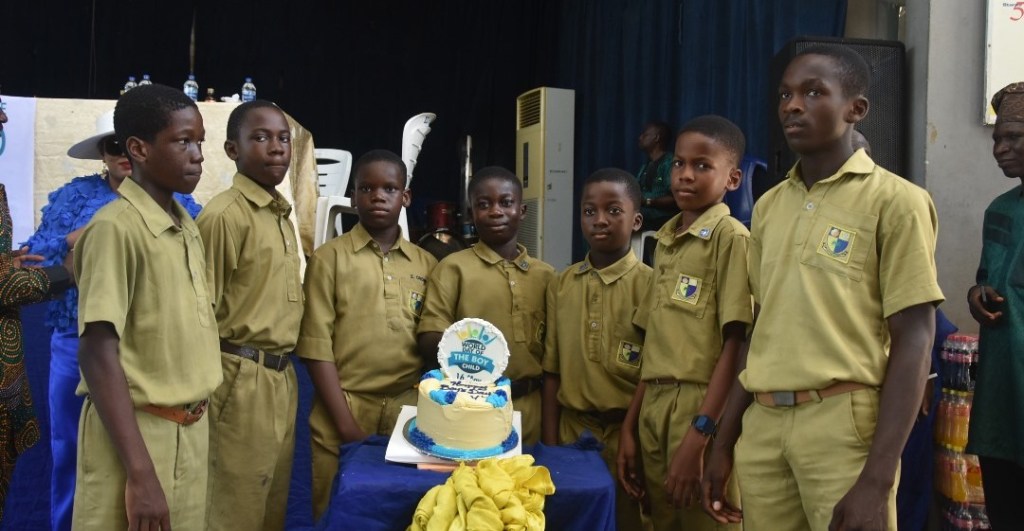
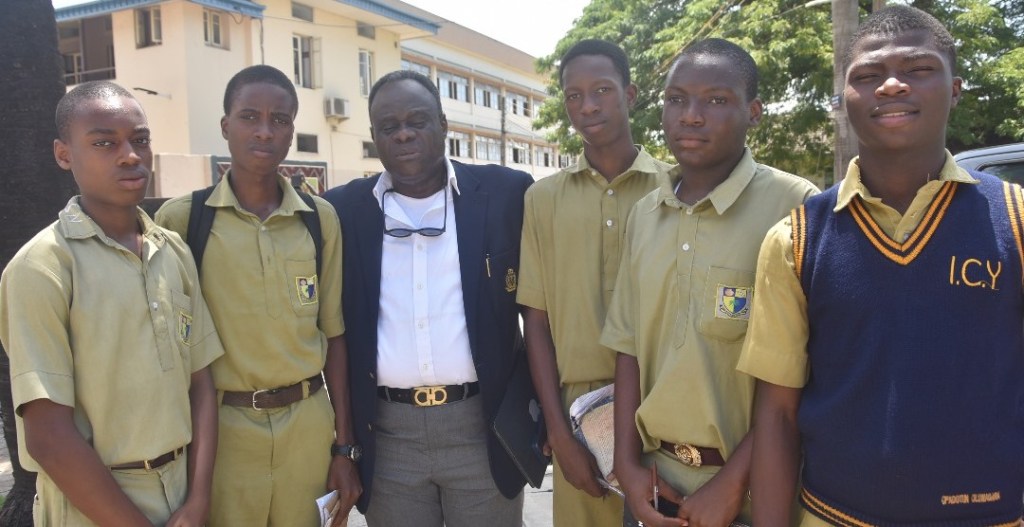
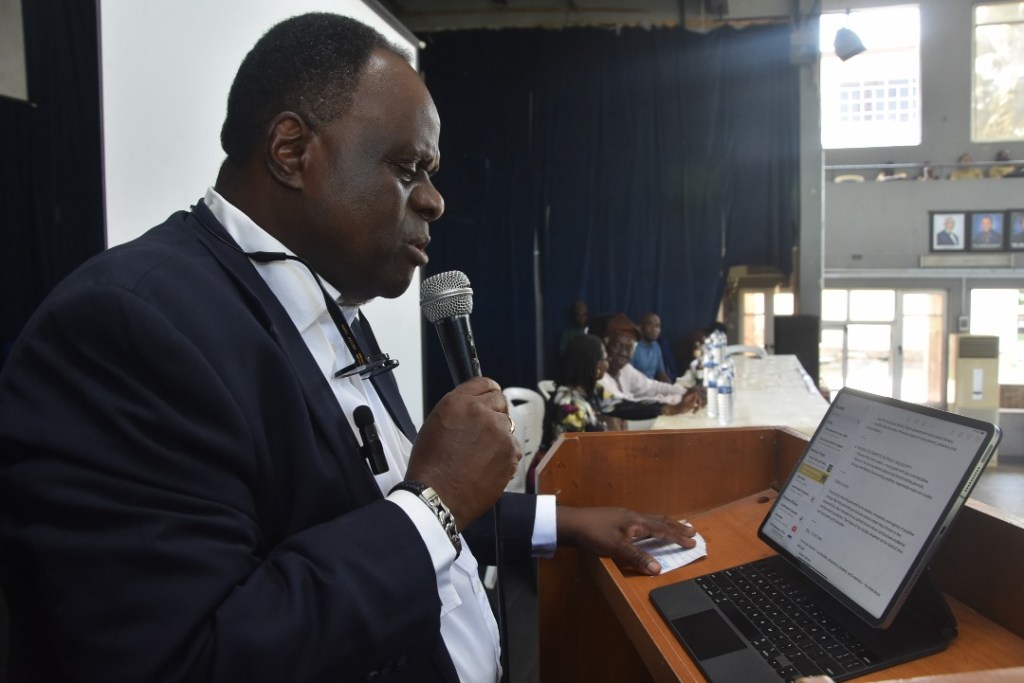
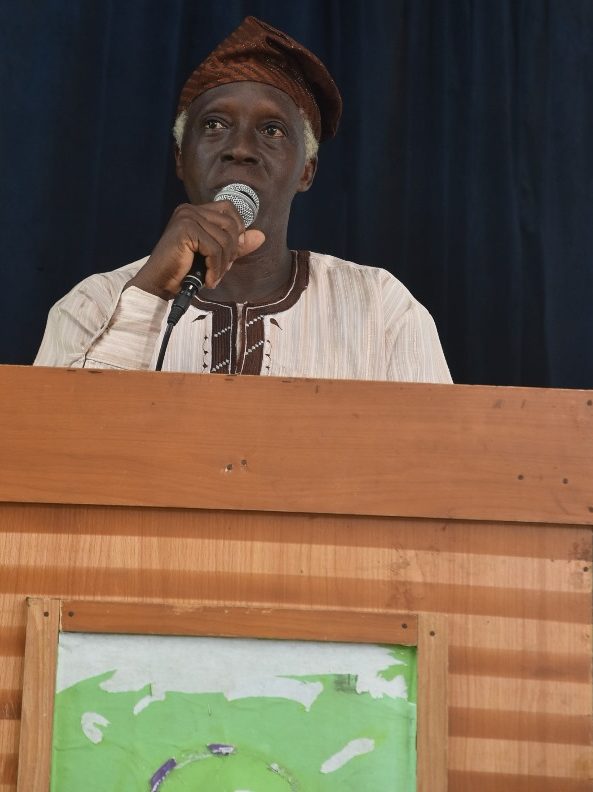
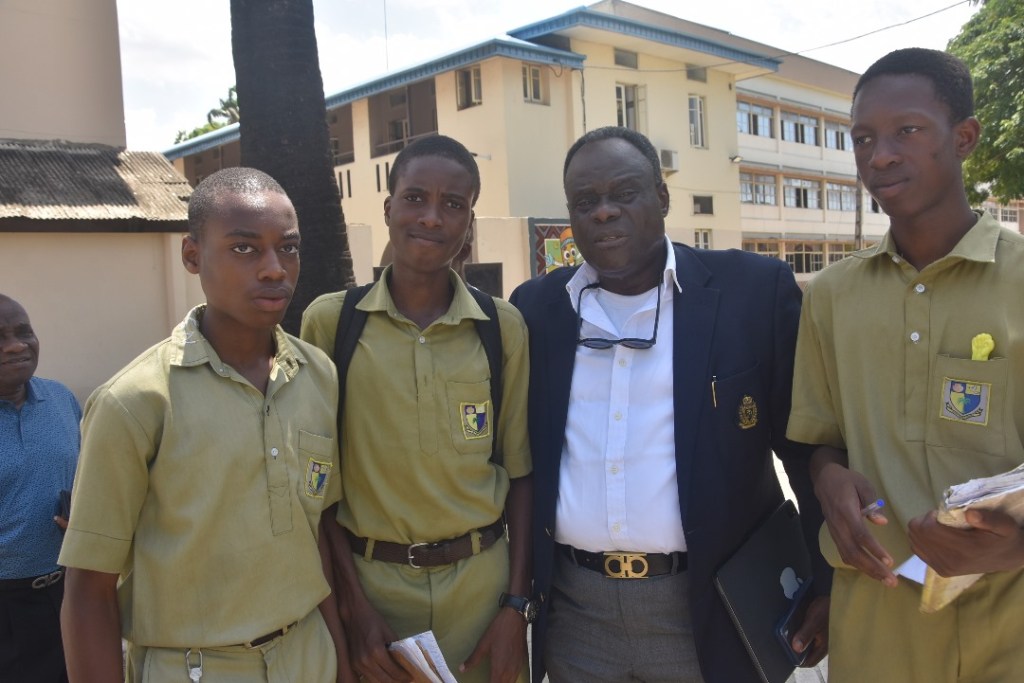
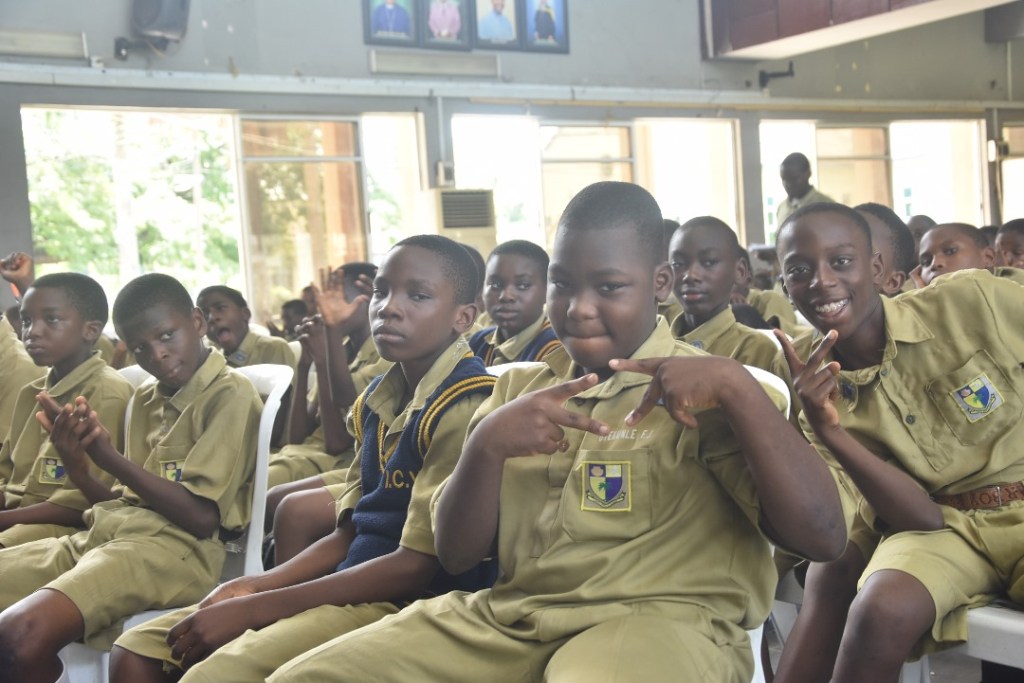
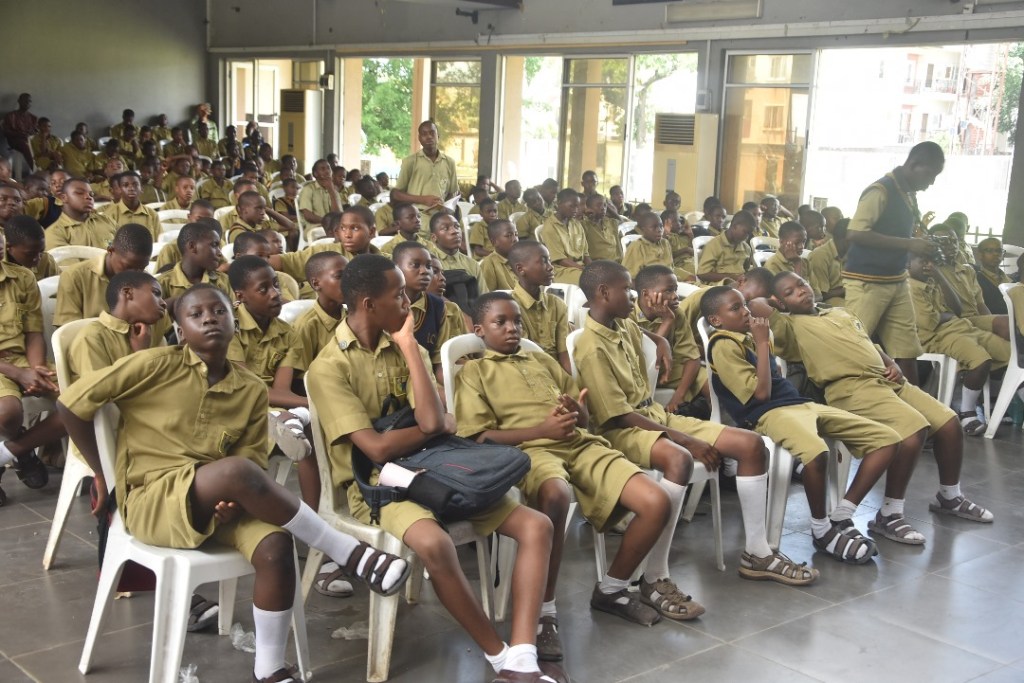
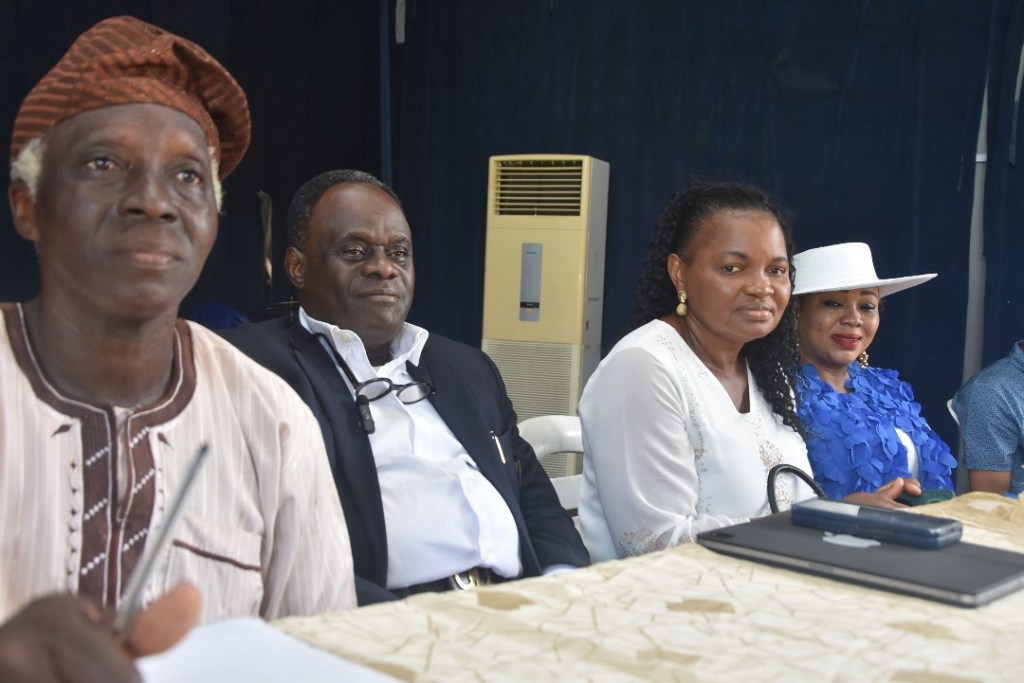
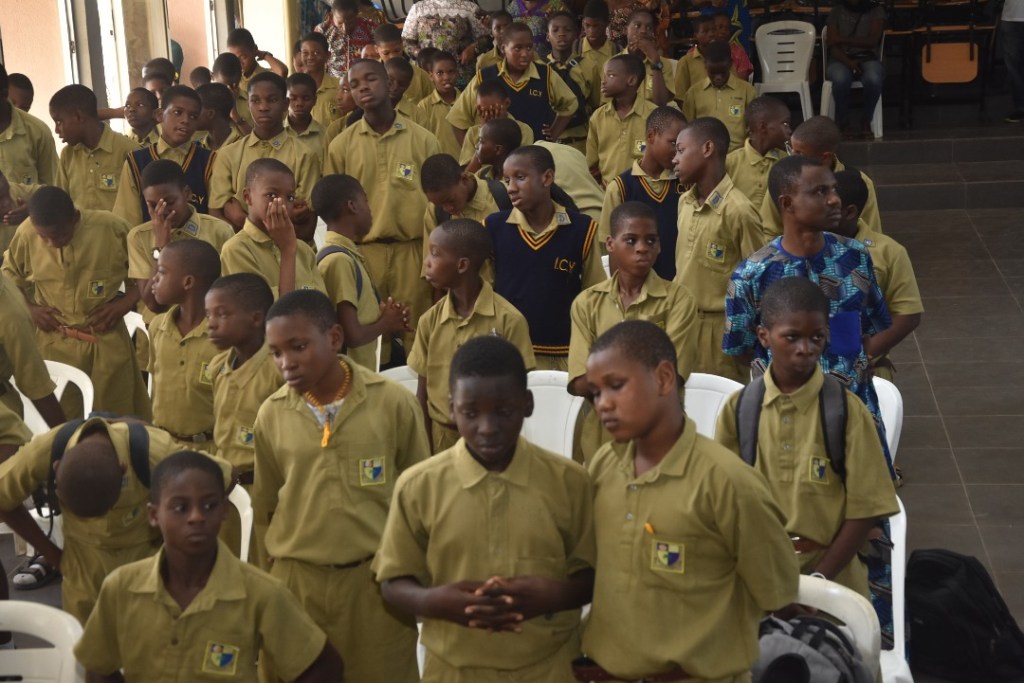
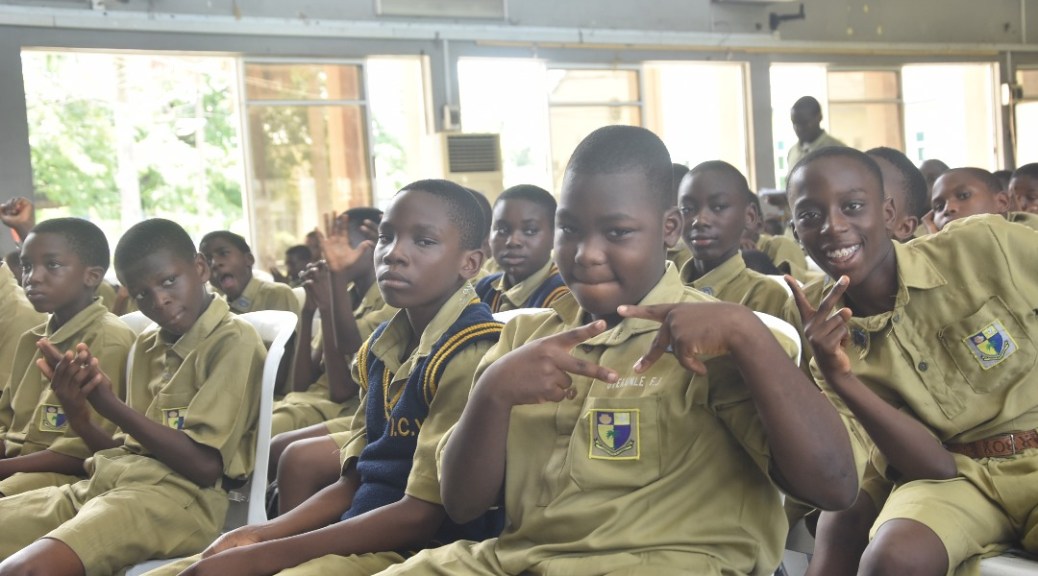
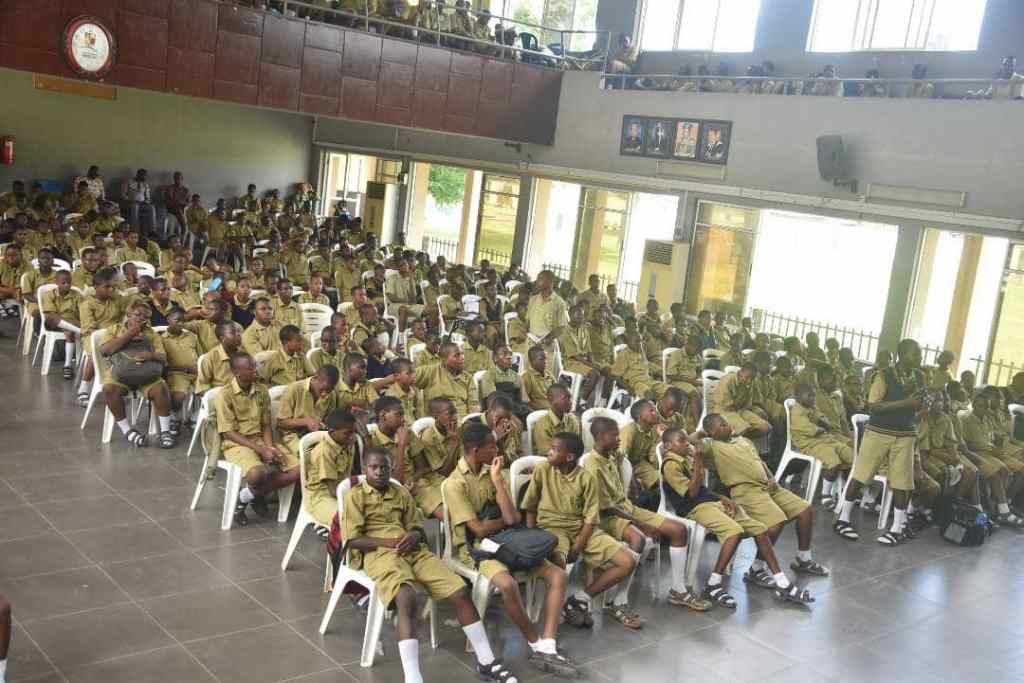
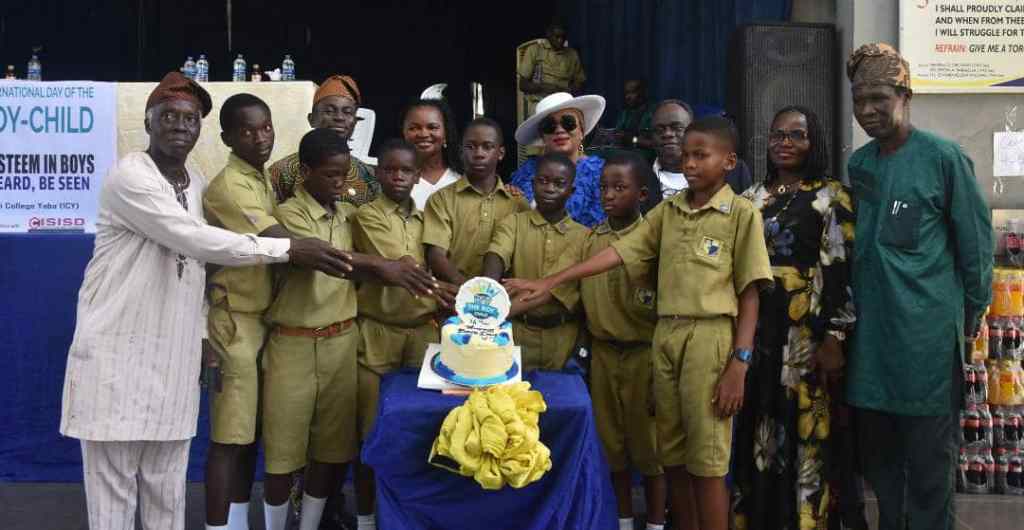
As part of activities commemorating the WDBC, Initiative for Social Impact and Sustainable Development (ISISD) joined the rest of the world to bring to the fore, issues affecting the boy child and providing solutions to some of the identified problems. ISISD in collaboration with Igbobi College Yaba Parents Teachers Association (ICY-PTA) organised capacity building programme for the students on the need to protect and enhance their self esteem.

According to Teelucksingh, the occasion gives the opportunity to put boys at the front burner and generate discussions into solving those issues for the boy child to fulfill potential in the society.

“Today, many boys are out of school serving as cheap labour at mines sites, factories as a result of poverty. In crisis situations, boys and adolescent males are used as children soldiers. Some of them suffer sexual abuse, depressed and suicidal. As a result of neglect, lack of positive male role model, many engage in social vices that are inimical to their mental, physical and psychological growth”, Teelucksingh noted.

According to the Principal, Igbobi College Yaba, Reverend Adedotun Akanbi, boys learn from what they see their fathers do at home and the same mentality is what they bring to the society.

“There is need for the boy child to learn virtues from home. The school system must also support boys educational and emotional needs. Boys must learn to respect the opposite gender. When boys learn values and leadership, I think they are ready,” he said.

In the same vein, ICY-PTA Chairman, Dr. Abiodun Makinde said character is important for the boy child to succeed in life and affect the society positively. “Children learn from home and it is what they learn from home that they bring to schools and society. Parents must strive to instil good characters in boys for them to succeed in life endeavours.’

Speaking on the theme, Educational Consultant, Mrs. Franca Okpiaifo said self esteem is a person’s self worth and the total value one places on self. She advised participants that it is important for them to know who they are which will help them in life journey.

“Self esteem defines your self confidence.
Stand up means knowing who you are. You don’t have to feel it, you know it without any doubt. When you stand up for something, you will be seen and heard,” she said.

She identified five things that would help participants to build their self esteem including “know who you are, define your purpose; have definite values; be the best version of you; do not be afraid of you (Your best version); do not allow other people, peers, social media to define you.”

In his address, Mr.Jide Sanwo, Special Adviser to Ogun State Governor on Revenue and also an alumnus of the college urged the boys to prioritise purposeful living over social vices.

He explained that boys must learn to live a purposeful life and be able to identify those better than them in a particular subject and learn from them.

“You must shun examination malpractices. When you cheat and get to the top you find it difficult to perform, you can’t stay up there if you don’t have good foundation.

“There’s nothing as good as putting your hope in God. Let’s shun social vices. Run away from cultism, drugs, cybercrime and the rest that won’t add any value to you,” he admonished.

Similarly, Evangelist Temilolu Okeowo also advised the boys to shun any immoral behaviour and make their studies a priority.

“You have no business in getting into romantic affairs in your teens. Shut your heads to those lewd lyrics, pornography. Your studies must be your priority now,” she warned.

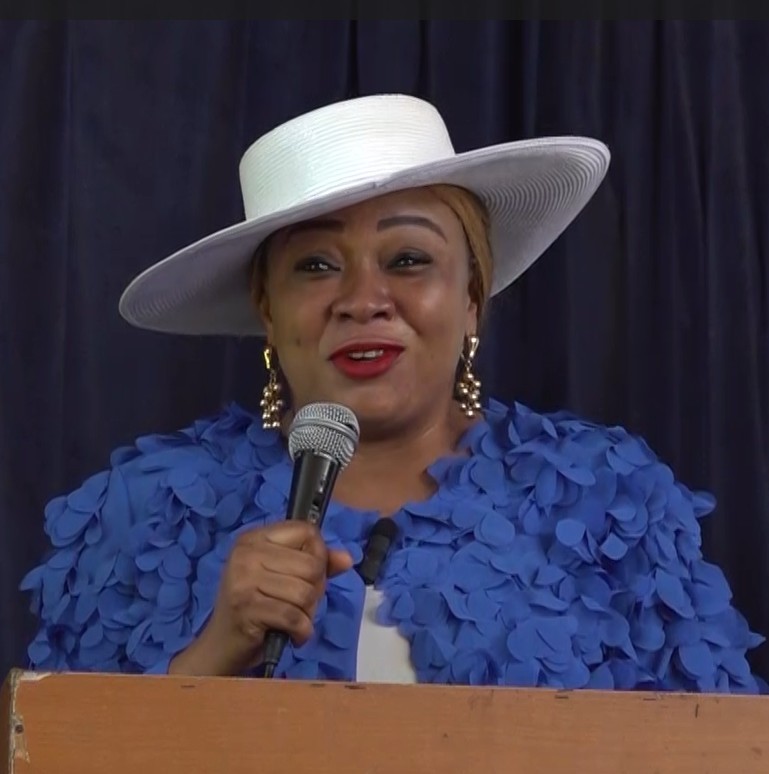
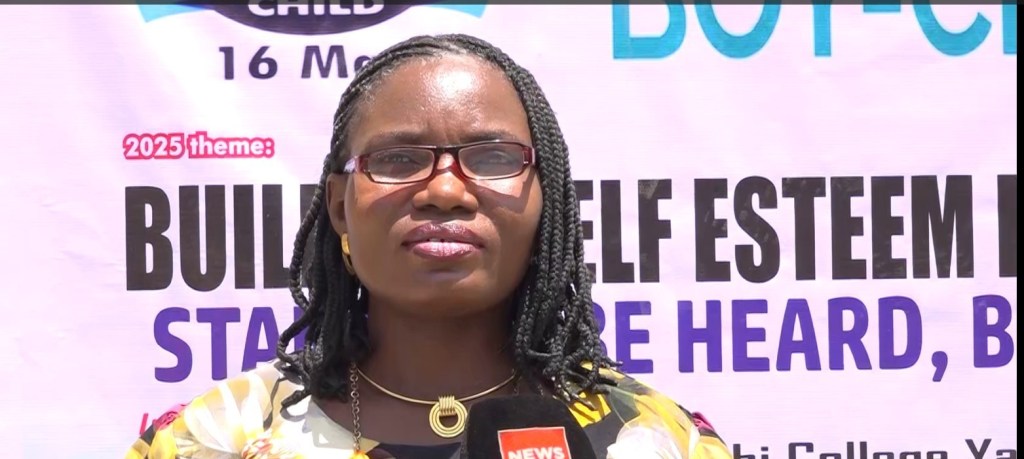
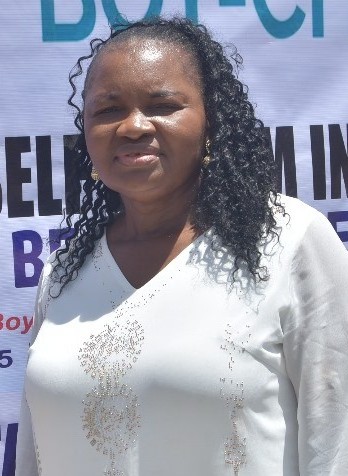
ISISD Coordinator and WDBC Ambassador, Mrs. Funmi Falobi said boys and adolescent males face a lot of challenges world over and the need to address such for better society.

“As we commemorate the 2025 World Day of the Boy Child, governments, organisations, institutions, families and communities must come together and discuss ways to make life better for the boy child. Governments must come up with policies that would protect boys and adolescent males in order to achieve potential,” she advised.

She declared that the boy child must not be left behind but policy must be inclusive to cater for his physical, mental and psychological needs for a saner and peaceful society.

Commending the programme, one of the participants, Pelumi Adegboyega, an SS2 student said they learnt the importance of self esteem. “Without self esteem it is almost impossible to go far in life. If you’re not confident in yourself you find it difficult to progress and make decision.”

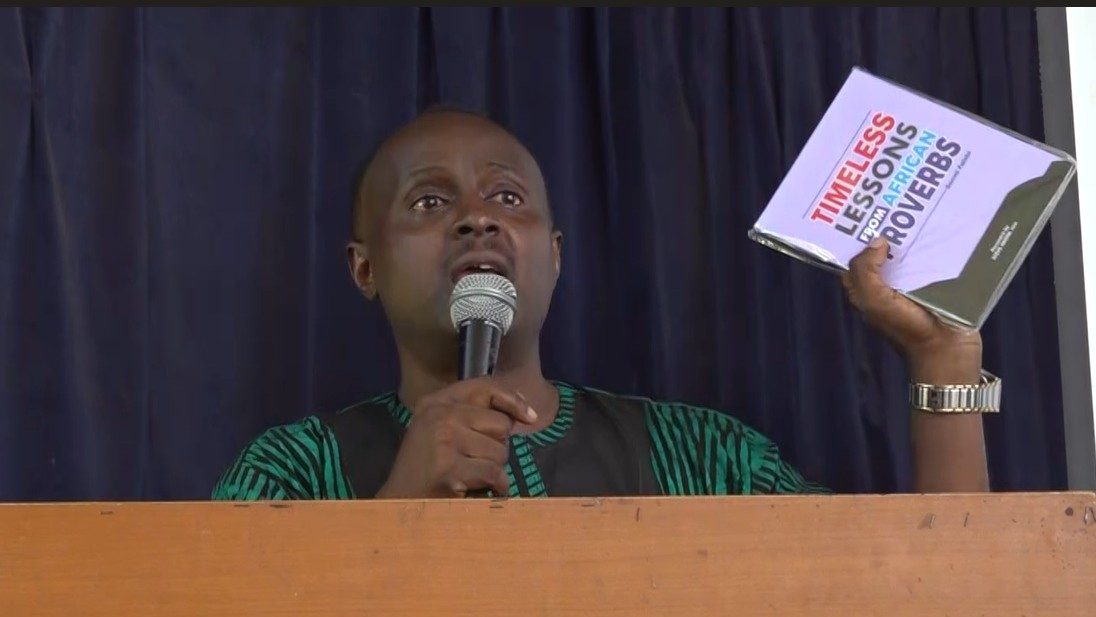
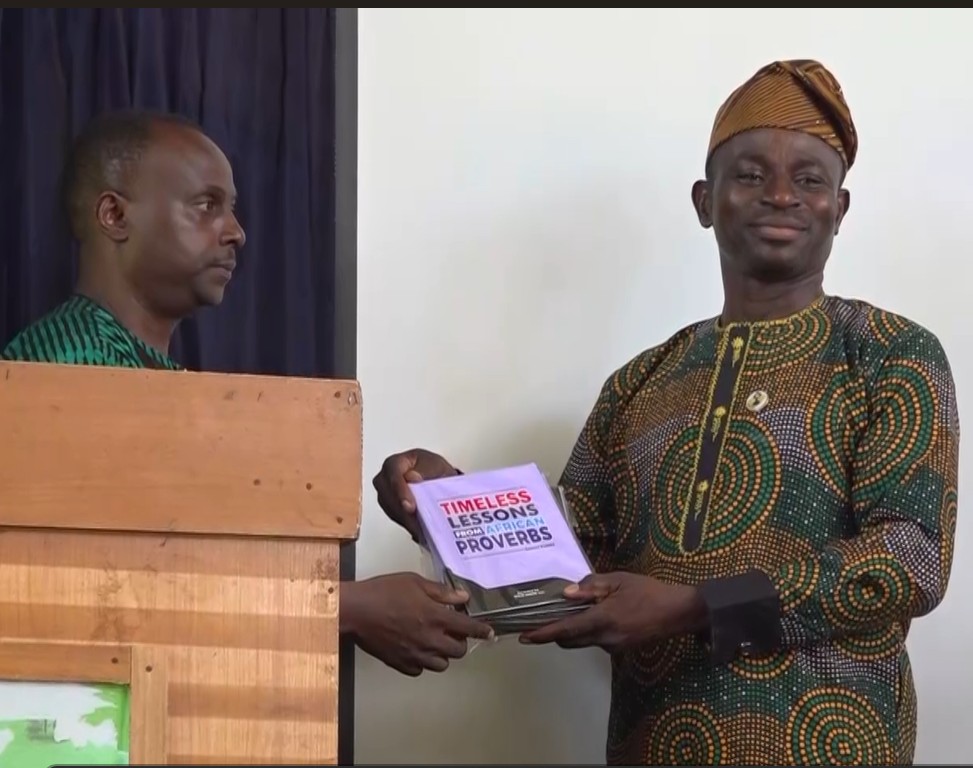
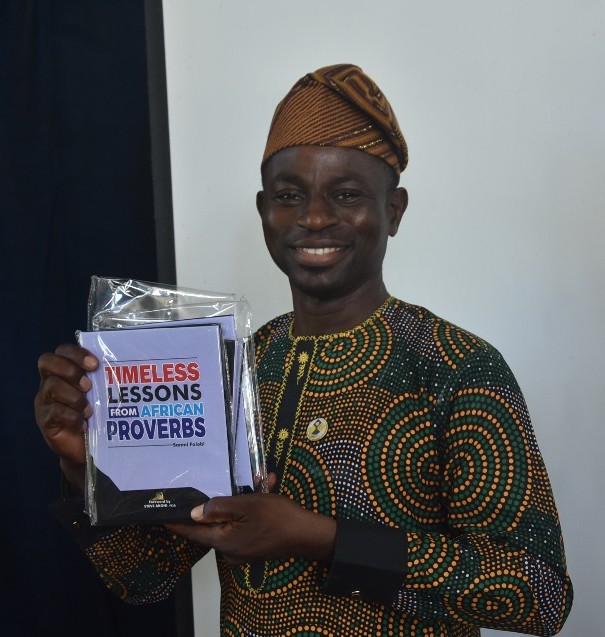
There was book presentation by Mr. Sanmi Falobi to the school. There was also film show to drive home the essence of self esteem for the boys.

WDBC (or International Boys Day) was inaugurated in 2018 by Dr. Jerome Teelucksingh a University Lecturer in Trinidad and Tobego,
and in 2025 it was observed in 36 countries. WDBC serves as a platform for individuals, organisations, and institutions to improve the manner in which we protect our boys and reclaim our heritage.  

DSS delists Nigerian Journalist, Lanre Arogundade from watchlist 40 years after

By SDN

The Nigerian Chapter of the International Press Institute (IPI) on Tuesday, May 6, 2025, announced the removal of the name of the Executive Director, International Press Centre, Mr Lanre Arogundade, from the Department of State Security’s watchlist after about forty years.
 
IPI Nigeria President, Mr. Musikilu Mojeed made this known in Abeokuta, Ogun State at the 3rd Nigerian Media Leaders’ Summit convened by Journalism Clinic led by veteran Journalist Taiwo Obe with media owners and top editors in attendance.

Mr. Mojeed said the Director-General of the DSS, Adeola Oluwatosin Ajayi, informed IPI Nigeria of the development during a recent engagement with the Service.
 
The DSS decision followed sustained and intensive campaign by IPI Nigeria to get Mr. Arogundade’s name removed from the watchlist. The renewed campaign became necessary when Mr. Arogundade’s name was not removed despite previous assurance.
 
For about forty years, Mr Arogundade was subjected to persistent harassment and embarrassment, including brief detention by security operatives at the Murtala Muhammed International Airport, Lagos.
 
IPI Nigeria says it welcomes the decision and commends the DSS for finally removing Mr. Arogundade’s name from the watchlist.
 
Media executives present at the Abeokuta summit applauded the announcement while Mr. Arogundade, who was also among them, expressed his gratitude and that of his family to IPI Nigeria for the commendable effort.
 
Mr.  Arogundade’s journey to the watchlist started during the military regime when he served  as the president of the National Association of Nigerian Students (NANS) between 1984 and 1985.

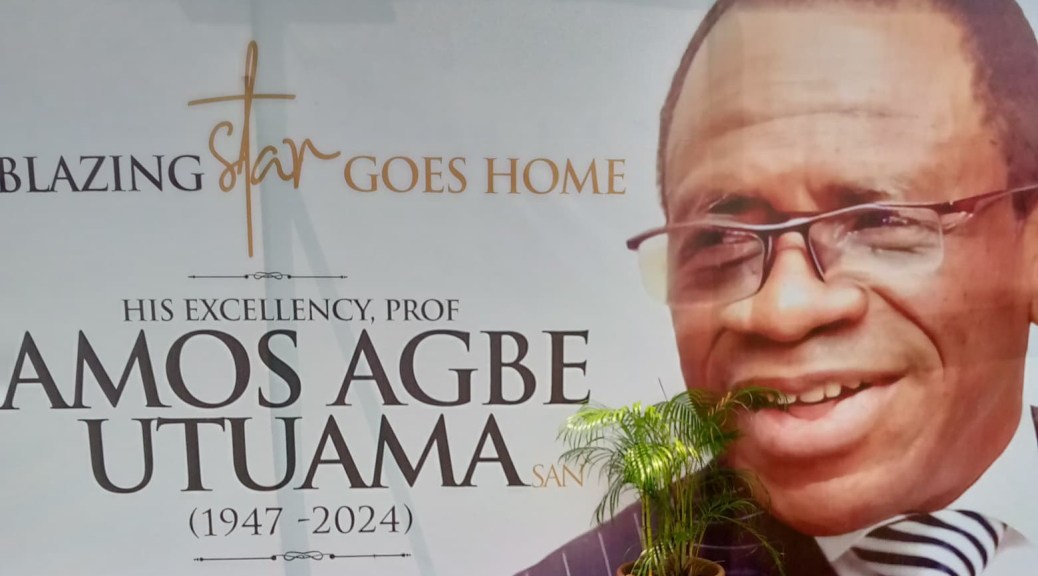
As Prof. Amos Utuama, SAN, goes home

By Babalola Falobi (Ph.D)
Warri, Delta State

“When beggars die, there are no comets seen; The heavens themselves blaze forth the death of Princes” – Williams Shakespeare (Julius Caesar).

The former Deputy Governor of Delta State, and a distinguished Alumnus of the University of Lagos, Prof. Amos Utuama SAN, has been laid to rest in his hometown, Otu-Jeremi, near Ughelli, in Delta State, in a “blaze of glory.”

The 2-day event commenced with a Service of Songs at St. Andrew’s Catholic Church, Otu-Jeremi on Tuesday, 29th April, 2025.

Dignitaries present at that occasion included the former Governor of Delta State, Chief James Onanefe Ibori, under whom the late Prof Utuama served as Attorney General and Commissioner for Justice for 8 years (1998-2007), after which he became Deputy Governor to Dr. Emmanuel Uduaghan (2007-2015). The present Governor of Delta State, Elder. Sheriff Oborevwori, his wife, and a host of Commissioners and members of the Federal and State Legislatures were also in attendance. Senior members of the Bench and Bar, from all over the country, captains of industry, Traditional Rulers and High Chiefs, as well as several Unilag Alumni members, were also present.
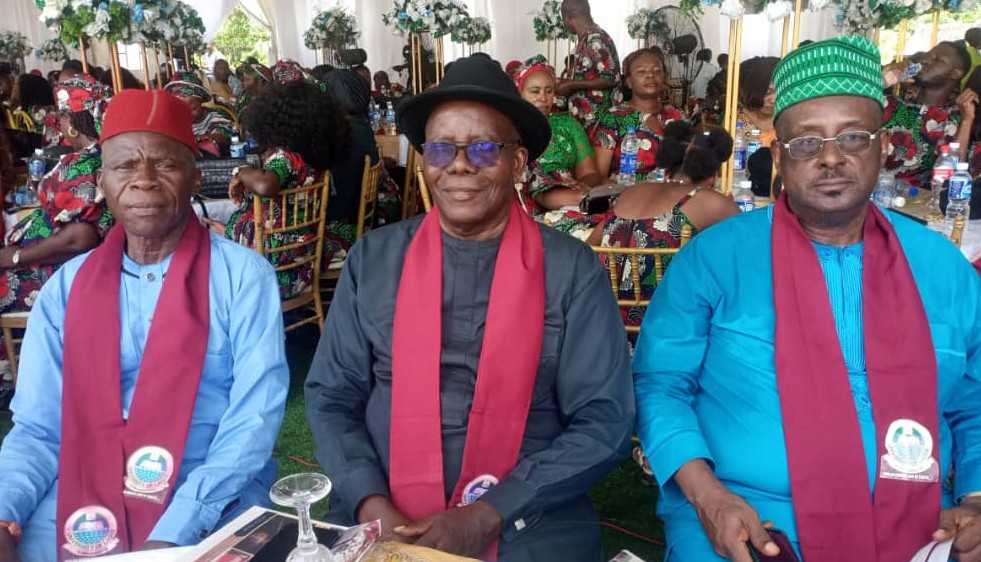
The Church service was held on Wednesday, April 30, 2025 at the Warri Cathedral, after which his burial took place, privately, at his residence at Otu-Jeremi. The entertainment of dignitaries and guests took place at the Otu-Jeremi Primary School ground, at which the Speaker of Delta State House of Assembly, Hon Dennis Guwor, several Commissioners and Honourable members of the Legislature, members of the Bench and Bar, several Chiefs, as well as a full compliment of Unilag Alumni members from both the Warri and Asaba branches, were visible present.
The Immediate Past Chairman of the Warri Circle, Dr. Babalola Falobi, represented the National President (Worldwide), Engr. Ifeoluwa Oyedele, FAEng, while the new Chairman of Warri Circle, Deacon Tony Onakpoma, and the Chairman of Asaba Branch, Barr. Emmanuel Diei, and numerous Alumni members, were also present at the event. The Unilag Alumni Association was well represented and properly recognised at the event.
The late Prof. Amos Utuama died a few months ago, at the age of 77 years. May his soul rest in peace.

Ibadan-Ife-Ilesa Road: Stakeholders Send SOS to Tinubu, Lament Neglect Despite Award for Rehabilitation

>By Sanmi Falobi <

Concerned stakeholders, citizen groups and individuals have lamented the increasingly hazardous condition of the Ibadan-Ife-Ilesa Expressway, which has significantly deteriorated in recent months, with the current state of disrepair now posing serious risks to road users and impeding economic activities across the region.

According to Chief Abiola Falayajo, a concerned citizen and one of the arrowhead of the call for rehabilitation of the road, the critical highway, which serves as a major transport corridor, connecting key towns in Oyo, Osun and Ondo States, has suffered significant deterioration, resulting in deep potholes which pose a serious risk to road users, leading to accidents, burst tyres and exposure to hazards and attack by assailants.

In a statement, as a Save our Soul (SOS) open letter to His Excellency, President Bola Ahmed Tinubu, Chief Falayajo lamented that the road is in a very critical condition and that there is the need for the urgent rehabilitation.

 “I, a concerned citizen of Nigeria, humbly bring to your esteemed attention the urgent need for the rehabilitation of the Ibadan-Ife-Ilesa Expressway. This critical highway, which serves as a vital economic and social lifeline for millions of Nigerians, is now in a state of severe disrepair, posing grave risks to the lives and livelihoods of those who depend on it daily”, he stated.

“The Ibadan-Ife-Ilesa Expressway is not just a regional road; it is a strategic national asset that facilitates trade, commerce, and movement between major states, including Oyo, Osun, Ondo and Ekiti, as well as other parts of the country. However, its current condition has become a source of pain and concern for commuters, businesses, and transporters.

Large potholes, eroded road sections, and structural failures have turned what should be a smooth transit route into a dangerous journey marked by frequent accidents, vehicle breakdowns, and tragic loss of lives”, he added.

“Your Excellency, I am positive, and appreciate the Renewed Hope Agenda and your administration’s commitment to infrastructure development.  I am positive that under your leadership that Nigeria will witness significant progress in road rehabilitation and national development. It is in this spirit that I earnestly appeal for your intervention to ensure that this expressway receives the urgent attention it so desperately needs”, he further stated.

It would be recalled that Chief Falayajo is not the only one concerned about the deteriorated condition of the Ibadan-Ile Ife-Ilesa road. Over the past year, several other groups, including students of the Obafemi Awolowo University, commuters and travelers alike have been calling for urgent repairs of the road.

In a recent media report by the Nation newspaper, Senator Sharafadeen Alli, representing Oyo South Senatorial District in Senate and Senator Lere Oyewumi, representing Osun West Senatorial District had appealed to the aggrieved people of Oyo and Osun states as well as other road users to exercise patience on the Ibadan-Ife-Ilesa Highway project, assuring that efforts are on to get the project completed as soon as possible.

According to the report, the lawmakers explained that they had also written to the President, seeking special intervention to ensure that funds were made available for the speedy completion of the highway.

“All of us,  as lawmakers in Oyo and Osun states, we are working on it. And we have written the President, seeking for special intervention to provide funds for the completion of the highway. We know how important the road is, and we are working on it”, Senator Sharafadeen Alli was quoted to have said.

Similarly, other stakeholders including the members of the Osun State Council of Obas, have appealed to the Federal Government to fix the Ibadan-Ife-Ilesa Express Road.

In a communiqué issued at the end of their monthly meeting in Osogbo, in June 2024, they described the Ibadan-Ife-Ilesa Express Road as a death trap for motorists. The Council noted that the road is one of the major Federal Government roads in the South West, linking several states together and appealed to President Bola Tinubu to quickly intervene and fix this important road.

Meanwhile, available information have it that the road had been awarded for repairs to KOPEC Construction Company. It was supposed to be supervised by Oyo and Osun States Field Office of the highway development and management initiative (HDMI) phase II programme under sukuk funding. However since it was awarded, the work has been abandoned with less than 5% work done. The highway, which is about 224km from Iwo road in Ibadan to the Brewery Area in Ilesa, was also noted to have been included and captured in the 2024 appropriation budget as ‘Emergency/palliative repairs of Ibadan-Ife-Ilesa dual carriageway in Oyo and Osun states.

Concluding the SOS open letter to President Tinubu, Chief Falayajo stated further: “I kindly appeal to your esteemed office to direct the Federal Ministry of Works and other relevant agencies to prioritise the reconstruction and maintenance of this road. A swift and decisive action in this regard will not only prevent further loss of lives but also enhance economic activities, improve regional connectivity, and restore public confidence in governance.”

“Your Excellency, I trust in your dedication to the well-being of Nigerians and remain hopeful that this appeal will be met with the prompt action it deserves” Chief Falayajo further stated.

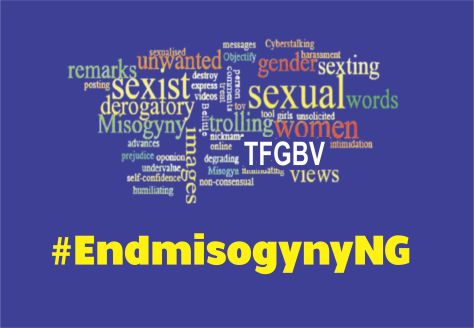
Combating Misogyny and Tech-Facilitated Gender-Based Violence in Nigeria

>By Sanmi Falobi<

In the already saturated social environment of dealing with patriarchal contexts that limits and hinder the communication rights of girls and women, the emerging manifestation of Misogynistic actions and Tech-Facilitated Gender-Based Violence (TFGBV) is a growing subject of concern. This is so because these acts have been found to infringe on the communication rights of women and girls, online and offline. Indeed, this emerging trend has become increasingly visible as more Nigerians turn to digital platforms for communication, business, and social interaction.

According to a recent report, which entailed perspectives from expert discourse, social media monitoring and focus group sessions, it was revealed from the monitoring of social media platforms, that the advancement in the use of technology and digital devices, has translated the manifestation of Gender-Based Violence (GBV) from the physical/social realms to technological and social communication platforms.

Indeed, while technology has opened doors to new opportunities, it has also created avenues for abuse, particularly of women and marginalised groups. As the digital spaces for communication expanded across social media platforms, so has the infringement, repression and oppression of the communication rights of women and girls translated from the traditional forms of physical violence to digital spaces as Online Gender Based Violence (OGBV), otherwise known as Tech-Facilitated Gender-Based Violence (TFGBV).

According to the report entitled, ‘Trends & contexts of Misogyny and Tech-Facilitated Gender-Based Violence in Nigeria’, “many women face daily harassment on platforms such as Twitter, Facebook, and Instagram.”

The report, produced by Journalists For Christ International Outreach (JFC), the organisation for Christian Journalists and allied professionals in Nigeria, under a project, entitled ‘countering misogyny and online gender-based violence through monitoring, digital counter-narratives and advocacy actions’ is with the support of the World Association for Christian Communication (WACC) and Bread for The World – German Protestant Agency for Diaconia and Development.

Misogyny and TFGBV: twin evil of same coin

In Nigeria, girls and women often bear the brunt of acts that stems from patriarchal ideologies. Indeed, Misogyny and TFGBV have emerged as common manifestations that inhibits and repressed the communication rights of girls and women in digital spaces, as perpetrators now use social media platforms like X (formerly Twitter), Facebook and Instagram, among others, as platforms to perpetuate forms of violence against women.

These acts includes cyberbullying: bullying with the use of digital technologies; Doxing: revealing or publishing private information about a person online; Sexting: the act of sending sexual text messages, including nude, seminude, or suggestive photos; Online sexual harassment: Sharing of unwanted, online sexual messages, photos, or videos, with the intent to make victims feel threatened, exploited or humiliated; Trolling: deliberately upsetting other people by posting inflammatory content, including making dehumanising and derogatory statements or name-calling, body shamming, use of derogatory statement and spreading false information to create confusion or controversy about an issue that relates to the target, among others,

Case studies: Misogyny, TFGBF and denigration of women

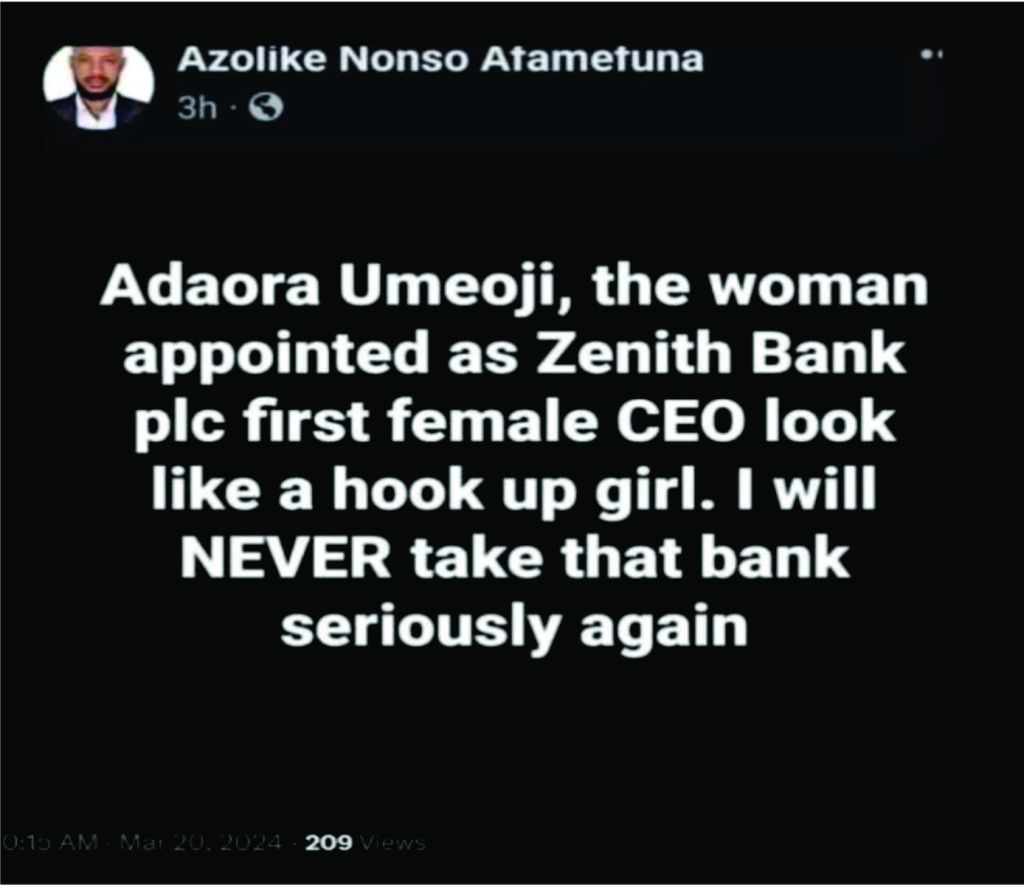
It would be recalled that when Zenith Bank Plc, one of the leading commercial banks in Nigeria, announced the appointment of Dr Adaora Umeoji as its Group Managing Director/Chief Executive Officer (CEO), effective June 1, 2024, the announcement was hailed and widely celebrated as a significant landmark. The significance Dr Umeoji’s appointment, which was made public by the bank’s Company Secretary, Mr Michael Otu, is hinged on the fact that Umeoji is the first female GMD/CEO in the bank’s 35 years of existence.

However, the release of the official picture of the new CEO was to become a subject of misogynistic statements by some persons online, among which was a post by a Facebook account holder by the name Azolike Nonso Afamefuna. The crux of the matter and the grouse of the Facebook post made by Afamefuna, on March 20, 2024, sequel to the announcement of Umeoji as the CEO of Zenith Bank was that she was ‘too beautiful’ to be a professional banker. Discarding her professional qualifications and experience, the post had insinuated that Dr Adaora Umeoji’s emergence as the bank’s CEO was because of her beauty and sexual escapades, rather than her professional qualifications or achievements. In the post, which was widely condemned, and which the account holder, later deleted with an apology, Afamefuna had stated that Umeoji looked like a ‘hook-up girl’, (a terminology which generally refers to a lady who is involved in casual sexual relationships).

The analysis of the post, which was one of the case studies referenced in the JFC report, was meant to objectify and demean her, disregarding all her qualifications and hard-earned positions through the management cadre of Zenith Bank to becoming CEO. The post according to the analysis in the report is a misogynistic statement that trivialises her career success and qualifications and as such was meant to reinforce harmful stereotypes that women, regardless of their achievements, are judged by their looks and not their professional competence. Ultimately, the post exemplifies how Misogyny undermines women in positions of power, portraying their presence as diminishing rather than empowering.

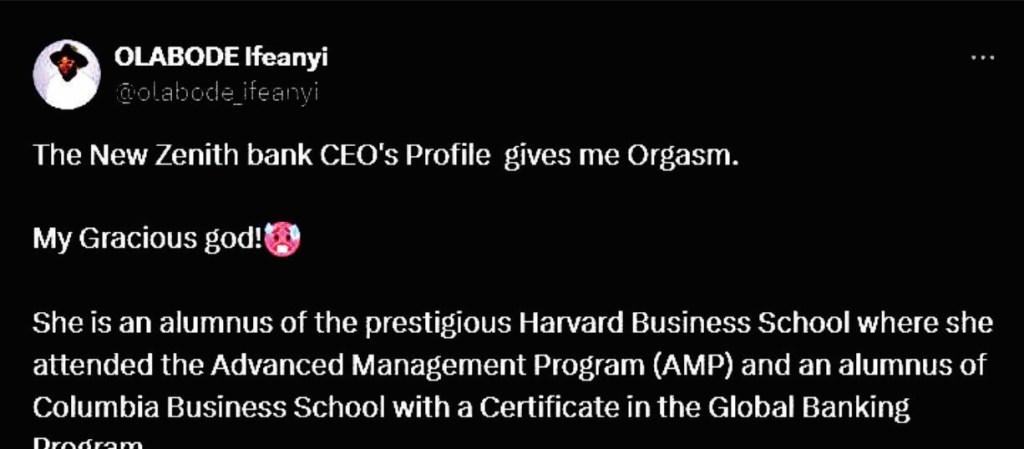
In a related post on X, a post by @olabode_ifeanyi had inadvertently stated that the “new Zenith Bank CEO’s profile gives me orgasm”. Though the content of the post was positive and celebrated the achievement of Dr Umeoji, the sexualisation of the title by the writer was interpreted to have a ‘mysogynistic intent’ by viewing her professional achievements through a sexual lens.

Though he later apologised and deleted the post, claiming that he was excited by the achievements of the newly appointed CEO, some social media users had reacted that the writer would not have used the word ‘orgasm’, if a man with a similar profile were to be appointed as the bank’s CEO.

In responding to the emerging indicators, Blessing Oladunjoye, the project officer for JFC Nigeria, under the #EndMisogynyNG campaign initiative noted that Misogyny and tech-facilitated harassment and prejudice against women are becoming prevalent on social media platforms, though unknown by some perpetrators who just see it as catching fun.

According to her, “some of the comments and expressions on social media including sexual remarks, non-consensual posting of sexual images or videos, and related snide posts to demean women, were intentional, and stem from personal ideologies and background”. She lamented that keeping silent or overlooking such acts will continue to fuel the prevalence of Misogyny and TFGBV.

Blessing Oladunjoye

Giving further insight, she stated that the report, which entailed a social media monitoring exercise conducted between January and September 2024 on the trend of misogyny and tech-based GBV revealed that misogynistic content and cyberbullying are majorly spread on Facebook  (74.2%), followed by X (formerly Twitter) and Instagram (12.1% each), while TikTok only takes 1.5%.

According to her, the study examined 500 social media posts and identified 66 instances of cyberbullying, online harassment, and misogynistic content directed at women. Additionally, the study found that while some female genders were not exempted from the act, males were the most that posted misogynistic content.

“This makes it clear that misogyny/OGBV are perpetrated largely by the male gender with a representative value of 60.6%, females also participated, representing 16.7%, the undetermined is 9 representing 13.6% and a combination of both males and females was 9.1%”.

She highlighted the widespread discrimination against women in society, especially those who are at the highest levels of their professions and fields of practice, as a serious issue that must be addressed to propel sanity in society, noting the importance of educating the general public about the dangers posed by misogynistic content in society.

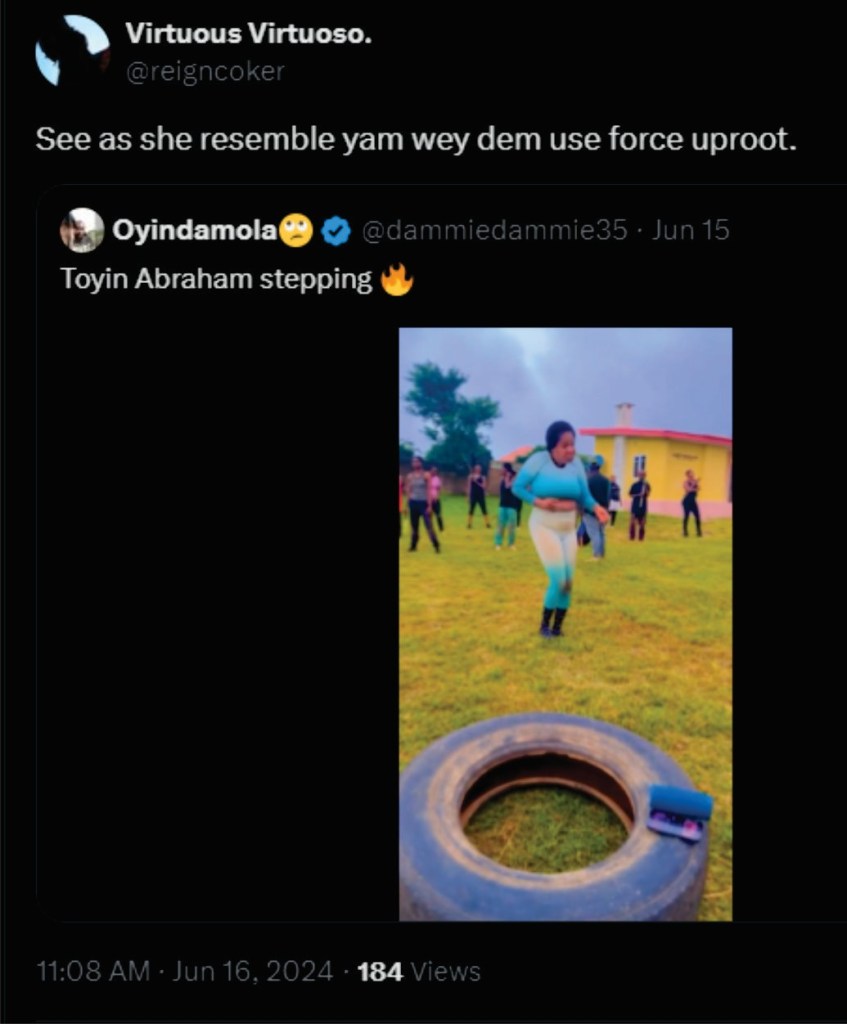
In another inference as contained in the report, Toyin Abraham (a Nollywood actress), in a demeaning and disrespectful manner was objectified with her legs described as ‘a yam that has been forcibly uprooted.’ While the original post which was viral on Facebook and Instagram was that of a short video with the headline, ‘Toyin Abraham shows off her amazing dance steps’ and ‘Actress Toyin Abraham Flaunts her Amazing Dancing Moves!’, the headline used by an X user @reigncoker on the short (7seconds) video post was a headline which was a derisive and deliberate statement to belittle and degrade her, reflecting an underlying attitude of Misogyny and disrespect for her achievements. The choice of words, expressed in indigenous pidgin language objectifies the actress, who was dancing, during what appears to be a work-out/exercise session.

According to the analysis, comparing her leg to ‘yam’, a staple food, is “an unflattering metaphor which is misogynistic and also reinforcing negative stereotypes”.

Other referenced case studies, beyond that of Dr Adaora Umeoji and Toyin Abraham include misogynistic statements against Funke Akindele another Nollywood Actress, and other persons, of the female gender.

Understanding and mitigating Misogyny and TFGBV

There are several general definitions and explanations about Misogyny. While the Collins dictionary defined it as ‘a strong dislike of women’, the Cambridge dictionary defined it as ‘feelings of hating women or the belief that men are much better than women’ and Merriam Webster dictionary defined Misogyny to mean ‘hatred of, aversion to, or prejudice against women’.

Referencing internetmatters.org, the report alluded that misogyny in the online space is largely found in videos, images and forums or comment sections. It includes name-calling or use of slur language suggesting women are lesser than men, or use of vulgar images or photos and content that puts down women.

While Misogyny is generally defined as the dislike, hatred of, contempt for, or prejudice against women or girls, typically exhibited by men, or acts and actions showing feelings of dislike for women, an adaptation of the broad 5 statement of definitions by london.gov.uk explained Misogyny to include acts or attitudes that “objectify women, such as to treat a person like a tool or toy, as if they have no feelings, opinions, or rights of their own; belittle women or girls in conversation, such as using sexist nicknames or using derogatory remarks; seek to control women’s behaviour; use intimidating or humiliating behaviour to destroy a woman’s self-confidence and undermine her; treat women differently from men in social and professional settings; and pursue/express unwanted sexual comments or advances on women.

Tech-Facilitated Gender-Based Violence (TFGBV) on the other hand is described as “the form of gender-based violence which is predominantly carried out online, on digital spaces/platforms. It can be described as targeted harassment and prejudice against women through technology-based, online channels or platforms.”

According to Mrs Ugonma Cokey, the Vice President of JFC and the focal lead of the #EndMisogynyNG Project, cyberbullying of women as a form of tech-based gender-based violence is on the rise. She noted that data from research and  Focus Group Discussions (FGDs) with about 100 people, including female journalists, students from tertiary institutions, professionals and men, has exposed that there are syndicates of online predators whose mission is to cyberbully women, noting that this validates general perspectives that women are often harassed and objectified in their lines of profession and through sexual text messages, and social media posts/contents to misrepresent and dehumanise the female gender.

Ugonma Cokey

“Women seeking leadership positions in their career advancement are frequently stigmatised as a result of societal male dominance. Women with disabilities are also the victims of online gender-based violence as they encounter profiling by the members of the public while they also receive sexual advances from the opposite gender”, she noted.

Mrs Cokey emphasised the importance of collaborating with men for strategic role-playing to combat misogyny and tech-based gender-based violence against women, as the majority of the content is perpetuated by the male gender.

Impact of Misogyny, TFGBV and need for collaborative actions

The increasing attacks on women on social media and other platforms are taking a psychological and emotional toll on the victims, as “it tends to force women to conform to societal pressures, often against their will,” Mrs Funmi Falobi, a mass communication lecturer and gender advocate, lamented.

“Mysogyny and TFGBV often targets women and this breaks the willpower of women and reduces women’s participation and contribution in society.It causes psychological harm, leading to a defeatist attitude and stalled ambitions. It limits the potential of women and can destroy ambition, conforming women to societal stereotypes. It also leads to depression, suicidal thoughts, and stigmatisation”.

Funmi Falobi

Suggesting the mitigation strategy to challenge tech-based gender-based Violence, Mrs Falobi, who is the coordinator of the Initiative for social Impact and Sustainable Development (ISISD) as well the gender expert for the JFC #EndmisigynyNG movement called for increasing awareness and more collaboration among civil society stakeholders to stem all forms of attack against female gender across the social strata

She noted that everyone, including the media, has a key role to play.

“Promoting responsible social media practices and collaborating with institutions to create awareness are essential steps in mitigating misogyny and TFGBV. Increased media reporting on the issues and encouraging storytelling to educate others are vital in the fight against misogyny, TFGBV and indeed any form of repression of the rights of women/girls.”

She also urged journalists and the media to report on women’s issues with an inclusive mindset and without prejudice, and to refrain from using sexist language when disseminating information, as this could further encourage misogyny in society.

Mr Lekan Otufodunrin, JFC President and the Project Coordinator, also urged journalists to maintain professionalism while doing their jobs and prioritise peace consciousness when reporting issues around gender-based violence.

Lekan Otufodunrin

He noted that journalists have powerful roles to play to reshape perspectives in society, both online and offline and as such, it is imperative for them to focus on the narratives that will create positive impacts on society generally.

He noted that the issues around Misogyny and TFGBV are of global concern and as such, the initiative by JFC Nigeria as a member of the WACC Africa membership network is a pilot scheme that calls for broader stakeholders’ involvement in focusing on achieving the priority purpose of providing information, assessing trends in manifestation and taking mitigation actions to address emerging incidences of gender discrimination and rights repression within the online/digital space.

FGBMFI SW3 Praise Day 2025: When faith embeds business in atmosphere of praise

>By Sanmi Falobi <

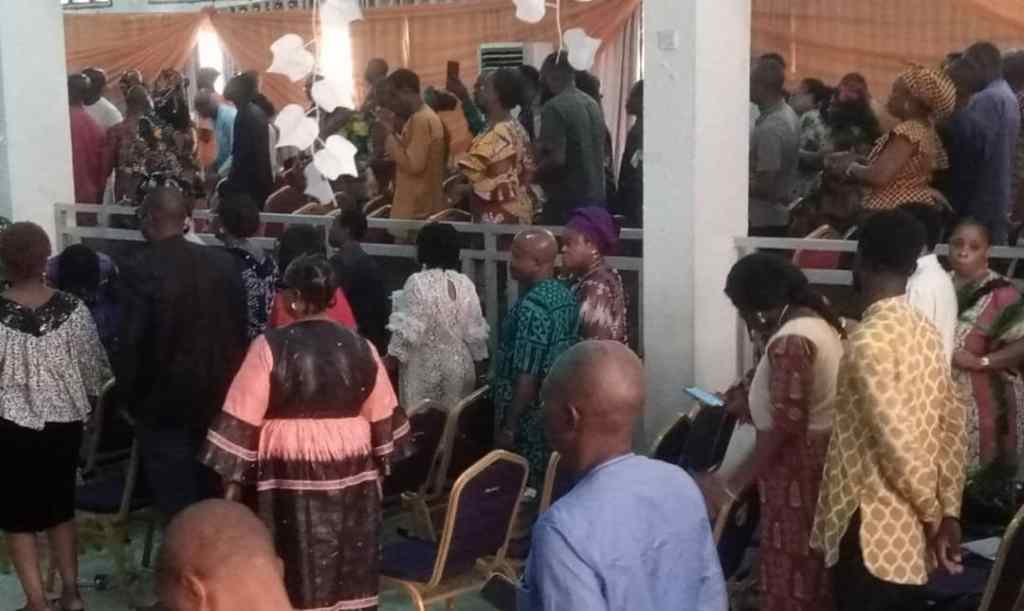
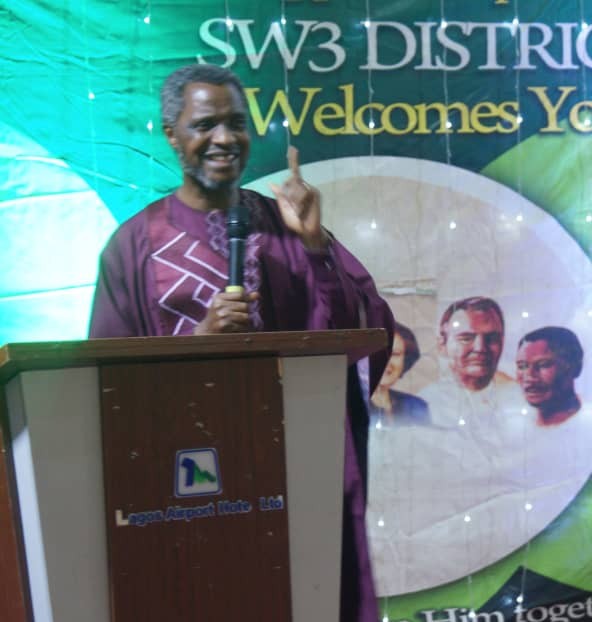
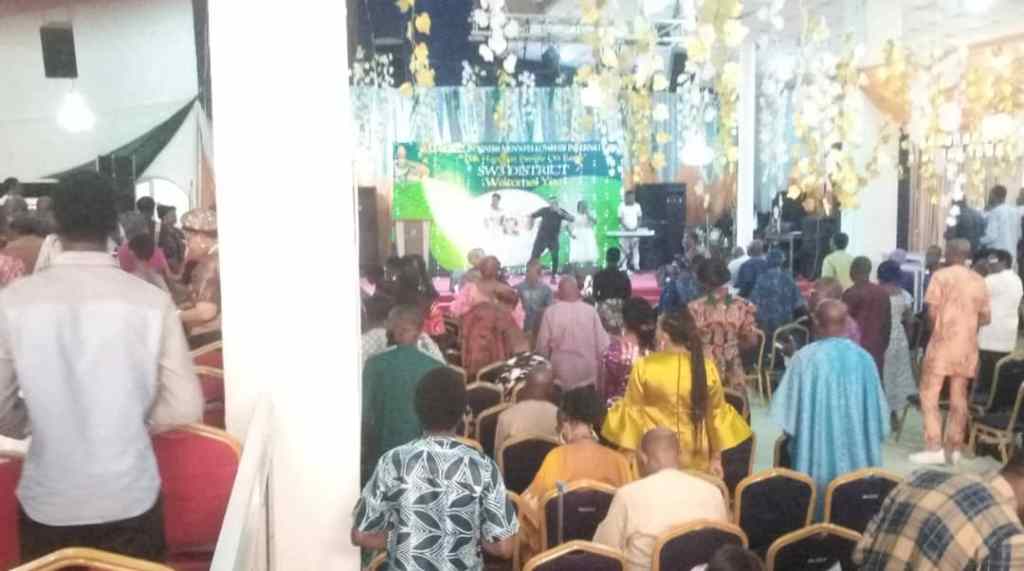
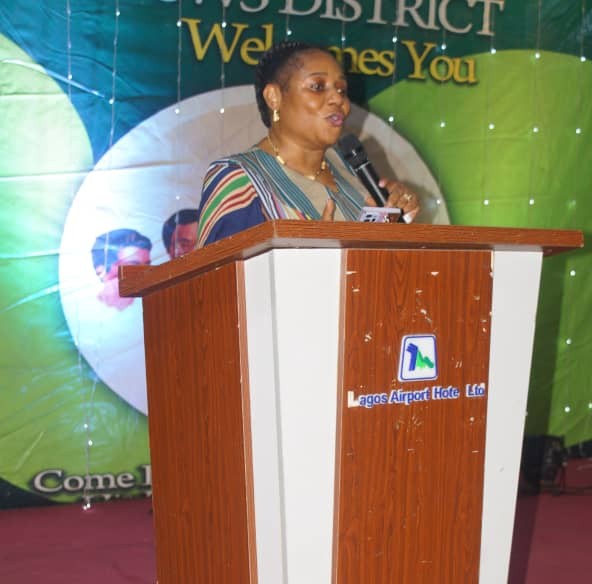
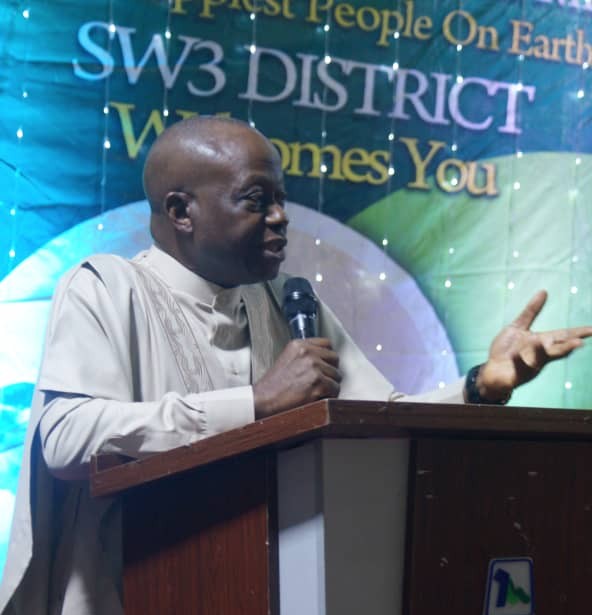
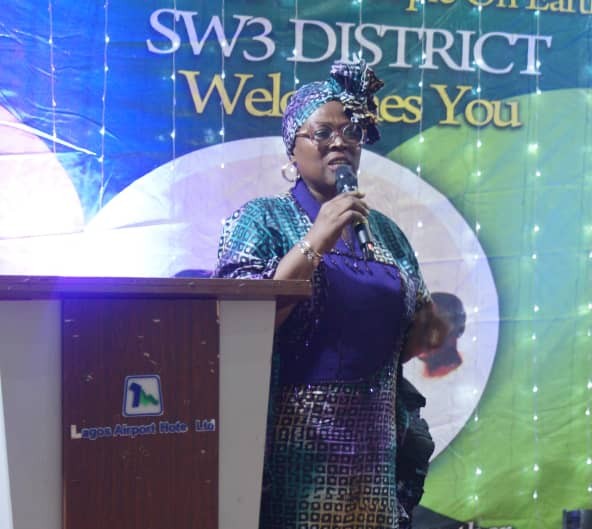
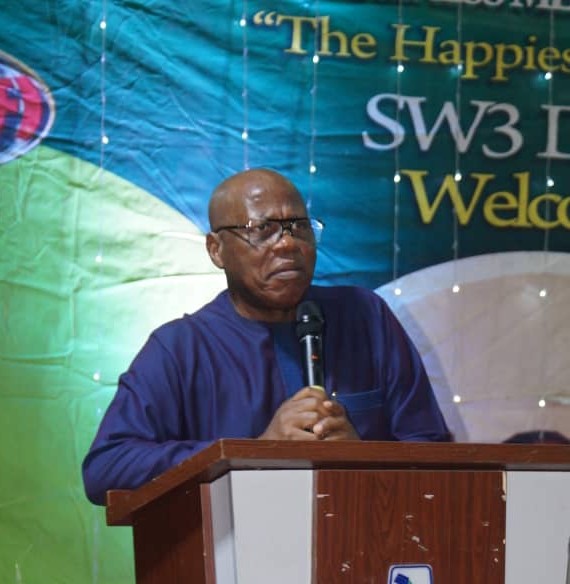
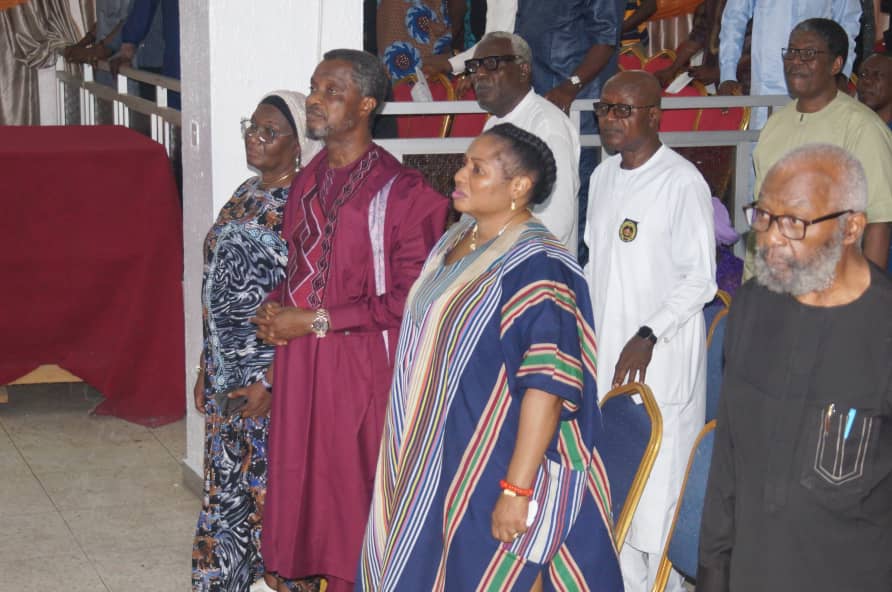
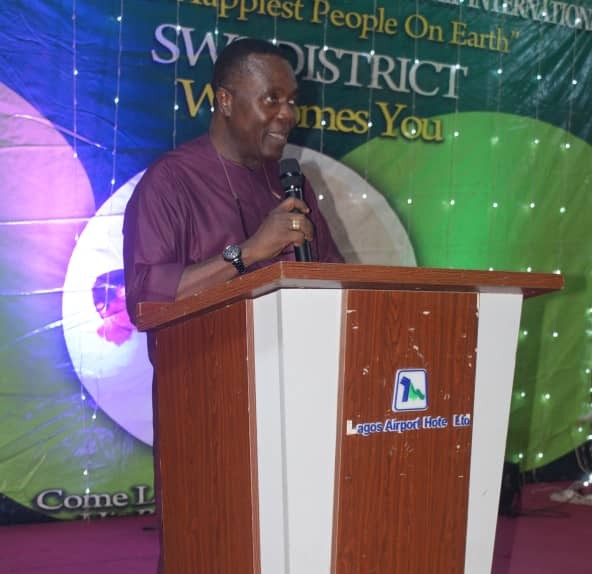
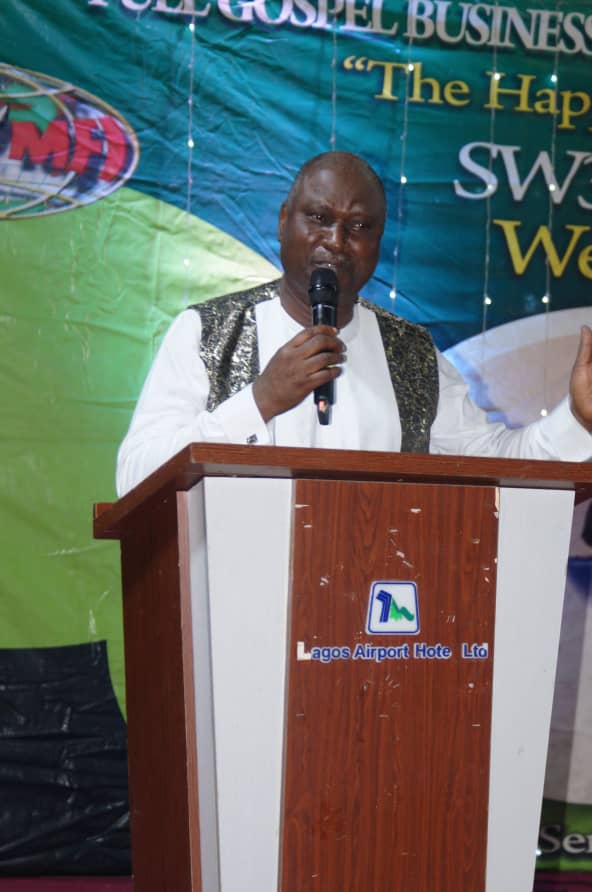
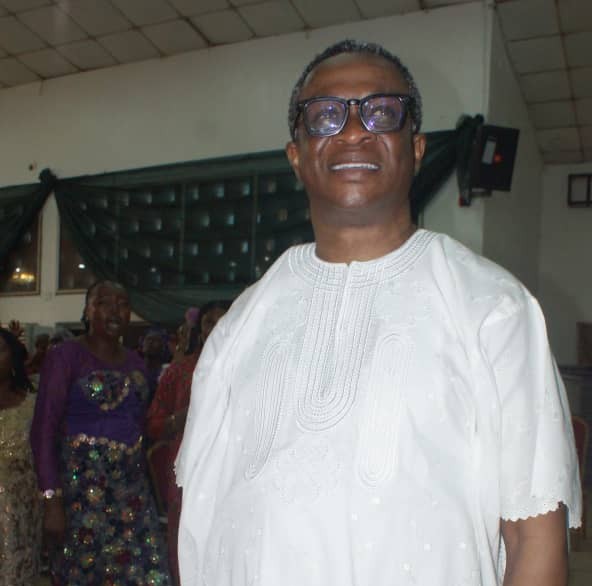
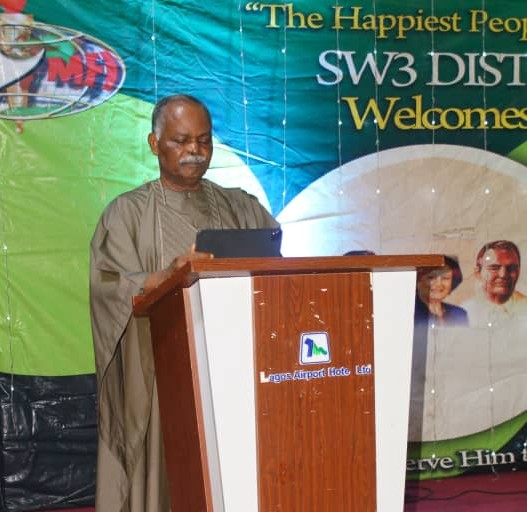
When faith embeds business in an atmosphere of praise, it creates a powerful synergy where spiritual principles and professional endeavours align. That was what played out as Mr. Sunny Beyioku, District Coordinator, South West 3 of the Full Gospel Businessmen’s Fellowship International, led accomplished career and business men in praising God at the International Praise Day 2025 which held on Saturday, February 8, 2025 at Airport hotel, Ikeja, Lagos.

Gratitude to God, fellowshipping for greater impact

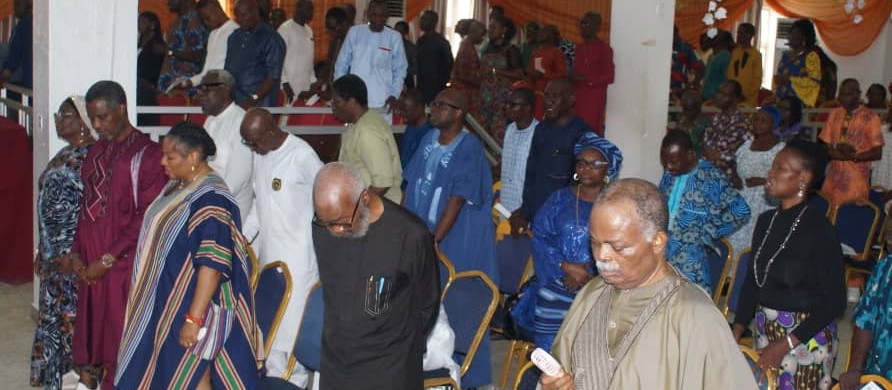
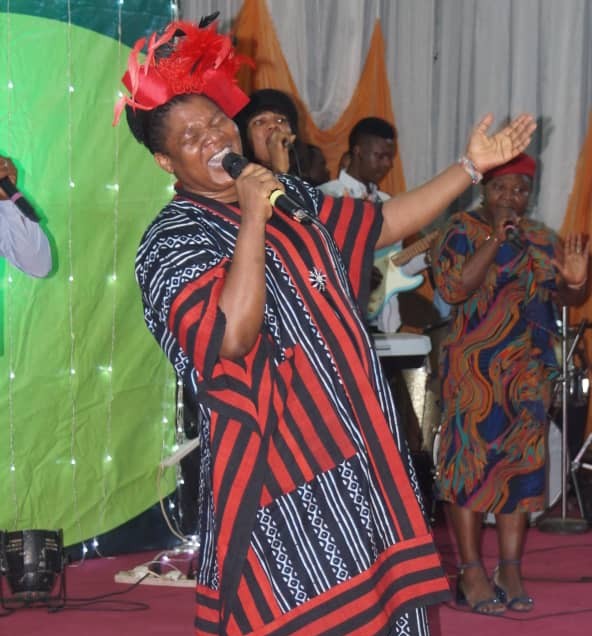
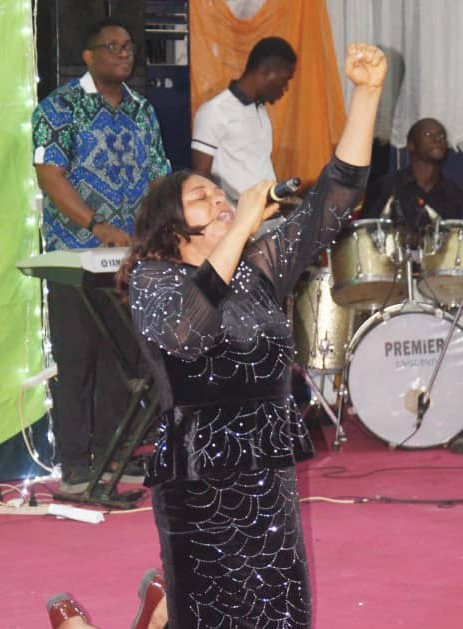
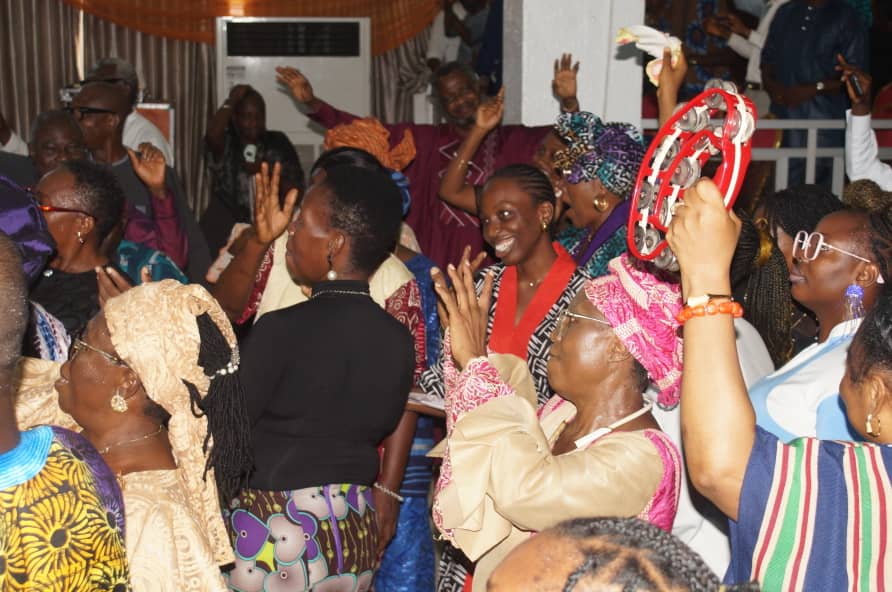
The event, which brought together entrepreneurs, business leaders, and professionals from across the city for a transformative day of worship, inspiration, and empowerment was a powerful fusion of faith and business, including series of heartfelt testimonies, intermittent prayer sessions, electrifying praise and deep worship sessions in appreciation to God for His faithfulness over the past year, while also thanking Him in appreciation ahead of wonderful things to manifest in the new year.

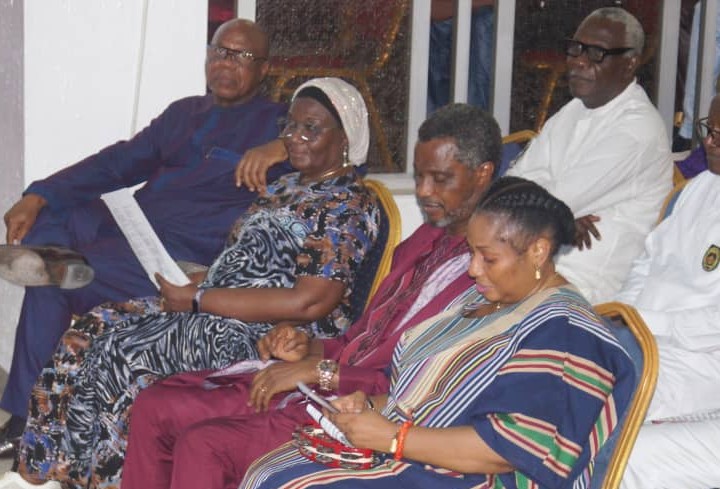
The event also provided the opportunity for the consolidation of friendship, networking, fellowship and strategic business connection under an atmosphere of worship and prayer within the fold of members across several chapters.

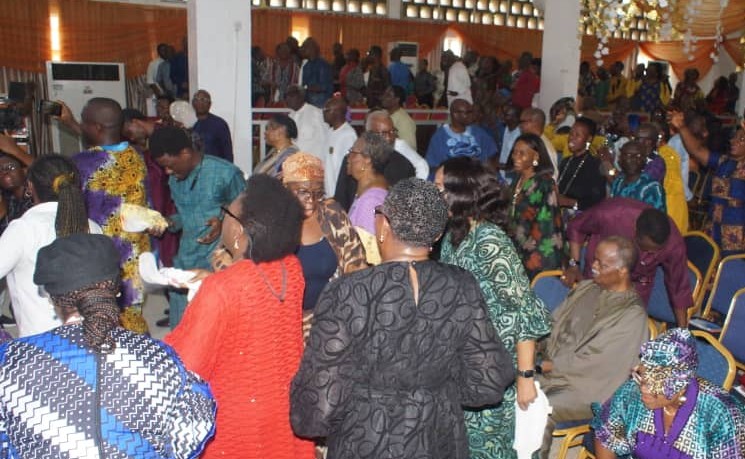
Joy overflowing as men danced to the lyrics, hymnals and worship sessions

It was a ‘no-holding-back’ session as men, not minding their social status, positions or financial prowess danced and swayed to the rhythm and beat of melodious songs and high praises by renowned Gospel Artists which included Bukola Bekes, Dancia Ngozi and Joy Ogbetere.

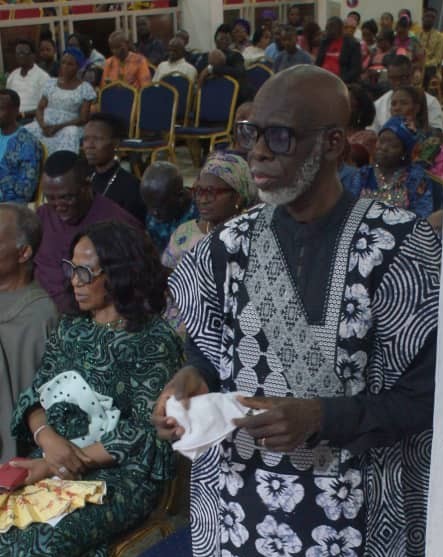
Dancing to the melody and serving as anchors of sessions and as persons executing tasks at the event were accomplished and distinguished businessmen, career professionals and leaders across 17 zones and almost 100 chapters under SW3, most of whom were present with their wives. They include: Dr. Wole Olufon, Engr. Charles Aladewolu, Ambassador Tony Ewelike, Engr. Banjo Adeyoju, Mr. Fola Aguda, Barr. Tunji Omole, Pharm. Ifeanyi Atueyi, Sir. IK Onyemekara and Pharm. Jude Elue.

Others were: Mr. Biola Ayeni, Engr. Femi Adesanya, Mr. Akin Oluwole, Mr. IK Obazee, Dr. Dapo Collins, Dr. Taiwo Makinde, Engr. Titus Abiola, Dr. Muna Chira, Dr. Kehinde Makinde and Engr. Olasina Giwa, among others.

The annual international praise day is a way of ushering members into the new year, thanking God for His wondrous works, what He has done and the anticipations of greater things in the new year.
It is to be noted that the members of FGBMFI, who are also called the ‘Happiest People on earth’ is not only for men, as women are well integrated to play strategic roles under the Ladies of the Fellowship (LOF) platforms, hence the event had women; wives of members and other guests in attendance.

Sharing insights and a testimony about his work and membership as a member of FGBMFI for over 30 years, Engr. Charles Aladewolu related the vision of the founder of the Full Gospel Business Men’s Fellowship International (FGBMFI), Demos Shakarian, who upon receiving the vision of the FGBFMI in 1952 had to go through phases of trails and undertook intense prayers, seeking the face of God for intervention in manifesting the vision. According to Engr. Aladewolu, he too had to depend on God upon his election as Vice president of a chapter and then later as president, when he became a member, some 30 years ago.

Engr. Charles Aladewolu

“The person who brought me to the Full gospel fellowship about 30 years ago is my friend who is still with me today. God used him to bring me to the fellowship and since that time, till now, God has been faithful in taking me from one height of accomplishment to the other” he said.

Looking Ahead

FGBMFI SW3’s Praise Day 2025 has undoubtedly set the tone for a new year of faith-centered business practices. The event demonstrated that when faith is embedded into business environments, it leads to greater prosperity, ethical leadership, and, most importantly, a deeper sense of purpose.

As the event wrapped up, attendees left feeling renewed, inspired, and ready to take on the challenges of their industries, armed with both faith and renewed mindset to accomplish greater success in respective endeavours.

With the 2025 Praise Day event, FGBMFI chapters under SW3 are now buoyed and inspired to commit to greater service in implementing chapter programmes and initiatives and advancing the gospel under the unique mandate of the FGBMFI principles, in both the marketplace and the communities.

Here are snapshots of pictorial and video highlights.

https://drive.google.com/file/d/1WlOn4_TXLZGF91txyaKSAyuU3Bkk3A-V/view?usp=drive_link

https://drive.google.com/file/d/1ZiVZKYrBvsM1cuC0Gj5To5NPTrGn0gqz/view?usp=drive_link

https://drive.google.com/file/d/15Ej_3j8fODqu9ktA28l0rN1hcDSCzKhN/view?usp=drive_link

https://drive.google.com/file/d/11yeZyexXGOtBnXFOxjoQPFOskf-OCCXg/view?usp=drive_link


__________________________________
* Picture credit: Olasina Giwa