
All posts by socialdevelopmentnews
JFC: Making case for managing internal displacement crisis in Nigeria
–By Funmi Falobi-
Nations of the world face one crisis or the other which have left many people to flee their homes. While some of these crises could be as a result of conflict, ethnic clash, terrorism, insurgencies, political and religion cconflict, others could be as a result of natural disasters like flooding, volcanic eruption, tsunami and the like; all these have adverse effect on the people and many have been displaced within their countries while others have become refugees in another land. While the West faces the challenge of migration, Africa on the other hand faces the challenge of internally displaced persons (IDPs) and refugees.
In Africa, more than 24 million people were forced to flee their communities, as at Deember 2017. This includes 6.3 million refugees and 14.5 million IDPs. The numbers increased, with some 170,000 new refugees and over two million new IDPs, in the first half of 2018, mainly from the Central African Republic, the Democratic Republic of the Congo, Nigeria, Somalia and South Sudan.
According to the Displacement Tracking Matrix (DTM) assessment by the International Organisation for Migration )IOM), over1.9 million individuals have been displaced in Nigeria between 20 October 2018 to 20 January, 2019 as a result of Boko Haram insurgency and related violent crisis across six states – Adamawa, Bauchi, Borno, Gombe, Taraba and Yobe.
In Democratic Republic of Congo (DRC), the displaced population tracked by DTM as of November 2018 puts the figure at 451,118 while Kenya had an estimation of 158,637 as displaced population as at December 2017.
Across Africa, people displaced, mostly women and children have had to resort to taking refuge in concentrated camps which are mainly un-used/abandoned facilities or open grounds with tents as shelter. There are few basic amenities, with concerns on social/health related issues. Welfare; food, proper shelter and health needs are a significant concern. Sanitary conditions are generally poor.
Unfortunately, these shortcomings are not often reported in the media, and so needed actions on the plight of IDPs are not brought to the front burner for stakeholders’ intervention or policy formulation.
In order to ensure global best practices in guaranteeing the rights of IDPs through the media, Journalists for Christ (JFC) International Outreach has launched a report titled “Managing Internal Displacement Crisis in Nigeria” – Making a case for IDPs through advocacy. The research report presented at a media roundtable in Abuja was with the support of the World Association for Christian Communication (WACC) and Waldensian Church’s Otto Per Mille (OPM), Italy.
In his address, JFC President, Mr. Lekan Otufodunrin explained that the organisation had carried out a study on the media portrayal of Internally Displaced People in Africa. The monitoring covered Nigeria, Kenya and The Democratic Republic of Congo.
Represented by Mr. Gbenga Osinaike ,a JFC Board Trustee, Otufodunrin said that at the end of the monitoring, the organisation, came up with a publication titled, Muffled Voices adding that the latest research report is a follow up on it.
“From that report, it dawned on us that the issue of internal displacement is no longer what we can take with a pinch of salt.
We have been able to put together a report on how to manage internal displacement crisis in Nigeria. We are here today to brainstorm on the outcome of the presentation and create a working template for officials that are directly concerned with the issues of IDPs in Nigeria and also sensitize the media the more on how they can help in projecting IDP issues to the public,” he said.
Consequently, the research Consultant, Mr. Francis Abayomi declared that the study reveals the depth to which violent conflicts have contributed overwhelmingly to a huge number of IDPs in Nigeria.
According to him, this also points to the possibility of worsening humanitarian crisis in future if the menace of violent conflicts and proliferation of small arms and light weapons is not addressed.
The study shows that there is no proper legislative framework to guide the management of IDPs in Nigeria. There is inadequate capacity of the media to properly interrogate issues related to the management of IDPs in Nigeria. There is no formidable network for stakeholders’ collaboration to demand improved legislative and institutional frameworks reflecting concerns about IDPs situation. There is inadequate responsiveness on the part of State institutions to the plight of IDPs. There is no holistic national database on displacement and resettlement of IDPs in (camps, host communities, and other non-governmental resettlement camps. There is no guarantee for the safety of journalists and press freedom to perform constitutional roles in line with relevant international instruments relating to management of IDPs. Hunger remained one of the biggest challenges in most IDP camps. Many resettlement camps are set up by philanthropists, NGOs and faith-based organizations who are not officially acknowledged, and so do not receive any form of government assistance.
Abayomi said, “There is need for strengthened legislative and institutional frameworks with commitment to enforcing global best practices in line with international standards to ensure greater sense of responsibility and accountability amongst actors concerned with the management of IDPs in Nigeria. The welfare and security of IDPs depend on the extent to which legislative and institutional frameworks are strengthened and enforced in response to the prevailing inhumane situation.”
In his review, Dr. Theophilus Abbah, Director, Daily Trust Foundation maintained that the research has brought out the fact that the inadequate or poor reporting of the plight of IDPs is directly related to the lack of clear legislative framework which should have provided the road map for relevant institutions, civil society organisations and citizens on how to treat IDPs.
While emphasizing that laws and policy documents, though not an end in themselves, are however needed to chart a path that everyone must follow in dealing with every phenomenon in the society.
“Central to the objective of this research is the need for the media to engage in the kind advocacy that could influence government policies and lead to an improved living condition for IDPs. This kind of advocacy has the egg and chicken dimension in which advocacy could facilitate the development of a legislative framework and legislative framework could facilitate better journalism.
While encouraging journalists to focus on development journalism that would lead to better society, development journalist, Ene Osang, said that there is need to bring out gender issues while covering IDPs camps in the country.
On her part, the Executive Director, Participatory Communication for Gender Development (PAGED), Bilikisu Irama enjoined journalists to work with civil societies in order to be well enlightened on issues to look out for while reporting IDPs. she disclosed that such organizations have data that would help journalists in their reporting.
In her submission, the Executive Director, Centre for Children’s Health Education Orientation and Protection (CEE HOPE), Betty Abah, charged journalists to report more of the challenges being faced by the IDPs in order to bring about positive change .

British-Nigerian entrepreneur makes waves on black pound day
-By sdnonline-
British-Nigerian, Shalom Lloyd is recognized and celebrated as United Kingdom (UK) kicks off ‘Black Pound Day’ for consumers to discover and support Black-owned businesses.
With natural ingredients sourced from Nigeria, Pharmacist and entrepreneur, Shalom Lloyd, combines her professional knowledge and African heritage to create a natural skincare line that has developed into a global premium skincare business- Naturally Tribal Skincare. The company was founded in 2016, when a need to improve her baby’s severe eczema led the mother-of-five to invent a formula using natural ingredients. The primary ingredient, which is ‘shea butter’, is ethically sourced from the Essan Kingdom in Niger State, Nigeria, where the company has a factory, and provides jobs and childcare for local women.
“After going through four cycles of IVF and giving birth to twins at 40, I was so desperate to find a natural remedy for my son’s eczema, which made his skin bleed. With no natural effective remedies available, I created one myself.
“I never intended to start a skincare business, but I am extremely proud that people of
all ethnicities love our products which infuse my British and Nigerian heritage; I hope
events like Black Pound Day give black-owned businesses the visibility they deserve.
“During the lockdown, we realised how vital e-commerce is for us and our international trade adviser at the Department for International Trade has been invaluable in helping us enter key markets,” Lloyd said.
Naturally Tribal is currently collaborating with the University of Bedfordshire on a project using new technologies to reduce waste production in their Shea processing facility in Essan, Nigeria, and recently launched a Nigerian e-commerce store, making plans to collaborate with retail stores and create more jobs in Nigeria.
Her Majesty’s Trade Commissioner for Africa, Emma Wade-Smith OBE said:
“Naturally Tribal Skincare’s success is a fabulous example of the positive power of
cultural heritage and the ability of the UK’s diversity to entrepreneurs to export.
“DIT’s support for the company in the UK and Africa, demonstrates how the partnership between government and business can help UK companies of all sizes
to identify new export markets and draw on DIT’s in-country expertise to expand their businesses.
“Such activity has never been more important as our economies recover from the
impact of the Coronavirus pandemic. It is great to see recognition for the leadership
that Black and Black-British businesses are showing in driving enterprise and exports.”
The UK’s Department of International Trade (DIT) has provided support for sales across
Africa, Europe and the US. In 2018, UK DIT supported its Nigerian launch at the British High commission in Lagos, and its participation at the Beauty West Africa fair in 2019 and is now supporting further expansion across the continent into Kenya and Ghana.
Shalom Lloyd is a DIT export champion and has won the ‘Female Entrepreneur’
First-Enterprise 2019 award. Though Naturally Tribal Skincare is based in Milton Keynes, UK, the the company in March 2019 provided health and safety training to over 350 Essan women in Nigeria and is looking to create over 70 jobs there.

PLWDs urge Sanwo-Olu to institutionalise Disability Agency
-By sdnonline-
People Living With Disabilities (PLWDs) in Lagos State have called on Governor Babajide Sanwo-Olu to institutionalise and strengthen the state disability agency, LASODA.
While felicitating with the Babajide Sanwo-Olu led administration’s one year in office, the PLWDs also urged the government to restore the Disability Empowerment Fund.
In a signed statement by Dr. Adebukola Adebayo, Chairman, Joint National Association of Persons with Disabilities (JONAPWD), Lagos chapter, the governor’s T.H.E.M.E.S Agenda offered Lagosians with disabilities some hope of enhancement of their inclusion in all sectors in the emerging smart mega city. “However the administration has failed after one year to strengthen the Disability Agency (LASODA) with which it would have achieved this important goal.”
“Lagosians with disabilities felicitate with our dear Governor, Mr. Babajide Sanwoolu and his very able Deputy, Dr. Obafemi Hamzat as they celebrate one successful year in the governance and leadership of Lagos state.
While we acknowledge and appreciate their commitment to promoting disability-inclusion and empowerment, we are concerned that after one year, there haven’t been any evidence to show a strategic, institutional, policy/program-driven approaches to implementing their passionate love for persons with disabilities.
LASODA up till now has no Board and General Manager to pilot its affairs.
As we set-out on the second year of Governor Sanwoolu’s Administration, Lagosians with disabilities would be much happier to see: The urgent set-up and institutional strengthening of LASODA; Restoration of the Disability Empowerment Fund; An Executive Order mandating all ministries, departments and agencies (MDAs) to set-up a Disability-Inclusion Desk to be supervised by a Director in charge of Planning,” he said
Other requests by the association include an Executive Order mandating all Local Government Areas, LGAs and Local Council Development Areas, LCDAs to set-up Disability Support and Resource Office; and Implementation of the Lagos state policy on inclusive education.”
The association hopes that these requests would have been granted by the end of Governor Sanwoolu’s second year in office.

LOCKDOWN BLUES: SOME THINGS LEARNT AND NOT LEARNT
-By Sanmi Falobi
These are indeed times of uncertainties as the Coronavirus pandemic rages on. When shall things normalise? Next month, in two months, six months? Some projections estimate that we shall continue to deal with the diversity of COVID-19 pandemic well into 2021.
Suddenly, our year 2020 projections and goals are on ‘lockdown’ due to the related socio-economic disruptions and displacements caused by the import of the Coronavirus pandemic.
I digress. Let’s relate with this old fable:According to the tale, there was once a tourist who was startled by the sight of some Elephants who were held by a tiny rope during a pre-circus show. The sight before him was that two huge creatures were held by only a small rope tied to their front leg. No chains, no cages, no bars.It was obvious that the elephants could, at any time, break away from their bonds, but for some reasons, they did not.
Fascinated, the tourist approached one of the circus handlers nearby and asked why the animals just stood there and made no attempt to get away.
“Well,” the handler said, “when they are very young and much smaller, we used this same size of rope to tie them and, at that age, it’s enough to hold them. Initially they tried to break free but the rope held them back. So as they grow up, they are conditioned to believe they cannot break away. They believe the rope can still hold them, so they never try to break free.”
The tourist was stunned. These animals could at any time break free from their bonds but because they believed they couldn’t, they were stuck right where they were, controlled by a strand of rope they could easily break apart.
The reality: Like the elephants, this is how many of us have allowed the social construct around the Coronavirus pandemic to rob us of our goals and aspirations.
Sure, we are experiencing lockdown restrictions and are constrained to #workathome, #staysafe and maintain #socialdistancing, yet, the lockdown provided some opportunities for #skillsdevelopment, #selfdevelopment, #selfdiscovery, #selfappraisal, #familybonding, #familydevotion, #virtuallearning, #reinvention, #refocusing, #reengineering, #readjustments, #re-envisioning, #repacking, #re-ordering, #re-learning, #re-appraisal, #re-positioning, #realisation, #re-organisation, #re-aligning, #rethinking, #reflecting, #reshaping, #innovations, #creativity, #etc.Sure, the realities we are faced with is to #STAYSAFE, even as #postcovid realities of #survival, #financialsustainability, #jobloss, #salarycut#dwindlingincome, #shutdown#familystress and #emotionaltruama remain issues to deal with.
So what has been learnt and not learnt? What new #skills and #resources do you have and can you use to survive the #postcovid challenges?What new #prospect? What new #project? What new #capabilities? What new #possibilities? What new #abilities? What new #ideas? What new #strategy? What new #talents? What new #ventures. What new #enterprise? What new #creativity? What new #innovations?
Whatever it is, let’s apply, the challenges and pressures notwithstanding.
© Sanmi Falobi @ SUCCESSTACT. May 2020. #SUCCESSTACT

COVID-19 coverage: Survey shows poor safety of journalists
By sdnonline
Journalists covering the Covid-19 pandemic in Nigeria have said they lack sufficient protection and are not adequately catered for.
The journalists disclosed this in a survey conducted by a group of media and civil society groups between April 27 and May 1, 2020 “to assess the support available to journalists for their safety in covering the COVID-19 pandemic in Nigeria.”
The Wole Soyinka Centre for Investigative Journalism (WSCIJ), Enough isEnough (EiENigeria), International Press Centre (IPC), the International Centre for Investigative Reporting (ICIR), and Premium Times Centre forInvestigative Journalism (PTCIJ), commissioned the survey following perceptions that journalists were being exposed to danger in the course of covering the pandemic.
A total of 463 male and female journalists participated in the survey. They included correspondents, reporters, editors, freelancers and presenters from 73 print, broadcast and online media across 33 states and the Federal Capital Territory.
Of the 463 respondents, 65 percent said their employers had not provided them with any support during assignment while only 35 percent said they had been provided with some form of support.
The survey revealed that the topmost needs of journalists covering theCovid-19 pandemic are:
Additional monetary allowance separate from salary and payment of outstanding salaries by owing employers;Special Covid-19 coverage insurance package;Specialized training on COVID-19 reporting;Provision of face masks; andProvision of specialized equipment to enable social distancing while on the field.
Concerned about the poor attention to the safety and welfare of journalists covering the pandemic as revealed by the survey, the organizations in a signed statement by the Executive Director, IPC, Lanre Arogundade called on media owners and managers to:
Widen the scope of their support to ensure that reporters on the field are adequately insured and financially empowered while those owing salaries should have them paid;Establish workplace policy and follow the same to equip their journalists with specialized and personal protective equipment including for observation of social distancing while on the field;Provide training to journalists on how to crowd source information for their stories without having to necessarily go to the field; andExplore technological options for interviews while in-house infrastructure should be put in place to ensure the safety of employees and guests (particularly for broadcast media) in line with the safety advisory of the government and health authorities.
They also enjoined freelance journalists to take advantage of reporting grants and other opportunities to procure personal protective equipment while covering the pandemic.
The six organizations also charged media development, civil society groups and other stakeholders to lead campaigns and advocacies for the safety of and support for journalists covering the Covid-19 pandemic.
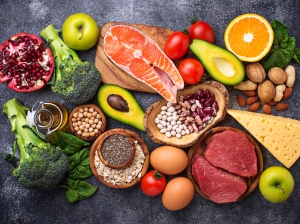
COVID-19: Food that boosts immunity
-By SDNonline reporter-
As the scourge of the coronavirus pandemic continues to ravage the world, and scientists are working to produce vaccines and drugs, experts have advised that people should focus on food that would boost their immune system to withstand the infection.
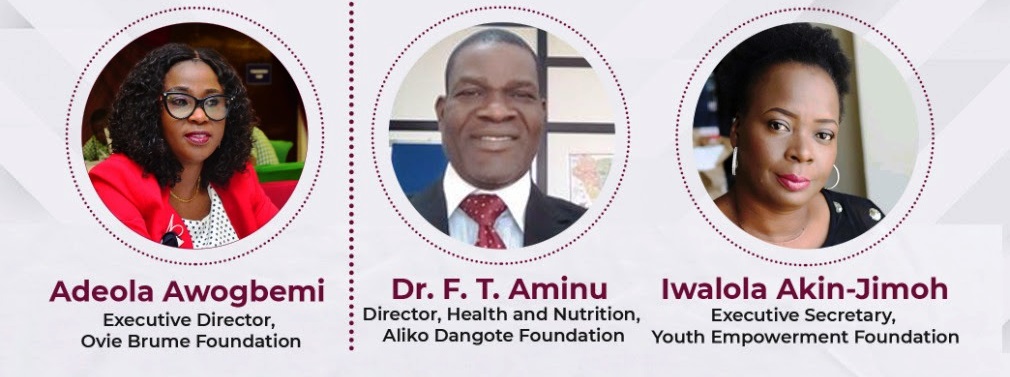
At a webinar organized by Ovie Brume Foundation, Youth Empowerment Foundation and Aliko Dangote Foundation, the nutritionists explained that balanced diet at this period would aid in reducing the malnutrition level in the country, especially among children. The webinar entitled, ‘Building Immunity through Nutrition: A Larger Picture for Preventing COVID-19 Infections’ was moderated by the Executive Director, Ovie Brume Foundation, Adeola Awogbemi.
According to Dr. F.T. Aminu, Director, Nutrition and Health, Aliko Dangote Foundation, immune system is the best medicine for now to combat the pandemic saying, “we must build our immunity through food.”
He declared that people need nutrients such as Vitamin C, E, A, D, B6, B12, zinc to keep healthy at this period. He noted that while there are supplements for the nutrients, he however maintained that they could also be gotten from food sources.
“We can get vitamin A from egg, carrot; vitamin C from orange; vitamin D from sardine, fortified milk, sunshine; vitamin E from almonds, sunflower oil, alvocado; vitamin B12/from beef, mackerel, tuber (boil tuber with the back and after cooking then peel); folic acid from lettuce, spinach, fortified bread; zinc from oyster, yoghurt, beef; copper from oyster, cashew nut; Celsius from tuna, pork, wheat bread,” he said.
Aminu admitted that in spite the pandemic, people must keep going and so, government, individuals must consider what they are feeding, noting that lack of these food or nutrients in meals, can lead to malnutrition and there will be problem to fight the infection
“If you don’t have those micro nutrient it will lead to malnutrition. Many children are now malnourished. We have to take care of them, those ones can’t survive coronavirus if they have it. We have to manage acute malnourishment in our society,” he said.
While advocating the use of safe, clean water especially in regular hand washing and drinking, Aminu said, “Food fortification is very important. Poverty along the line will make many not to have access to the micro nutrients. Beyond COVID-19, health system, market system must work together. Your safety is now your responsibility.’
Speaking on ” How to address COVID-19 at household level,”Mrs. Iwalola Akin-Jimoh, Executive Secretary, Youth Empowerment Foundation said there is no food or diet that can prevent the virus but, to improve our immunity.
While explaining that food hygiene is better controlled at the household level, she advised that people should eat at home.
“On pregnant women, research shows that the virus cannot pass from mother to child and it is not found in the breast milk. There should be exclusive breast feeding, pregnant women should go for their antenatal session. For mothers who are in isolation, NCDC has guidelines for them. For mothers who have COVID-19 and strong enough to breastfeed, they should wear PPE or facemask, express breast milk.
“Safe disposal of faeces is a very big problem in our country. Community that operates open defecations is a very huge problem,” she said.
For front-liners including health workers and carers, Akin-Jimoh advised super food for them. This include orange, green pepper, carrot, dairy products, legumes, zinc, sardines, mackerel.
On tips for good diet, she said, “eat lots of fruits and vegetables, cut on salt and sugar intake, drink water regularly, two litres of water daily, limit consumption of alcohol, exercise regularly, reduce/manage stress and avoid food that causes allergy.”
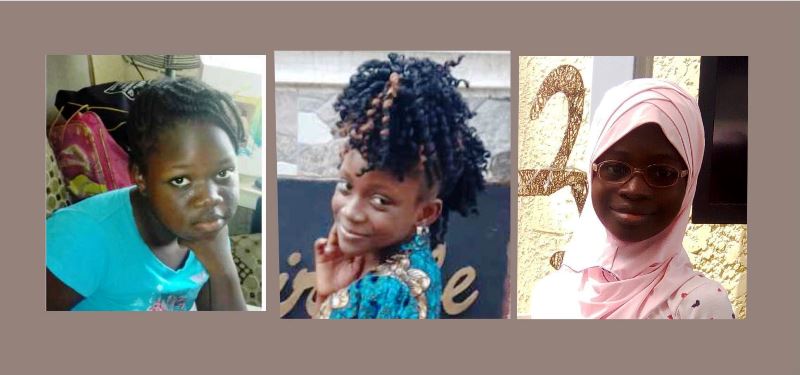
COVID-19 Children Story Board
Though we are all affected by the Coronavirus (COVID-19) pandemic, the lockdown and resultant compulsory holiday mean different things to children.
What are perspectives and the experience of the Coronavirus lockdown for the children? Here are some expressions and perspectives!
Read on @ COVID-19 Children Story Board https://socialdevelopmentnews.wordpress.com/portfolio/story-board/

 Social Development News (SDN)