
>By Temilade Deborah Olagunju<
On a campus known for academic excellence and innovation, conversations recently shifted from routine lectures to a deeper focus on representation and voice. At Caleb University, students of Mass Communication gathered for a campaign aimed at reshaping how women’s stories are told — and who gets to tell them.
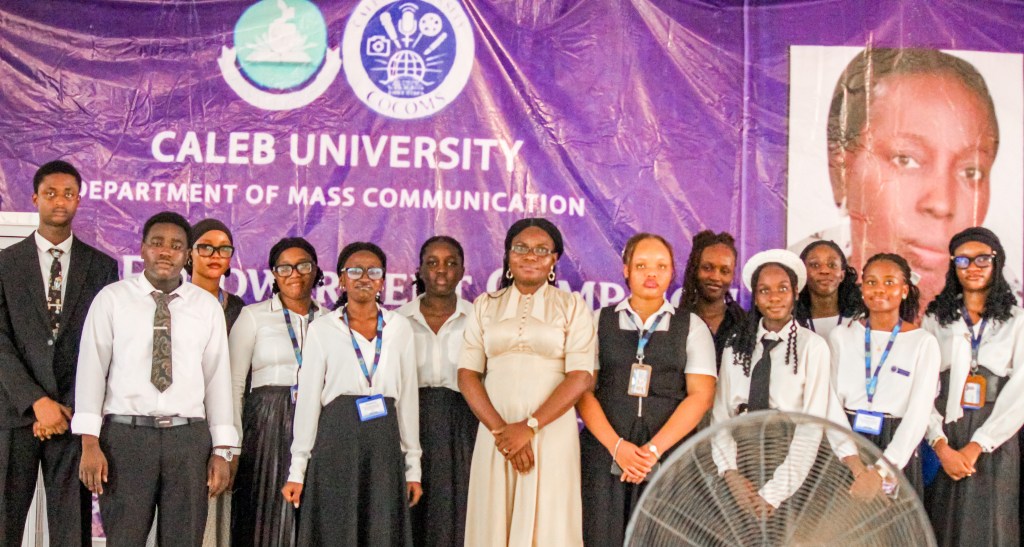
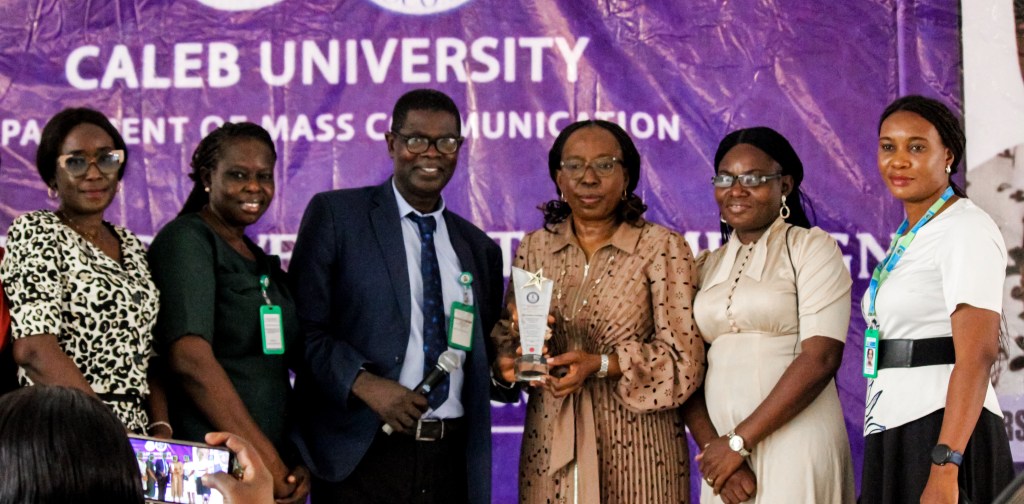
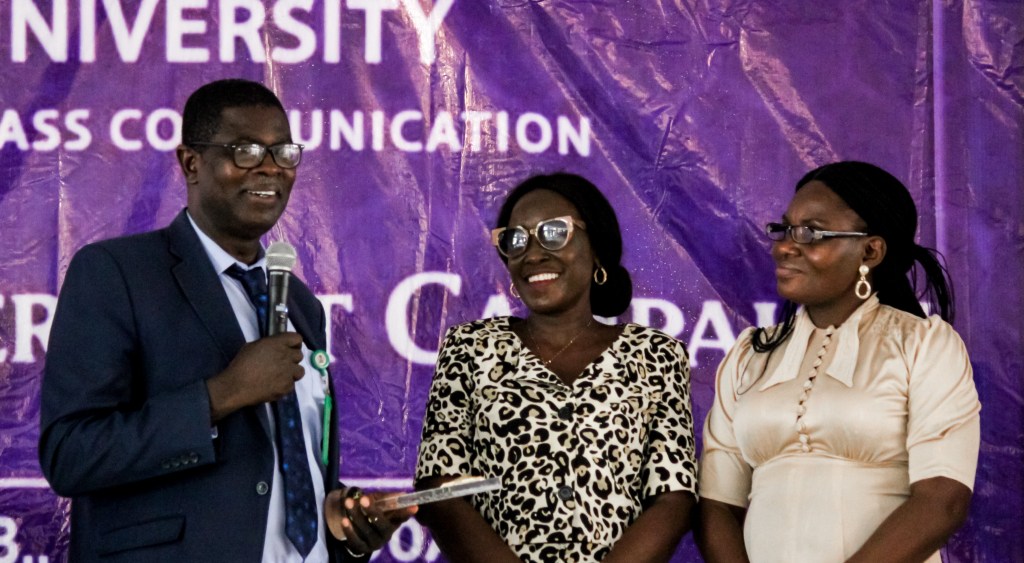
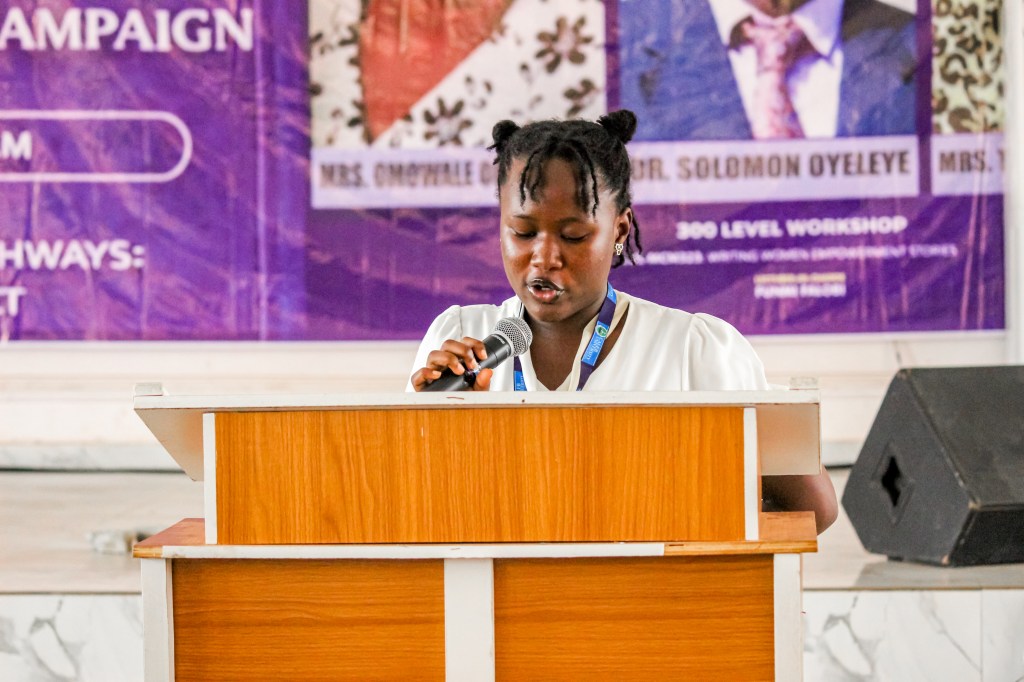
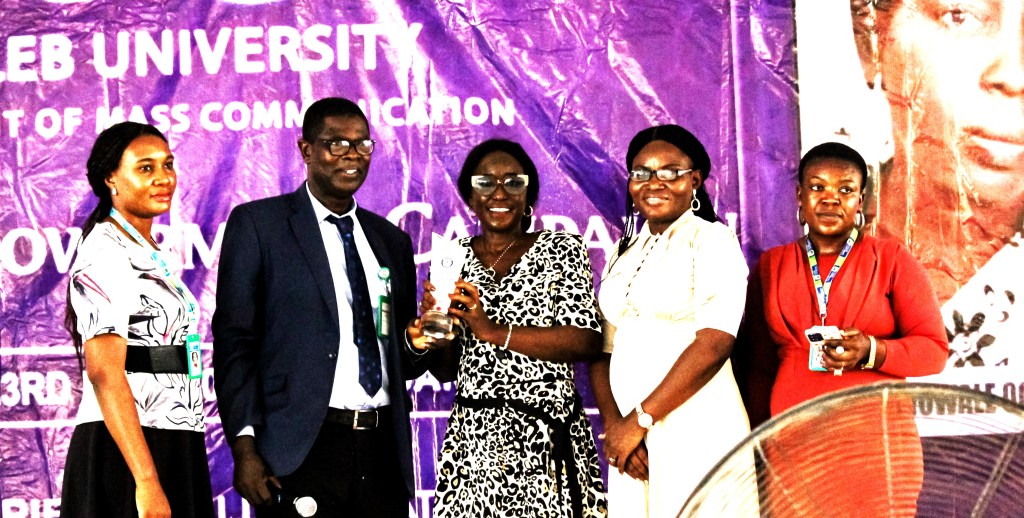
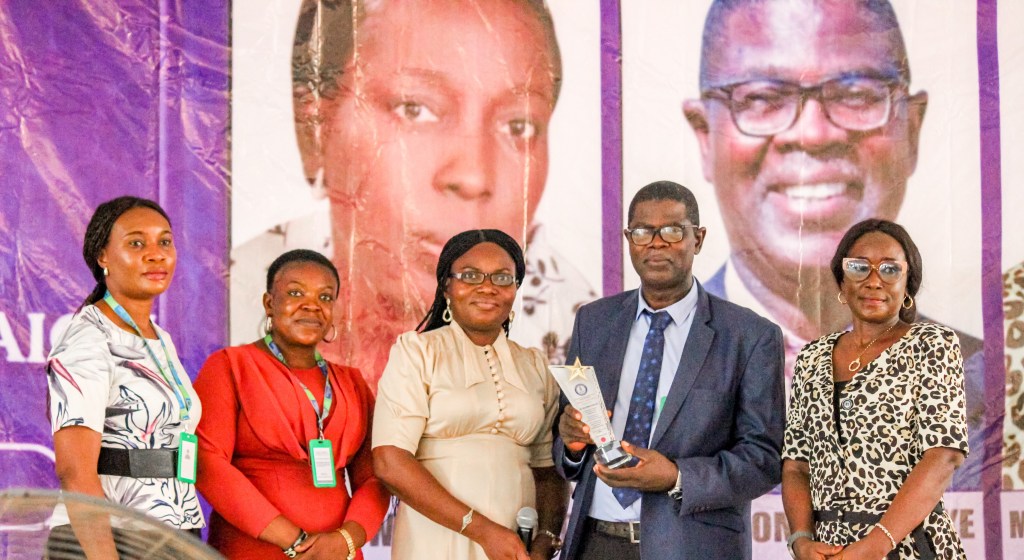
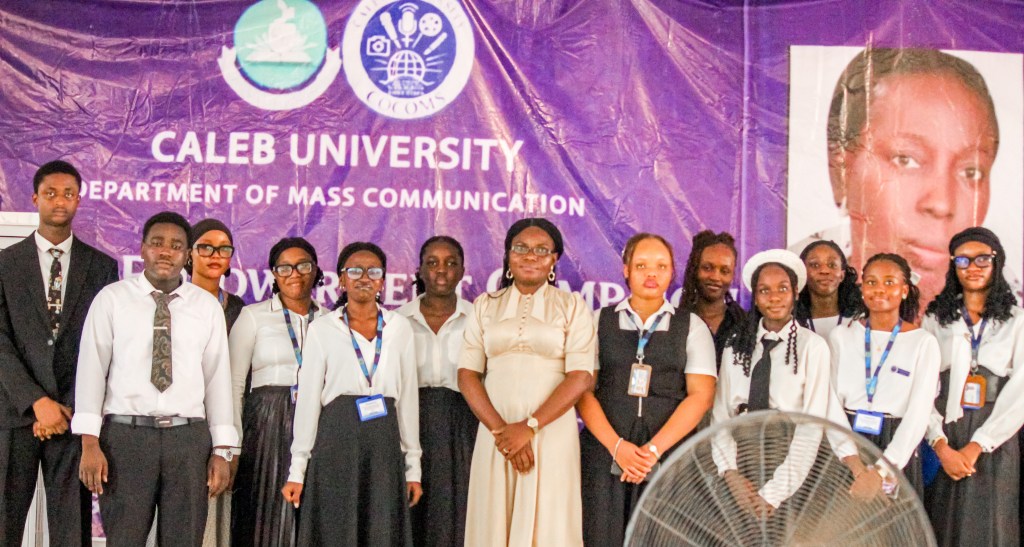
The Women Empowerment Campaign, themed “Breaking Barriers, Building Pathways: Storifying Women’s Impact,” trained students to report the economic contributions of women with context, depth and responsibility. The event featured distinguished speakers who shared professional experiences and encouraged students to become confident and responsible gender advocates.
Shifting the Narrative
Leading the discourse, Mrs Omowale Ogunrinde, Executive Director of Field of Skills and Dreams (FSD) Academy, highlighted the essential role women play in the economy and society. She urged women to reject limiting narratives and fully participate in nation-building. According to her, the issue is not whether women contribute to the economy — it is whether their contributions are adequately recognised.
Standing before the students, she challenged long-standing stereotypes that limit women’s participation in public life.
“A woman who works has a voice, brings something to the table and always has something credible to say,” she asserted.
Her message was clear: economic participation strengthens not only families, but national development. She urged young women to reject limiting narratives and embrace ambition without apology.
“There is no limit to what you can accomplish. Do not be ashamed of being smart.”
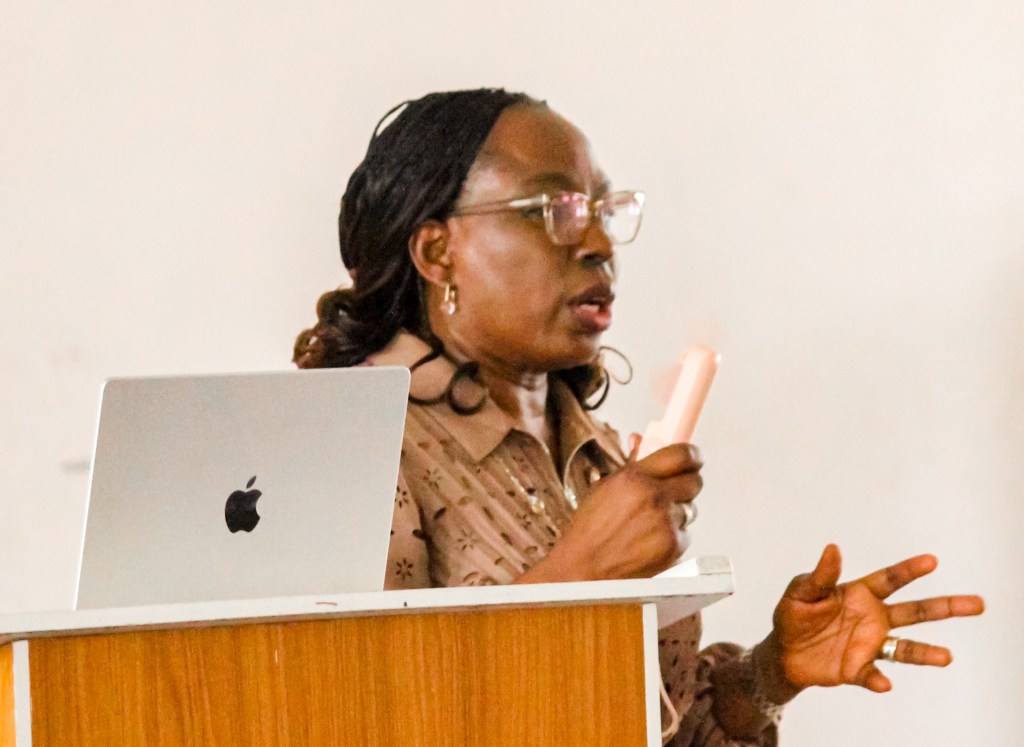
Ogunrinde, a social entrepreneur, trainer and mentor mentioned women like Senator Natasha Akpoti, Funmilayo Ransome Kuti, Funke Opeke, Adela Olabamiji who had impacted the society. Illustrating the power and potential of women in leadership and entrepreneurship, she declared that there is nothing a woman cannot achieve as long as she has the right mindset. She also referenced Proverbs 31, encouraging women to embody strength, wisdom and diligence. To further inspire the students, she cited Napoleon’s words:
“The word impossible is only found in the dictionary,” emphasising that there is nothing impossible for a determined woman. She noted that ‘success as a function of mindset, resilience and courage.’
Thriving in Male-Dominated Spaces
Also speaking at the event, Mrs. Temitope Sulaiman, a seasoned journalist, Media Consultant and Women/teen advocate stressed that women and young girls must be resilient and focused in order to thrive in male-dominated professions. Sharing her personal and professional journey in the media industry, she spoke on how she survived and thrived in the newsroom, despite working in a largely male-dominated profession. She highlighted the challenges she faced and encouraged young women to remain determined, focused, confident and resilient in pursuing their careers.
Sulaiman, who was former Woman Editor at Niche Newspaper and presently of Allure, Vangaurd lamented that women are often celebrated only during special occasions such as Women’s Day and International Girl’s Day, stressing that women’s contribution should be recognised consistently and not occasionally.
She noted: “Women’s contributions should be recognised consistently, not occasionally.”
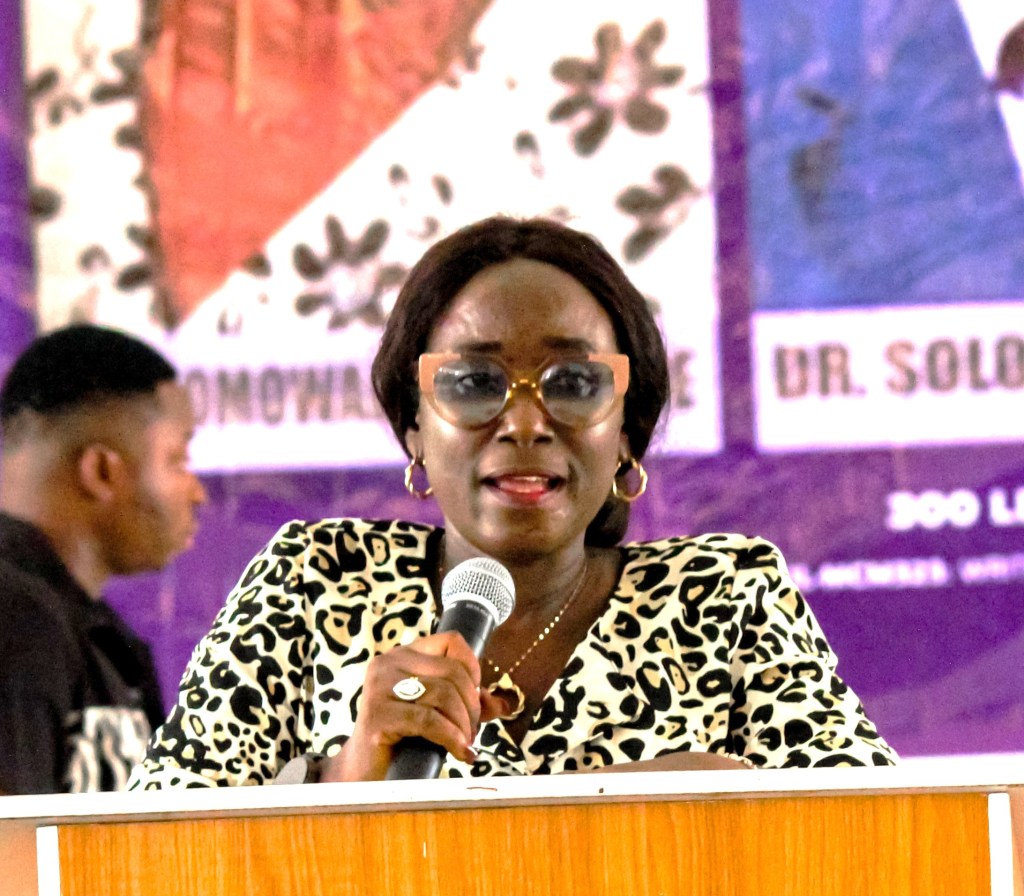
In addressing issues affecting women, she spoke passionately about poverty, limited opportunities, inequalities and lack of support systems especially for young girls. She emphasised the need for continuous advocacy and empowerment initiatives to improve the lives of women.
Her presentation served as a reminder that women must remain bold, persistent and vocal in demanding equal opportunities and recognition in all spheres of society.
Journalism as a tool for Social Meaning
For Dr Solomon Oyeleye, Deputy Dean, Student Affairs, the conversation extended beyond gender advocacy to the core philosophy of journalism itself. He described the course “Writing Women Empowerment Stories” as a unique course that is only offered at Caleb University, describing the students as privileged to be part of such initiatives that is positioning students as pioneers in a specialised field of reporting.
Journalism, he reminded them, is not simply about recounting events.
“Journalism is not just about reporting what happened; it is about giving meaning, context and relevance to social realities.”
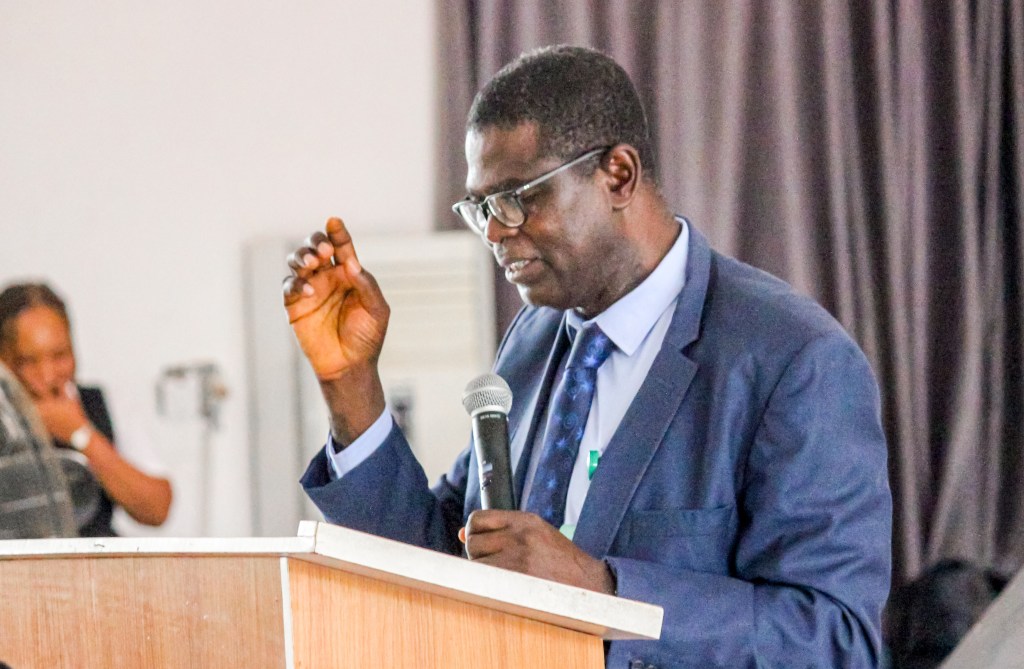
He urged aspiring reporters to interrogate the economic dimensions of gender inequality — employment gaps, access to finance, entrepreneurship, inflation and resource distribution. According to him, when such realities are ignored, inequality risks becoming normalised.
Dr Oyeleye observed that although women contribute significantly to society, many of their efforts remain unnoticed and underreported. He stated that when the media fails to report these realities, it normalises inequality as culture and choice.
“When the media fail to report these realities, inequality becomes normalised as culture rather than recognised as a problem.”
His presentation encouraged students to become responsible communicators who use the media to promote fairness, viability and social change.
From Classroom to Newsroom
Addressing the participants, the Convener and Lecturer-in-Charge, Mrs Funmi Falobi, stated that the campaign was anchored within the broader academic vision of Caleb’s Mass Communication Department. She explained that the course focuses deliberately on reporting women’s economic contributions, particularly those that remain underreported, and in the process advocating for improved representation of women voices in the media.
“Women contribute greatly to economic development of any society. And when we talk of women, it also includes women with disabilities who are thriving despite challenges. The media need to amplify the voices and economic contributions of women hence, the need to inculcate the culture early from the classroom to the newsroom,” Falobi said.
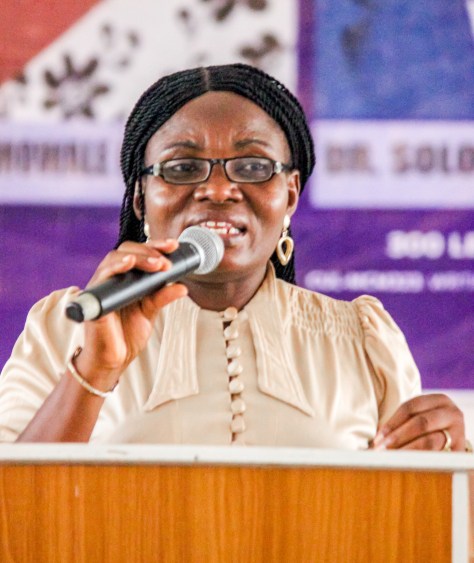
She stated that courses like ‘Writing Women Empowerment Stories’ are designed to give students a unique perspective on women’s contributions to society and to encourage ethical reporting. She emphasised the need for students to take full advantage of academic opportunities and to use their skills to challenge stereotypes, advocate for equality and promote gender-inclusive narratives, while also encouraging the students to be confident, resourceful and persistent noting that media and storytelling are powerful tools to amplify women’s voices and impact.
“The media need to amplify the voices and economic contributions of women — from the classroom to the newsroom.”
Her charge to students was both practical and ethical: challenge stereotypes, pursue inclusive narratives and recognise storytelling as a powerful instrument of social change.
Students Engagement and Impact
Bottom of Form
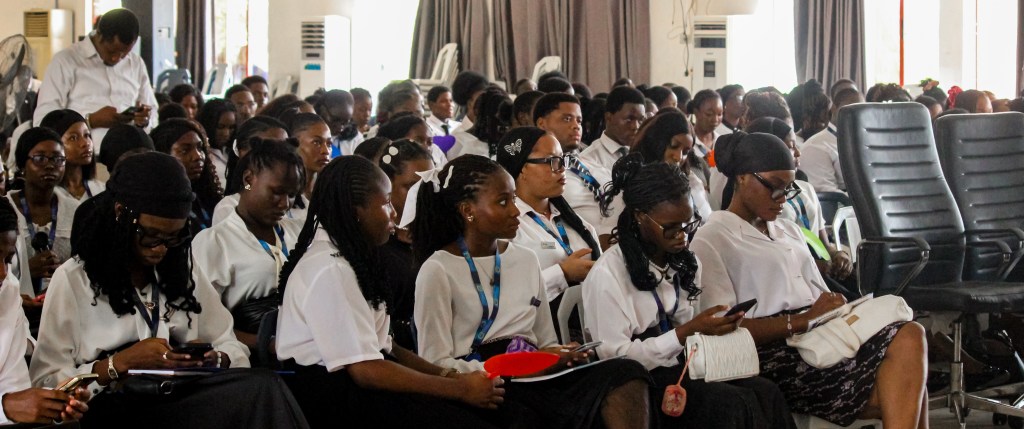
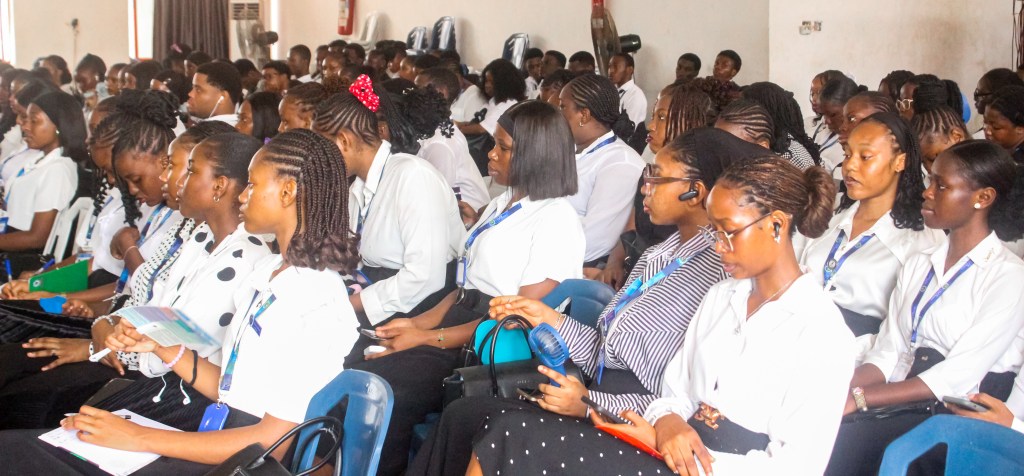
The campaign concluded with student group presentations showcasing stories on women’s impact across sectors of the economy, including the contributions of women with disabilities in economic development.
The presentations reflected research depth, creativity and a growing awareness of journalism’s responsibility in shaping public perception.
An interactive session followed, with students raising questions on career growth, workplace realities and professional development. The atmosphere was reflective yet energised — evidence that the campaign had struck a chord.
As conversations lingered beyond the formal programme, one message stood out in the event at Caleb: telling women’s stories is not an act of charity, but an act of responsibility.
Temilade Deborah Olagunju, a student of Caleb University, contributes this as a freelance writer for Social Development News
Photos: remymatinstudios
 Social Development News (SDN)