>By SDN<
Civil Society Organisations (CSOs) have issued a clarion call to the National Assembly, urging the lawmakers to harmonise the Electoral Bill and validate real-time electronic transmission of election results ahead of the 2027 general elections.
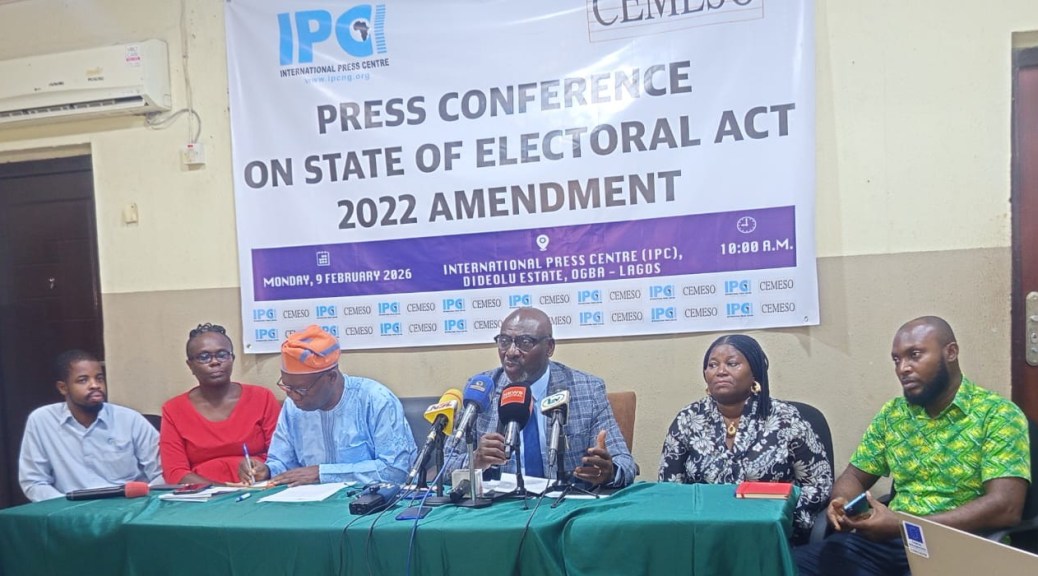
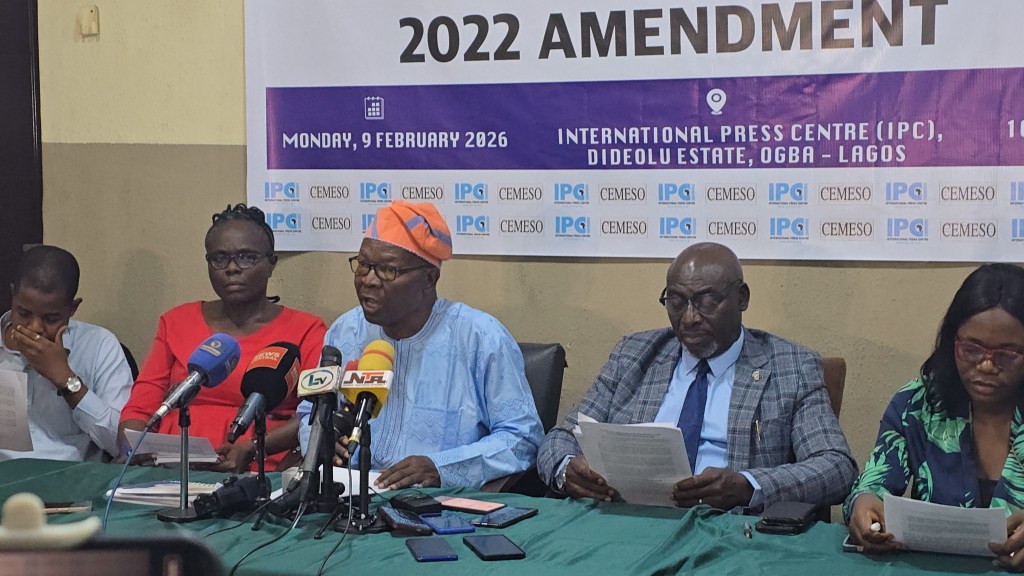
This call was echoed at a Press Conference in Lagos where two frontline CSO leaders, Mr. Lanre Arogundade of the International Press Centre (IPC) and Dr. Akin Akingbulu of the Centre for Media and Society (CEMESO), expressed deep concern over the Senate’s rejection of electronic result transmission, the exclusion of downloadable missing and unissued voter cards, and the shortening of critical electoral deadlines.
The duo, who are part of a CSO coalition—including The Kukah Centre, ElectHer, Nigerian Women Trust Fund, TAF Africa, Yiaga Africa, Spaces 4 Change, CAPPA, and WARDC—also called for a technology-neutral approach to electronic result transmission.
According to Dr. Akingbulu, the divergence between the Senate and the House of Representatives on the amendments could have profound implications for the integrity of the 2027 general elections.
“The divergence between the Senate and the House of Representatives on these amendments has significant implications for the credibility of the 2027 elections. Electoral reform is not merely a procedural exercise; it is fundamental to ensuring transparency, predictability, and the legitimacy of democratic transitions.
“The protracted amendment process has created legal uncertainty, delaying INEC’s constitutionally mandated electoral preparations and potentially undermining its ability to conduct credible elections. Since the Senate vote, public discourse has been saturated with conflicting narratives regarding its precise position,” he said.
He emphasised that delays in concluding the electoral amendment could compromise preparations for the 2027 elections.
“The ongoing legal uncertainty appears to have deterred INEC from releasing the timetable for the 2027 elections, potentially placing the Commission in breach of the extant law. The 2022 Electoral Act remains in force until amended.
We urge INEC to issue the election timetable and schedule for the 2027 general election in accordance with the 2022 Electoral Act without further delay. This would fulfil statutory obligations, protect the Commission from legal challenge, provide political parties, candidates, and civil society with certainty for systematic preparations, and establish baseline timelines that any subsequent amendments could adjust through transitional provisions if necessary. Indefinite postponement pending legislative resolution only compounds administrative challenges and legal vulnerabilities,” he said.
As the Senate prepares an emergency plenary session on Tuesday, 10 February 2026, the coalition called on it to seize the opportunity to adopt clear, unambiguous provisions. These should mandate real-time electronic transmission and collation of results, allow for downloadable missing and unissued voter cards, and retain timelines for election notice, submission of candidate lists, and publication of nominated candidates.
Adding further perspectives on the issue, Mr. Arogundade noted thus:
“Designated election officials should transmit all results in real time from polling units and collation centres to a public portal. These results should verify any other figures before final collation. The House of Representatives’ position on downloadable voter cards should also be adopted. During the 2023 elections, over 6.2 million registered voters were effectively disenfranchised because they did not collect their PVCs. Downloadable PVCs eliminate this barrier and open the door to fuller participation”, he said.
“Electoral timelines must be retained: 360 days for election notice, 180 days for submission of candidate lists, and 150 days for publication of nominations. Shortening these timelines increases risks, constrains ballot production and distribution, and heightens the likelihood of operational failure”, he added.
The coalition also recommended broadening eligibility to report electoral results to include political parties, candidates, accredited party agents, and observers, creating a multi-stakeholder accountability framework that strengthens the credibility of the process.
Finally, the CSOs called on the National Assembly to conclude the amendment process and transmit the final bill to the President within two weeks, urging citizens to hold legislators accountable. They stressed that public interest and electoral integrity must take precedence—through real-time electronic transmission, downloadable PVCs, and protection of timelines essential to credible elections.
“The eyes of the nation are on the National Assembly. Every delay, every compromise, could affect the very foundation of our democracy. We cannot afford to gamble with the 2027 elections,” the coalition warned.
 Social Development News (SDN)