

By sdnonline
Wole Soyinka Centre for Investigative Journalism (WSCIJ) has called for joint action to protect the rights of girls in Nigeria.
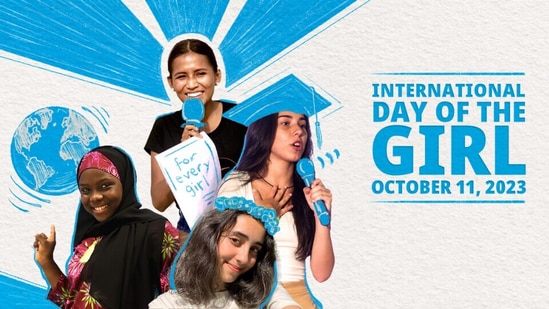
Executive Director/CEO, WSCIJ, Motunrayo Alaka said the 2023 theme for the International Day of the Girl Child, ‘Invest in Girls’ Rights: Our Leadership, Our Well-being,’ underscores the urgent need to increase investment in girls’ education, health, violence prevention programmes and overall well-being to protect their rights and support them to maximise leadership opportunities.
According to a 2022 UNICEF report, 6 million girls are out of school in Nigeria – 3.9 million at the primary and 3.7 million at the junior secondary levels, implying that over 50 percent of Nigerian girls are not attending school at the basic education levels. Despite the federal Child Rights Act (2003) prohibiting marriage below the age of 18 in Nigeria, 43 percent of teenage girls are married before their 18th birthday, and 16percent are married before the age of 15. Hence, Nigeria ranks among the highest on the African continent for early child marriage, according to the United Nations Development Programme in 2020.
This data validates a recent report from the United Nations – Secretary-General, António Guterres, who mentioned that the world is still 300 years away from ending child marriage and its ripple effect globally is 110 million young women and girls out of school and about 340 million girls and women will face extreme poverty by 2030. This alarming analysis is a clarion call for the media, government, CSOs and other stakeholders to intensify their efforts as champions of equality, equity and inclusivity to protect girls and women’s rights through nuanced investigative reportage, multilevel advocacy and timely sustainable interventions that defend the girl-child and protects her rights to live, learn and dream.
“At the Wole Soyinka Centre for Investigative Journalism (WSCIJ), we are dedicated to improving the reportage of girls and women-focused issues, empowering female journalists to champion the cause of equality in the news, newsroom and facilitate the evolution of gender policies and practices that affect girls and women representation as leaders. All these and more we continue to support with the Report Women! programme, initiated in 2014,” Alaka said.
She explained that the centre has trained and rewarded female journalists on leadership projects centred on women and girls empowerment. The programme has also produced documentaries and published research reports under the Report Women! Programme on the gender status of news and newsroom leadership, the gender policy and practice in Nigerian newsrooms and assessment of the Report Women! FRLP fellowship. With a forthcoming report on the representation of women in the leadership of news and newsrooms in Nigeria, the centre aims to contribute to a more inclusive media landscape.
“In the upcoming fourth quarter, WSCIJ will launch a website featuring 500 female expert sources across eight sectors, reflecting its commitment to amplifying the voices of women in news and news programmes. We urge everyone, particularly the journalists and media managers, to champion this cause within their spheres of influence, transcending traditional, economic, religious, social, and security-related challenges.
“Together, let us create a future where the rights of the girl child are protected, and opportunities for leadership and growth are accessible to all,” she said.
 Social Development News (SDN)